What fictional characters do you relate to as an INFP?
Just as we can describe real people using the Myers-Briggs® typology system, we can also use the system to type well-written fictional characters. Some of fiction’s most iconic and intriguing characters are INFPs, and today we’re going to talk about seven of them that I think real-life INFPs will find relatable.
One great thing about looking at character personality types is that it helps us to better understand people who have different types than we do. Fictional INFPs can serve as examples for what real-life INFPs might be like, and also show how much variation can exist between individuals with the same type.
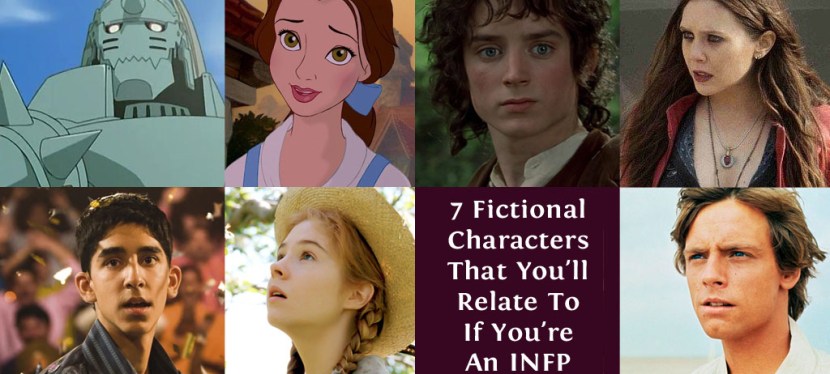
Alphonse Elric
Fullmetal Alchemist Brotherhood was the first Anime series I watched and it’s now one of my favorite TV series of all time. One of the highlights of this series (as well as the Fullmetal Alchemist series) is the character Alphonse Elric, who I’m pretty sure is either an INFP or an ISFP. Al is a sensitive, sweet young man with great strength of character. He believes deeply in doing what’s right and has a strong bond with the people he cares about, as do many real-life IFPs.
As someone who leads with Introverted Feeling (aka “Authenticity”) Al’s preferred mental process is one that’s concerned with inner harmony. As such, he makes decisions based on what feels right to him. As I’m sure many INFPs can attest, this isn’t an easy or straightforward way of figuring things out. It involves a life-long process of checking in with oneself, figuring out who you are, and finding the right way to navigate an often confusing world. Though he’s trapped in a giant suit of armor, Al is quite a young character and though the course of his story we get to see him working through a complicated process of discovering himself that I think many INFPs can relate to from their own growing-up years. Read more →
What fictional characters do you relate to as an INTP?
Just as we can describe real people using the Myers-Briggs® typology system, we can also use the system to type well-written fictional characters. Some of fiction’s most iconic and intriguing characters are INTPs, and today we’re going to talk about seven of them that I think real-life INTPs will find relatable.
One great thing about looking at character personality types is that it helps us to better understand people who have different types than we do. Fictional INTPs can serve as examples for what real-life INTPs might be like, and also show how much variation can exist between individuals with the same type.
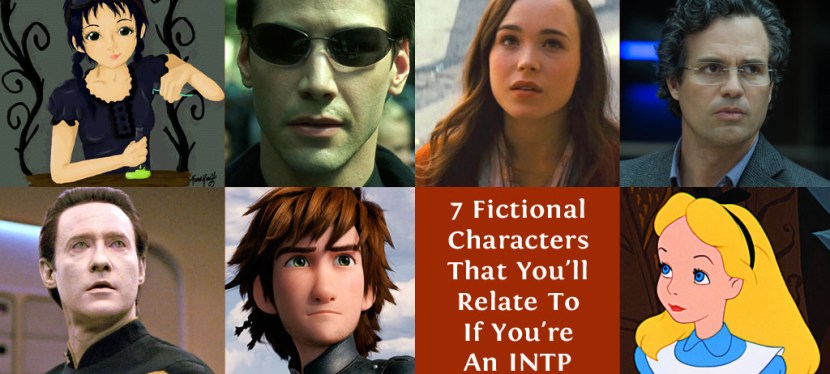
Alice
I actually typed Alice as an ENTP on my Disney Princess MBTI chart, but many people type her as an INTP. I’m fairly certain she uses Introverted Thinking and Extroverted Intuition as her two favorite functions, so both ENTPs and INTPs will probably find her a relatable character.
Extroverted Intuition is the most visible aspect of her personality. “If I had a world of my own everything would be nonsense,” seems the sort of thing a bored, curious intuitive would say as they try to explore every possibility no matter now far-fetched. As Alice goes through Wonderland, she’s constantly testing the different aspects of the world and asking questions. Read more →
What fictional characters do you relate to as an ESFJ?
Just as we can describe real people using the Myers-Briggs® typology system, we can also use the system to type well-written fictional characters. Some of fiction’s most iconic and intriguing characters are ESFJs, and today we’re going to talk about seven of them that I think real-life ESFJs will find relatable.
Another great thing about looking at character personality types is that it helps us to better understand people who have different types than we do. Fictional ESFJs can serve as examples for what real-life ESFJs might be like, and also show how much variation can exist between individuals with the same type.
Anna
Most people type Anna from Disney’s Frozen as an ESFP or ENFP, but hear me out. ESFJs lead with a function called Extroverted Feeling (Fe, or “Harmony”). Fe is a decision-making process that’s concerned with connection and meeting other peoples’ needs, and that’s what we see Anna prioritizing throughout the film. Like so many real-life ESFJs, Ann longs for harmonious connections with other people. She’s also so concerned with the needs of people around her that she asks Kristoff, “Are you going to be okay?” while she’s dying. If that’s not an FJ thing I don’t know what is. Read more →
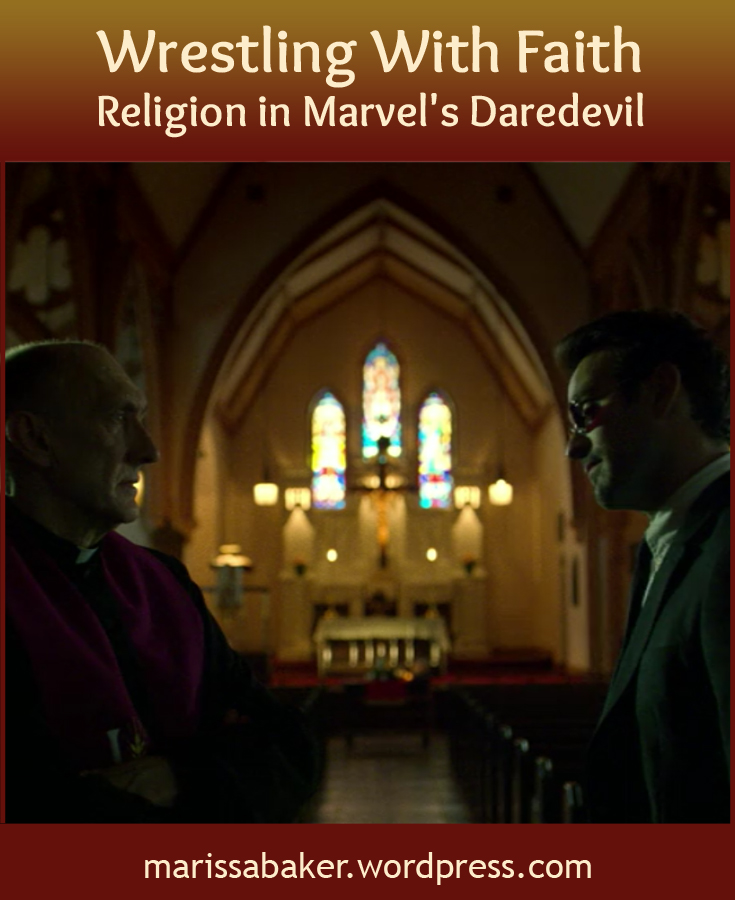
Before Daredevil premiered on Netflix in April of last year, the closest Marvel’s Cinematic Universe came to portraying a superhero of faith was Captain America’s line, “There’s only one God, ma’am, and I’m pretty sure he doesn’t dress like that” in The Avengers three years earlier. As much as I like and admire Steve Rogers as a character, however, I’m not sure I’d describe him as a man of faith. Certainly he’s a moral man who believes in God, but his faith doesn’t play a major role that we can see on-screen.
Matt Murdock (played by Charlie Cox), on the other hand, is a character defined by his faith. The way he’s portrayed in the Netflix series leaves no doubt that Matt is a staunch Catholic and that his faith influences every decision he makes. The religious elements don’t make Daredevil any less violent (this is not a show for children or squeamish adults), but the series’ engagement with religious themes does make it one of the most intriguing things on screen right now.
It’s rare to see a character portrayed as unabashedly Christian in today’s culture, at least outside of films produced by a faith-based group such as Sherwood Pictures. It’s even rarer to see a man of faith cast as the hero of a gritty drama. Yet Matt Murdock is a practicing Catholic who proclaims his belief on-screen, as well as a seriously impressive superhero.
Quick note: I’ll be honest, I don’t know all that much about Catholicism. I’ve known Catholics and counted several my friends, read a few books written by Catholic authors (both fiction and non-fiction), and encountered some facts about Catholicism in studying British history, but I wouldn’t really consider myself knowledgeable on the subject. If you’re reading this as a Catholic and I say something stupid, please correct me with love in the comments 🙂
Quicker note: this article contains spoilers for both seasons of Daredevil. Spoilers for Season 2 will be clearly noted.
To Kill, or Not To Kill
Everything about Matt’s choices is influenced by his Catholicism. He won’t kill because he firmly believes it is morally wrong. That is explored strongly in the first season, when we learn Matt refuses to kill his enemies and tries his best to prevent others, including his allies, from killing as well. It’s back again in the second season when
SPOILER WARNING
we learn in flashbacks that Matt’s college romance with Electra ended after she asked him to kill the man who murdered his father. A few episodes later, we find out that she has a mission to pull Matt away from the faith that was, in part,why he’s not still fighting alongside Stick. It didn’t work. Matt wasn’t a perfect enough Christian to say no to premarital sex or to leave Electra when she was stealing cars and breaking into people’s houses, but his faith runs too deep for the possibility of murder to not act as a wake-up call.
(end spoilers)
Unlike Batman, who doesn’t (typically) kill because it’s part of his crime-fighting code, Daredevil doesn’t kill because it’s part of his faith. The only way he would consider breaking the law of God that prohibits murder is if he thinks sacrificing his soul would save enough people to make it worthwhile. That’s why he considers killing Wilson Fisk near the end of Season 1. “I know my soul is damned if I take his life,” Matthew says, “But if I stand idle” people “will suffer and die.”
Daredevil S1, E9
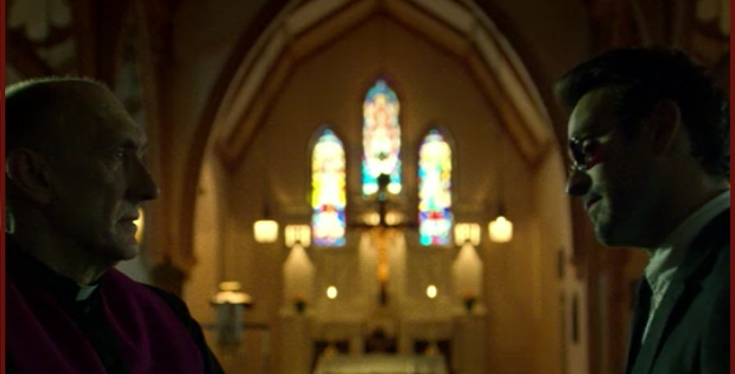
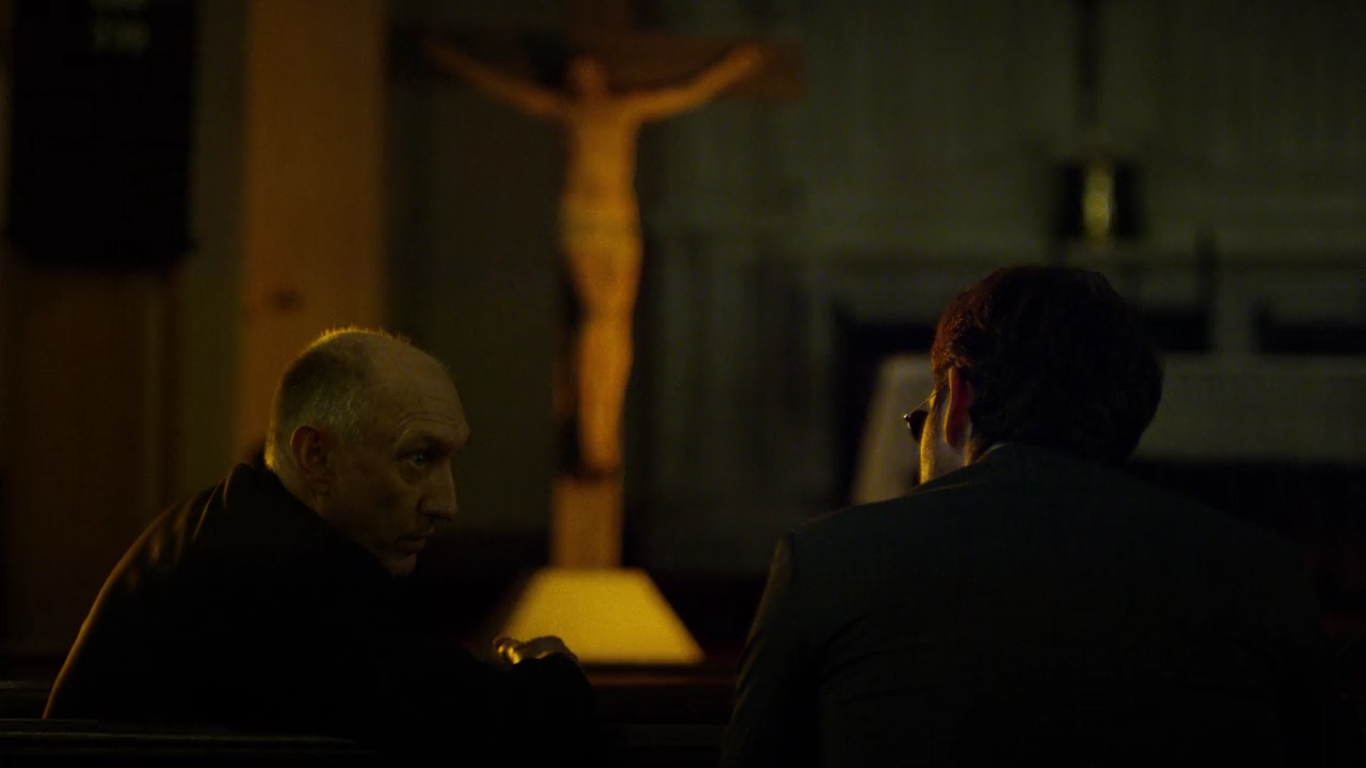
For most action heroes, there wouldn’t even be a question of what to do — you just go out and kill the bad guys. Matt, however, cares about what taking another person’s life says about him. He doesn’t take this question to his bartender or girlfriend though (as an equally introspective but less religious character might). He takes it to his faith in the form of his priest, Father Lantom, who reminds him, “There is a wide gulf between inaction and murder, Matthew. Another man’s evil does not make you good. … the question you have to ask yourself is are you struggling with the fact that you don’t want to kill this man, but have to? Or that you don’t have to kill him, but want to?”
A Question of Motive
In the same conversation where Father Lantom talks with Matt about whether or not Matt should kill Fisk, he also says, “Few things are absolute, Matthew. Even Lucifer was once an angel. It’s why judgment and vengeance… are best left to God. Especially when murder is not in your heart.” When Matt asks how Lantom can know what’s in his heart, the priest responds, “You’re here, aren’t you?” The fact that Matt wrestles with how his faith fits into his mission to fight for justice is one thing that proves he’s a good man. Our motivations matter.
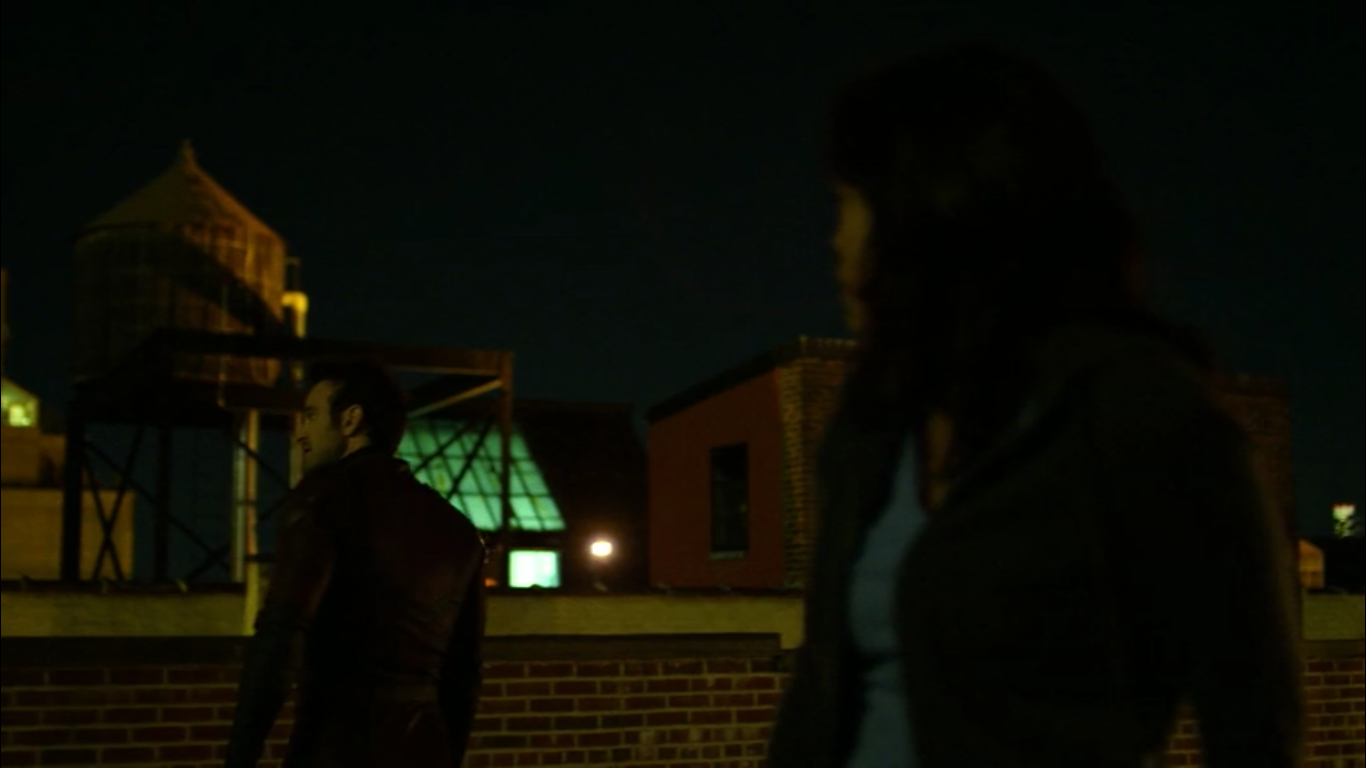
Matt works as a lawyer by day trying to right wrongs within the system, then goes out at night as Daredevil trying to bring justice to the people who were overlooked by the law. In the first episode of Season 2, Matt tells Foggy that the woman they helped as lawyers by recommending a battered women’s shelter would have been murdered by her husband before her escape if Daredevil hadn’t put the man in a hospital. Daredevil goes around fixing the problems that Matt Murdock can’t.
An article that appeared on Slade.com last year said Netflix’s Daredevil understands that Matt’s religion is “essential to his identity … which is what makes the show work.” The article continues, “Murdock’s brutal justice is more than his way of taking personal responsibility for the sins of others; it’s his way of atoning for his own. Murdock’s real superpower, and also his biggest foe, is his Catholicism” (from “Daredevil’s Greatest Superpower Is His Catholicism“). Matt’s religion is what drives him to fight for justice, yet it’s also what makes him question himself at every turn.
Guilt and Redemption
Throughout his crusade, Matt punishes himself as much as the people he’s after. In “Daredevil, Catholicism, and the Marvel Moral Universe,” Leah Schnelbach connects this with “mortification of the flesh.”While Matt Murdock does qualify as a powered-person in the MCU, his powers don’t give him fast healing or make him invincible. To fight evil, “He has to keep getting hit, keep getting wounded. Over the course of the show, we see this process–old wounds reopen, cuts heal slowly, bruises linger, and each fight seems more labored. … The point is that he keeps going anyway” (click here to read the full article). Matt’s only partly joking when he responds to Claire describing him as “blind vigilante who … can take an unbelievable amount of punishment without one damn complaint” by saying, “The last part’s the Catholicism.”
Daredevil S2, E10
Mortification of the flesh is a concept very much tied to penance in the Catholic version of Christianity. It’s referenced even more clearly into Daredevil in Season 2, again by Claire (mild spoiler warning). Matt’s beating himself up (metaphorically, this time) for not saving a group of people soon enough. She suggest he take off his “hair shirt” and “start thinking about climbing down off that cross of yours and spending some time with us normal people for a change.” The idea of Matt martyring himself is a theme throughout both seasons.
MAJOR SPOILER WARNING
One of the aspects of Season 2 I found most interesting was the association of Matt with Jesus Christ. He’s not portrayed as a “Christ-figure” per say, but there’s more going on here than just Claire’s overt reference to Matt crucifying himself. Much like I argued when talking about Luke and Vader in Star Wars, we can compare Matt’s insistence that redemption is possible for Electra to God “not wishing that any should perish, but that all should come to repentance” (2 Pet. 3:9, ASV). While Matt is willing to die for her, what’s more poignant is that he’s willing to sacrifice himself by living for her.
I struggled with this scene in the final episode. Why would Matt give up everything he’s working for in Hell’s Kitchen to run away with such a morally dark character as Electra? Upon further reflection, I realized he didn’t intend to abandon his faith by offering to take this action. While being with Electra does bring out the “devil” side of him, he’s not offering to run off with Electra just so he can be free of responsibility or guilt. He wants to do this because of his stated reason — that she “gets” the part of him that no one else understands — and because of the redemption theme running through this season. He has to believe Electra can be good and he’ll give up his own life to help make that possible.
(end spoilers)
Matt’s not a perfect Christian or a perfect Catholic. Some might even question whether or not he qualifies as a “good man” after putting so many people (criminals, yes, but still people) in the hospital. Where do we draw the line? and what is the responsibility of a moral man confronted with evils that he can fight, but isn’t sure at what cost? Those are the sort of questions that Marvel’s Daredevil offers for our consideration. It’s not interested in a sanitized version of Christianity that focuses on faultless people living lives of bliss and, quite frankly, I’m not either. And neither’s the Bible, if the struggles of David, Peter, Paul and so many others are any indication. God never tells us our walk with Him will be without wrestling. It’s how we respond to the crises of faith — the moments where we wonder if all this is worth it — that count.
I have two reason why you’re getting a rambling post about how I spent yesterday rather than a nice, neat article:
1) NaNoWriMo
50,000 words in 30 days = one novel, and not much sleep. I’ve done it twice before, and I’m trying again this year with a Young Adult novel full of super humans (click to visit my writer’s website). I’m prepared with enough Lindt hazelnut truffles to reward myself every 5,000 words (plus a few extras, just in case).
2) Zoo Day!
Months ago we got half-price tickets to the Columbus Zoo, and just never seemed to find time to use them. Then we realized they expired in February, and it wasn’t getting any warmer, so we went yesterday. It was so cold that most of the South-Asian and African animals weren’t out, but the predators were very active.
the Amur leopards were moving too fast for my camera
Very, very active, in some cases. The brown bears were chasing each other all over their exhibit, my family saw a tiger try to pounce on one guy through the glass, and there was a cheetah stalking a child being pulled in a wagon.
huge brown bears
We also saw an extremely rare creature — an awake koala. They sleep 22 hours a day if given the chance, and I think this is the only time I’ve ever seen one moving.
hungry koala
I’d say the dinosaurs were even more rare, but they weren’t moving much. Didn’t even try to snatch a tourist out of the boat ride, so I suspect they were animatronic.
It’s a dinosaur!
The aquarium in Columbus might not be huge by public aquarium standards, but it’s certainly one of the most impressive at a zoo. I love the manatees. Columbus and Cincinnati are the only aquariums in the U.S. outside of Florida that help with manatee rescue and rehabilitation.
Stubby can’t be released into the wild because of propeller damage to her fluke and an autoimmune disease that affects her skin
And last but not least … I found a yurt!
yurt, a.k.a. one of the cutest structures known to man
Honestly I have no idea what to write about for today’s post. Guardians of the Galaxy, which I recently watched? The book I just read about HSPs? How much I hate the head cold that kept me from attending a friend’s wedding?
Let’s go with a combo of the first two. My sister talked our whole family into going with her to see Guardians of the Galaxy yesterday. After being … less than impressed with the trailers, I found that I actually enjoyed the film for the most part. I’d thought it would be the characters or humor or plot that I didn’t enjoy, but that that wasn’t what bothered me.
It was the violence. You expect a certain level of violence in a Marvel superhero film. But at least in The Avengers they were trying to minimize casualties and none of the main characters enjoys killing. The Guardians (spoiler warning) do save an entire planet, but there’s a lot of collateral damage in a mining colony that no one seems concerned about, and Rocket Raccoon, Drax, and Groot are all seen laughing or grinning while killing people. The deaths are played for audience laughs too, like when Groot grows a tree limb through about 5 bad guys and batters them around inside a spaceships corridor to kill them and their companions. I think Peter Quinn and I were the only ones in the theater not laughing.
Sensitive to violence
If you take Elaine Aron’s self-test for High Sensitivity, one of the questions is “True or False: I make a point to avoid violent movies and TV shows.”
When I first took the test, I answered “false.” I wouldn’t watch things with what I considered excessive violence, but I would watch the occasional Criminal Minds episode and I had seen too many R-rated movies to count on one hand (but just barely, and most in a film class at college). Even so, during our yearly re-watching of The Lord of the Rings, I’d leave the room for most of the Battle of Helm’s Deep and if I was watching Henry V on my own I hit the skip button for Agincourt.
Now I think I’d answer “true,” mostly because I’m becoming more aware of how violence affects me and I’ve stopped trying to pretend that it doesn’t. I had to stop watching Criminal Minds because the nightmares got too bad (and even after I quit, they came back after reading Kristin Cashore’s Bitterblue). I wish I hadn’t seen X-Men: Days of Future Past in theaters because the battle scenes were so dark and raw. I’d still see it, but I’d have enjoyed it more on a smaller screen since I’m much more interested in character development than in impressive battle sequences. And now more recently, I find myself troubled by Guardians of the Galaxy.
Please tell me I’m not the only one who flinches when a character gets stabbed, punched, kicked, shot or otherwise maimed? That there’s other people who think even superhero movies could do with fewer explosions, mayhem, and destruction?
I suppose one solution would be to give up watching moves, but I’ll still go see Avengers: Age of Ultron for the same reason I let my sister talk me into seeing Guardians of the Galaxy. Marvel films are addictive. And hopefully in this one, there won’t be so much casual violence.




 Like An Anchor