Wisdom for A Reason

A couple weeks ago while listening to a sermon, I noticed something about Solomon’s request for wisdom that I’d never realized before. It’s a familiar story: King David’s son Solomon became king in his father’s place, and God came to him in a dream. God told Solomon to ask something of Him, and Solomon asked for wisdom (1 Kings 3).

In Gibeon, Yahweh appeared to Solomon in a dream by night; and God said, “Ask for what I should give you.”

Solomon said, “You have shown to your servant David my father great loving kindness, because he walked before you in truth, in righteousness, and in uprightness of heart with you. You have kept for him this great loving kindness, that you have given him a son to sit on his throne, as it is today. Now, Yahweh my God, you have made your servant king instead of David my father. I am just a little child. I don’t know how to go out or come in. Your servant is among your people which you have chosen, a great people, that can’t be numbered or counted for multitude. Give your servant therefore an understanding heart to judge your people, that I may discern between good and evil; for who is able to judge this great people of yours?”

This request pleased the Lord, that Solomon had asked this thing. God said to him, “Because you have asked this thing, and have not asked for yourself long life, nor have you asked for riches for yourself, nor have you asked for the life of your enemies, but have asked for yourself understanding to discern justice, behold, I have done according to your word. Behold, I have given you a wise and understanding heart, so that there has been no one like you before you, and after you none will arise like you. I have also given you that which you have not asked, both riches and honor, so that there will not be any among the kings like you for all your days. If you will walk in my ways, to keep my statutes and my commandments, as your father David walked, then I will lengthen your days.”

1 Kings 3:5-14, WEB

The part of this story that I hadn’t paid attention to before is why Solomon asked for wisdom. It wasn’t to be the smartest person in the room or so he’d have an advantage in making political decisions. He asked for wisdom so that he could properly judge God’s people; Solomon wanted to govern with justice.

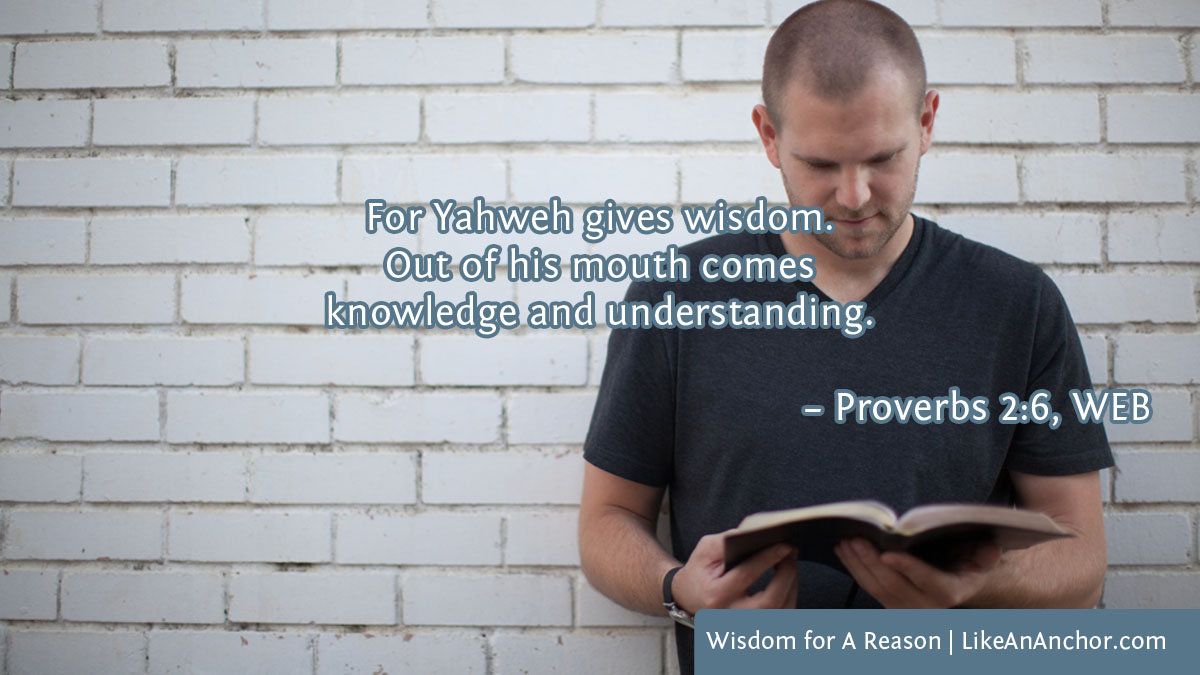
Image of a man reading a Bible overlaid with text from Proverbs 2:6, WEB version: "For Yahweh gives wisdom. Out of his mouth comes knowledge and understanding."
Image by Anggie from Lightstock

Justice, Judgement, and Governance

In the English language, judgement, government, and justice are separate things. We hope they’re connected, but we don’t see the judicial system or people who govern/rule as inseparably about justice. In Hebrew, though, it’s the same word. The root word shapat (which is used in 1 Kings 3:9, 28) means “to exercise [all] the processes of government” (Theological Wordbook of the Old Testament [TWOT], entry 2443). Ancient understanding didn’t really separate what we think of as different branches of government nor did they separate the law from the lawgiver: “the centering of law, rulership, government in a man was deeply ingrained” (TWOT 2443). This makes perfect sense when we think of God as the Lawgiver and Ruler. The Bible treats His Law as an extension of His character, and a good king of Israel was expected to act as God’s representative in upholding divine law.

The derivative word mishpat (used in 1 Kings 3:11, 28) has “at least thirteen related, but distinct, aspects of the central idea, which if to be rendered by a single English word with similar range of meaning ought by all means to be the word ‘justice’” (TWOT 2443c). These 13 meanings include “the act of deciding a case of litigation,” “a sentence or decision issuing from a magistrate’s court,” “an ordinance of law,” “one’s right under law,” and “sovereignty, the legal foundation of government in the sense of ultimate authority or right.” We get to see Solomon use his gift of wise judgement immediately, as the next thing recorded in this narrative is the story of the two mothers arguing over one living child. Both claim to be the baby’s mother and that a child who died belonged to the other. Solomon wisely figured out who the real mother was without even needing to conduct an investigation.

All Israel heard of the judgment (mishpat) which the king had judged (shaphat); and they feared the king, for they saw that the wisdom of God was in him to do justice (mishpat).

1 Kings 3:28, NET

Solomon’s wisdom wasn’t confined to judicial matters or government–God’s blessing exceeded Solomon’s initial request (1 Kings 4:229-34)–but that was the central reason he gave for requesting wisdom. It seems from the way that Solomon talked about his new responsibilities that he was worried he wouldn’t be able to govern as well as he ought, and he asked for supernatural help to discern and do justice. There was a purpose behind his request, and it was related to the role he was meant to fill in ruling and serving God’s people.

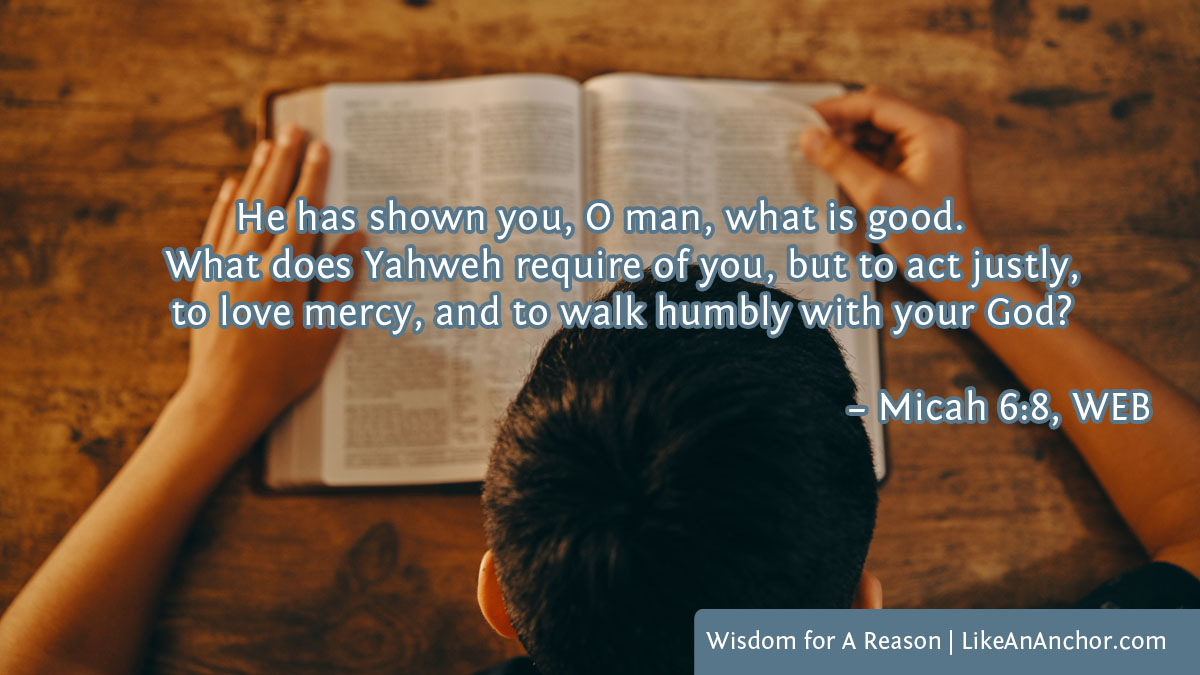
Image of a man reading the Bible overlaid with text from Micah 6:8, WEB version: "He has shown you, O man, what is good. What does Yahweh require of you, but to act justly, to love mercy, and to walk humbly with your God?"
Image by Matt Vasquez from Lightstock

Next-Level Justice and Love

As I pondered Solomon’s reason for asking God to give him wisdom, it made me think of what Paul told the Corinthians about wisdom and knowledge. In the opening part of 1 Corinthians, Paul made a distinction between wisdom as the world defines it and wisdom that God gives through His holy spirit. Earthly wisdom can get in the way of us following God–we get so impressed with what we know and how we wisely apply our knowledge that it’s hard for us to realize how much we need God and how little our own talents impress Him (Jer. 9:23-24; 1 Cor. 1:26-31). It took Solomon a long time to realize this, even with his wisdom being a gift from God (Ecc. 12:9-14).

The wisdom that Paul talked about is “not a wisdom of this age or of the rulers of this age, who are perishing. Instead we speak the wisdom of God, hidden in a mystery, that God determined before the ages for our glory” (1 Cor. 2:6-7, NET). It’s a different sort–or maybe a different level–of wisdom than Solomon had. This fits into a larger pattern in the New Testament of Jesus taking things from God’s Old Covenant interactions with people to a higher, deeper, more spiritual level.

We see good examples of this in the Sermon on the Mount, [where He mentions a law (e.g “You have heard that it was said, ‘Do not commit adultery’ [Matt. 5:27, NET]) and then shares the New Covenant application (e.g. “But I say to you that whoever looks at a woman to desire her has already committed adultery with her in his heart” [Matt. 5:28, NET]). He goes through this pattern several times, revealing that God expects more of us under the New Covenant because we’re to keep the spirit and intent of the law, not just the letter.

There is one law that seems like an outlier to this pattern. In the past, God’s law let you exact equal retribution for a crime (e.g. “An eye for an eye and a tooth for a tooth” (Ex. 21:24; Lev. 24:20; Matt. 5:38). Jesus doesn’t say to be more extreme with this law, but rather “do not resist the evildoer” (Matt. 5:39, NET). It might not seem like a logical escalation to us, but when God takes justice to the next level, it turns into mercy, long-suffering, peace, and love (Matt. 5:38-48).

Heading

Image of a woman reading the Bible, overlaid with blog's title text and the words, "When we ask God for wisdom and knowledge,  we should remember why He gives these sorts of gifts and know how He wants them to be used."
Image by Pearl from Lightstock

Wisdom by itself doesn’t do much for us. There has to be a purpose behind it, and it has to be the right kind of wisdom (i.e. “wise in what is good and innocent in what is evil” [Rom. 16:19, NET]). In 1 Corinthians, Paul discussed both wisdom and knowledge (which aren’t the same thing, but are connected). This church had several issues they needed to work through, including a mistaken idea that they had all the answers.

 With regard to food sacrificed to idols, we know that “we all have knowledge.” Knowledge puffs up, but love builds up. If someone thinks he knows something, he does not yet know to the degree that he needs to know.

1 Corinthians 8:1-2, NET

Having knowledge isn’t a problem in itself; we’re actually supposed to have some types of knowledge (1 Cor. 12:8; 14:6; 15:34). But no matter how much we know, we still have incomplete knowledge and a limited perspective compared to God. Also, not everyone has the same understanding, and there are times that acting on your knowledge–even if you’re right–can undermine someone else’s faith (1 Cor. 8:4-13). If you’re using your knowledge to increase your pride or hurt other people, then it’s worse than useless.

And if I have prophecy, and know all mysteries and all knowledge, and if I have all faith so that I can remove mountains, but do not have love, I am nothing. 

1 Corinthians 13:2, NET

Wisdom is often defined as using knowledge in the right way. I think there’s a connection here between Solomon’s wisdom to do justice and Paul’s teaching that knowledge is useless without love. Just like there was a reason behind the wisdom Solomon asked for, so there should be a driving factor behind our use of knowledge as well. Without love (a central aspect of God’s character and law [Rom. 13:10; Gal. 5:14; 1 John 4:8, 16]), intellectual gifts are pointless.

Solomon spent a lot of time in Ecclesiastes bemoaning how empty his life felt even with so much wisdom. He ultimately came to the conclusion that wisdom is definitely better than folly, but that the most important thing is to “Fear God, and keep his commandments; for this is the whole duty of man” (Ecc. 12:13, WEB). When we ask God for wisdom, knowledge, and understanding (which He will give us if we ask [James 1:5]), we should remember why He gives these sorts of gifts–so that we can follow His example and develop His character in us, including His love and justice.

He has told you, O man, what is good,
and what the Lord really wants from you:
He wants you to carry out justice, to love faithfulness,
and to live obediently before your God.

Micah 6:8, NET

Featured image by Pearl from Lightstock

What Does It Mean to Make Known the Multifaceted Wisdom of God?

A couple weeks ago, my father-in-law gave a sermon about the spiritual origins or influences behind conflicts we face. Of course, he went to the verse that’s very familiar to anyone studying spiritual warfare: “For our struggle is not against flesh and blood, but against the rulers, against the powers, against the world rulers of this darkness, against the spiritual forces of evil in the heavens” (Eph. 6:12, NET). We look at this verse quite a bit in my Study Guide: Armor of God.

In this sermon, though, he also looked at other places in Ephesians where Paul uses the words “rulers” and “powers,” which are also translated “principalities” and “authorities.” I hadn’t realized that this was a theme in the letter, and one of the verses in particular caught my eye for further study.

The purpose of this enlightenment is that through the church the multifaceted wisdom of God should now be disclosed to the rulers and the authorities in the heavenly realms.

Ephesians 3:10, NET

That’s the sort of verse it’s easy to read over, but if you stop and think about what Paul’s saying it’s mind-blowing. There’s something happening in the church that supposed to disclose “the multifaceted wisdom of God” to “the rulers and authorities in the heavenly realms.” That’s a staggering thing to think about. I’ve never thought of myself as being part of showing God’s manifold, multifaceted, many-sided wisdom to powers in the heavens.

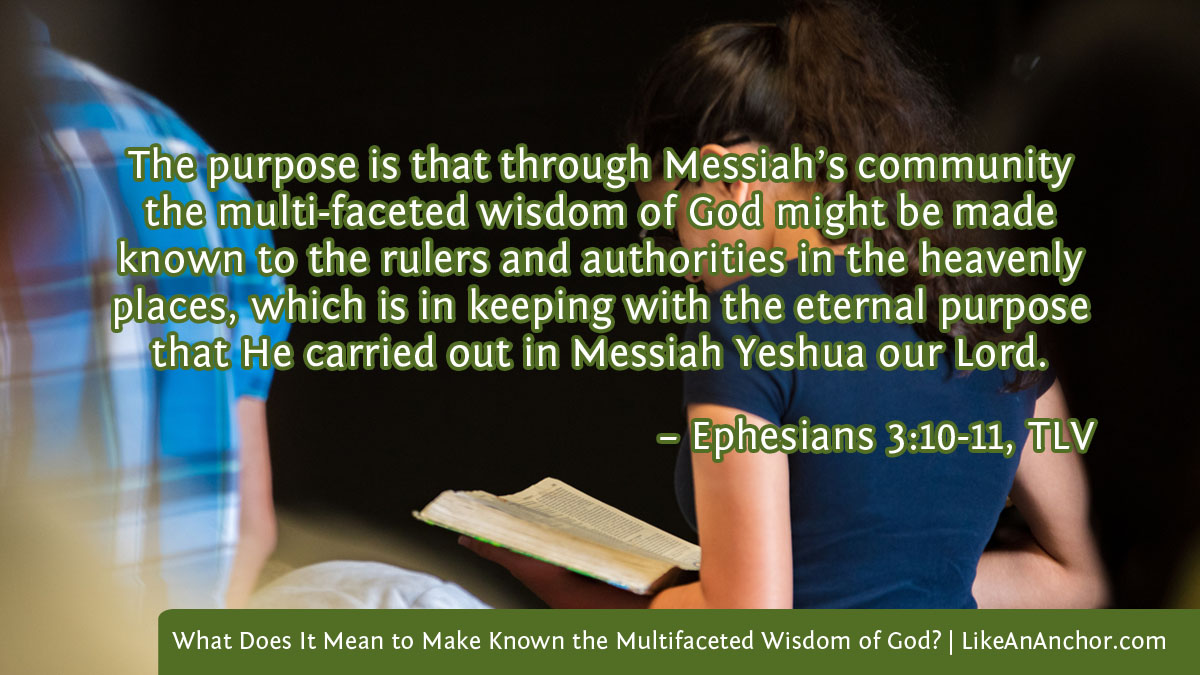
Image of a girl standing in church reading the Bible overlaid with text from Eph. 3:10-11, TLV version: "The purpose is that through Messiah’s community the multi-faceted wisdom of God might be made known to the rulers and authorities in the heavenly places, which is in keeping with the eternal purpose that He carried out in Messiah Yeshua our Lord."
Image by José Roberto Roquel from Lightstock

What Are the Rulers and Authorities?

You all know by now that I’m a word nerd, so let’s start with some definitions. The Greek word translated “principalities” or “rulers” is arche (G746). There’s a variety of meanings, including beginning, origin, person that commences something, or the active cause. For example, Jesus is described as the arche of creation (Rev. 3:14). The word also means the “first place, principality, rule, or magistracy,” and that’s the sense in which it may be used “of angels and demons” (Thayer’s Dictionary). If that seems like a confusing variety of meanings, just think of how we use “first” in English. If we say someone is “first,” context determines if they arrived first, did something first, or are first in importance.

The Greek word for “powers” or “authorities” is exousia (G1849). This refers to the power to do something, like make choices, do “as one pleases,” exercise authority, rule or govern, and make others submit (Thayer’s Definition). It “combine[s] the two ideas of right and might” (Zodhiates). It refers to having the power/might to accomplish something and the right/authority to go ahead and choose whether to use that power. There are levels of authority. For example, Jesus was given all exousia in heaven and earth (Matt. 28:18). There are other powers, but Jesus is over all of them. That’s the first thing Paul establishes regarding the topic of principalities and powers in Ephesians.

 he raised him from the dead and seated him at his right hand in the heavenly realms far above every rule and authority and power and dominion and every name that is named, not only in this age but also in the one to come. And God put all things under Christ’s feet, and gave him to the church as head over all things. Now the church is his body, the fullness of him who fills all in all.

Ephesians 1:20-23, NET (italics mark an  allusion to Ps 8:6)

That’s the first thing we need to understand about rulers and authorities, both earthly and heavenly. They’re all subservient to Jesus; He is “far above” even the most powerful of them. He’s the one heading the church, which is the whole group of called-out people that make up His body. We used to live “according to this world’s present path, according to the ruler (archo, derived from arche) of the domain (exousia) of the air, the ruler of the spirit that is now energizing the sons of disobedience” (Eph. 2:2, NET). But God called us out from under that authority and placed us into His son’s body for a purpose.

But God, being rich in mercy, because of his great love with which he loved us, even though we were dead in offenses, made us alive together with Christ—by grace you are saved!—and he raised us up together with him and seated us together with him in the heavenly realms in Christ Jesus, to demonstrate in the coming ages the surpassing wealth of his grace in kindness toward us in Christ Jesus. For by grace you are saved through faith, and this is not from yourselves, it is the gift of God; it is not from works, so that no one can boast. For we are his creative work, having been created in Christ Jesus for good works that God prepared beforehand so we can do them.

Ephesians 2:4-10, NET

If you read last week’s post, you might remember that God sometimes takes action on behalf of His people to prove His holiness. Even if His people aren’t representing Him as holy, He still acts with respect for His own name and moves to prove Himself holy in the eyes of those watching. That includes His own people, those of other nations, and the spiritual principalities and powers that we’re talking about today.

Image of a man reading the Bible overlaid with text from Colossians 1:9-10, NET version: "For this reason we also, from the day we heard about you, have not ceased praying for you and asking God to fill you with the knowledge of his will in all spiritual wisdom and understanding, so that you may live worthily of the Lord and please him in all respects—bearing fruit in every good deed, 
growing in the knowledge of God"
Image by Anggie from Lightstock

God’s Great Wisdom

In spiritual terms, all those who respond to God’s call and enter a committed covenant relationship with Him become citizens of His kingdom, and those who aren’t yet in covenant with Him belong to other nations. This is the case regardless of your ethnic background or physical citizenship. In many of Paul’s letters, he addresses this topic in relation to Jews (historically part of God’s covenant people) and Gentiles (all other nations).

When reading this, you will be able to understand my insight into the mystery of Christ (which was not disclosed to people in former generations as it has now been revealed to his holy apostles and prophets by the Spirit), namely, that through the gospel the Gentiles are fellow heirs, fellow members of the body, and fellow partakers of the promise in Christ Jesus. I became a servant of this gospel according to the gift of God’s grace that was given to me by the exercise of his power. To me—less than the least of all the saints—this grace was given, to proclaim to the Gentiles the unfathomable riches of Christ and to enlighten everyone about God’s secret plan—the mystery that has been hidden for ages in God who has created all things. The purpose of this enlightenment is that through the church the multifaceted wisdom of God should now be disclosed to the rulers and the authorities in the heavenly realms. This was according to the eternal purpose that he accomplished in Christ Jesus our Lord, in whom we have boldness and confident access to God by way of Christ’s faithfulness.

Ephesians 3:4-12, NET

Paul describes the way God works with people in the New Covenant as “the mystery of Christ,” “the unfathomable riches of Christ,” and “God’s secret plan.” It’s an incredible thing that God is still working with a specific group of people, just like He was in the Old Testament. It’s even more amazing that who’s in that group today has nothing to do with your physical heritage. It’s about God choosing you and you choosing to follow Him. It was God’s plan from the beginning to bring human beings into His family, and now that Jesus came in the flesh, died for our sins, and inaugurated the New Covenant the plan is clearer than ever before.

With that incredible fact established, Paul then says “the purpose” of enlightening others about this plan “is that through the church the multifaceted wisdom of God should now be disclosed to the rulers (arche) and the authorities (exousia) in the heavenly realms.” The word translated “multifaceted” is polupoikilos (G4182). In the New Testament, it only appears in this particular verse. It means “much variegated, marked with a variety of colors,” such as in “cloth or a painting” (Thayer). It can also mean “manifold, multifarious, greatly diversified, [and] abounding in variety” (Zodhiates). God’s wisdom isn’t one-dimensional or limited. It’s also not like human thought patterns.

“For my thoughts are not your thoughts,
    and your ways are not my ways,” says Yahweh.
“For as the heavens are higher than the earth,
    so are my ways higher than your ways,
    and my thoughts than your thoughts.”

Isaiah 55:8-9, WEB

Living With the Wisdom of God

Image of people sitting in church services overlaid with blog's title text and the words, "Our lives, and the church that we're all a part of, ought to demonstrate the wisdom of God’s plan."
Image by Brown Bag Photography from Lightstock

A few years ago, I did a series of blog posts on James’s definition for “the wisdom that is from above.” He said that this wisdom “is first pure, then peaceful, gentle, reasonable, full of mercy and good fruits, without partiality, and without hypocrisy” (Jas. 3:17, WEB). This is a description of God’s multifaceted wisdom, though likely not a full description.

Oh the depth of the riches and wisdom and knowledge of God! How unsearchable are his judgments and how unfathomable his ways!

Romans 11:33, NET

We’re never going to understand everything about God, but we’re called to study Him and get to know Him better anyway. We can grow toward perfect understanding and imitation of Him, though we know we won’t completely achieve being “like Him” until after Jesus’s return and our transformation (1 Cor. 15:50-53; 1 John 3:1-3). His wisdom is incredibly complex, but we have the opportunity to witness His wisdom, to be examples of how He wisely interacts with humanity, and even to learn how to use His wisdom in our own lives (1 Cor. 2).

 I do not cease to give thanks for you when I remember you in my prayers. I pray that the God of our Lord Jesus Christ, the glorious Father, will give you spiritual wisdom and revelation in your growing knowledge of him,—since the eyes of your heart have been enlightened—so that you can know what is the hope of his calling, what is the wealth of his glorious inheritance in the saints, and what is the incomparable greatness of his power toward us who believe, as displayed in the exercise of his immense strength

Ephesians 1:16-19, NET

This is one of Paul’s prayers for the church; it’s very similar to another in Colossians 1:9-12. One of Paul’s priorities when praying for God’s people was that God would continue to give wisdom, revelation, and knowledge to them. God’s wisdom growing in us is connected with understanding His calling and the inheritance He offers us as His people. We’re participating in the great mystery, the incredible plan of God whereby He brings human beings into His spiritual family. The way that He works in us–and the way we respond to His work in us–show the rulers and authorities how wise God is. Our lives, and the church that we’re all a part of, ought to demonstrate that God’s way works. He really can do what He says.


Featured image by Pearl from Lightstock

Song Recommendation: “One Day” by Cochren & Co.

The Beginning of Being Like God

As we draw closer to the Passover and continue examining ourselves (as I talked about in last week’s post) I keep thinking about how vital our understanding of God is to understanding ourselves. Paul tells us to examine, evaluate, and discern ourselves (1 Cor. 11:28-32), but in order to do that we need the help of God’s spirit, as Paul talks about earlier in 1 Corinthians. To see ourselves clearly and know what needs to change (and how to make that change), we need a wisdom that we can only get by understanding God.

Understanding, Wisdom, and Fear

I like to study 1 Corinthians at this time of year because (as I wrote about in more detail a couple years ago), this epistle references the Exodus story, Passover, and the Feast of Unleavened Bread over and over. Before Paul begins talking directly about Passover, he expands on the idea that the wisdom of God is very different than what human beings speak of as wisdom (1 Cor. 1:18-31, quoting Jer. 9:23-24). Knowing and understanding the Lord is far more important than having wealth, power, or worldly wisdom. Echoing a sentiment expressed throughout scripture, Paul tells us a proper perspective on God is where true wisdom begins.

The beginning of wisdom is to fear the Lord,
and acknowledging the Holy One is understanding.

Proverbs 9:10, NET

The idea that we ought to fear a God of love seems odd to many of us, mostly because we think of fear in the sense of being terrified of something scary, dangerous, or bad. But I think the more we learn about God, the more we realize that our love for Him must also be mixed with awe, reverence, and even fear. A devotional book that I’ve been reading puts it this way:

when we approach the Holy One with casual familiarity, we do not take Him as seriously as we ought, and we do not take our sin as seriously as we ought. Fear–not of punishment but of the overwhelming greatness of God–sees Him correctly. When this fear grips us, we begin to understand the enormity of the gospel and of our God. That understanding begins to rearrange our lives. And that is what wisdom is all about.

CHRIS TIEGREEN, 365 POCKET DEVOTIONS, DAY 40

Understanding God leads to wisdom, which leads to us changing our lives. The more we know Him, the more we’ll want to be like Him, and the more clearly we’ll see what we need to keep working on in order to move closer to that goal. Wisdom begins with fearing the Lord, and change happens as we start to become wise.

Knowing God through His Spirit

After Paul explains that God’s people don’t often seem wise in the world’s eyes (and if they do, they’re not supposed to glory/boast about it), he starts to talk about “the wisdom of God hidden in a mystery.” God has decided to share with us deep, wonderful things that other people haven’t even imagined, and he has “revealed these to us by the Spirit” (1 Cor. 2:7-10, NET).

For who among men knows the things of a man except the man’s spirit within him? So too, no one knows the things of God except the Spirit of God. Now we have not received the spirit of the world, but the Spirit who is from God, so that we may know the things that are freely given to us by God. And we speak about these things, not with words taught us by human wisdom, but with those taught by the Spirit, explaining spiritual things to spiritual people. … we have the mind of Christ.

1 Corinthians 2:11-13, 16, NET

This is where we get wisdom–from God’s spirit working inside us and making our minds like Christ’s mind. The closer we draw to God the more we understand Him, and the more we understand Him the more in awe we are. And the more all of that comes together as we grow and change and learn, the more we become like God.

Wisdom Can Change Us

Real, godly wisdom is an incredible thing. Last year, I spent months studying and writing about wisdom in a series of 10 posts. We could write whole books about Godly wisdom, but a quick summary of the things God reveals about His wisdom can be found in James’s epistle.

Who is wise and understanding among you? By his good conduct he should show his works done in the gentleness that wisdom brings. … the wisdom from above is first pure, then peaceable, gentle, accommodating, full of mercy and good fruit, impartial, and not hypocritical. And the fruit that consists of righteousness is planted in peace among those who make peace.

James 3:13, 16-18, NET

A proper perspective on God is the starting place for this kind of wisdom. And much like fear is the beginning of wisdom, I think we can also say that wisdom is a beginning to being like God. Notice how much of this description of godly wisdom involves character traits we can develop and/or actions that we can take. If we want to examine ourselves, this is an excellent place to start. As we consider God’s goodness and greatness, learning more and more about who He is and how we can be like Him, we ought to meditate on the characteristics of His wisdom. Every aspect of “the wisdom from above” is a part of God; are they also a part of us?

Featured image by Pearl via Lightstock

Growing in the Wisdom from God

We just wrapped-up a series of posts going through all the characteristics of “the wisdom from above” that James writes of in his epistle. That’s not all there is to say about Godly wisdom, however. I already wrote an introduction post to this series that’s about God’s definition of wisdom, but today as we conclude this series of articles I want to narrow in our focus on wisdom as it relates to Jesus Christ.

My dad’s the one who pointed out to me that Paul says “Christ Jesus … was made to us the wisdom from God” (1 Cor. 1:30). God — both Father and Son — are the starting point for true wisdom. It seems, though, that God the Son plays a special role in giving this wisdom to us, and I think that’s worth looking at more closely.

Glory in the Wisdom from God

One of the things Paul does in his writings is reference scriptures from the Old Testament as support for what he’s talking about in his letters. He doesn’t always quote the referenced passage in its entirety, though, leaving it to his readers to familiarize themselves with scripture and recognize the connection. That’s what he’s doing here in 1 Corinthians. He’s talking about God choosing the foolish, weak, lowly, and despised things of this world and then he says,

Because of him, you are in Christ Jesus, who was made to us wisdom from God, and righteousness and sanctification, and redemption: that, as it is written, “He who boasts, let him boast in the Lord.” (1 Cor. 1:30-31, all quotes from WEB)

This phrase that Paul says “is written” comes from Jeremiah.

Yahweh says, “Don’t let the wise man glory in his wisdom. Don’t let the mighty man glory in his might. Don’t let the rich man glory in his riches. But let him who glories glory in this, that he has understanding, and knows me, that I am Yahweh who exercises loving kindness, justice, and righteousness in the earth,
for I delight in these things,” says Yahweh. (Jer. 9:23-24)

Paul talks about God choosing people who are the opposite of wise, mighty, and rich to make a point. None of us have room to glory before God based on our own merits. Read more

Wisdom Without Hypocrisy

I dare say we’re all familiar with the problem of hypocrisy in the church. For most of us, it’s something we’ve had close experience with. We’ve found ourselves disgusted with others who we identify as hypocrites and we may even have caught ourselves doing hypocritical things.

As we wrap up our study of how James talks about godly wisdom, we come to the last characteristic on his list. “The wisdom from above is … without hypocrisy” (James 3:17, WEB). In Greek, the words for hypocrisy and hypocrite have to do with someone playing a part, as if they were an actor on stage. They’re dissemblers, pretenders who simulate, feign, and pretend to be something they are not (Thayer’s dictionary, entries on G5273 and G5271). The opposite is what we find in wisdom — anupokritos (G505), something that is unfeigned, undisguised, sincere.

The Bible tells us “wisdom is the principle thing, therefore get wisdom” (Prov. 4:7, KJV). Wisdom is something God has in abundance and which He is eager to share with those who ask for it (James 1:5). As we grow in wisdom we will become people who are sincere, authentic, and live without hypocrisy.

Traits of the Hypocritical

Before we talk more about living without hypocrisy, let’s take a look at what a hypocrite is like. Jesus talked about this quite a bit in the gospels recorded by Matthew, Mark, and Luke (in fact, the word hupokrites, G5273, only appears in these three books).

  • Hypocrites call attention to the godly things they do in order to be seen and respected by other people (Matt. 6:2, 5, 16)
  • Hypocrites judge others before fixing up their own problems and repenting of their own sins (Matt. 7:5; Luke 6:42)
  • Hypocrites have double standards when applying God’s law (Matt. 15:4-7; Luke 13:14-16)
  • Hypocrites try to tempt others to sin (Matt 22:17-18)
  • Hypocrites block others from getting closer to the Lord (Matt. 23:13-15)
  • Hypocrites are greedy and have misplaced priorities (Matt. 23:16-19)
  • Hypocrites get distracted by minutia and neglect the things that are most important to God (Matt. 23:23)
  • Hypocrites appear righteous on the outside but are inwardly wicked (Matt. 23:25-28; Luke 11:44)
  • Hypocrites play lip-service to God but their hearts aren’t committed (Mark 7:6)

Read more

Wisdom Without Partiality

Balanced, impartial, unbiased views are going out of style in our culture today. While we like to think that we act with fairness and have a balanced way of looking at the world, I don’t think most of are as impartial as we’d like to be. We tend to prioritize emotional arguments over facts and logic (or vice versa, depending on our personality). We may favor certain groups of people when making decisions. Or perhaps we think that what’s “fair” should always work out in our favor. We’re partial to certain types of arguments, certain types of people, and to our own self interests. Those are very human reactions. In contrast, James tells us that godly wisdom operates without partiality.

But the wisdom that is from above is first pure, then peaceful, gentle, reasonable, full of mercy and good fruits, without partiality, and without hypocrisy. (James 3:17, all quotes from WEB translation)

Acting without partiality is a hard thing to do, but it is a godly thing and therefore worth doing. Part of growing to have the “wisdom that is from above” involves setting aside our automatic human reactions to situations and replacing them with how God would react.

Impartial Gift of Wisdom

Before we start looking at how we’re to be impartial, it’s important to note that God doesn’t show partiality regarding whom He blesses with wisdom. James writes, “if any of you lacks wisdom, let him ask of God, who gives to all liberally and without reproach, and it will be given to him.” If you meet the basic requirements  — seek God and ask in faith (James 1:5-6) — then God will give wisdom regardless of your age, background, ethnicity, status, ability, etc. He is not a “respecter of persons” who shows favoritism or twists His rules based on who someone is (Deut. 10:17; 2 Chr. 19:7; Acts 10:34). Read more