Writing A “Husband List”

Every girl who wants to be married has dreamed about what he will be like. Many of us have written lists of the traits our ideal man will have. Over the years, we’ve also heard various views on writing husband lists. Some people say you should have a list, so you know what you’re looking for. Others say that having a list makes your focus too narrow and that you’re “limiting God.”

Writing A "Husband List"  | marissabaker.wordpress.com
bg image credit: Anonymous on Flickr

I had a nice long list when I was in my teens, then a short list of “must haves,” and now a more specific idea that’s not written down. Recently, though, a married friend encouraged me to write a new list to pray over. She had a list, and when she was in her 30s she met a man who fit every thing she’d been praying for (right down to the kind of car he drove) and married him 2 weeks after their first meeting (yes, you read that right. They’re still happily married and have two teenage kids). I know other girls who’ve been told their standards were “too high” yet found guys who matched everything on the list they were praying for, and there are also ladies like blogger Lucinda McDowell who prayed for 24 things in a husband, and God gave her 23. Writing a list doesn’t make you “too picky” — it means you have standards, and that’s a good thing.

So I started work on my new list. And I thought perhaps other girls might find it useful to read about how I decided what to include. There are articles out there offering lists of non-negotiables for you to base your list on, but even the essential qualities are going to look a bit different for everyone. For example, if you’re Christian, some form of “He’s a practicing believer” is probably at the top of your list, but what does “practicing believer” mean to you?

Just a quick note … guys can write “wife lists” too, and I suspect that much of what I talk about here might be useful for that as well. Since I’m a girl thinking about a future husband, though, that’s what I’m going to focus on for this post.

Free Writing

I’ll be honest — I actually didn’t start with this step, but I think now I should have. You want your list to reflect the things you feel like you “should want” as well as what you truly desire, and so there’s often a feeling of not being able to ask for “little thing” or mention appearance at all. But if we’re honest, things that might seem shallow at first glance are still there in the back of our minds, which means they do matter on some level. Starting with free writing gives us a chance to put those little dreams on paper without feeling bad about them.
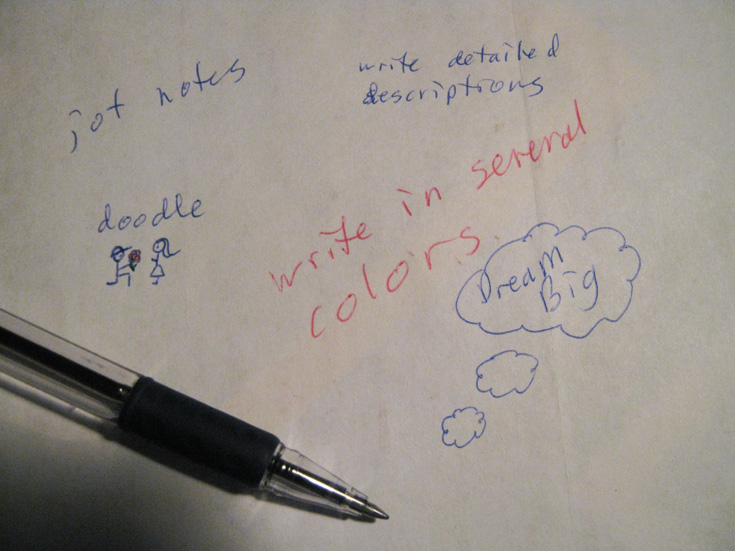
Writing A "Husband List" | marissabaker.wordpress.comGrab a piece of paper and just start writing the first phrases and descriptions that pop into your head when you think about what kind of guy you would like to marry. Think about guys (real and fictional) you’ve had crushes on and list the things about them you found attractive. Think about guys you’ve dated and list things that you liked about them, and the opposite of the reason you broke up with him (i.e., if you’re boyfriend didn’t respect your boundaries, you might add “respects my boundaries”). Think about happily married couples you know and list things you want to see in your own marriage. Write down literally anything that you think of, no matter how unrealistic it sounds.

Now look back over your list. Circle anything that 1: doesn’t have to do with physical appearance and 2: you consider absolutely essential in a relationship. You’re looking for things that have to do with who he is as a person, like “loves God,” “good communicator,” and “we worship together.”

Next, look at the things you haven’t circled yet. Cross-out anything that you know is 1: not essential for you in a relationship (I crossed out “rich singing voice”), 2: only related to physical appearance (such as “taller than me), and/or 3: completely unrealistic. While you’re doing this, you might find that you can replace an unrealistic goal with a related realistic goal. For example, instead of “rich as Mr. Darcy” you might list, “able to provide financially for a family.” I would encourage you to pray about the things you want but know are unrealistic. Sometimes, we use unrealistic expectations to push other people away and shield ourselves from being vulnerable in relationships.

Now you have a sheet of paper with things crossed out, things circled, and a few things that are neither. For now, set this list aside.

Red, Yellow, Green

There’s a book called True Love Dates by Christian relationship counselor Debra Fileta that recommends writing three separate lists, and that’s where we’re going to start. Before you spend any more time writing down the things you want in a relationship, we’re going to write a list of things that are never okay.

“Stop” and “Slow”

The first thing you’re going to write is a Red list of traits that always mean “stop” when you notice them in a relationship. If a guy has any characteristic from your Red list, you do not pursue a relationship with him (no matter how many good traits he has). My Red list includes things like “does not believe in God/won’t respect my belief” and “refusal to communicate,” along with others like the examples Debra Fileta gives in her book:

  • Abusiveness (physical, verbal, emotional, or sexual)
  • Dangerous and uncontrolled temper or displays of aggression
  • Pattern of dishonesty or betrayal

The next step is writing a Yellow list. This is for things you’re not sure about and would need serious consideration and discussion before moving forward in a relationship. They give you pause, but don’t mean the relationship can’t work. A few on my list are “previously married” and “trouble handling money.” Here are more examples from True Love Dates:

  • Family of origin issues and problems
  • Unhealthy habits or behaviors
  • Lacks motivation, goals, and dreams

“Go” For It!
green light
credit: Raymond Brown

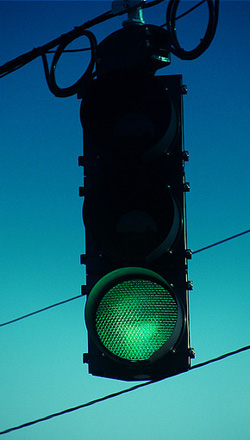
Now for the fun part — the Green list or “husband list” of things you want to have in your relationship. If Red means stop and Yellow means slow down and reevaluate, Green means you can feel good about going forward with a relationship. Here’s where we get to go back to the free writing exercise.

I sorted my list into four categories: “Personal Values,” “Family and Relationships,” “Makes Me Feel …” and “Personality.” The circled phrases from my free writing exercise ended up in the first three categories, and many of the phrases that were neither circled nor crossed out ended up in one of the last two categories (you might even list a couple of the ones you crossed-out if they are still important to you). I saw the “Personality” category as representing things I want, but some of which could be negotiable. Here’s a few specific items from each list, so you can see what I’m talking about without me sharing a copy of the whole thing:

  • Personal Values
    • follows God and Christ first
    • uses his gifts to serve in some way
    • demonstrates integrity, commitment, faithfulness
  • Family and Relationships
    • respects and helps set boundaries
    • wants children
    • hospitable; welcomes guests and visitors to our home
  • Makes Me Feel …
    • protected and cherished
    • listened to and understood
    • like I’m valuable and contributing to his life
  • Personality
    • slow to anger
    • good communicator
    • enjoys discussing ideas

Looking At Yourself

Now that you have your list, turn it back on yourself and ask if you have those qualities. Would the guy you’ve written about want to date, or marry, you? Some of this should match pretty easily — you wouldn’t list a guy who wants 6 kids if you didn’t want 6 kids.

Others might be harder. If you listed a man who spends time with God every day, will he want to marry you if you regularly forget to study? Or if you ask for a guy who will never cheat on you, are you prepared to be faithful to him? If you want an Ephesians 5 husband, will you be an Ephesians 5 wife?

I hope this post was helpful to you — writing the list that inspired it has certainly helped me. While we know that God knows exactly what we need without us telling Him, I think it is helpful for us to have something more to ask Him than “please give me a good husband.” You’re putting effort into pursuing a relationship by figuring out what it is you’re looking for. God bless you, my dear readers.

Delight yourself also in the Lord, and He shall give you the desires of your heart. (Ps. 37:4)


The Power of Fiction

The Power of Fiction | marissabaker.wordpress.com
bg image: “mountain of books” by Ginny, CC BY-SA

Fiction affects society, for good or ill, often as much or more than real-life situations. If Charles Dickens had lectured about the plight of real-life orphans in London, would it have had the same effect as writing Oliver Twist? Or to use an example I see as very negative, would as many people have been obsessed with an essay about BDSM as they were with 50 Shades of Gray?

Fiction is powerful. We talked about this a couple weeks ago, but all in a positive light since I was arguing that fiction has value. It can also have a more negative influence as well, which is why I think both writes and readers have a responsibility to self-censor. It’s not up to someone to tell writers not to write a certain kind of book or discuss a specific topic, or to tell readers what they can and cannot read. But it is a good idea (particularly if you’re a Christian) to think carefully about the reading and writing choices we make.

Writer Responsibility

On March 31, 1750, Samuel Johnson published what has become one of the most famous statements in regards to the potential of fiction. While I don’t agree with his arguments against imaginative invention of the fantastic (I write fantasy, after all), this passage intrigues me:

if the power of example is so great as to take possession of the memory by a kind of violence, and produce effects almost without the intervention of the will, care ought to be taken that, when the choice is unrestrained, the best examples only should be exhibited; and that which is likely to operate so strongly should not be mischievous or uncertain in its effects.”

I think what Johnson is saying is that authors have a responsibility not to use the power they weld to influence their readers negatively. Responsible authors exercise a form of self-censorship, which doesn’t necessarily mean they shouldn’t talk about complex or even “bad” ideas. But fiction can be enormously influential, and authors should be conscious of the fact that what they are writing has the potential to fill their readers’ minds.

Writers of fiction set out to create a story that draws readers in, and once this happens the readers are under the writer’s influence. Johnson thought that, “the best examples only should be exhibited” so that there is nothing “mischievous or uncertain” in fiction’s effect. I don’t think we need to go that far, but we should be mindful of the power we have to influence readers.

Reader Responsibility

As readers, we should also be mindful of what we expose our minds to, remembering that we’re giving our reading material the opportunity to change or influence our thinking. I came across a great article titled “Self Censorship Better Than Book Banning” a few weeks ago about teaching your children how to make good decisions about their reading material instead of trusting the schools or government to ban “inappropriate” books (which will be defined differently for each individual).

This is pretty much what my mother did, though I wasn’t required to talk about every book with her after reading it (I usually did anyway, so she didn’t really need a rule). The only time I remember my mother taking away a book was when I broke down sobbing one day and confessed that I was having trouble dealing with the main character losing her father to cancer. There were a few other books that she strongly recommended I give up, and I usually (eventually) agreed with her. Harry Potter was “banned” in our house when it first came out, and that’s the only book I can remember being specifically told not to read.

It seems to have worked for the most part. There are books I wish I hadn’t read (and a few I’m sure that I really I shouldn’t have been reading), but for the most part I’m glad I had that freedom. It helped teach me to think for myself, which, to reference John Keating from Dead Poets Society, is the goal of good education.

Why Write Fiction?

“Why would you write fiction? Isn’t it just a bunch of lies?”

It’s been a while since someone asked me that question, but I can re-play the scene clearly. They look smug, like they’d just discovered a great argument against writing and reading fiction. Fiction is not true, and so therefore it is not good. Why make-up stories when there are plenty of good, wholesome things, people, and events that already exist? In fact, why tell stories at all, especially fantasy stories? They just give children unrealistic expectations of the world, and adults an excuse to ignore reality.

Obviously, since I’m still writing and reading fiction, I don’t buy into these arguments. But why?

Escape

Probably the simplest reason for writing fiction is to escape. Much of fiction — both good and bad — falls into this category. Sometimes life isn’t any fun, and reading and writing fiction gives us a way to escape for a while without actually leaving our location or situation. This can be as simple as diving into Middle Earth while waiting for the clothes to finish drying at the laundromat. Would you rather stare at your t-shirts spin, or canoe down the Rauros with the Fellowship of the Ring?

Connect

In a New York Times article, ‘Why Write Novels at All?’ Garth Risk Halberg talks about the idea that “the deepest purpose of reading and writing fiction is to sustain a sense of connectedness, to resist existential loneliness.” Now we’re getting closer to the reason I write fiction. Escape is all well and good, but what are you escaping to? It’s not enough to just take off for Narnia — we have to find Aslan there or the journey means nothing.

We write to share who we are and what we think, and we read to connect with something outside us. Usually this is a new world or characters, but if we’re very lucky we’ll also sense the author as they bleed through the pages of their work. This connectedness is one of the chief arguments for reading and writing, since it carries over into “real” life: people who read fiction are more emphatic than non-readers.

Think

Let’s say you have something you want to say about a controversial topic. We’ll use abortion as an example, and say you’re on the pro-life side. If you write an article telling people that abortion is bad, only the people who already agree with you are going to like it. If you tell a true story about a baby who survived an abortion or a mother whose life was ruined by an abortion, it will affect more people but you’ll still lose a large number of your readers.

Why Read Fiction?  | marissabaker.wordpress.com
Photo credit: Easa Shamih, CC BY, via Flickr

Now suppose you write a story where you climb inside the head of a character and show what they are struggling with as she decides whether or not to have an abortion. You don’t just put your words in the character’s mouth – you imagine yourself in her shoes, and realize that she has real reasons to consider both options. You sympathize with her, and whatever your readers believe they sympathize with her too. Your ideas will filter through in decisions you make about how see feels when she sees the baby on an ultrasound, or whether or not she keeps the child at the end of the story. You can let readers know what you think, but you don’t shove your ideas down their throat. You give them a chance to feel with you, and let them think for themselves.

Obviously, I think of the writer of novels and stories and plays as a moral agent. In my view, a fiction writer whose adherence is to literature is, necessarily, someone who thinks about moral problems: about what is just and unjust, what is better or worse, what is repulsive and admirable, what is lamentable and what inspires joy and approbation. This doesn’t entail moralizing in any direct or crude sense.

Serious fiction writers think about moral problems practically. They tell stories. They narrate. They evoke our common humanity in narratives with which we can identify, even though the lives may be remote from our own. They stimulate our imagination. The stories they tell enlarge and complicate—and, therefore, improve—our sympathies. They educate our capacity for moral judgment. ” – Susan Sontag, from a speech at the Los Angeles Public Library

This sort of literature may or may not be an escape for your readers, but should definitely let them connect with something or someone. It should make them think. It should give them a chance to “meet” types of people thy might never come in contact with in their real lives, to question ideas that they take for granted, to consider what is and is not moral. Fiction lets us talk about things that are uncomfortable to discuss in real life, or give a new perspective on issue too charged in reality to have a dialogue about. It lets us ask “what if?” and run with the potential answers before actually changing the world. Yet.

Very Inspiring Blogger Award

very-inspiring-blogger-award1I was nominated by PearlGirl of INFJ Ramblings. Thank you so much! I wish I could nominate you back — you’re one of the bloggers whose posts I actually read on a regular basis 🙂 I’m so glad we connected through our blogging about INFJ things.

The Rules

  • Post the award on your blog
  • Thank your nominator because they’re awesome
  • List 7 facts about yourself
  • Nominate 15 other blogs for their awesomeness
  • Post the rules so people know them

Seven Facts About Me:

  1. I can’t decide whether my favorite color is rose-pink or grass-green. Or possibly plum-purple.
  2. Even though my “to-read” list is humongous, there are a few books I take the time to re-read every year or so. Mara: Daughter of the Nile by Eloise Jarvis McGraw is at the top of that list. Seriously, drop everything and go read that book. There’s danger, love, intrigue, sacrifice and the only romantic attempted murder I’ve ever seen in fiction.
  3. Much as I love Jane Austen, my favorite classic is actually Jane Eyre by Charlotte Bronte.
  4. I’d be happy if I could wear Ren Faire Costumes all the time.
  5. I love kayaking. It’s the only “sport” type of activity that I truly enjoy, even though it has been life-threatening twice (caught in bad weather on Lake George and knocked up-side-down in shallow, fast-moving water on the Mohican River).
  6. I’m considered a “Garden Specialist” on eHow, and publish quite a few articles on that site.
  7. Cheesecake is my favorite dessert, and since I started coming up with my own cheesecake recipes I’ve become something of a cheesecake snob.

My Nominees:

Yes, you’re supposed to nominate 15 other bloggers and I’ve only nominated 7. I’ll try and make up for that by telling you why I like each one.

2HelpfulGuys — I only recently started following them, but I like what I’ve read so far.

Baptism For Life — this is my dad’s blog, and while I know he won’t take the time to accept the nomination you really should check out his posts if you’re looking for inspiring bloggers.

Idle Wanderings — I always enjoy Charity’s posts and if you’re watching Grimm, I highly recommend her recent articles.

Introvert, Dear — a blog and Facebook group that is great to follow if you’re an introvert and/or HSP

Science and Faith — he’s a new blogger, and the first two posts are great. Looking forward to more!

See, there’s this thing called biology… — occasionally I disagree with this blogger. Usually, though, I’m bouncing up and down in my seat pointing at the screen and saying “That’s exactly what I think!”

SmileSupport313 — her posts are always encouraging. And she’s one of my very best friends, so of course her blog is worth reading.


The INFJ Writer

I’m sure I read somewhere that David Keirsey originally called the INFJ personality type “The Writer” instead of “The Counselor,” but I can’t find the article now. Nevertheless, it does seem that quite a few INFJs are attracted to writing. Even if they aren’t working as writers or typing away at a novel, they probably keep a journal/diary and are often more comfortable with written communication than they are with speaking. I’m a fairly typical example of INFJs in this regard — I write a blog (obviously), keep a journal, work as a writer, prefer writing e-mails to taking on the phone, and write fiction.

Speaking of writing fiction …

Winner-2014-Web-BannerI won NaNoWriMo! I’m particularly pleased with myself for conquering the 50,000 words a day early in spite of having pneumonia in November. Anyway, back to INFJ writers.

Imaginative Fiction

There’s an INFJ profile written by Dr. A.J. Drenth (which no longer appears on his website, but you can read it here) that has this to say about INFJs:

Although INFJs are commonly drawn to music, visual arts, design, or architecture, writing may well be this type’s signature creative talent. Adept at channeling their right-brain creativity into a fluid and engaging left-brain storyline, INFJs are unmatched in their feel for and creative use of the written word.

from INFJ Doodles

This creative aspect of our writing  talent seems to be tied to an INFJ’s primary function — Introverted Intuition (Ni). Intuitive types prefer possibility to actuality, future to the present, intuition to fact, and improvement over the status quo. When intuition is introverted, as for INFJs, the focus is mostly on an internal world where our minds tinker with “ideas, perspectives, theories, visions, stories, symbols, and metaphors” (Dr. A.J. Drenth, Introverted Intuition).

Even INFJs who don’t write typically have an affinity for stories and a “rich inner life.” We tend to live in a world of possibilities, and I find that one way to keep my fantasy life anchored in reality is to turn those ideas into stories and write them down. It’s weakness/temptation for INFJs to never move their ideas from possibility to reality. With creative writing, I can set my imagination loose and tell myself there’s a practical application for it as well.

INFJs as Writers

It’s hard to type people when you don’t know them, but there are some famous writers that we can guess were INFJs. Keirsey lists Emily Bronte and Emily Dickenson as “Counselor” types. Another list of famous INFJs adds writers like Chaucer, Dante Alighieri, Fyodor Dostoevsky, and Nathaniel Hawthorne. A forum discussion suggests Madeleine L’Engle, Antoine de Saint-Exupery, Lois Lowry, Ursla LeGuin, Franz Kafka, and several others could be added to the list.

my latest novel, laid-out in Post-It notes above my bed
my latest novel, laid-out in Post-It notes above my bed, with a different color for each point-of-view character

Now, the fact that many INFJs gravitate towards writing doesn’t mean that it’s always easy for us. I’m not sure how many stories I started and abandoned before finally finishing my first novel in 2011. It was for NaNoWriMo, and I needed that deadline to keep myself writing. It’s so easy to build the story in my head, and then lose interest in writing it down once I think I know how it ends.

Though knowing the end makes me lose interest in the story, I also need some kind of outline to keep me on track. I’ve discovered sticky notes on the wall is my new favorite way to plot-out novels. They can be removed or rearranged as needed, and you don’t need to have them all there to start writing. For my NaNo novel this year, I began with only half the plot laid-out, and added more scenes as I wrote and the direction of the story became clear.

Further Reading

Why INFJs Have Trouble Writing by Lauren Sapala

The INFJ Writing Personality: Eloquent Vision by Andrea J. Wenger