There’s been a big push culturally to erode traditional gender roles; to prove that men and women are equal and equally capable of filling roles that were once assigned to just one sex. For example: that women can pursue successful business careers and men can care for children. Or that women can display strong logic and men can be emotional and nurturing.
But somehow this has backfired on us and cultural expectations of gender are just getting more rigid. That statement probably raised a few eyebrows. We’ve come a long way, many will argue. Women are now accepted in traditionally masculine professions. They don’t have to just stay at home and raise children any more. We have freedom, equality! Besides, gender is just a cultural construct and we can redefine it however we want so those roles aren’t so confining.
That’s not what we’ve done though. Take, for example, the problem of people pushing young children to identify as transgendered (which the American College of Pediatricians defines as “child abuse”). If a child displays traits outside the gender associated with their biological sex, they’re encouraged to get their sex changed. Instead of making it acceptable for a little girl to embrace femininity and enjoy “boy things” like superheroes and tractors, she’s told she’s not really a girl. She’s a boy. In a fit of mass cultural insanity, we’re making social constructions of gender more rigid while trying to make a person’s biological sex something that’s flexible.
Stranger Things’ New “Mom”
I started thinking about this topic (at least in the context of this blog post) when I came across this image while scrolling through Pinterest: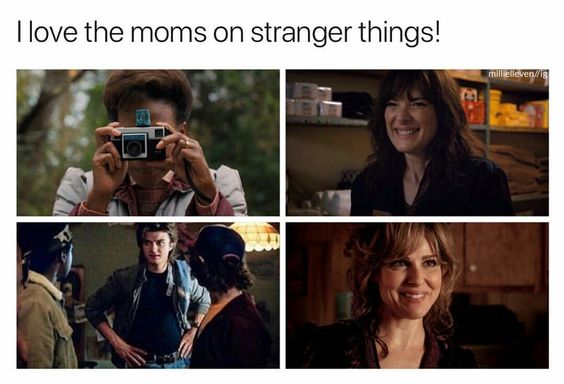 Like many Stranger Things fans, Season 2 turned Steve Harrington into one of my favorite characters. For those of you not watching the show, Steve was a stereotypical character in the first season but in Season 2 he got some spectacular character development. He grew from a standard jock into a hero who has a great relationship with the younger main characters. And for some reason that gets him labeled as their “mom” by the Internet.
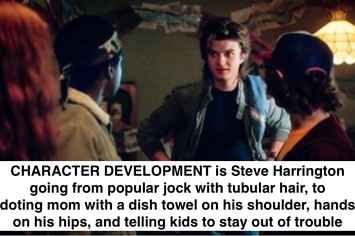

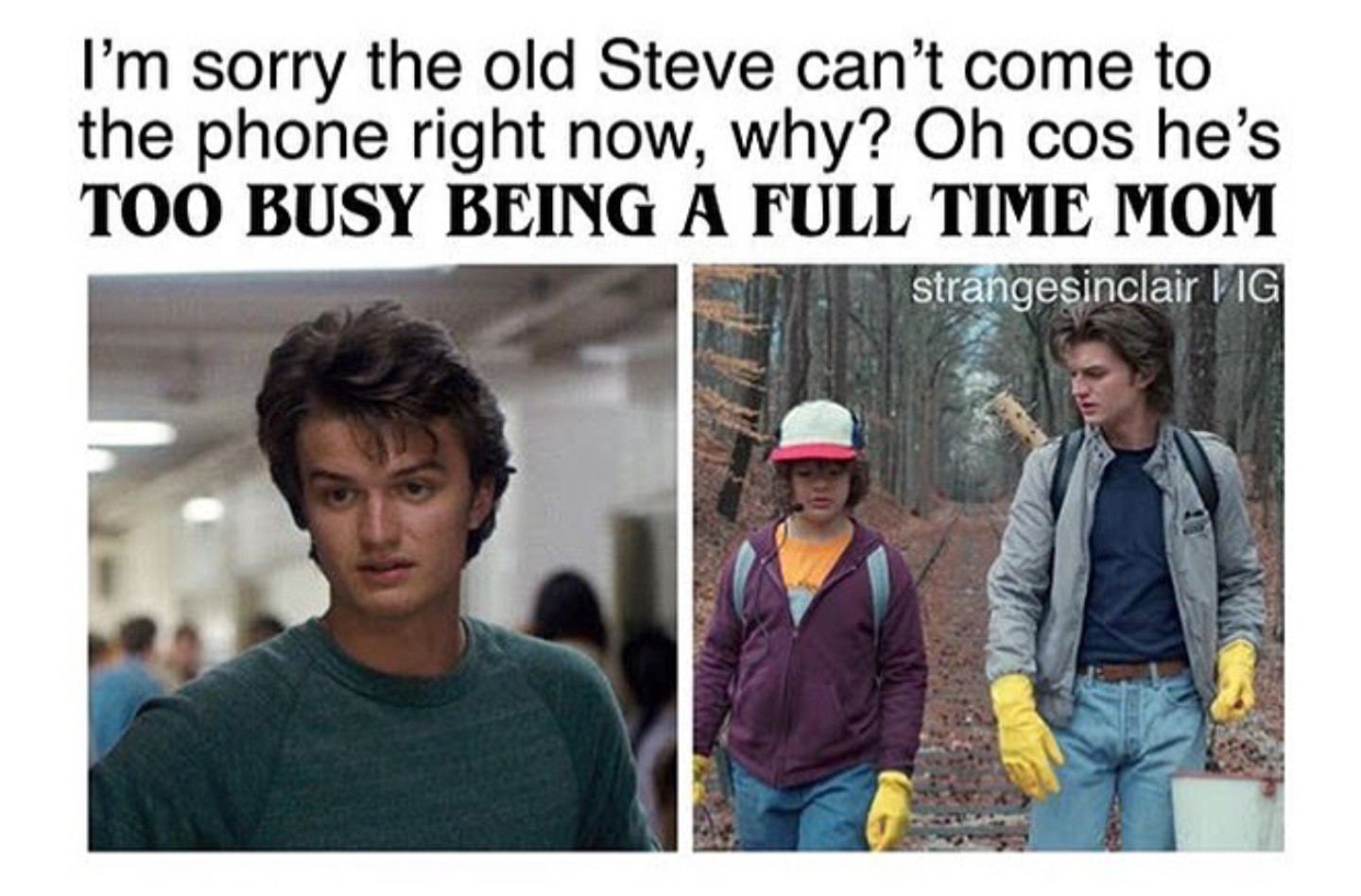
Now, I doubt any of the people describing Steve as the “mom” of the group intended to make any sort of sociopolitical commentary on modern conceptions of gender. But why is it that when a male character who’s previously shown stereotypically “masculine” traits becomes responsible, protective, nurturing, and takes care of children he’s described using a feminine title? Why not “dad” or “older brother”?
The Importance of Dad
To be fair, there are people talking about how great the new Steve is who describe him as a dad-figure. They’re just much more rare than the ones calling him the mom. But why? Is it supposed to be funny? Or is there some reason people don’t want to think about there being such a thing as a masculine parenting role?
Okay, maybe it’s not that much of a conspiracy. But there are too many wonderful, involved dads out there who are asked if they’re “babysitting” their own kids because people don’t see them as a real parent. And on the other side of this problem, there are too many kids growing up without dads becasue society decided some time back that we only need to hold mothers accountable for their parenting role (with the occasional exception of mailing a child support check). And that’s not okay.
the majority of studies affirm that an involved father can play a crucial role particularly in the cognitive, behavioral and general health and well-being areas of a child’s life; that having a positive male role model helps an adolescent boy develop positive gender-role characteristics; that adolescent girls are more likely to form positive opinions of men and are better able to relate to them when fathered by an involved father; that it is generally accepted, under most circumstances, a father’s presence and involvement can be as crucial to a child’s healthy development as is the mother’s (from “The Importance of Fathers” by Ditta M. Oliker Ph.D.)
Fathers (or male mentors like Hopper, Bob, and Steve in Stranger Things Season 2) play a huge role in children’s development. And the four boys in Stranger Things could really use some older men to look up to. Will’s dad is gone (and considering his character it’d be worse if he wasn’t), Dustin’s father never appears (nor is mentioned, so far as I can remember), and Mike’s dad is so disengaged he might as well not be around. Lucas is the only one who appears to have an involved dad, though we don’t see him much in the show.
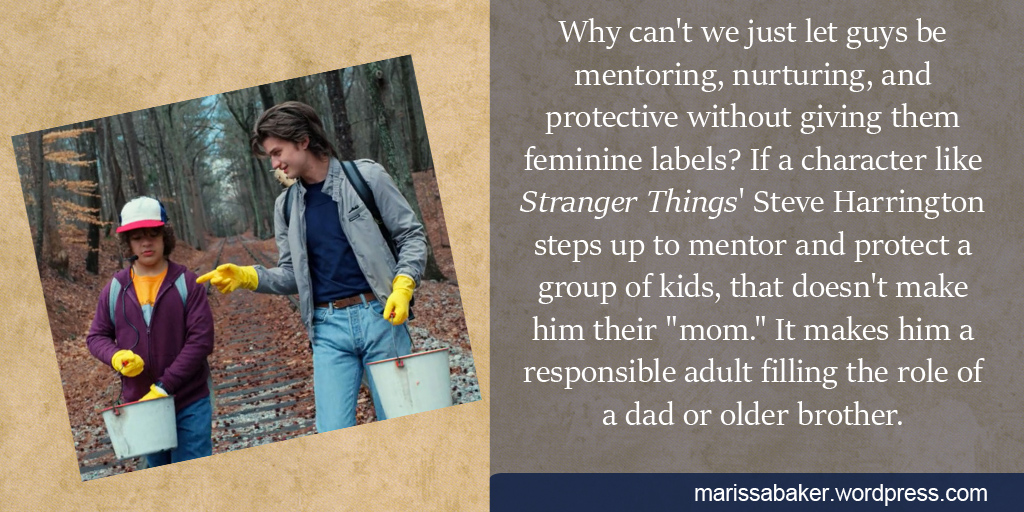
When Steve responds to Dustin’s request for help, he ends up taking on the role of an older brother/mentor figure. He gives Dustin advice on interacting with girls and styling his hair. He accepts responsibility to keep all the kids safe from monsters. He tries to keep the kids out of trouble but when they drag him into another perilous situation, he makes sure he’s the one out in front accepting the most risk. That’s what responsible adults do, regardless of gender. So let him and men like this in real life fill their mentoring, nurturing, protective role as men. Don’t say that it’s exclusively a “mom” role.


Leave a Reply