Ficitonal MBTI – The Librarians

The Librarians is one of my favorite TV shows. What could be better than a team of bookworms saving the world from runaway magic? Sure it’s campy and can’t be taken too seriously, but isn’t that part of the appeal?

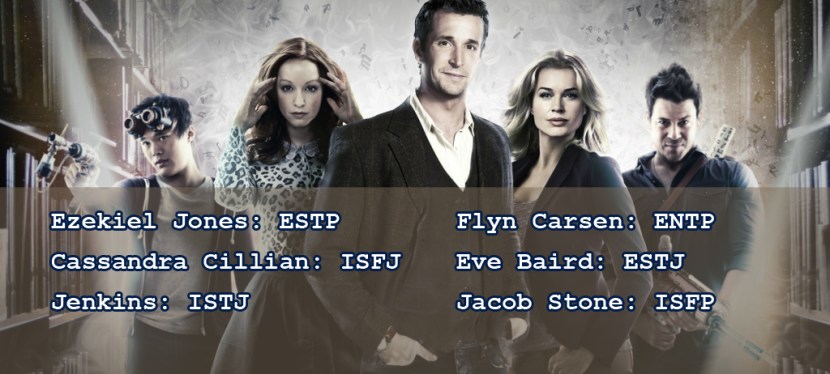
Typing fictional characters is one of my favorite things to do in blog posts. I’d started writing this one for last week, but when I realized how many of the Librarians characters are Sensing types I thought it’d be a great follow-up to my “Myths About Sensing Types” post. One of the more pervasive myths about Sensors is that they’re neither intelligent nor imaginative. Since all the main characters in this show except Flynn are Sensors, The Librarians provides a perfect example to the contrary.

Please note: I type using cognitive functions, which are the basis of Myers-Briggs theory. If you’re not familiar with this concept or want a refresher, check out this articles: The Simplest Guide To Myers-Briggs Functions Ever

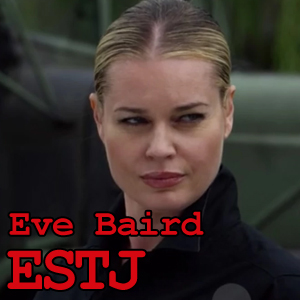
Eve Baird: ESTJ

Ficitonal MBTI – The Librarians | marissabaker.wordpress.com

Eve is the easiest character to type, partly because she’s such a stereotypical example of the type nicknamed “Supervisor” or “Guardian.” ESTJs are known for their blunt demeanor, no-nonsense attitudes, and ability to keep things moving forward. They also care about keeping the world running as it should be, a trait Eve devotes to keeping the Library safe and magical artifacts out of the wrong hands.

ESTJs lead with a judging function called Extroverted Thinking/Effectiveness. That means Eve’s preferred mental process involves measuring and managing impersonal criteria when making decisions. There are examples of this in literally every episode. Read more

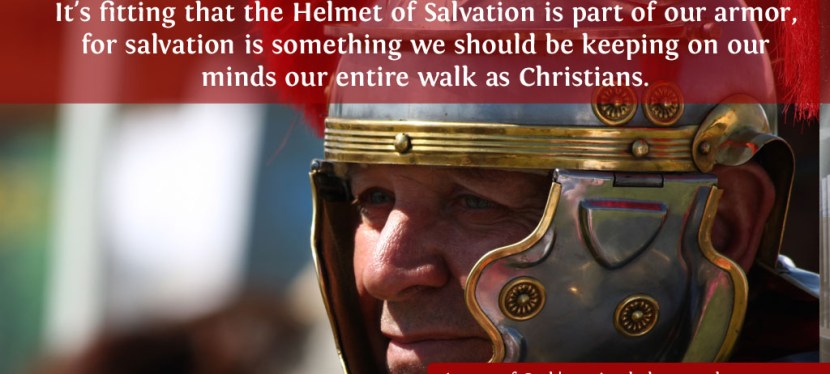
Helmet of Salvation

No set of armor would be complete without something to protect your head. In our study of Ephesians 6, we’ve already taken up the Girdle of Truth, Breastplate of Righteousness, Footwear of the Gospel, and the Shield of Faith. Now Paul adds,

and receive the helmet of salvation (Eph. 6:17, LEB)

Just a short phrase in this list, but it’s an incredibly powerful piece of armor. As every Christian knows, salvation is one of the core tenants of our faith. We wouldn’t be here without Jesus dying to save us and continuing to work on bringing His followers into the family of God. But usually we think of salvation as something we’re given, like grace, rather than something that we keep carrying around as part of our armor. So let’s take a look at the idea of salvation in that context.

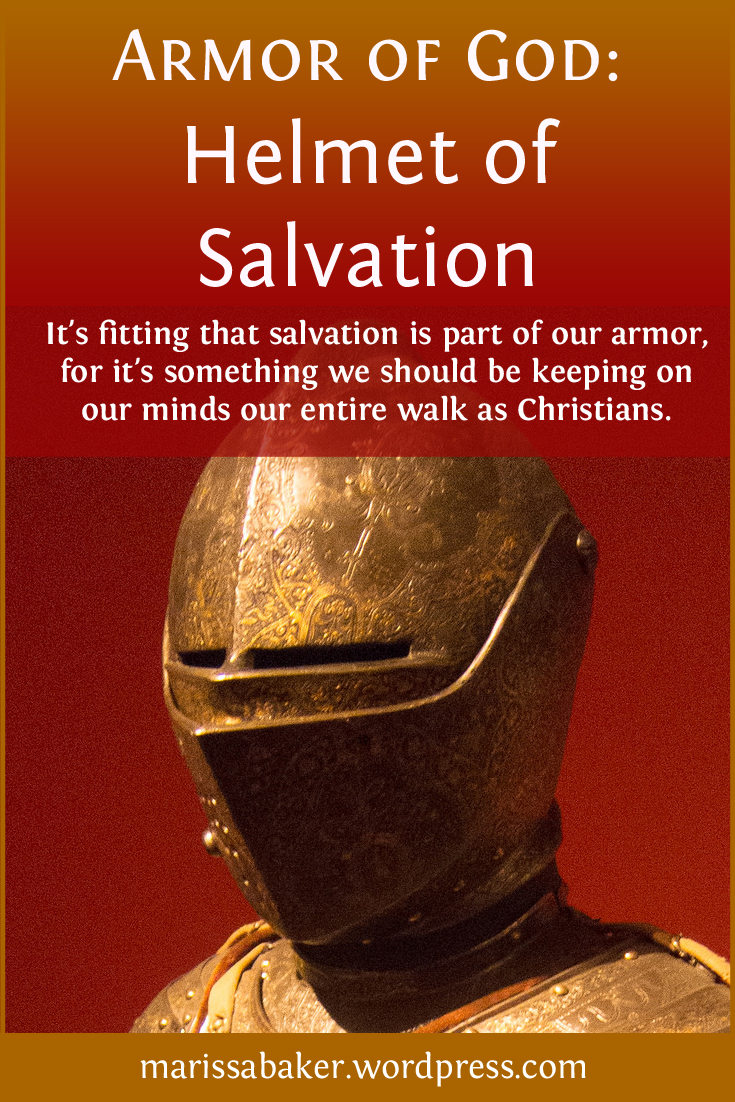
Helmet of Salvation | marissabaker.wordpress.com
Photo credit: Thomas Quine via Flickr

A Helmet On God’s Head

One of the most interesting things about the Helmet of Salvation is that it’s one of the armor pieces that God Himself wears. We referenced the verse about God’s helmet a few weeks ago when talking about the Breastplate of Righteousness. It reads,

He put on righteousness as a breastplate, and a helmet of salvation on his head. He put on garments of vengeance for clothing, and was clad with zeal as a mantle. (Is. 59:17, WEB)

When we’re told, “receive the helmet of salvation,” we’re being given a piece of armor identical to one that God has worn on His own head. “Salvation belongs to Yahweh,” which gives Him the absolute right to wear it as a helmet and to share it with whomever He wills (Ps. 5:8, WEB). Read more

Challenging Myths About Sensing Types and Inviting A More Balanced Dialogue In The Myers-Briggs® Community

One of the most disturbing trends I’ve noticed in the community of Myers-Briggs® enthusiasts is a bias against Sensing types. You’ll see it in comments from Intuitives about how they don’t want any Sensing friends because they couldn’t possibly understand us. It’s someone saying a fictional character is too dumb and shallow to be an INFJ so they have to be ISFJ (or insisting another character has to be INFJ because they’re relatable and imaginative). It’s assuming all SP types are dumb jocks who’d run off a cliff just for a thrill and all SJ types are conservative traditionalists who’d rather die than see the status quo change.

There was a similar issue when introverts finally started realizing they weren’t broken extroverts. In some cases, the introvert hype turned into an idea that introverts are better than extroverts, which is simply not true. It resulted in stereotypes being used to tear-down extroverts and build-up introverts. We’re still undoing that damage, but I think we’ve finally started to balance out and realize that introverts and extroverts are equally valuable.

Unfortunately, I’m not seeing a similar shift toward balance in how Intuitives view Sensing types, at least no everywhere. There are some wonderful groups out there (like Personality Hacker’s “Intuitive Awakening”) that insist on no Sensor-bashing while exploring what it means to be an Intuitive. But outside those groups it still happens. And even if we’re not staying Intuitives are better than Sensors, I wonder if the fact that there’s so much more material out there for Intuitives than for Sensors is still sending the message “you don’t matter as much as us.”

Sensing/Intuition Numbers

70% of the population are Sensing types, but when you Google individual personality types only 19% of the search results relate to Sensors (that’s if my math’s right — numbers aren’t one of my strengths). I searched each type and compared the number of results that came back. Here’s the full list:

  • INFJ – 16,100,000
  • INFP – 15,300,000
  • INTJ – 13,700,000
  • INTP – 8,090,000
  • ENFP – 5,680,000
  • ENTP – 3,510,000
  • ISTP – 3,100,000
  • ENFJ – 2,270,000
  • ISFJ – 2,230,000
  • ISTJ – 2,080,000
  • ESTP – 2,040,000
  • ENTJ – 2,020,000
  • ISFP – 1,900,000
  • ESTJ – 1,890,000
  • ESFP –  1,280,000
  • ESFJ – 1,210,000

No wonder so many people mistype themselves as an INxx — we’re the types flooding the internet with articles about what we’re like and inviting people to identify with us. That’s great for people with those types, but it’s actually one of the things contributing to the anti-sensor bias.

One of the reasons that so many people online identify as INFJs is because there is just so much more, and so much better, and more in-depth content on INFJs. If every second article you read is about INFJs, it’s only natural to come to identify more with INFJs, simply because we relate more to things that we understand more.” — Erik Thor, “Have You Ever Thought That You’re Actually Just A Smart Sensor?

If you Google “INFJ” you get back about 16,100,000 results. Search “ISTJ” and you get about 2,080,000 results. That’s almost 8 times as many results for the world’s rarest type as for the one that’s most common. We can argue that it’s because INFJs need more support online since they don’t get as much validation in-person from meeting people like them. But don’t Sensing types deserve the resources to learn about how their minds work as well? and the connection of seeing their types positively portrayed and defended by people writing about personality types? Read more

Shield Of Faith

Our God has an Adversary. And when we choose to walk in a relationship with God, Satan aims his attacks at us as well. Jesus’ work on the cross ensures Satan’s defeat, but for now the Adversary is still active in the world and fighting against God’s people.

Knowing that He has called us into a battle, God makes sure that we’re well equipped to stand against spiritual wickedness. He offers us His own strength and clothes us with appropriate armor. The first three pieces of this armor are the Girdle of Truth, the Breastplate of Righteousness, and the Footwear of the Gospel. They’re all vital, but there’s something particularly important about this fourth piece.

in everything taking up the shield of faith, with which you are able to quench all the flaming arrows of the evil one (Eph. 6:16, LEB)

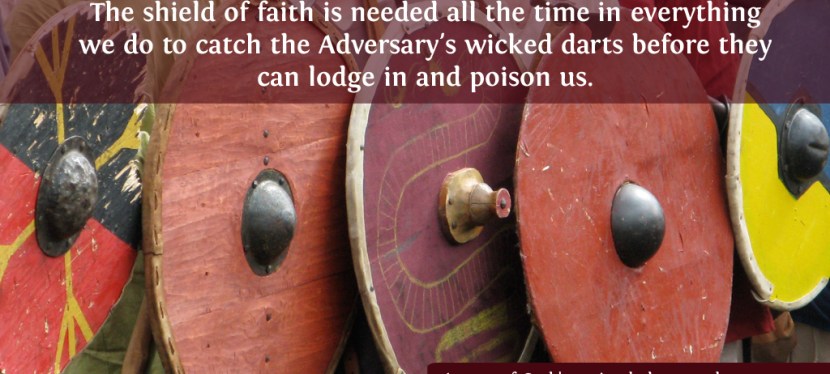
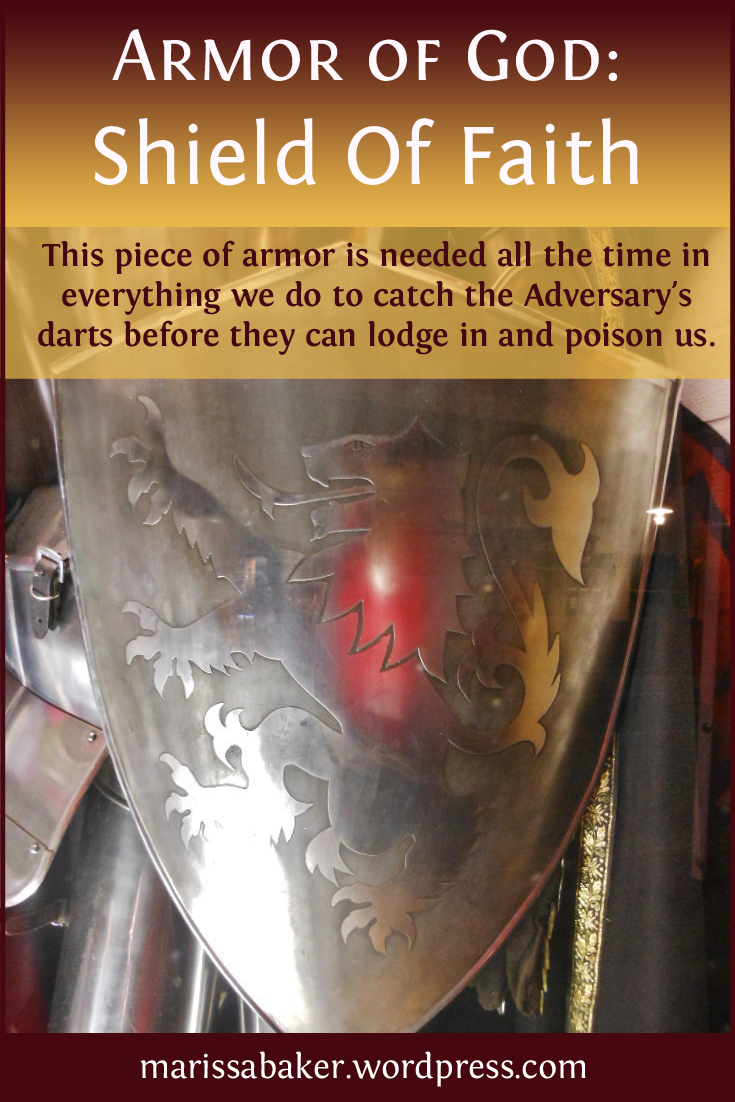
The King James says, “Above all, taking up the shield of faith.” Whichever translation you use, the emphasis is clear. The shield of faith is needed all the time in everything we do and we must make using it a high priority.

Shield Of Faith | marissabaker.wordpress.com
Photo credit: Michael Coghlan via Flickr

The One Who Shields Us

This is the only reference to shields in the New Testament. They’re mentioned quite often in the Old, though. Many of these references speak of war and soldiers, for shield and spear were standard weapons (1 Chr. 12:8; 2 Chr. 14:8; 25:5). But there are also many versus like this one:

God is my rock in whom I take refuge; my shield, and the horn of my salvation, my high tower, and my refuge. My savior, you save me from violence. I call on Yahweh, who is worthy to be praised; so shall I be saved from my enemies. (2 Sam. 22:3-4, WEB)

Comparing God to a shield shows up several times in David’s writings (Ps. 3:3, among others). God also describes Himself as Abraham’s shield (Gen. 15:1) and all Israel is told Yahweh is “the shield of your help” (Deu. 33:29, WEB). It is a symbol of protection held by a capable defender. Read more

The Importance of Living Authentically As An INFJ

As an INFJ, you’re good at picking up on other people’s emotions. And when you pick up on what other people feel you also start to get a good feel for their expectations. For some of us, that seems like a good thing. We know what’s expected of us in different social settings and from different friend groups. We understand who we need to be so we can fit in.

But is that really a good thing for us? Does being able to fit in help an INFJ?

We call it the chameleon effect when an INFJ leverages their unique combination of mental processes to blend in with different groups of people. Chameleon INFJs might even appear as if they’re a different personality type in different situations because they’re automatically shifting toward being extroverted around the extroverts, logical around the thinkers, and interested in the real world around the sensors.

Blending in feels like an advantage at times. That’s why we do it. Fitting in feels safe. It seems like a way to protect ourselves from negative attention. But in reality, using our gifts in this way doesn’t just protect us from bad things. It also blocks us from really being seen and appreciated as ourselves. Read more

Footwear Of The Gospel

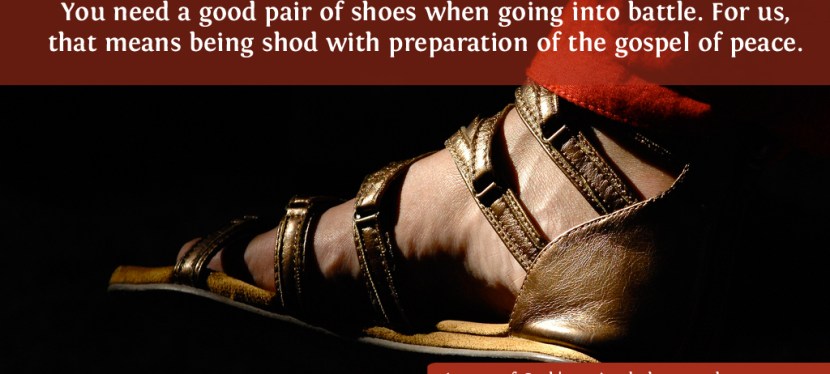
If you’re going into battle, you’re going to need a good pair of shoes. That’s probably not something most of us think about, but what soldiers wear on their feet helps determine how far they can travel in a day and what type of terrain they can fight on. In fact, a good argument can be made that one of the Roman army’s key strengths was improved footwear. Perhaps that’s part of what Paul was thinking about when he wrote this phrase to describe the third piece in the armor of God:

and binding shoes under your feet with the preparation of the good news of peace (Eph. 6:15, LEB)

This piece of armor is related to preparation, the gospel, and peace. It’s a curious combination, especially considering the girdle of truth and breastplate of righteousness have pretty straightforward descriptions. I wasn’t even quite sure what to title this post. Shoes of peace? Prepared footwear? Sandals for preparing good news of peace? I settled on the title you see up there since similar scriptures in Isaiah and Nahum place the focus on carrying good news. Let’s take a look at those.

Footwear Of The Gospel | marissabaker.wordpress.com
Photo credit: DVIDSHUB, CC BY via Flickr

Carrying God’s Words

How beautiful on the mountains are the feet of him who brings good news, who publishes peace, who brings good news, who proclaims salvation, who says to Zion, “Your God reigns!” (Is. 52:7, WEB)

Nahum borrows this phrase in 1:15 and Paul uses it to support his teaching that “faith comes by hearing and hearing by the word of God” (Rom. 10:17, WEB). People must call on the name of the Lord to be saved, but before that they must believe on him and to do that they need to hear about Him. For that to happen, there must be a preacher sent to carry the good news of peace (Rom. 10:13-15). Read more