Shutting people out of your life after they’ve hurt you or someone you love isn’t specific to INFJs, but it happens often enough that we’ve given it a name: The INFJ Door Slam. I like the definition given in an article by Jenn Granneman titled “How INFJs Deal with Conflict: 10 Confessions” (which is no longer available online).
“It means you’ve hurt me so much, I’m no longer investing any of my (limited) supply of energy in you. It means I’ve come to resent you. If you value me, don’t let it get to this point. It’s really hard to go back.”
An INFJ door slam may or may not involve actually cutting a person out of your life. Depending on the circumstances, a door slam can range from ignoring someone completely, to limiting contact to the bare minimum, to acting almost normal. In some cases the person who’s been door slammed can’t help but notice, while in others they don’t realize anything has changed (though something definitely has, at least in the INFJ’s mind). Read more →
I had two Myers-Briggs-related thoughts while watching Disney’s new live-action Cinderella last Sunday. 1) she’s a perfect example of an ISFJ, and 2) she’s a perfect example of why people mistake ISFJs for INFJs and vice versa.
Usually when we talk about fictional ISFJs we talk about men — Samwise Gamgee, John Watson, Steve Rodgers … and they are all very good examples of ISFJs in fiction. But in real life, ISFJ women outnumber ISFJ men, so it seems odd not to have a woman on the list of famous fictional ISFJs. I think Cinderella is a great example of an ISFJ, and here’s why.
Why ISFJ?
Cinderella, like other ISFJs, leads with a process called Introverted Sensing (Si). Dr. A.J. Drenth considers it one of the “least understood of the eight Myers-Briggs functions,” and David Keirsey chategorized them with the Guardian types (SJs). All Guardians use Si as their their first or second function.
They are more concerned with ensuring their beliefs and behaviors are consistent with an existing standard than they are in formulating their own set of standards. In many ways, they are dependent on what has already been already been tried and established, systems of thought that grant them a sense of consistency and security. –Dr. Drenth
When you’re browsing the internet reading about Myers-Briggs types, you’ll probably see people talking about “shadow functions.” This is a confusing concept, because people use the term “shadow” to refer to several different things related to personality types.
background photo credit: Georgie Pauwels, CC BY 2.0, via Flickr
Inferior Function
Every type in the Myers-Briggs system has what we call a “function stack,” which describes how they interact with the outer world, process information, and make judgements. There are 8 possible functions (extroverted and introverted versions of Sensing, Intuition, Feeling, and Thinking), and each types uses four functions:
Primary Function
Auxiliary Function
Tertiary Function
Inferior Function
The primary and auxiliary functions are the ones we use most comfortably, the tertiary function develops as we mature, and the inferior function is largely outside our conscious control. Much of what makes one type distinct from another has to do with how we use our particular combination of four functions. I have a blog post explaining exactly how the four-letter type relates to function stacks. I won’t take the time to repeat that information here, but here are a couple examples:
Disclaimer: some of the links in this post are affiliate links. This means that, at no additional cost to you, I will receive a commission if you click on the link and make a purchase on that website.
Often when you’re reading about functions, the “shadow” is treated as just another name for the “inferior function.” I’ve done that myself in several posts. This is also what Isabel Briggs Meyers implies in her book Gifts Differing.* She describes the shadow as “the product of the least-developed part, which a person rejects and disowns. The shadow uses relatively childish and primitive kinds of judgements and perceptions, not intentionally in the service of conscious aims” (Meyers, 1995, p.84). She doesn’t spend much time talking about the shadow, but I get the sense reading her description that she thinks it can include both the tertiary and the inferior function if they are not well developed.
The Jungian Shadow
The best resource I’ve found for explaining the role of inferior functions is the book Was That Really Me? by Naomi L. Quenk. In her introductory chapters, she addresses the concept of the inferior function and the shadow.
Many people confuse the inferior function with the concept of the shadow and use the terms interchangeably (Quenk, 1982). In Jung’s system, the shadow is an archetype, one of our innate modes of responding to important universal psychological realities. The shadow includes those things people are unable or unwilling to acknowledge about themselves, such as undesirable character traits, weaknesses, fears, and lapses in morality, or desirable qualities such as intelligence, attractiveness, and leadership skills. The shadow is a key component of a person’s personal unconscious, a layer of the psyche that is more accessible than its much larger counterpart, the collective unconscious. (Quenk, 2002, Was That Really Me?* p.49)
Quenk draws a distinction between the inferior function as a sort of “doorway” to our unconscious, and the shadow. Our shadow informs our inferior functions, but is not the inferior function itself. Together, our inferior function and the shadow make up our personal unconscious (Jung, 1970, Mysterium coniunctionis). This is made more confusing by the fact that Jung himself referred to the shadow as an “‘inferior’ personality.” He still draws a distinction between the fourth function and the shadow, though.
The individuation process is invariably started off by the patient’s becoming conscious of the shadow, a personality component usually with a negative sign. This ‘inferior’ personality is made up of everything that will not fit in with, and adapt to, the laws and regulations of conscious life. … Closer investigation shows that there is at least one function in it which ought to collaborate in orienting consciousness. Or rather, this function does collaborate, not for the benefit of conscious, purposive intentions, but in the interests of unconscious tendencies pursuing a different goal. It is this fourth, ‘inferior’ function which acts autonomously towards consciousness and cannot be harnessed to the latter’s intentions. (Jung, 1969, Psychology and Religion: West and East*
So, in Jungian psychology the shadow isn’t composed of any of our four functions. It is outside our conscious control, and shows up through our inferior function, which most of us don’t understand well or use effectively. It’s not necessarily bad but it often shows up as our “dark side,” the part of us that appears when we’re under stress. The shadow and inferior function are very much connected, but they are still different (even though we may use them interchangeably).
Four “Shadows”
One other explanation of shadow functions that you’ll occasionally see is a claim that each type uses all 8 functions. This theory describes the four functions that we just discussed as the “dominant processes” and the other 4 as the “shadow processes.” Using the same examples from before, it looks like this:
It’s basically a way to quantify our unconscious and describe how it manifests through our inferior function. However, I don’t think Jung assigned “functions” within the shadow or thought the unconscious could be understood in that way, and I haven’t read support for this theory of 8 functions from psychologists discussing the MBTI.
Probably the best way to understand the idea of a “shadow” is to say that it is the part of our personal unconscious that we have the most limited access to. We experience our shadow through our inferior function, which is a part of the unconscious that we can access more easily because it is still on our function stack. Usually it shows up in a negative way under stress, but there’s also a good side to explore as well.
But the shadow is merely somewhat inferior, primitive, unadapted, and awkward; not wholly bad. It even contains childish or primitive qualities which would in a way vitalize and embellish human existence, but — convention forbids! (Jung, 1969, Psychology and Religion: West and East)
People have been trying to use personality types to find their perfect romantic match since typology first became popular. In a previous posts about Myers-Briggs types and love languages, I talked about how falling in love — and staying in love — with someone is so much more complex than simply matching personality types. Sometimes when browsing personality type forums, I’ll come across posts from people asking how to find and attract a someone of a specific personality type (often it’s an ENTP asking for step-by-step instructions to win an INFJ, which I find hilarious). It’s like some of us think that if we can just find someone who is our ideal type-match, then we’ll be happy because we caught the mythical “compatibility” creature.
Disclaimer: some of the links in this post are affiliate links. This means that, at no additional cost to you, I will receive a commission if you click on the link and make a purchase on that website.
Now, I do have some personality types I find more attractive romantically than others, but it’s not always the types I’m “supposed” to like according to Myers-Briggs or Keirsey theories. Even Isabel Myers was happily married to a man who her theory said should have been incompatible. An understanding of love languages and a mutual willingness to understand and work with each other is one piece of the puzzle. Another is something I just learned this week from Personality Hacker.*
The “Genius System”
Personality Hacker was founded by Antonia Dodge and Joel Mark Witt, who use what they call the “Genius system” to divide Myers-Briggs types into four groups based on the last two letters in a person’s type. In terms of function stacks, this means they group types based on whether the type introverts or extroverts their Judging function. The groupings end up looking like this:
According to a new article on Personality Hacker, each of these groups look for and expressed love in a unique way. Most people would tell an INFJ to look for a relationship with an ENFP or an ENTP and avoid their opposite type, ESTP. This system stays that an ENFP and and ENTP express love in completely different ways, but ENTPs and ESTPs are actually very similar in how they love. That would explain why some INFJs find ENFPs really attractive, while others prefer ESTPs or ENTPs. It’s not so much about matching two specific types, as it is about finding types who express love in a way you relate to and understand. This Genius style take on the MBTI adds an intriguing aspect to the subject of personality types in relationships. You can check out the Personality Hacker podcast on how each type says “I Love You”* for a full explanation, but here’s my brief take on what this means:
Types of Love
“Harmony” types, who use Extroverted Feeling as their first or second function, feel loved when they are connected, safe, cared for, and accepted as their authentic selves. They express love in a similar way, by encouraging the people they love and keeping in touch with them. They are primarily concerned with harmonious relationships and emotional connection.
The types who use Introverted Feeling, “Authenticity” in the Genius System, highly value honesty in relationships. They feel loved when they know someone is being real with them and is supportive of their own authentic expressions. Authenticity types express love by giving people space to be themselves and being willing to work through problems in the relationship.
“Effectiveness” types, those who use Extroverted Thinking, value independence in relationship. They want to know that the person who loves them is supportive of their goals and can be trusted to function on their own. They are loyal and protective towards those they love, and give them room to be themselves.
Those who use Introverted Thinking, “Accuracy” types, feel loved when they are respected. They want to know that the person who is in love with them thinks they are impressive and that the relationship makes sense. In return, they are protective, non-judgmental, and strive to bring the best version of themselves to the relationship.
Matching Types
Ultimately, typology is simply a tool we can use to understand each other. When we understand ourselves and the people around us, we have a better idea of what we’re looking for in a romantic relationship. I think that’s really the best way to apply Myers-Briggs theory to romance. We can’t just say that all INFJs’ ideal match is an ENTP — people are far more nuanced than that, even within a type. But the better we understand how we’re wired and what makes us feel loved, the more likely we’ll be able to recognize whether a potential romantic partner would be a good or a bad match for us.
This is one of the things Debra Fileta talks about in her book and blog True Love Dates. You have to know yourself before you try to get to know other people in a romantic context, otherwise you have no idea what you’re looking for in a relationship. So maybe the first thing we should do when looking at the Genius System types is find which group we fit into. If we know who we are, we’re one step closer to knowing what we want.
In the world of fictional typology, Sherlock Holmes is typically cited either as the perfect example of an INTP or as a notoriously difficult charter to type. Some writers say this difficulty is because the character displays aspects of several different types (including INTJ and ISTP) due to the writers’ ignorance of Myers-Briggs theory.
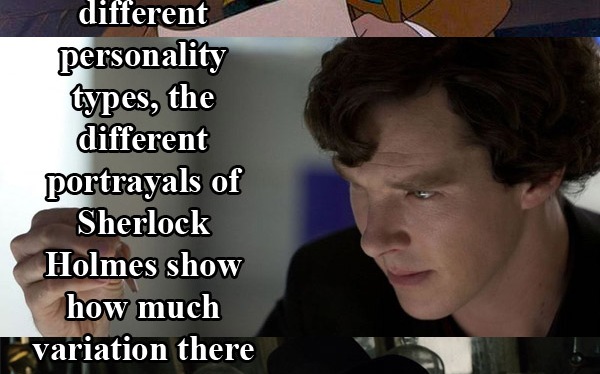
While this may be partly true, I think we can pin-down a single best-fit type for most portrayals of Sherlock Holmes in film and television (I’m not covering the original stories in this post). Rather than showing several different personality types, the different portrayals of Sherlock Holmes show how much variation there can be within a single personality type.
INTP Traits
The personality type that fits most film and movie portrayals of Sherlock best is INTP. The function stack for this type is this:
Introverted Thinking (Ti)
Extroverted Intuition (Ne)
Introverted Sensing (Si)
Extroverted Feeling (Fe)
This means that Sherlock first approaches the world with a judging attitude that is focused inward and relies on impersonal analysis. Ti prefers to internalize observations and work with abstract ideas. It “values facts chiefly as illustrative proofs of the idea,” and rejects things that seem irrelevant (Myers, Gifts Differing, p.78). This would explain why BBC’s Sherlock didn’t bother to remember that the earth goes around the sun. Read more →
Sometimes when I ask people this, their first response is to ask “What gifts?” or to stall and say something flippant like “I can fry an egg.” I think that’s one of the most heart-wrenching things I hear on a fairly regular basis. So many of us believe that there really isn’t anything unique about us, that there’s nothing special we can offer the world, that we don’t have an aptitude for something useful or interesting. We think we’re boring, normal, or mundane, and even if we do recognize some good qualities in ourselves, we think they are too small to do any good. Gifts? me? I don’t think so.
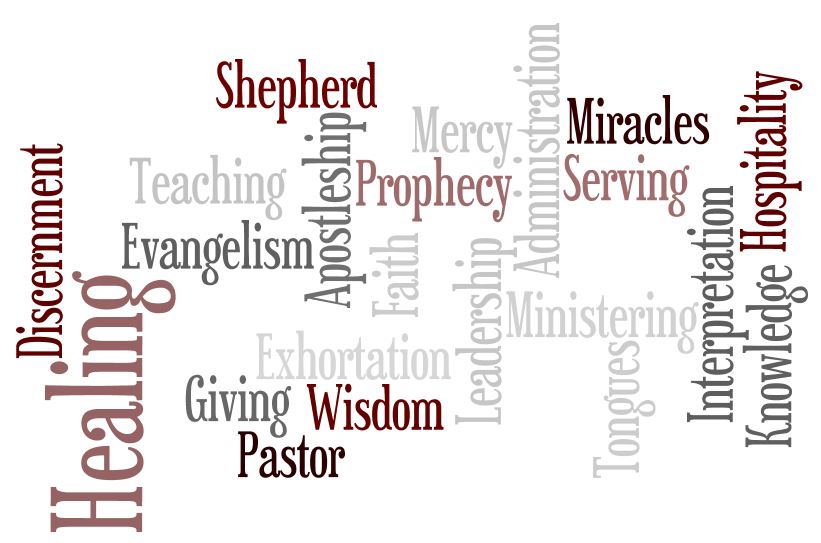
But everyone really does have gifts. Some of this is part of our personalities, and if you’re a Christian you probably believe in Spiritual gifts as well. I guarantee that there’s at least one thing (and probably several) gifts that you have. Even if you can’t see it yet there really is something that you are ridiculously good at, or a core part of yourself that offers something good to you and the world, or a talent just waiting to be used.
Hidden Gifts
I recently read an article titled How Your Greatest Insecurities Reveal Your Deepest Gifts by Ken Page (a psychotherapist, lecturer, and author who studies intimacy). He argues that the core parts of ourselves that we try to hide because we think we’re “too much” or “too little” are where our gifts dwell.
Over the years, I realized that the characteristics of my clients which I found most inspiring, most essentially them, were the ones which frequently caused them the most suffering.
Some clients would complain of feeling like they were “too much”; too intense, too angry, or too demanding. From my therapist’s chair, I would see a passion so powerful that it frightened people away.
Other clients said they felt that they felt like they were “not enough”; too weak, too quiet, too ineffective. I would find a quality of humility and grace in them which would not let them assert themselves as others did.
In his definition, your gifts are essential qualities that make you who you are. Most of us distance ourselves from our gifts and create “safe” versions of ourselves that don’t show the world who we really are. Ken Page’s focus is on expression our core gifts in intimate relationships, but if we discover who we are and what we have to offer it will impact other aspects of our lives as well.
His tips for discovering your core gifts are to look at the things that cause you the most joy, as well as the things that cause you the most pain. You will be most moved and inspired by positive experiences related to your core gift, and most hurt by negative experiences that touch on those sensitivities. For example, if one of your core gifts is honesty you will be drawn to other people who are honest and hurt deeply when someone you’re close to violates your trust. Here’s a link to one of Page’s more in-depth articles exploring this topic.
Personal Strengths
We spend quite a bit of time on this blog talking about personality types. Since I’m an INFJ on the Myers-Briggs scale, I’ll use my personality type as an example yet again. We can’t all be equally good at everything, and different personality types have different strengths. Some gifts that would be consistent with an INFJ personality type are a talent for reading other people, easily practicing empathy, and generating an inspiring vision for the future. On the other hand, most INFJs will not have a strong gift for impersonal evaluation of pros and cons in a situation, or for interacting with huge groups of people. For those tasks, you’ll need to track down a thinking type with a gift of logic or an extrovert with a gift for interacting with people.
Learning the strengths and weaknesses of your individual type is a good way to start tracking down your own unique gifts. The profiles on 16 Personality Types have a list of typical strengths and weaknesses associated with each type, and there’s also a free test you can take if you don’t know your type yet.
Often, the strengths of our personality types come to us so easily that we don’t think of them as a gift. It’s so easy for INFJs to pick up on other peoples emotions that it can seem like a slightly annoying thing we do automatically, rather than a unique gift we can use to relate to other people. ETSJs take charge of situations almost without thinking about it, and might not list leadership as a gift because it seems so normal to them.
Spiritual Gifts
God doesn’t make useless people. You are a child of God, and no matter how weak and helpless and even useless you feel God can work with you and make you strong (2 Cor. 12:10). If God is calling you and working with you through His Holy Spirit, then you’ve also been given one or more spiritual gifts. Paul tells us that “the manifestation of the Spirit is given to each one for the profit of all” (1 Cor. 12:7) and trust me, you’re not the exception to that rule.
Finding out what your particular spiritual gift is can be quite a challenge. Live Your Calling: A Practical Guide to Finding and Fulfilling Your Mission in Life by Kevin Brennfleck and Kay Marie Brennfleck has a chapter devoted to a spiritual gifts questionnaire. It’s more of a guideline than a definitive answer, though. When I took the evaluation, it told me I had and potentially used somewhere between 2 and 8 spiritual gifts. Didn’t really narrow it down much.
Other tests, like Spiritual Gifts Test, can also give you an idea of what your spiritual gift might be. It ranks your top three gifts, and gives a description of each. Ultimately, though, I think to discover what your spiritual gift really is requires prayer and action. Thinking about your spiritual gifts only gets you so far — you have to start using them and serving and seeing if you have a gift for that particular way of serving.
Learning about your particular gifts can give you more confidence in yourself, improve your relationships, and give you an idea of how you can serve others more effectively. I’m still discovering my gifts, but they’re already bearing fruit, including this blog. I wish you a similarly exciting journey!

 Cinderella, like other ISFJs, leads with a process called Introverted Sensing (Si). Dr. A.J. Drenth considers it one of the “least understood of the eight Myers-Briggs functions,” and David Keirsey chategorized them with the Guardian types (SJs). All Guardians use Si as their their first or second function.
 .* She describes the shadow as “the product of the least-developed part, which a person rejects and disowns. The shadow uses relatively childish and primitive kinds of judgements and perceptions, not intentionally in the service of conscious aims” (Meyers, 1995, p.84). She doesn’t spend much time talking about the shadow, but I get the sense reading her description that she thinks it can include both the tertiary and the inferior function if they are not well developed.
 * p.49)
 *
*


 Like An Anchor