Am I Really In the Faith? (Crash-Course in 2 Corinthians)

What do you think of if I bring up the idea of self-examination?

When I talk about self-examination, it’s often in the context of Passover preparation and we usually turn to 1 Corinthians. But there’s another instruction about self-examination in Paul’s second letter to the church at Corinth. That’s what I want to look at today as we move from Passover to Pentecost (May 28 this year).

Put yourselves to the test to see if you are in the faith; examine yourselves! Or do you not recognize regarding yourselves that Jesus Christ is in you—unless, indeed, you fail the test!

2 Corinthians 13:5, NET

My dad read this verse a couple weeks ago in his sermon, and it jumped out at me because of how Paul uses the word “faith.” As you might imagine if you read my book review of Relational Faith, faith in scripture has been on my mind a lot lately. I wanted to take a closer look at this verse with Brent Schmidt’s study on the original first-century context for the Greek word pistis fresh in my mind.

As you’ve no doubt noted in the title, I might have started by looking at the end of 2 Corinthians, but we’re going to look at the entire letter. One of the key principles I follow when interpreting Paul’s writings is that he must be read in context. This includes looking at the parts of the letter around the verse(s) you want to look at as well as keeping historical context in mind. As I started looking at the context, I realized the whole letter is important to understanding the self-examination point near the end.

Image of a woman reading a Bible overlaid with text from 2 Corinthians 1:1-2, NET version:  “From Paul, an apostle of Christ Jesus by the will of God, and Timothy our brother, to the church of God that is in Corinth, with all the saints who are in all Achaia. Grace and peace to you from God our Father and the Lord Jesus Christ!”
Image by MarrCreative from Lightstock

Faithful New Covenant Ministry (2 Corinthians 1-5)

Paul opens this second canonized letter to the Corinthians with a message of comfort and hope. He then goes on to explain why he didn’t visit the Corinthian church earlier, saying, “Now I appeal to God as my witness, that to spare you I did not come again to Corinth. I do not mean that we rule over your faith, but we are workers with you for your joy, because by faith you stand firm. So I made up my own mind not to pay you another painful visit” (2 Cor. 1:23-2:1, NET). It seems that the “painful visit” he alludes to might have been connected with the issues he wrote about in 1 Corinthians, for he now counsels them to welcome back a man he’d previously told them to put out of the church because of sinful behavior now that he has sincerely repented.

This is also the first time Paul brings up “faith” in this letter. A note in the NET says that “because by faith you stand firm” could be translated “because you stand firm in the faith.” As we know from our discussion of Schmidt’s book a couple weeks ago, “faith” in the first century wasn’t simply a set of beliefs or a feeling. Rather, “in the first century, pistis implied active loyalty, trust, hope, knowledge, and persuasion” as part of a covenant relationship (p. 11). Here in 2 Corinthians, Paul is telling his readers that he and other ministers don’t rule over their faithful covenant relationship with Jesus; ministers are there to help you stand firm in the covenant that you entered into with God when you were baptized.

Paul then goes on to talk about his role as a person sent by God for ministry work, referring to himself and his fellow ministers as “servants of a new covenant” (2 Cor 3:6, NET). He then compares the new covenant with the old, speaking of the letter of the law written in stone and the spirit of the law that’s associated with an even more glorious ministry. It’s in the context of ministers’ roles in the New Covenant that he begins talking about faith again. He says, “we have the same spirit of faith as that shown in what has been written, ‘I believed; therefore I spoke,’ we also believe, therefore we also speak” (2 Cor. 4:13, NET, quoting Ps. 116:10). Just a little farther down the page, Paul makes the famous statement, ” we live by faith, not by sight” (2 Cor. 5:7, NET). We don’t yet see all the glorious promises of the covenant, but we trust that God will deliver them when we are faithful to Him.

Living in Holiness and Faith (2 Corinthians 6-10)

Paul goes on to talk about reconciliation, Christ’s sacrifice, and true teachings. He also continues his discussion of ministry in the New Covenant, describing himself and other “ambassadors for Christ” as “fellow workers” with his readers (2 Cor. 5:20; 6:1, NET). He also talks about the things that responsible Christians need to do, urging us “not to receive the grace of God in vain” (2 Cor. 6:1, NET) or associate too closely with unbelievers.

For we are the temple of the living God, just as God said, “I will live in them and will walk among them, and I will be their God, and they will be my people.” Therefore “come out from their midst, and be separate,” says the Lord, “and touch no unclean thing, and I will welcome you, and I will be a father to you, and you will be my sons and daughters,” says the All-Powerful Lord.

Therefore, since we have these promises, dear friends, let us cleanse ourselves from everything that could defile the body and the spirit, and thus accomplish holiness out of reverence for God.

2 Corinthians 6:16-7:1, NET

Paul returns to the topic of his previous letters again after this point, reinforcing that “sadness as intended by God produces a repentance that leads to salvation, leaving no regret” (2 Cor. 7:10, NET). He doesn’t regret writing a letter that made them sad because it bore such good fruits and led to rejoicing, encouragement, and more fervent faith.

The next two times “faith” shows up in 2 Corinthians, it’s in the context of faithful action. Paul tells them “you excel in everything,” including “in faith,” when writing about generous giving to other saints in need (2 Cor 8:7, NET). He then goes back to talking about his ministry work and says, “we hope that as your faith continues to grow, our work may be greatly expanded among you” (2 Cor. 10:15, NET). For Paul, faith always went along with doing something.

Image of four people studying the Bible togather overlaid with text from 2 Corinthians 13:5-6, WEB version:  “Examine your own selves, whether you are in the faith. Test your own selves. Or don’t you know about your own selves, that Jesus Christ is in you?—unless indeed you are disqualified. But I hope that you will know that we aren’t disqualified.”
Image by Ben White from Lightstock

2 Corinthians 10-12

One of my favorite passages from 2 Corinthians comes at the beginning of chapter 10 (of course, there weren’t chapter breaks originally; it’s just a convenient way of navigating scripture). I usually think of this as a section about spiritual warfare and mental health. It is those things, but it’s also part of Paul’s discussion of his ministry and his hopes for the people he writes to.

Now I, Paul, appeal to you personally by the meekness and gentleness of Christ (I who am meek when present among you, but am full of courage toward you when away!)—now I ask that when I am present I may not have to be bold with the confidence that (I expect) I will dare to use against some who consider us to be behaving according to human standards. For though we live as human beings, we do not wage war according to human standards, for the weapons of our warfare are not human weapons, but are made powerful by God for tearing down strongholds. We tear down arguments and every arrogant obstacle that is raised up against the knowledge of God, and we take every thought captive to make it obey Christ. We are also ready to punish every act of disobedience, whenever your obedience is complete. You are looking at outward appearances. If anyone is confident that he belongs to Christ, he should reflect on this again: Just as he himself belongs to Christ, so too do we. For if I boast somewhat more about our authority that the Lord gave us for building you up and not for tearing you down, I will not be ashamed of doing so.

2 Corinthians 10:1-8, NET

As Paul goes on, he continues describing his ministry work. With the topic of faith in mind as I read this, I’m struck by how all-in Paul was to his faith commitments. He endured terrible suffering to keep preaching the gospel. He passionately defends the ministry work that God gave him, and condemns those who claim to be apostles but don’t have the same commission from God and commitment to teaching His word faithfully. He even shares his story of glorious revelations and a humbling thorn in the flesh to show “I lack nothing in comparison to those “’super-apostles,’ even though I am nothing” (2 Cor. 12:11, NET). Yet this defense isn’t for his own benefit; he’s writing to build his readers up before his third visit because he’s afraid he’ll find that some of them still aren’t living in the faith.

Have you been thinking all this time that we have been defending ourselves to you? We are speaking in Christ before God, and everything we do, dear friends, is to build you up. For I am afraid that somehow when I come I will not find you what I wish, and you will find me not what you wish. I am afraid that somehow there may be quarreling, jealousy, intense anger, selfish ambition, slander, gossip, arrogance, and disorder. I am afraid that when I come again, my God may humiliate me before you, and I will grieve for many of those who previously sinned and have not repented of the impurity, sexual immorality, and licentiousness that they have practiced.

2 Corinthians 12:9-21, NET

Now Paul reveals the point of the whole letter. He’s been writing to build people up and encourage them to make necessary changes before he comes. “Quarreling, jealousy, intense anger, selfish ambition, slander, gossip, arrogance, and disorder” are not things that he ought to see in a faithful church, nor is “impurity, sexual immorality, and licentiousness.” Those things have to go. Which brings us to the instruction to test ourselves.

Putting Yourselves to the Test (2 Corinthians 13)

Image of a man walking in the woods holding a Bible with the blog's title text and the words "In 2 Corinthians, Paul tells his readers, “Put yourselves to the test to see if you are in the faith.” Why does he issue this warning, and how does it fit with the rest of the letter?"
Image by HarveyMade from Lightstock

This is the third time I am coming to visit you. By the testimony of two or three witnesses every matter will be established. I said before when I was present the second time and now, though absent, I say again to those who sinned previously and to all the rest, that if I come again, I will not spare anyone, since you are demanding proof that Christ is speaking through me. He is not weak toward you but is powerful among you. For indeed he was crucified by reason of weakness, but he lives because of God’s power. For we also are weak in him, but we will live together with him, because of God’s power toward you. Put yourselves to the test to see if you are in the faith; examine yourselves! Or do you not recognize regarding yourselves that Jesus Christ is in you—unless, indeed, you fail the test! And I hope that you will realize that we have not failed the test! Now we pray to God that you may not do anything wrong, not so that we may appear to have passed the test, but so that you may do what is right even if we may appear to have failed the test. For we cannot do anything against the truth, but only for the sake of the truth. For we rejoice whenever we are weak, but you are strong. And we pray for this: that you may become fully qualified. Because of this I am writing these things while absent, so that when I arrive I may not have to deal harshly with you by using my authority—the Lord gave it to me for building up, not for tearing down!

2 Corinthians 13:1-10, NET (bold italics mark a  quotation from Deut 19:15)

Notice the intensity of Paul’s instruction here. “Put yourselves to the test to see if you are in the faith; examine yourselves!” This is important. He’s been building up to this for the entire letter. Paul didn’t just tell the Corinthians they needed to repent, stop sinning, and live obediently with God because he wanted to. He taught this because it’s necessary for faithful living.

“Or do you not recognize regarding yourselves that Jesus Christ is in you,” Paul asks, “unless, indeed, you fail the test!” Either Jesus is in you and you’ll be living in the faith, or He’s not. There are no two ways about it. You can’t live sinfully and still say you have a relationship with Jesus. If the Lord is living inside you, then you’ll be acting like Him and when you mess up you’ll repent and change.

 Finally, brothers and sisters, rejoice, set things right, be encouraged, agree with one another, live in peace, and the God of love and peace will be with you. Greet one another with a holy kiss. All the saints greet you. The grace of the Lord Jesus Christ and the love of God and the fellowship of the Holy Spirit be with you all.

2 Corinthians 3:11-13, NET

This is how Paul ends the letter. He wants his readers to “set things right,” but he also wants them to rejoice, be encouraged, and live in peace. As Proverbs says, “the wise in heart accept commandments” (Prov. 10:8, WEB). For those who love God, correction like Paul gives here motivates change and also brings joy because it helps us live in a closer relationship with God.


Featured image by Aaron Kitzo from Lightstock

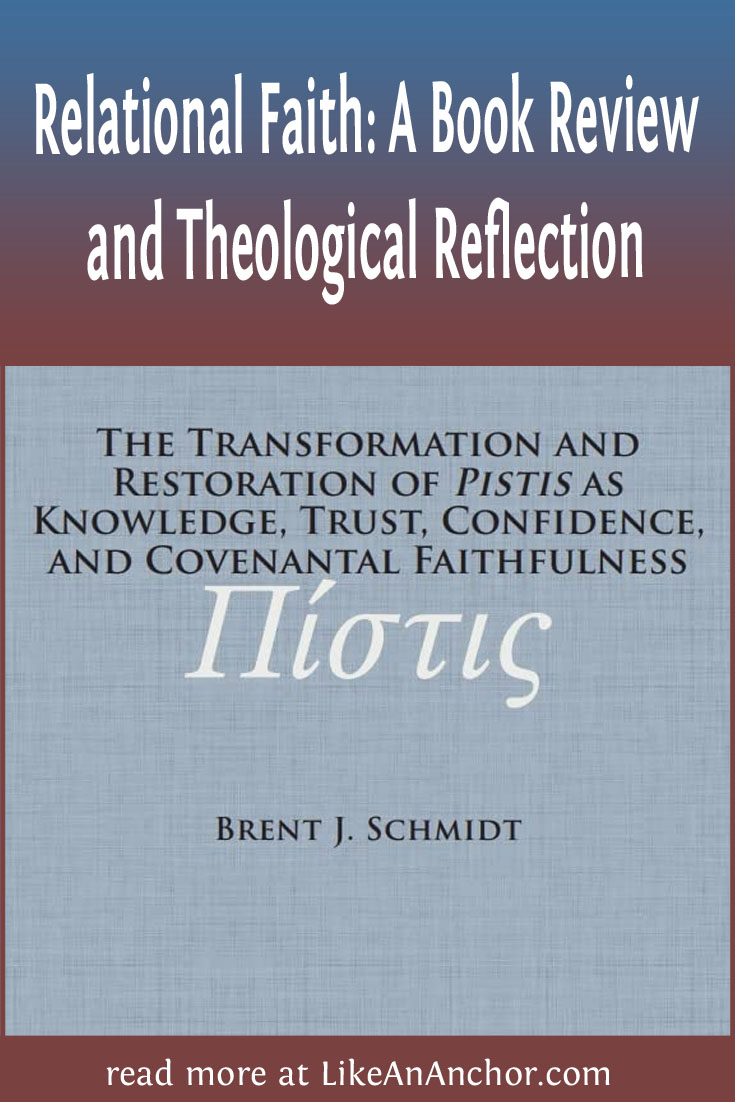
Relational Faith: A Book Review and Theological Reflection

I was so happy to receive a comment from Brent Schmidt on my blog post about his book Relational Grace: The Reciprocal and Binding Covenant of Charis (2015) offering me the opportunity to read his new book Relational Faith: The Transformation and Restoration of Pistis as Knowledge, Trust, Confidence, and Covenantal Faithfulness (2023). I really enjoyed the book on grace, and I was eager to read this follow-up work on faith.

You could read Relational Faith on its own, but it builds on Relational Grace and is best read as a continuation of that study. The basic argument of this new book is, “A universal doctrinal apostasy regarding faith occurred, necessitating a restoration of relational, covenantal faith” (p. 233). Much like Schmidt explained with charis/grace, the original meaning of pistis is vastly different from most mainstream Christian ideas of faith. Studying the context for how these Greek words were used when the New Testament was written helps us understand how grace and faith work today. God’s character is unchanging and the way He relates to us–including what He expects of those in relationship with Him–also didn’t change just because theologians over the years came up with different interpretations and ideas.

I don’t remember if I’ve mentioned this here before, but if I could have constructed a perfect-for-me class to take as part of my Masters in Rhetoric and Writing program, it would have focused on the Apostle Paul’s use of classical and Jewish rhetorical strategies. Schmidt holds a PhD in classics, and reading this book I felt like I was getting much of what I’d want from that hypothetical class. Schmidt opens the introduction with the words, “Context is key if we are to understand the essential Christian doctrine of faith as taught by the Apostle Paul” (p. 1). Amen, sir. Also, pistis is the same word used for “persuasion” in Aristotle’s rhetoric, and Schmidt spends a good deal of time on classical rhetoricians’ use of the word.

In short, this book could have been written for me even though Schmidt and I have some significantly different theological views/backgrounds (a bit more on that at the end). Overall, I found this an excellent scholarly work situating pistis firmly in its ancient context for both Jewish and Gentile Christians in the first-century. It also contains a detailed history of the changes in doctrinal understandings of faith over the years, with comparisons between different interpretations of faith from a variety of theologians. I didn’t find this book quite as engaging as Relational Grace, but it was well worth reading.

Image of two people with hands lifted in worship overlaid with text from Hebrews 11:1, WEB version:  “Now faith is assurance of things hoped for, proof of things not seen.”
Image by Temi Coker from Lightstock

Contextualizing Pistis

One of Schmidt’s basic premises is that we can better understand how Biblical writers use a Greek word by looking at how Classical writers earlier and around the same time used that word. This may seem an odd idea to us who live in a world where it’s considered normal and proper to separate religion from things like philosophy and science. There wasn’t such a separation in ancient times, though (Schmidt, p. 3). And while Biblical writers did give some words new/deeper Christian spiritual meanings, extrabiblical writings provide invaluable clues for understanding how people used these words at the time Paul and others were writing.

Schmidt’s etymological history of pistis and related words reveals that they can mean “faithfulness, steadfastness, and trustworthiness because of the underlying expressions of loyalty between parties in covenant relationships” (p. 11). He also places the word’s use in the context of classical Greek writers and Roman writers using the equivalent Latin word fides. He even looked into how pagan conceptions of the Pistis and Fides as goddesses influenced contemporary uses of the word. It’s a thorough scholarly investigation.

Additionally, Schmidt writes, “in the first century, pistis implied active loyalty, trust, hope, knowledge, and persuasion in the patron-client relationship or within the new covenant brought about through Christ’s Atonement” (p. 11). Faith in this sense is an active thing that’s connected with reciprocal relationships. When we’re in covenant with God, He is faithful to us and we must be faithful to Him. This is a concept that would have been very familiar to both Greek and Jewish audiences (Schmidt, p. 12-16). Also, Greek and Roman audiences were very familiar with the patron-client relationships that had pistis at the center. Whatever their religious background, first-century audiences would have thought of faith in a reciprocal relational context.

Jewish audiences in particular knew that faithfulness was key to covenants with God. In Hebrew, the basic root word for faith is aman (H539 in Strong’s). At the core, it means “firmness or certainty” (Theological Wordbook of the Old Testament, entry 116). Related words in this family include amen (verily, truly), emun (faithfulness, trusting), emuna (firmness, fidelity), and emet (truth). Schmidt points out that, like the Greek pistis, these Hebrew concepts were “knowledge-based, relational, and covenantal” (p. 37). And when Jewish writers wrote in Greek, they translated aman words into Greek as pistis (Schmidt 38). For example, when Paul quotes Habackuck 2:4, “the righteous will live by his faith (emunah),” he says, “the righteous shall live by faith (pistis)” (Rom. 1:17, WEB).

Image of a woman studying the Bible, overlaid with text from Deuteronomy 7:9, NET version:  “So realize that the Lord your God is the true God, the faithful God who keeps covenant faithfully with those who love him and keep his commandments, to a thousand generations”
Image by MarrCreative from Lightstock

Tracking Changes in Descriptions of Faith

Neoplatonists and Augustine

Have I talked on this blog before about the Neoplatonists? I don’t think I have, but they keep coming up in books I read that trace how Christianity changed after the first century. This school of thought (along with other trends, including anti-Jewish sentiments) heavily influenced shifts such as the change from keeping the Sabbath on Saturday to gathering on Sunday and adding the idea of an immortal soul (whereas in the Bible, God ” alone possesses immortality” until He grants it to people in His family [1 Tim. 6:16; 1 John 3:1-3]). And apparently, it’s also connected to the change from thinking of faith as intimately connected to covenant to an expression of belief in accepted Christian doctrines.

  • Side note: if you’re interested in exploring this idea more, I recommend Plato’s Shadow: The Hellenizing of Christianity by Gary Petty. It’s a good introduction/overview of the topic. (Please note this is an affiliate link, which means I’ll receive a small commission if you click on the link and make a purchase.)

While tracing the ways Christian conceptions of faith changed after the first century, Schmidt writes, “Neoplatonist faith (pistis) embraced the intelligible and pure through contemplation and also embraced emotional assurances that the soul was immortal by identifying with an abstract divine” (p. 116). Here’s where we start getting the idea of faith as something abstract, mystical, or requiring only passive acknowledgement. This is happening during the late Classical period (starting around 200 AD), and heavily influences Christianity of the Middle Ages. In contrast, “Ancient readers understood that faith obligated them to demonstrate their faithfulness actively” (p. 130).

The major shifts in conceptions of faith solidified around the 5th century. Schmidt comes down hard on Augustine for that, and rightly so I think based on other examinations I’ve read of Augustine’s work and the readings I’ve done of excerpts from his own texts (we covered him in my classical rhetoric class). Augustine introduced doctrinal concepts such as original sin and predestination, and defined faith as something God gave those He determined would be His people. Though an influential theologian, Augustine contradicted long-established Christian teachings in some of his doctrines, including the way he spoke about faith as something passively received from God, an emotion, and/or acknowledgment of a belief system (Schmidt, Chapter 9). In short, “Augustine’s model of faith fit very poorly with any Hellenistic notions of pistis because first-century pistis was ‘neither a body of beliefs nor a function of the heart or mind, but a relationship which creates community” (Schmidt, p. 167, quoting scholar Teresa Morgan).

I find it very interesting that the shift to seeing faith as a mystical thing granted to you by God, which helps you accept mysteries unknowable, coincides with the shift in popularly accepted Christian doctrine toward describing God’s nature as a Trinity (the Council of Nicae and the Council of Constantinople both happened in the 4th century). If you’re going to describe God as an unknowable three-in-one deity rather than as a family where the Father and Son make covenants with and know people individually, then it’s hard to define faith as a patron-client relationship that believers have with the Father modeled after the relationship the Father has with the Son. (For more on why I don’t think “trinity” is the best way to describe the nature of God, see my post “What Does It Mean For Each of Us That God Is A Family?“)

Medieval to Modern Theologians

Schmidt spends the next few chapters tracing Catholic and then Protestant teachings about faith through the Medieval, Renaissance, Enlightenment, and early Modern periods. William Tyndale stands out as a theologian working to balance the ideas of “salvation by faith alone” and the clear Biblical instructions for faith to result in good works (Schmidt, pp. 185-88). Heinrich Bullinger, John Locke, and Dietrich Bonhoeffer are also highlighted as rare examples of theologians hearkening back to the active, covenantal context of pistis. Overall, though, the meaning of faith shifted away from ancient conceptions of pistis as faithfulness in covenant and focused more on passive, mystical experiences. Debates at this time often centered on how/if good works were linked with faith and whether or not there was any human free will involved.

There still isn’t a clear consensus in modern Christianity about how to define faith. There are, however, influential theological movements hearkening back toward an ancient understanding of pistis. In Chapter 13, Schmidt explores one of the reasons why I wasn’t all that surprised by what I read in this book about covenants and faith. C.S. Lewis (my favorite Christian writer) taught that faith necessarily involves action. The modern theological movement known as The New Perspective on Paul (including authors I’ve read and enjoyed like N. T. Wright and others I’m familiar with including E.P. Sanders and James Dunn) teach that Paul must be read through a first-century Jewish lens. They also point out that mistakes in reading Paul’s writings and over-reliance on Medieval theologians have led to distorted ideas of faith.

A Few Last Thoughts

Image of the Relational Faith book cover overlaid with the blog post's title text.
Features cover image for Relational Faith

As someone who’s been part of a 7th-day Sabbath-keeping Church of God group her whole life and who also has a Messianic Jewish background, the core arguments of Relational Faith weren’t surprising to me. Similarly, when I first came across the New Perspective on Paul, it didn’t seem revolutionary to read Paul as a Jewish writer who sees covenants as central to Christianity. That’s simply how I think of Christianity.

I will admit, though, that reading Relational Faith challenged me to think more deeply about how I talk about faith. For example, I will use the phrase “my faith” to mean “the doctrines I believe in and the experience of feeling sure that God exists.” A first-century Christian, though, saw faith more as something you do than something you have. If they talked about “my faith,” they’d likely mean “my faithfulness to the covenant God makes with me, as well as the obedient actions associated with honoring that covenant.” Reading this book made me want to be more intentional and careful about how I conceptualize and speak of my relationship with God to ensure it aligns with His word.

Even with confusion about what faith really means and ongoing theological debates, I would argue that the original meaning of faith has not been entirely lost even in “mainstream” Christianity. Yes, there are plenty of songs and teachings that reduce faith to some internal sensation or belief, but there’s also Josh Wilson singing, “Faith is Not a Feeling,” Christianity.com pointing out that faith is often synonymous with obedience, and Baker’s Evangelical Dictionary of Biblical Theology connecting faith with covenants that bridge Old and New Testaments. There isn’t a simple “this group is all wrong, while this group is all right” answer.

Finally, as I mentioned in the beginning, Schmidt and I have some different theological views. I try to practice the first-century version of Christianity I read about in the New Testament as closely as possible (if you want to label me, “Messianic” or “Sabbath-keeper” works pretty well). Schmidt is a member of the Church of Jesus Christ of Latter Day Saints. Most of the focus of his book is on areas where he overlaps with other Christians (i.e. interpreting the New Testament in light of the writers’ use of classical Greek language), but the last two chapters are devoted to the concept of “faith” in the Book of Mormon and other Latter Day Saints’ writings. While I find this aspect of his beliefs rather puzzling, please read this more as an observation than a criticism–those chapters didn’t interest me much, but readers are free to do with them as they will.


Relational Faith was published on March 21, 2023. It is available on Amazon as a Kindle ebook or paperback book (please note this is an affiliate link, which means I’ll receive a small commission if you click on the link and make a purchase).


Featured image by Claudine Chaussé

Spiritual Tenacity

The word “tenacity” comes into English “from Latin tenacitas ‘an act of holding fast,’ from tenax (genitive tenacis) ‘holding fast, gripping, clingy; firm, steadfast'” (Online Etymology Dictionary). It’s not a word that’s used in any of the Bible translations I frequently read (WEB, NET, TLV, KJV), but the same concept is expressed with terms such as “hold fast” or the related idea of endurance.

When we hold fast to something on a physical level, it’s either because we love it so much (e.g. hugging your child tight) or because we need something to keep us from falling or getting pulled away (e.g. clinging to a rope when climbing a cliff or holding onto a tree branch to keep from being swept away in a flash flood). Something similar is happening on a spiritual level.

When we’re living in covenant with God and have a relationship with Him, He wants a close and loving relationship with us. He also expects an exclusive relationship, but there are other things pulling at our time and attention that could draw us away from Him if we don’t hold on tight. Putting something before Him, making covenant relationships with conflicting things, or holding tight to something other than God would mean that we’re being unfaithful to Him (Ex. 34:12-14). In contrast, holding fast to God involves having a faithful, love-filled relationship with Him.

What are you Holding Onto?

In the Old Testament, Joshua warned ancient Israel about the importance of staying faithful to God. With God’s guidance, Joshua led them into the promised land, fought and conquered the land under God’s leadership, and saw the people settled in their promised inheritance. The surrounding nations weren’t completely gone, though, and neither were the influences from Israel’s past. So when Joshua was old, he called Israel together to give them instructions and warnings.

Therefore be very courageous to keep and to do all that is written in the book of the law of Moses, that you not turn away from it to the right hand or to the left; that you not come among these nations, these that remain among you; neither make mention of the name of their gods, nor cause to swear by them, neither serve them, nor bow down yourselves to them; but hold fast to Yahweh your God, as you have done to this day. …

“But if you do at all go back, and hold fast to the remnant of these nations, even these who remain among you, and make marriages with them, and go in to them, and they to you; know for a certainty that Yahweh your God will no longer drive these nations from out of your sight; but they shall be a snare and a trap to you, a scourge in your sides, and thorns in your eyes, until you perish from off this good land which Yahweh your God has given you.”

Joshua 23:6-8, 12-13, WEB (emphasis added)

Here, Joshua presents the people with two options. They can “hold fast to Yahweh your God” or they could “hold fast” to the ungodly nations around them. Similarly, we see other people in the Bible holding fast to either good or bad things. A psalmist tells the Lord, “I hold fast to your rules” (Ps. 119:31, NET). Yahweh promises good things to those who “hold fast to my covenant” and keep the Sabbath (Is. 56:1-7, WEB). God praised Job to Satan as an example of “a pure and upright man,” saying, “he still holds firmly to his integrity” (Job 2:3, NET).

In contrast, there are others who “hold fast to their deception” (Jer. 8:5, NET). Proverbs says, “The evil deeds of the wicked ensnare him. The cords of his sin hold him firmly” (Prov. 5:22, WEB). Jesus chided people who rejected God’s law to “hold fast to human tradition” (Mark 7:1-8, NET). Clearly, we need to be careful what we’re clinging to. Are we holding on to God, or to things that are trying to tug us away from Him? Trying to do both isn’t going to work. “No man can serve two masters,” Jesus said, “for either he will hate the one, and love the other; or else he will hold to the one, and despise the other” (Matt. 6:24, KJV). We need to make sure the one we “hold to” is God.

Holding on to Hope

There are strict warnings about who or what we choose to hold onto in this life. We can’t have divided loyalties when we come to God. He’ll work with us through our doubts, but He expects us to choose Him when it comes down to it. The admonition to us today is still the same as the one Joshua gave Israel: “hold fast to Yahweh your God.”

God also told people in the Old Testament to hold onto His covenant, including the Sabbaths (which are a sign of being in covenant with God). That continues today. For example, Paul told the Corinthian church to “hold firm the traditions” and “hold firmly the word which I preached to you” in an epistle contextualized by his discussion of the Feast of Unleavened Bread (1 Cor. 11:2; 15:2, WEB). Paul also gave similar instructions in three other letters (2 Thes. 2:15; 1 Tim. 1:18-19; Tit. 1:8-9). We need to carefully hold on to the truth God gives us and obey his instructions. And when we do that, we’re holding on to some amazing things.

Christ is faithful as a Son over his house. We are his house, if we hold fast our confidence and the glorying of our hope firm to the end. … we have become partakers of Christ, if we hold the beginning of our confidence firm to the end.

Hebrews 3:6-7, 13 WEB (emphasis added)

Therefore since we have a great high priest who has passed through the heavens, Jesus the Son of God, let us hold fast to our confession. …

And let us hold unwaveringly to the hope that we confess, for the one who made the promise is trustworthy.

Hebrews 4:14; 10:23 NET (emphasis added)

 God wanted to demonstrate more clearly to the heirs of the promise that his purpose was unchangeable, and so he intervened with an oath, so that we who have found refuge in him may find strong encouragement to hold fast to the hope set before us through two unchangeable things, since it is impossible for God to lie. We have this hope as an anchor for the soul, sure and steadfast

Hebrews 6:17-19, NET (emphasis added)

Look how positive this wording is. We’re to “hold fast” to our confidence in Christ and the glory of hope, the confession of our faith and hope, and the hope of joy set before us in the future. Holding onto God, His word, righteousness, and goodness also means holding onto hope and joy. It makes me think back to part of our Isaiah study from earlier this year about the joy found in keeping covenant with God (see “Isaiah Study: Joy in the Sabbath Covenant With God“). In a close relationship with God, obedience flows naturally from love and honoring God brings joy while strengthening hope.

“Hold on to What You Have”

We can sum up the Bible’s “hold fast” instructions with this verse: “hold fast to what is good. Stay away from every form of evil” (1 Thes. 5:21-22, NET). Our spiritual walk requires tenacity–a conviction to hold tight to God and the goodness associated with Him while rejecting the things which would want to pull us away or present alternative things to cling to.

Something that helps us greatly in our quest to hold fast to good is that Jesus holds fast to us. He says that He and the Father hold Their people in Their hands (John 10:27-29). He also holds the keys to death, the spirits of God, the angels of the churches, and the keys to David’s kingdom–wonderous things we can only begin to understand (Rev. 1:16-18; 2:1; 3:1, 7). It’s in the letters to the churches in Revelation that Jesus describes Himself as holding these things, and it’s also here that He counsels us to keep holding on.

I am coming soon. Hold on to what you have so that no one can take away your crown. …  The one who has an ear had better hear what the Spirit says to the churches.

Revelation 3:11, 13, NET

The “crown” here “refers to a wreath … worn as a symbol of honor, victory, or as a badge of high office” (NET footnote on Rev. 3:11). It’s not so much a symbol of ruling as it is of victory. Think of the laurel crowns in ancient Rome and Greece that still influence our language today; we use the word “laurels” for “a tangible symbol signifying approval or distinction” (Vocabulary.com).

We’re part of a spiritual war. We’ve joined up on God’s side–the one guaranteed victory in the end. Until the time when we receive our crowns of victory, we’re called to be soldiers in a war that mostly takes place on a spiritual plane but also bleeds into the physical realm. I have a book about this called Like An Anchor Study Guide: The Armor of God coming out early next year, but for now I’ll direct you to my series of blog posts on Spiritual Warfare if you want to read more about this.

You will be hated by everyone because of my name. Yet not a hair of your head will perish. By your endurance you will gain your lives.

Luke 21:17-19, NET

Jesus Christ and God the Father are the ones who make victory possible. We get to play a role, too. It’s our job to hang on to them and endure. That’s how we win. Spiritual tenacity is a vital component to living a victorious, godly life.


Featured image by S. Hermann / F. Richter from Pixabay

Don’t Despise Your Role

I caught myself doing something I’m not proud of a few weeks ago. I was talking with someone about why I’d been traveling last month for the Feast of Tabernacles (Sukkot) and made a comment about the “weird religious things” I do. I felt bad about it immediately, repented and asked God’s forgiveness, but it still kept bugging me. Why was my first reaction to downplay rather than to explain my faith?

Just a few weeks later in a sermon, I heard a speaker at church using a similar phrase in the context of explaining our “weird religious stuff” to people who have no background with our faith. I’m not the only one doing this, and I think I know why. We recognize that our faith is very different than what the world thinks is “normal” and that’s becoming increasingly apparent. Religious people are no longer the majority in the United States. According to Gallup, “In 2020, 47% of U.S. adults belonged to a church, synagogue or mosque,” which is 20 points lower than it was in 2000 (“U.S. Church Membership Falls Below Majority for First Time“).

When you’re going to church on Saturday and keeping God’s holy days (as I do), then you have some very visible differences from other Christians as well. We laugh self-consciously at the King James Version of 1 Peter 2:9, which says “ye are a chosen generation, a royal priesthood, an holy nation, a peculiar people,” and agree that we’re certainly peculiar. We know we’re odd, and so we laugh at ourselves before someone else can.

The thing is, “peculiar” comes from the Latin word peculiaris, which relates to private property (Oxford Languages via Google). That’s why modern translations say things like, “you are … a people for God’s own possession” (1 Pet. 2:9, WEB). Our peculiarity isn’t because we’re strange and odd; it’s because we belong to God. That will make us look strange to the world that we’re living in without being a part of it (John 17:14-16), but that doesn’t mean we should think of ourselves as weird.

Being self-effacing and deflecting conversations about your faith in certain situations isn’t necessarily a sin. You don’t always have to engage with people who are actively hostile or have zero interest in learning about God. But evading or downplaying is not the best thing to do. Especially if it might come across as you being embarrassed about your faith or unwilling to confess that you follow Jesus Christ, because then we are getting into sin territory. God wants us to be lights in a dark world, not cover up the light He’s shining through us. He wants us to speak about Him boldly because we love Him too much to stay silent and we respect Him too much to downplay His importance.

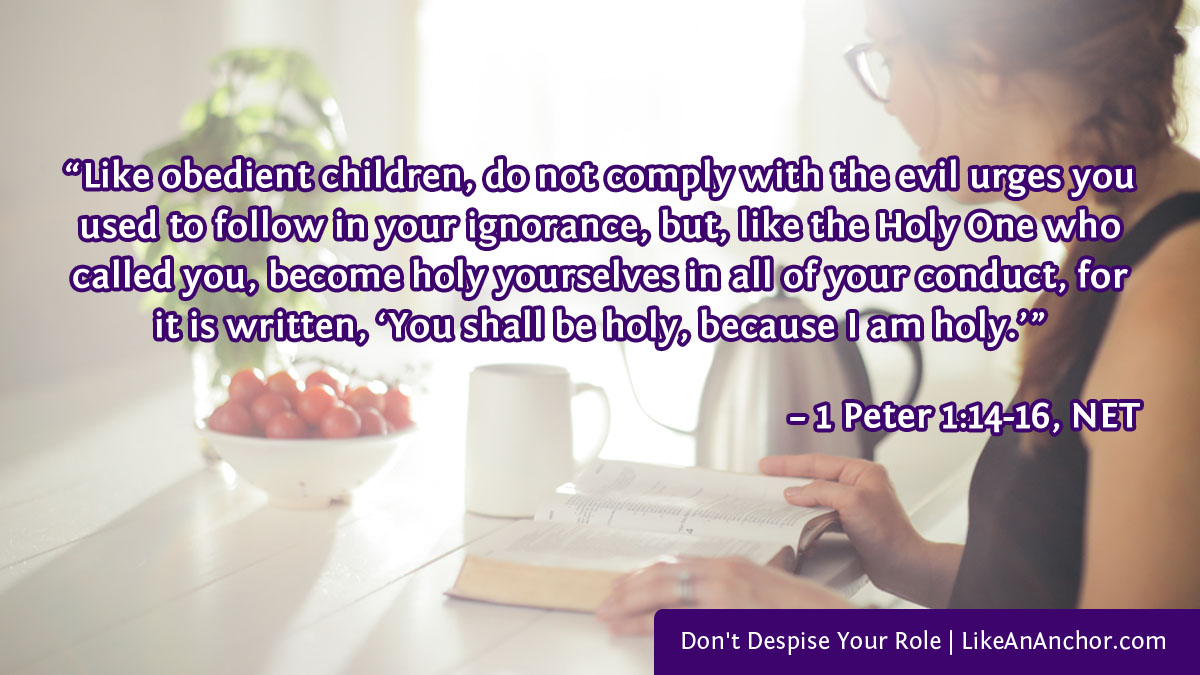
Image of a woman studying a Bible overlaid with text from 1 Peter 1:14-16, NET version: “Like obedient children, do not comply with the evil urges you used to follow in your ignorance, but, like the Holy One who called you, become holy yourselves in all of your conduct, for it is written, ‘You shall be holy, because I am holy.’”
Image by MarrCreative from Lightstock

Esau’s Problem

There’s a story in the Old Testament that comes to mind when I think about the value we place on God’s gifts. Part of God’s law includes a special place for the firstborn. He told Moses to write, “Sanctify to me all the firstborn, whatever opens the womb among the children of Israel, both of man and of animal. It is mine” (Ex. 13:2, WEB). Culturally and theologically, the firstborn had a special role in the ancient Biblical world. They were set apart for God’s own use, and they inherited a more significant blessing from their father. Even before Exodus, we see this pattern in the stories of the patriarchs. There were rights and privileges that should belong to the firstborn. We also see this disrupted several times–Isaac was the son of the promise, but not Abraham’s firstborn, and Joseph was chosen for special blessings over his older brothers. That disruption also happens for Isaac’s sons Jacob and Esau.

Jacob boiled stew. Esau came in from the field, and he was famished. Esau said to Jacob, “Please feed me with some of that red stew, for I am famished.” Therefore his name was called Edom.

Jacob said, “First, sell me your birthright.”

Esau said, “Behold, I am about to die. What good is the birthright to me?”

Jacob said, “Swear to me first.”

He swore to him. He sold his birthright to Jacob. Jacob gave Esau bread and lentil stew. He ate and drank, rose up, and went his way. So Esau despised his birthright.

Genesis 25:30-34, WEB

This didn’t turn out so well for Esau. He lost the firstborn blessing and it was his younger twin Jacob who became the patriarch of Israel and is part of the lineage of Jesus Christ. But what does that have to do with us?

Pursue peace with everyone, and holiness, for without it no one will see the Lord. See to it that no one comes short of the grace of God, that no one be like a bitter root springing up and causing trouble, and through it many become defiled. And see to it that no one becomes an immoral or godless person like Esau, who sold his own birthright for a single meal.

Hebrews 12:14-16, NET (italics mark allusions to Deut 29:18 and Gen 27:34-41)

There’s a danger that we could also become like Esau. The writer of Hebrews warned about it strongly. We’re to diligently follow peace, holiness, and grace, avoiding things like bitterness, immorality, and godlessness that’s here exemplified by Esau selling and despising his birthright. He didn’t value that gift and so he let it go in exchange for something relatively worthless. There’s little chance Esau was actually “about to die” after a day of hunting in the field, especially when he had a tent to go back to where his whole family lived. They likely had a whole household and if there wasn’t other food available right that moment there would be later. But he didn’t consider consequences or think through his options. He wanted immediate gratification of his hunger more than he wanted significant, long-term blessings.

Image of a man reading a Bible overlaid with text from Luke 9:25-26, NET version: “For what does it benefit a person if he gains the whole world but loses or forfeits himself? For whoever is ashamed of me and my words, the Son of Man will be ashamed of that person when he comes in his glory and in the glory of the Father and of the holy angels.”
Image by Creative Clicks Photography from Lightstock

Firstborn Inheritance with Jesus

There’s another question earlier in Hebrews that also seems relevant to this conversation. Near the beginning of this book, the writer reminds us of God’s revelation through Jesus Christ and of how important it is to properly reverence and appreciate Him. Then, he says this:

Therefore we must pay closer attention to what we have heard, so that we do not drift away. For if the message spoken through angels proved to be so firm that every violation or disobedience received its just penalty, how will we escape if we neglect such a great salvation? It was first communicated through the Lord and was confirmed to us by those who heard him, while God confirmed their witness with signs and wonders and various miracles and gifts of the Holy Spirit distributed according to his will.

Hebrews 2:1-4, NET

For Esau, the problem was that he despised his birthright. Here, the danger is that we might neglect the great salvation offered through our elder brother Jesus Christ, who is sharing His firstborn inheritance with us. In both situations, improperly valuing the gifts, inheritance, and roles that God gives you leads to a poor outcome.

And see to it that no one becomes an immoral or godless person like Esau, who sold his own birthright for a single meal. For you know that later when he wanted to inherit the blessing, he was rejected, for he found no opportunity for repentance, although he sought the blessing with tears.

Hebrews 12:16-17, NET

God offers abundant forgiveness for sins, but sometimes you still have to deal with the consequences. In Esau’s case, he couldn’t get his birthright back. In our case, continual and deliberate neglect of God’s word and despising His gifts can have eternal consequences.

Image of a woman reading a Bible overlaid with text from Phil. 3:13-15, NET version: “Brothers and sisters, I do not consider myself to have attained this. Instead I am single-minded: Forgetting the things that are behind and reaching out for the things that are ahead, with this goal in mind, I strive toward the prize of the upward call of God in Christ Jesus. Therefore let those of us who are ‘perfect’ embrace this point of view.”
Image by Pearl via Lightstock

Living With Joyful Integrity

The question of whether or not you can “lose” salvation is hotly debated in Christian circles. At one extreme, some say that anyone who confesses Jesus is permanently saved regardless of how they live after. At the other extreme, some say you can’t have any certainty that you’re saved until the very end and live in fear that they won’t measure up.

Bible writers strike an interesting balance between the two–teaching and displaying both a sense of urgency and a sense of confidence. Paul, for example, said in Philippians that he was still striving “to attain to the resurrection from the dead” (Phil. 3:8-16). He hadn’t been perfected yet, but he was confident God could get him there and by the time he wrote 2 Timothy he was sure that God would reward him for his faithfulness (2 Tim. 4:6-8). Similarly, Jesus promises that His father wants to give His children the kingdom and that no one will ever take them out of His hand (Luke 12:32; John 10:28-29) while also warning that people who claim to follow Jesus without sincerely doing God’s will won’t inherit the kingdom (Matt. 7:21-23; 25:1-13; 31-46).

Image of a man sitting on a beach with the blog's title text and the words "God has blessed us with incredible gifts and roles. When we see Him and His work in us as precious, we’ll align the way we talk about our faith and live our lives with the value we place on following Jesus."
Image by Aaron Kitzo via Lighstock

Basically, if we do our best to follow God, obey Him, honor Him, and keep growing closer to Him then He’ll make sure we succeed. He even calls us perfect so long as we’re heading that direction. On the other hand, if we “deliberately keep on sinning after receiving the knowledge of the truth” and show “contempt for the Son of God” then we’re not on a path toward eternal life in His kingdom (Heb. 10:19-39).

This might have taken too harsh a turn from our starting point of referring to some aspect of your faith as a “weird religious thing.” However, if we’re downplaying the importance of our faith in a little thing like that, will we be faithful when we’re confronted with choosing between our faith and fitting in with the world for a larger thing? It’s a question I ask myself, especially when I read stories of people being persecuted and killed for their faith. If someone put a gun to my head and told me to deny Jesus or die, I intend to stay faithful. But what if the compromise is easier to justify, such as staying quiet about a moral issue so you can get a promotion? Can I really expect to respond with faith then if I’m reluctant to express how important He is to me now when there aren’t even any negative consequences?

We need to live with integrity, aligning the way we talk about our faith and live our lives with the value that we say we place on following Jesus. In writing this, I’m speaking to myself as much as (and perhaps more than) anyone else. I pray this study helps keep me on-track. I pray the next time I could describe my faith as weird, I instead let others see how much joy following Jesus brings me. And I hope this gives you something to think about as well, even if you are always honest and joyful about your faith when talking with other people.

Featured image by Matt Vasquez via Lightstock

God Chose You Even Knowing You’ll Mess Up

This Sabbath follows shortly after the Passover–a day when we remember Jesus’s death and His sacrifice for sins. He told us to keep that day “in remembrance of me” with the symbols of His new covenant. As we think about His sacrifice, we’re forced to consider the terrible price that justice for humanity’s sins–including our sins–demanded. Jesus died an excruciating death. He endured that with His eyes fixed on “the joy set out for him” because He knew that sacrifice was needed to grow His and His father’s family.

Recognizing the high price Jesus paid for us should humble us deeply and move us to genuine repentance. It should also boggle our minds with a realization of His overflowing love. God has been inviting people into His family for thousands of years even though He knew the cost of that welcome. Moreover, He still chooses us today knowing that even after we receive the gift of forgiveness we’ll mess up again. Thankfully, Jesus’s perfect sacrifice keeps covering those sins when we repent after making a mistake; He doesn’t need to be sacrifice again each time we slip-up (Hebrews 10:1-18). God chooses us and keeps showing us mercy even knowing we’ll mess up. This is a kind of love that people rarely offer to each other, but the Creator of all things gives it to us.

A History of Gracious Relationships

Long ago, God chose to form a covenant with Abraham and with his children. Those descendants grew into a nation called Israel, and God delivered them from Egypt on the first Passover. About 50 days later (very likely on the day of Pentecost), God made a covenant with them as well. About 40 years later, when Israel was finally ready to go into the promised land, God had this conversation with Moses:

“Behold, you shall sleep with your fathers. This people will rise up and play the prostitute after the strange gods of the land where they go to be among them, and will forsake me and break my covenant which I have made with them. Then my anger shall be kindled against them in that day, and I will forsake them, and I will hide my face from them, and they shall be devoured, and many evils and troubles shall come on them; so that they will say in that day, ‘Haven’t these evils come on us because our God is not among us?’ I will surely hide my face in that day for all the evil which they have done, in that they have turned to other gods.

“Now therefore write this song for yourselves, and teach it to the children of Israel. Put it in their mouths, that this song may be a witness for me against the children of Israel. For when I have brought them into the land which I swore to their fathers, flowing with milk and honey, and they have eaten and filled themselves, and grown fat, then they will turn to other gods, and serve them, and despise me, and break my covenant. It will happen, when many evils and troubles have come on them, that this song will testify before them as a witness; for it will not be forgotten out of the mouths of their descendants; for I know their ways and what they are doing today, before I have brought them into the land which I promised them.”

Deut. 31:16-21, WEB

God knew Israel wouldn’t be faithful, but He chose them anyway and told them to keep coming back to Him when (not if) they strayed from the right path. Similarly, He choses us knowing we’ll make mistakes and already planning to keep welcoming us each time we turn back to Him repentantly asking for forgiveness. When we begin this relationship with God He asks us for faithfulness, we promise to be faithful, and He accepts that promise even though he knows we’ll slip up and He’ll need to forgive us again.

Even at my best, my faithfulness involves falling, picking myself up (or Him picking me up), and then recommitting to walking with God. I’m encouraged looking at centuries of Bible history that records God’s grace-fueled relationships with people. There’s so much forgiveness available from God; so many calls in His word for people to keep coming back to Him. The whole process of us trying to be faithful to God is enabled by His faithfulness.

Image of a woman writing in a notebook, with text from Romans 3:24-26,  NET version: “for all have sinned and fall short of the glory of God. But they are justified freely by his grace through the redemption that is in Christ Jesus. ... God in his forbearance had passed over the sins previously committed. This was also to demonstrate his righteousness in the present time, so that he would be just and the justifier of the one who lives because of Jesus’ faithfulness.”
Image by Corey David Robinson from Lightstock

Saved Before We Were Good

Paul’s letter to Rome is one of the Bible books that I find most fascinating. There’s so much packed into this letter about our relationship with God and how His expectations for us work in the New Covenant. Paul spends quite a bit of time discussing the topic of God choosing us even though it’s still a battle for us to live in the spirit rather than in the flesh.

Therefore, since we have been declared righteous by faith, we have peace with God through our Lord Jesus Christ, through whom we have also obtained access into this grace in which we stand, and we rejoice in the hope of God’s glory. Not only this, but we also rejoice in sufferings, knowing that suffering produces endurance, and endurance, character, and character, hope. And hope does not disappoint, because the love of God has been poured out in our hearts through the Holy Spirit who was given to us.

For while we were still helpless, at the right time Christ died for the ungodly. (For rarely will anyone die for a righteous person, though for a good person perhaps someone might possibly dare to die.) But God demonstrates his own love for us, in that while we were still sinners, Christ died for us. Much more then, because we have now been declared righteous by his blood, we will be saved through him from God’s wrath. For if while we were enemies we were reconciled to God through the death of his Son, how much more, since we have been reconciled, will we be saved by his life? Not only this, but we also rejoice in God through our Lord Jesus Christ, through whom we have now received this reconciliation.

Romans 5:1-11, NET

God’s love is so amazing. No one could reasonably expect someone as perfect or as important as God to die for people like us. Most human beings would hesitate to die even for a good person, and we weren’t even good (Rom. 3:24-26). We are family, though, because God the Father decided He wants us to be His children. He claims us as His, justifies us even though we fall short of His glory, and gives us life through Jesus’s faithfulness.

Image of a smiling woman with her arm raised in worship with text from Lamentations 3:22-23, TLV version: “Because of the mercies of Adonai
    we will not be consumed,
    for His compassions never fail.
They are new every morning!
    Great is Your faithfulness.”
Image by Pearl from Lightstock

Mercies and Great Faithfulness

It’s incredible to think of how much God loves us and of the high price He was willing to pay to remove our sins and get us into His family. Knowing that God chose us despite our past sins and even though we aren’t perfect yet should both humble and inspire us.

It’s a strange sort of balance that we’re to have in our thinking. We’re supposed to be confident while acknowledging we have no power or strength on our own. We can fully embrace our importance to God, yet we must never become puffed up and self-important. We get to be heirs in God’s family alongside Jesus, but we must give thanks for God’s mercy and continue following His example rather than boasting about what He has given us.

Image of a man praying with the blog's title text and the words "Knowing that God chose us despite our past sins and even though we aren't perfect yet should both humble and inspire us."
Image by WhoisliketheLord Studio from Lightstock

So in the same way at the present time there is a remnant chosen by grace. And if it is by grace, it is no longer by works, otherwise grace would no longer be grace. What then? Israel failed to obtain what it was diligently seeking, but the elect obtained it. The rest were hardened …

But if you boast, remember that you do not support the root, but the root supports you. Then you will say, “The branches were broken off so that I could be grafted in.” Granted! They were broken off because of their unbelief, but you stand by faith. Do not be arrogant, but fear! For if God did not spare the natural branches, perhaps he will not spare you. Notice therefore the kindness and harshness of God—harshness toward those who have fallen, but God’s kindness toward you, provided you continue in his kindness; otherwise you also will be cut off. And even they—if they do not continue in their unbelief—will be grafted in, for God is able to graft them in again.

Romans 11:5-6, 18-21, NET

Here, Paul explains to his readers that even though many of the the peoples descended from ancient Israel turned their backs on God, He hasn’t given up on anyone. Rather, the Lord “has consigned all people to disobedience so that he may show mercy to them all” (Rom. 11:32, NET). This is a tricky verse, but I think it means that God chooses to treat people who ignore Him or who’ve broken covenants their ancestors made with Him as if they are ignorant and disobedient rather than unredeemably wicked. We’re accountable for what we know and what we do (see Rom. 2-3), but God still chooses mercy over judgment whenever He can (James 2:13).

As we embrace our godly identities more and more fully, we also become more and more like God. And the better we understand His holiness the more easily we see how far from being like Him we really are even as we get better at living His way of life. Alongside that comes an increased appreciation for the incredible gifts of His faithfulness, forgiveness, and mercy that keep guiding us back to Him when we miss the mark. God isn’t surprised that we aren’t perfect yet. He chose us anyway, and He keeps choosing us. We can take comfort in that, knowing that He’s just as invested (and often more so) in getting us into His kingdom as we are in being there.

Featured image by Shaun Menary from Lightstock

Song Recommendation: “Who Am I?” by Casting Crowns

Combating Doubt with Faith, Hope, and Love

I’ve been thinking about the topic of “double-minded” again. The phrase only appears two or three times in the Bible (depending on the translation), but I wrote a whole post on it a few months ago and this month it’s the topic for my church’s scripture writing group (click here to download a copy for yourself). As I write out these scriptures each day, other scriptures keep coming to mind related to how we can avoid being double-minded and instead be whole-hearted for God.

Being able to maintain a whole-hearted level of commitment is very important for us. We don’t want to be “like a wave of the sea, blown and tossed around by the wind … a double-minded individual unstable in all his ways” (James 1:6, 8, NET). Doubt like that has no place in a faithful life. But saying we need to have faith without doubting and really living that way are two different things. What is it that can keep us from being tossed around like this by turmoil, questions, and fear?

Fixed on Jesus

The double-minded person is described as “tossed around” and “unstable.” You could say they are wavering between two ways of being and thinking: faith and doubt. So that means we need to find something unwavering to hold on to if we’re going to avoid being trapped in this sort of mindset.

we must get rid of every weight and the sin that clings so closely, and run with endurance the race set out for us, keeping our eyes fixed on Jesus, the pioneer and perfecter of our faith.

Hebrews 12:1-2, NET

Jesus endured the cross without wavering, and He’s now sitting at God’s right hand advocating for us (Heb. 12:2; Rom. 8:34). He isn’t going to leave us on our own, and that gives us confidence. We can come to God the Father through Jesus at any time from anywhere with anything we need to talk about.

Therefore, brothers and sisters, since we have confidence to enter the sanctuary by the blood of Jesus, by the fresh and living way that he inaugurated for us through the curtain, that is, through his flesh, and since we have a great priest over the house of God, let us draw near with a sincere heart in the assurance that faith brings

Hebrews 10:19-22, NET

Holding on to Jesus is the first step in combatting doubts and fears that would make us double-minded, unstable people. Faith is where our journeys as Christians start, and if we feel ourselves wavering then we need to go back to that foundation and focus on Jesus. He’s where our confidence to keep enduring comes from.

Anchored in Hope

Continuing to read in Hebrews 10, the author adds another layer to how we can hold fast to Jesus: “And let us hold unwaveringly to the hope that we confess, for the one who made the promise is trustworthy” (Heb. 10:23, NET). Being double-minded makes us wavering; hope in Jesus is something we can hold on to unwaveringly. For Christians, hope isn’t a nebulous possibility. It is a sure and certain thing.

so that we who have found refuge in him may find strong encouragement to hold fast to the hope set before us through two unchangeable things, since it is impossible for God to lie. We have this hope as an anchor for the soul, sure and steadfast

Hebrews 6:18-19, NET

We have faith in God, He proves Himself faithful, and that gives use a solid foundation for hope. If we can hold on to faith and hope, then we have an anchor to keep us from being tossed around like a wave on the sea. We have a way to combat double-mindedness as we keep moving forward in faith and hope.

Brothers and sisters, I do not consider myself to have attained this. Instead I am single-minded: Forgetting the things that are behind and reaching out for the things that are ahead, with this goal in mind, I strive toward the prize of the upward call of God in Christ Jesus. Therefore let those of us who are “perfect” embrace this point of view. If you think otherwise, God will reveal to you the error of your ways.

Philippians 3:13-15, NET

And the Greatest is Love

Faith and hope are commonly paired in scripture (Rom. 5:2; Gal. 5:5; Col. 1:23; 1 Thes. 1:3; Heb. 11:1; 1 Pet. 1:21). They’re also spoken of alongside love as something we ought to put on (1 Thes. 5:8). Indeed, Paul tells us “faith, hope, and love” are what endure and remain, and of the three “the greatest is love” (1 Cor. 13:13, NET). It would make sense, then, that love would also play a vital role in keeping us whole-heartedly focused on God.

One of the scribes came, and heard them questioning together, and knowing that he had answered them well, asked him, “Which commandment is the greatest of all?”

Jesus answered, “The greatest is, ‘Hear, Israel, the Lord our God, the Lord is one: you shall love the Lord your God with all your heart, and with all your soul, and with all your mind, and with all your strength.’ This is the first commandment. The second is like this, ‘You shall love your neighbor as yourself.’ There is no other commandment greater than these.”

Mark 12:28-31, WEB

Loving God wholly–with all the focus of our hearts, souls, and minds–leaves no room for being double-minded. Being whole-hearted for our God, who “is love” helps us become love as well (1 John 3:10; 4:7-12; 5:2). That transformation toward being like God changes our minds as well as our actions.

The Spirit God gives us (a gift we commemorate tomorrow on Pentecost) is a spirit “of power and of love and of a sound mind” (1 Tim. 1:7, NKJV). Modern Bibles often translate sophonismos (G4995) as “self-control” or “self-discipline,” but it also means “soundness of mind.” The root words refer to someone who is “sane” or restored to their senses (Thayer’s dictionary, G4994 and G4998). If we want to avoid being double minded, we need to have faith in God, trust Him and hope in His word, and be filled with His spirit of love. That’s what will make our minds “single” as we follow Paul’s example of continuing to press on toward the wonderful future God promises us.

Featured image by Shaun Menary from Lightstock