Do You Value The Gifts From Your Bridegroom?

God has invited us to become part of the greatest love story ever told. As Jesus said, “The kingdom of heaven may be compared to a man — a king — who gave a wedding feast for his son” (Matt. 22:2), LEB). That’s what God the Father is doing. He’s inviting us to be part of the marriage He’s planing for His son in the key role of the bride.

The people listening as Jesus spoke this parable would have known about all the wedding customs implied by this comparison. If you want to learn more about what was involved in a father planning his son’s marriage, I recommend “The Ancient Jewish Wedding” by Jamie Lash (click to read). There’s a lot of incredible things in these traditions that point to Jesus, but we’ll just focus on one for today.

A Jewish bridegroom would give his bride gifts as part of the betrothal process. He’d seal the betrothal agreement and then go away for a while to prepare their new home, leaving a gift along with his pledge to return. The gift(s) were meant to remind the bride of her groom. Think of it like an engagement ring. It’s no surprise, then, that our bridegroom Jesus Christ also “gave gifts to people” (Eph. 4:7-8, WEB).

Gift Of the Spirit

As we talked about in my Pentecost post earlier this year, the holy spirit is the chief of our bridal gifts.

in whom you also, having heard the word of the truth, the Good News of your salvation—in whom, having also believed, you were sealed with the promised Holy Spirit, [which] is a pledge of our inheritance, to the redemption of God’s own possession, to the praise of his glory. (Eph. 1:13-14, WEB with “who” corrected to “which.” See article, “What Is The Holy Spirit?”)

The holy spirit wasn’t given until after Jesus was glorified and had fulfilled the other parts of establishing the marriage covenant (John 7:39). Only then did He and His father give “the gift of the holy spirit” (Acts 2:38). Each time God gives the holy spirit to a new believer, He’s marking us as belonging to the Bridegroom and pledging that He will come back and fulfill all His promises. Read more

God Wants The Real You

Unless you’re listening to a branch of Christianity that teaches God doesn’t expect anything from you, Christians talk about change quite a bit. We change our lives when we commit to leaving sin behind and following Jesus. We change how we think as we put on the mind of Christ. We change from being outside the faith to being grafted into God’s chosen people.

There are some things, though, that God doesn’t want to change about you. Or at least, that’s not quite the best way to describe what He’s doing. Rather, He wants to reveal the “you” that He created you to be. He doesn’t want us to get rid of our individuality, our gifts, or our true personalities (though it might feel that way at times).

The way God transforms us often involved quite a bit of change. But it’s not about turning you into someone you’re not. It’s more of a revelation of the truest, best version of you.

He Sees All Of You

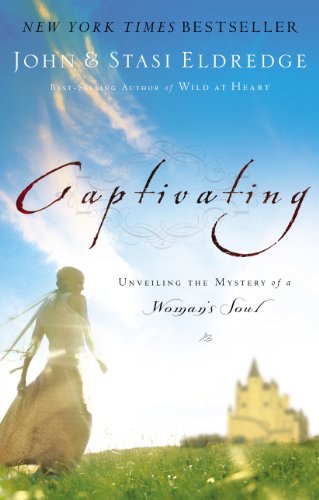
God wants a relationship with the real you. I’ve been reading Captivating by John and Stasi

Eldrege, and this quote caught my eye:

He wants your deep heart, that center place within that is the truest you. He is not interested in intimacy with the woman you think you are supposed to be. He wants intimacy with the real you (p. 123)

Though this book is specifically written to women, what I just quoted applies to both genders. Throughout the ages, God calls to our hearts. He longs for a relationship with people who aren’t going to hide themselves from Him. Read more

Preparing For The Bridegroom To Come Back

In Christ’s day, a Jewish bride-to-be had to be ready for her bridegroom to arrive at any moment. She prepared herself, and listened for the trumpet blasts and shouts signaling his eminent arrival. Jesus’ first coming followed a similar pattern, with a “friend of the bridegroom” telling people he was on His way. Scripture indicates His return will also follow a pattern like this.

As we approach the fall holy days of Yom Teruah (Feast of Trumpets), Yom Kippur (Day of Atonement), and Sukkot (Feast of Tabernacles), my mind has been on Jesus’ return. These days picture parts of God’s plan that have not yet been fulfilled, including Messiah’s second coming.

Here on this blog, we’ve often talked about how Jesus’ relationship with the church is like that of a Jewish bridegroom with his bride (you can read more about this in my posts “The Bridegroom’s Pledge” and “The Bridegroom Cometh!“). After the betrothal, the bride wouldn’t know exactly when the groom was going to come back for the wedding. She had to be ready, listening for the trumpet blasts and shouts signaling his eminent arrival. In much the same way, we don’t know when Christ will return and it’s very important that we get ready and keep watching for Him to come back. Read more

Immanuel: The Lord’s Incredible Response To Dealing With A Sinful People

The name Immanuel means “God with us.” It’s part of a beautiful Messianic prophesy that God delivered to a sinful king. When confronted by people who wouldn’t do as they were told, who thought they didn’t need God, and wanted to do their own thing, God’s response was to promise He would come and visit them. He followed through on that promise by coming to live on our plane of existence, getting as close to us as He could so He could relate to us and save us in a uniquely vulnerable way.

For Christians today, there’s a temptation to look at the stories of the Old Testament as just that — stories. These include the stories about all the bad kings of ancient Israel and Judah, which might not seem particularly relevant to us. King Ahaz of Judah was just one in a long list. He committed idolatry, sacrificed his own children, and tore valuables out of the Lord’s temple to pay-off his neighbors (2 Kings 16).

When Jerusalem was attacked during Ahaz’s reign, the Lord sent Isaiah to him with a message. Isaiah tells Ahaz, “Be careful, and keep calm. Don’t be afraid, neither let your heart be faint” because the Lord will not let enemy plots against His people succeed (Is. 7:3-9, WEB). Even though Ahaz was actively practicing evil, God was still concerned with Judah and He still held open a door for Ahaz to repent.

What happens next leads to one of the most famous prophesies in the Old Testament. But rather than just skip ahead to the Immanuel prophecy, let’s take a close look at the conversation God had with Azah that led up to this incredible promise. Read more

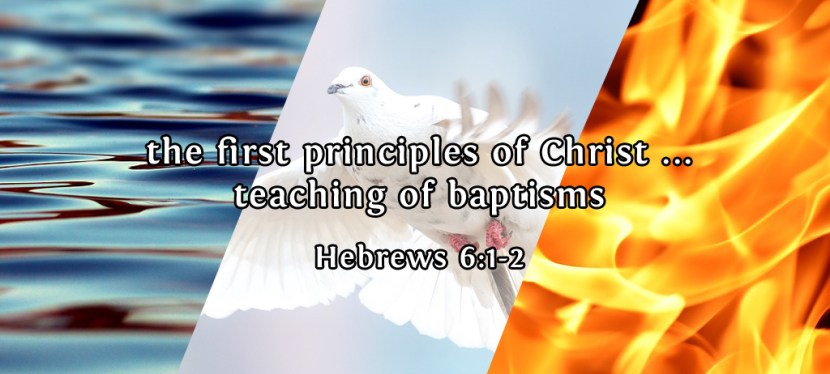
Water, Spirit, Fire: The Three Baptisms of Christianity

How many times have you been baptized?

Scripture talks about baptism — full immersion in water — as a first step in believers’ walks of faith. It’s an outward sign of our identification with God’s people and our commitment to leave our old lives behind. Some church groups stop there, some sprinkle people from a baptismal instead, and Messianics continue to mikvah on a semi-regular basis.

I thought practicing mikvah once a year (more or less) was an odd idea when I started attending a Messianic group. Part of me still does, though I don’t really see anything wrong with it. However, while we are supposed to undergo water baptism at least once, it doesn’t stop there. When Scripture talks about multiple baptisms they’re not all done with water. Here’s what John the Baptist said about the baptism he was doing and the baptisms Messiah would do:

I baptize you with water for repentance, but the one who comes after me is more powerful than I am, whose sandals I am not worthy to carry. He will baptize you with the Holy Spirit and fire. (Matt. 3:11, LEB)

Water, Spirit, Fire: The Three Baptisms of Christianity | LikeAnAnchor.com

Water, spirit, and fire — those are the three baptisms that John tells us believers in Jesus will go through. I think this is what the writer of Hebrews means when he describes “the doctrine of baptisms” (plural) as a foundation of Christianity (Heb. 6:1-2).

Read more

Does God Change His Mind About What He Expects Of Us?

Has God changed His mind about what He expects from people? Some think He has, or should. It’s the 21st century, they say. Those notions of morality are old-fashioned and need an update. Others think the change already happened and God doesn’t expect anything from you under the new covenant. You’re saved by grace and that’s it; no action required.

Neither of these ideas accurately reflects the picture God gives us in scripture. And while the idea of God brushing some rules under the rug can be a nice one if you plan to break those rules, it sets up a chilling precedent. Do you really want to serve a God who will change what’s expected of you or how He defines morality? If we can’t count on God to stay self-consistent we can’t trust Him and we’d have no hope to anchor our souls. Honestly, I find the idea of a God who changes the rules far more upsetting than that of a God who consistently expects certain things of His people.

God Wants You To Live

Thankfully, God reveals Himself in the Bible as reliable and consistent. That doesn’t mean He’s always predictable — He’s far too much for our minds to put Him in neat little boxes. But He will always act according to His character, keep His promises, and uphold His laws. Read more