With The Sound of Trumpets

We begin this year’s fall holy days today (Sept. 16, 2023) with Yom Teruah, the Day of Trumpets (also called Rosh Hoshana). When I think of this holy day, one of the things that comes to mind is a choir song called “With The Sound of Trumpets” that I’ve sung a few times over the years when I was involved in church choirs. It’s a majestic, beautiful song based on passages in 1 Thessalonians and Revelation that describe Jesus returning to earth with trumpet blasts.

The Day of Trumpets is probably the holy day that we know the least about. In Leviticus 23, where God outlines all the holy days for Moses and the people of ancient Israel, He simply says this: “Speak to the children of Israel, saying, ‘In the seventh month, on the first day of the month, there shall be a solemn rest for you, a memorial of blowing of trumpets, a holy convocation. You shall do no regular work. You shall offer an offering made by fire to Yahweh’” (Lev. 23:23-25, WEB). The word “trumpet” or “horn” actually doesn’t appear in the Hebrew. It could more literally be translated “a memorial of loud blasts,” though horn/shofar sounds are what is likely being referenced (NET footnote). The word teruah can include battle cries, shouts of alarm or joy, and blasts of trumpets (BDB H8643).

Numbers adds a little more detail to the instructions for Day of Trumpets, but most of that is focused on the burnt offering and grain offering associated with the holy day. Each of the holy days had specific offerings/sacrifices connected with them. For Trumpets, it was “one young bull, one ram, and seven lambs one year old without blemish” for the burnt offering, each accompanied by a grain offering of “finely ground flour mixed with olive oil.” Then, there was “one male goat for a purification offering to make an atonement for you.” And since Trumpets always falls on the first day of the seventh month in the Hebrew calendar, all this was “in addition to the monthly burnt offering and its grain offering, and the daily burnt offering with its grain offering and their drink offerings as prescribed, as a sweet aroma, a sacrifice made by fire to the Lord” (Num. 29:1-6, NET).

But what about for us, the New Covenant church of God? We should still keep the days that God made holy, because they are important to Him (i.e. they are God’s holy days, not belonging to a single group or time) and because Jesus and His first-century followers kept these days (see “Top 5 Reasons for Christians to Keep God’s Holy Days” and “What Are God’s Holy Days and Why Would We Care?“). However, the sacrifices and offerings in the temple aren’t for us today–Jesus’s perfect sacrifice means there’s no more need for burnt offerings (Heb. 7:26-27; 9:23-10:12). For us, that just leaves, “On the first day of the seventh month, you are to hold a holy assembly. You must not do your ordinary work, for it is a day of blowing trumpets for you” (Num. 29:1, NET).
What Do We Do on the Day of Trumpets?

Aside from the burnt offerings God told Israel to make for each holy day under the Old Covenant, there are three details about the Day of Trumpets that we learn in Leviticus and Numbers.

  1. This day is “a complete rest” (Lev. 23:24, WEB) when “You must not do your ordinary work” (Num. 29:1, WEB). In other words, it is a Sabbath (the Hebrew word shabbâthôn appears in Leviticus).
  2. The Day of Trumpets is “a holy assembly” (Lev. 23:24; Num. 29:1, WEB). In Hebrew, this phrase is qôdesh miqrâ’, a meeting time that God has called and which He makes holy.
  3. This miqra is “a memorial announced by loud horn blasts” (Lev. 23:24, WEB); “it is a day of blowing trumpets for you” (Num. 29:1, WEB). The word translated “loud horn blasts” and “blowing trumpets” is terû‛âh.

In my experience among Sabbath keeping groups, we’ve got the “holy assembly” part down. Every group I’ve attended with has a church service on Day of Trumpets, when we gather as an assembly of believers. Most of us have the Sabbath part down pretty well, too, though I’ve met some who don’t treat this as a day of complete rest. The trumpets part is a little more sporadic; the only group I attended with that consistently blew shofars and shouted with joy on Day of Trumpets was a Messianic group.

I’m consistently puzzled by why it’s not a standard practice among sabbath keepers to blow shofars or trumpets on the Day of Trumpets. I’ve been told that this was just “for Israel” and not us, but we call ourselves spiritual Israel (see Rom. 11) and say that we inherit other parts of the covenant God made with them (though on a higher, spiritual level) so I’m not sure why this would be an exception to that.
Charting the Festival Days

I’ve been thinking a lot recently about a study I did five years ago examining the different Hebrew words for the days that God calls holy to Him. In English, Bible translations might use words like “feast,” “festival,” “assembly,” or “convocation” to translate a few different words, and it’s not always consistent between different translations. This can muddy our understanding of the holy days and the distinctions in how God speaks about them.

For example, we often call all the holy days “feasts” and speak of “Feast of Trumpets” or “Feast of Tabernacles.” But of those two, only Tabernacles is a chag (feast or festival) in Hebrew. Trumpets is a day, yom. Both are mo’ed (appointed seasons). Trumpets and the first day of Tabernacles are miqra (convocations), but not the other six days of Tabernacles (though they’re still part of the chag). The eigth day of/after Tabernacles is a mo’ed, miqra, and atserah (solemn assembly). The only other atserah is the last day of the Feast of Unleavened Bread. We can lose track of these nuances in English.

To help myself keep track of and compare the Lord’s holy times, I made a chart. It lists all the days/observances outlined in Leviticus 23, with extra details drawn from other parts of the Torah, and notes on times the days show up in the New Testament. Here’s a copy of that chart if you’d like to download it:

Looking For The Lord’s Coming
For the spring holy days, it’s easy to find the parallels between Old and New Covenant. Passover pictured God delivering Israel from Egypt, and now it also pictured Jesus giving His life to deliver us from sin. Paul talks about how the Feast of Unleavened Bread pictured putting sin our of our lives and the way to keep the feast on a spiritual level as New Covenant Christians. According to Jewish tradition, Pentecost is the day that God established the Sinai covenant with Israel and delivered the Ten Commandments, then in the New Testament that’s the day He gave the church the Holy Spirit.

The fall holy days are a little less clear; they haven’t been fulfilled yet and Jesus hasn’t explained them to us as clearly as he did the ones connected with His first coming. Traditionally in the churches I attend, we’ve linked the Day of Trumpets with Jesus Christ’s second coming. We also say Atonement pictures God’s triumph over Satan (partly fulfilled by Jesus’s sacrifice), and Tabernacles pictures the millennium spoken of in Revelation and by the prophets. I think those assumptions for what these holy days picture seem reasonable and scripturally supported (but I still like to point out, for accuracy’s sake, that these links aren’t stated directly in the Bible).

Now we do not want you to be uninformed, brothers and sisters, about those who are asleep, so that you will not grieve like the rest who have no hope. For if we believe that Jesus died and rose again, so also we believe that God will bring with him those who have fallen asleep as Christians. For we tell you this by the word of the Lord, that we who are alive, who are left until the coming of the Lord, will surely not go ahead of those who have fallen asleep. For the Lord himself will come down from heaven with a shout of command, with the voice of the archangel, and with the trumpet of God, and the dead in Christ will rise first. Then we who are alive, who are left will be suddenly caught up together with them in the clouds to meet the Lord in the air. And so we will always be with the Lord. Therefore encourage one another with these words.

1 Thessalonians 4:13-18, NET

Trumpets and loud shouts are consistently linked with the events of Revelation leading up to Jesus’s return and with His second coming to earth (e.g. the seven trumpets of revelation and shouts of “hallelujah” and of warning). While there are arguments about the timing for all this and how it might line-up with holy days, the main thing we should notice is that Jesus is coming back. Like the virgins in Jesus’s parable, who didn’t know exactly when the bridegroom would return and waited for a shout to signal His arrival, we’re also waiting and listening for His return.

As we observe God’s holy Day of Trumpets this year, I pray that our hearts will be attuned and open to what He has to teach us through His special holy days. I pray we’ll reignite our anticipation for Jesus’s return, reminding ourselves that the future God promises us is a wonderful one. Sometimes, I think we can forget how great God’s plan is. We either get discouraged by how bad things are in the world today, or we get so used to it and complacent that we don’t really long for Jesus’s return. But Paul writes that even creation itself eagerly awaits the return of Jesus and our transformation as God’s children (Rom. 8:18-25). We can take comfort in God’s good plan for our future, and we should feel excitement about the prospect of our bridegroom-king returning.


Featured image by StockSnap from Pixabay

Song Recommendation: “With The Sound of Trumpets

Pentecost: A Time of Joyful, Spiritual Life

Pentecost kinda sneaked up on me this year. This is the only one of God’s holy days where we’re not given a specific date to observe it on (like the 14th of Nissan or the 1st of the 7th month). It moves around a little each year, always 50 days after the wave offering on the Sunday following Passover. This year, Pentecost is happening tomorrow, on June 5th.

Many Messianics and Jews count the omer each evening as a new day begins, praying a specific blessing. In Leviticus, God told His people through Moses, “You must count for yourselves seven weeks from the day after the Sabbath, from the day you bring the wave offering sheaf; they must be complete weeks. You must count fifty days—until the day after the seventh Sabbath” (Lev. 23:15-16, NET). That’s what the word “Pentecost” means–it’s transliterated from the Greek word pentēkostē, or “fiftieth” (as in we’ve counted up to the fiftieth day).

Much like Passover, Pentecost takes on additional significance for the New Testament church. After Jesus’s resurrection and His ascension to the Father on the Sunday when priests in the temple did the wave sheaf offering, He remained here on earth with His disciples for 40 days. Then, He told them to stay in Jerusalem and wait (Acts 1:1-5). They did as they were told, no doubt expecting something to happen at Pentecost since it was coming up just 10 days from when they last saw Jesus. “Now when the day of Pentecost had come, they were all together in one place,” and the Holy Spirit came on them in a powerful way (Acts 2:1-4).

What about us today? We have instructions from the Old Testament about Pentecost, traditions that tell us God established his Sinai covenant with Israel on this day, and the story of the New Testament era of the church getting its start on Pentecost in the first century. Clearly this day is important and God tells us to keep observing it, but what is the significance for believers today?

A Time of Hope and Sharing

When I’ve written about Pentecost before on this blog, I usually focus on the book of Ruth. It’s traditionally read on Pentecost because of the connection with gleaning. In Leviticus 23, God included these instructions when He told us how to keep Pentecost, which coincided with the wheat harvest:

When you gather in the harvest of your land, you must not completely harvest the corner of your field, and you must not gather up the gleanings of your harvest. You must leave them for the poor and the resident foreigner. I am the Lord your God.’”

Leviticus 23:22, NET

It’s this instruction to landowners that allowed Ruth to glean for grain in Boaz’s field to keep herself and Naomi alive (Ruth 2). She started gleaning during the barley harvest (around Passover time) and continued on through the wheat harvest (around Pentecost time). This is one of the social safety nets God built into ancient Israel. He cares deeply about the poor, widow, and orphan–the people who struggle most to provide for themselves. A good man like Boaz would even order his workers to drop extra grain for someone like Ruth (2:16).

Ideally, harvest isn’t a time for hoarding your new wealth into a barn. It’s a time for sharing your bounty and offering hope for a brighter future. This principle works on a spiritual level as well. If we sow “in righteousness” and “reap according to kindness” while seeking the Lord and doing good, we will “from the Spirit reap eternal life” (Hos. 10:12-13; Gal. 6:7-10, WEB). Pentecost is a joyous festival day where we remember all the good Lord has given us to “harvest” in our lives and gather with others who are also doing their best to sow good things.

Gifts from the Lord

When we look at the book of Exodus, keeping in mind that the Israelites left Egypt right after Passover and it took about two months to travel all the way to Mount Sinai on foot, it seems reasonable to accept the Jewish tradition that says God gave the 10 commandments on Pentecost. That would place the establishment of one of the most important covenants in scripture on this holy day.

At Sinai, Yahweh set Israel apart to Himself as “a kingdom of priests and a holy nation.” He warned them to purify themselves and respect His holiness, then presented the terms of the covenant starting with the 10 commandments (Ex. 19-24). Finally, the people said, “We will do all that Yahweh has said, and be obedient” (Ex. 24:7, WEB). This covenant was an incredible gift–the only fault with it was in the people who couldn’t keep the covenant as perfectly as God did. That’s why we needed a New Covenant established on better promises (Heb. 8).

Jesus enacted this New Covenant on Passover when He shared bread and wine with His disciples (Luke 22:19-20), outlined the terms of the new covenant (John 13-17), and died to end the old covenant and establish the new (Heb. 9:11-28). Then on Pentecost, He started giving His New Covenant church the gifts involved in these better promises.

Now when the day of Pentecost had come, they were all together in one place. Suddenly a sound like a violent wind blowing came from heaven and filled the entire house where they were sitting. And tongues spreading out like a fire appeared to them and came to rest on each one of them. All of them were filled with the Holy Spirit, and they began to speak in other languages as the Spirit enabled them. …

Peter stood up with the eleven, raised his voice, and addressed them… “this is what was spoken about through the prophet Joel: ‘And in the last days it will be,’ God says, ‘that I will pour out my Spirit on all people, and your sons and your daughters will prophesy, and your young men will see visions, and your old men will dream dreams. Even on my servants, both men and women, I will pour out my Spirit in those days, and they will prophesy.'”

Acts 2:1-4, 14, 16-18, NET

Life in the Spirit

There is a beautiful symmetry to think that on the same day, centuries apart, God gave His people the Law and the Spirit. For us today who “serve in the new life of the Spirit,” we get to keep the law on a spiritual level as God always intended. Because of Jesus Christ’s sacrifice, “the righteous requirement of the law may be fulfilled in us who do not walk according to the flesh but according to the Spirit” (Rom. 7:5-6; 8:3-5).

Pentecost helps remind us to rejoice in the abundant gifts God gives us, particularly the gift of His Spirit. God Himself is dwelling in us. That’s a wonderful thing. With that in mind, it’s no surprise that Paul writes about the “joy that comes from the Holy Spirit” (1 Thes. 1:6, NET) and says joy is part of the fruit of the spirit (Gal. 5:22). Even after being thrown out of a city for preaching God’s word, “the disciples were filled with joy and with the Holy Spirit” (Acts 13:52, NET). The joy of the Lord is a persistent, irrepressible thing.

We can also have this same joy when we follow God in the spirit and intent of the law.  We know that God’s kingdom consists of “righteousness, peace, and joy in the Holy Spirit. For the one who serves Christ in this way is pleasing to God and approved by people” (Rom. 8:17-18, NET). As we use the gifts God gives us and cultivate spiritual lives, God’s holy days remind us to also embrace the joy that comes along with being a child of the living God.

Now may the God of hope fill you with all joy and peace as you believe in him, so that you may abound in hope by the power of the Holy Spirit.

Romans 15:13, NET

Featured image by J F from Pixabay

The Beginning of Being Like God

As we draw closer to the Passover and continue examining ourselves (as I talked about in last week’s post) I keep thinking about how vital our understanding of God is to understanding ourselves. Paul tells us to examine, evaluate, and discern ourselves (1 Cor. 11:28-32), but in order to do that we need the help of God’s spirit, as Paul talks about earlier in 1 Corinthians. To see ourselves clearly and know what needs to change (and how to make that change), we need a wisdom that we can only get by understanding God.

Understanding, Wisdom, and Fear

I like to study 1 Corinthians at this time of year because (as I wrote about in more detail a couple years ago), this epistle references the Exodus story, Passover, and the Feast of Unleavened Bread over and over. Before Paul begins talking directly about Passover, he expands on the idea that the wisdom of God is very different than what human beings speak of as wisdom (1 Cor. 1:18-31, quoting Jer. 9:23-24). Knowing and understanding the Lord is far more important than having wealth, power, or worldly wisdom. Echoing a sentiment expressed throughout scripture, Paul tells us a proper perspective on God is where true wisdom begins.

The beginning of wisdom is to fear the Lord,
and acknowledging the Holy One is understanding.

Proverbs 9:10, NET

The idea that we ought to fear a God of love seems odd to many of us, mostly because we think of fear in the sense of being terrified of something scary, dangerous, or bad. But I think the more we learn about God, the more we realize that our love for Him must also be mixed with awe, reverence, and even fear. A devotional book that I’ve been reading puts it this way:

when we approach the Holy One with casual familiarity, we do not take Him as seriously as we ought, and we do not take our sin as seriously as we ought. Fear–not of punishment but of the overwhelming greatness of God–sees Him correctly. When this fear grips us, we begin to understand the enormity of the gospel and of our God. That understanding begins to rearrange our lives. And that is what wisdom is all about.

CHRIS TIEGREEN, 365 POCKET DEVOTIONS, DAY 40

Understanding God leads to wisdom, which leads to us changing our lives. The more we know Him, the more we’ll want to be like Him, and the more clearly we’ll see what we need to keep working on in order to move closer to that goal. Wisdom begins with fearing the Lord, and change happens as we start to become wise.

Knowing God through His Spirit

After Paul explains that God’s people don’t often seem wise in the world’s eyes (and if they do, they’re not supposed to glory/boast about it), he starts to talk about “the wisdom of God hidden in a mystery.” God has decided to share with us deep, wonderful things that other people haven’t even imagined, and he has “revealed these to us by the Spirit” (1 Cor. 2:7-10, NET).

For who among men knows the things of a man except the man’s spirit within him? So too, no one knows the things of God except the Spirit of God. Now we have not received the spirit of the world, but the Spirit who is from God, so that we may know the things that are freely given to us by God. And we speak about these things, not with words taught us by human wisdom, but with those taught by the Spirit, explaining spiritual things to spiritual people. … we have the mind of Christ.

1 Corinthians 2:11-13, 16, NET

This is where we get wisdom–from God’s spirit working inside us and making our minds like Christ’s mind. The closer we draw to God the more we understand Him, and the more we understand Him the more in awe we are. And the more all of that comes together as we grow and change and learn, the more we become like God.

Wisdom Can Change Us

Real, godly wisdom is an incredible thing. Last year, I spent months studying and writing about wisdom in a series of 10 posts. We could write whole books about Godly wisdom, but a quick summary of the things God reveals about His wisdom can be found in James’s epistle.

Who is wise and understanding among you? By his good conduct he should show his works done in the gentleness that wisdom brings. … the wisdom from above is first pure, then peaceable, gentle, accommodating, full of mercy and good fruit, impartial, and not hypocritical. And the fruit that consists of righteousness is planted in peace among those who make peace.

James 3:13, 16-18, NET

A proper perspective on God is the starting place for this kind of wisdom. And much like fear is the beginning of wisdom, I think we can also say that wisdom is a beginning to being like God. Notice how much of this description of godly wisdom involves character traits we can develop and/or actions that we can take. If we want to examine ourselves, this is an excellent place to start. As we consider God’s goodness and greatness, learning more and more about who He is and how we can be like Him, we ought to meditate on the characteristics of His wisdom. Every aspect of “the wisdom from above” is a part of God; are they also a part of us?

Featured image by Pearl via Lightstock

Examining Ourselves by Examining God

Every year before Passover, Christian and Messianic Jewish believers who follow Jesus’s instruction to keep this day “in remembrance of me” also follow Paul’s instruction to examine ourselves. Before we eat the unleavened bread and drink the wine as Jesus did “on the night in which he was betrayed,” we must examine ourselves. It’s a serious matter, for “the one who eats and drinks in an unworthy way eats and drinks judgment to himself if he doesn’t discern the Lord’s body” (1 Cor. 11:23-31. WEB).

As I ponder the question of self-examination today, about 4 weeks before Passover, I’m struck by something Job says near the end of the book bearing his name. After all his trials, all the discussions with his friends, and all of God’s replies, Job says,

I had heard of you by the hearing of the ear,
but now my eye has seen you.
Therefore I despise myself,
and I repent in dust and ashes!”

Job 42:5-6, NET

It’s easy to look at ourselves and think we’re doing okay unless something comes along to shake up that self-perception. Job thought he was a righteous man. He was even right about that, as God points out when He describes Job as “a blameless and upright man” at the beginning of the story (Job 1:8, NET). But Job still had room for improvement, and the more he learned about God the more fully he realized how much he still had to learn. The better we can see God, the less impressive we are to ourselves.

Heading Toward His Perfection

It is important to regularly “put yourselves to the test to see if you are in the faith; examine yourselves!” (2 Cor. 13:5, NET). We can’t accurately evaluate ourselves, though, unless we understand the standard we’re measuring ourselves by. In other words, if we don’t have some idea of what we are supposed to be we don’t know how well we’re doing.

See what sort of love the Father has given to us: that we should be called God’s children—and indeed we are! For this reason the world does not know us: because it did not know him. Dear friends, we are God’s children now, and what we will be has not yet been revealed. We know that whenever it is revealed we will be like him, because we will see him just as he is. And everyone who has this hope focused on him purifies himself, just as Jesus is pure.

1 John 3:1-3, NET

God is calling us into His family and we are His children right now. We’re also growing and changing, becoming more and more like Him. At least, that’s what should be happening. And if we’re going to examine ourselves to see how much progress we’re making on becoming like God, we need to know what it means to be like Him. We won’t achieve perfection in this life, but we should be heading there. And if we want to know what perfection looks like, we just need to look to God for an example of how we’re supposed to be.

Glimpsing His Unsearchable Riches

I keep talking about the need to see and understand God as if that’s something we could actually do as human beings. While we are invited to know Him in an increasingly familiar way, part of knowing Him involves realizing that our minds can’t warp themselves around His fullness. His thoughts are not like our thoughts (Is. 55:8-9) and “the riches both of wisdom and the knowledge of God” are so deep we’ll never plumb them all (Rom. 11:33).

I find this an encouraging realization. We’re never going to hit a point where there’s nothing left to work on, no way to grow, or nothing more to learn. The more we follow God, the more we get to engage with Him in a dynamic, growing relationship.

But just as it is written, “Things that no eye has seen, or ear heard, or mind imagined, are the things God has prepared for those who love him.” God has revealed these to us by the Spirit. For the Spirit searches all things, even the deep things of God.

1 Corinthians 2:9-10, NET

By God’s spirit inside us, we get an increasingly clear picture of what it means to be like God. We even get to put on “the mind of Christ” (1 Cor. 2:6-16). The better we know Him, the better we understand who we are meant to be and what we are supposed to do on the way toward being that person. That’s why I say that if we want to examine ourselves, we need to “examine” God. Self-examination is vital, but that process isn’t all about us even though the word “self” is in there. It’s about becoming like God.

To Fix Ourselves or to Be Like God

Putting on God’s nature often goes against our ingrained impulses. We are so used to reacting in certain ways (like anger if someone shouts at us, or spite if we’re ill treated) that trying to fix our human nature might seem impossible. And it is if we try to do that on our own. Thankfully, we’re not on our own and we don’t have to start from scratch.

“We have two options: we can try to reform the sinful human nature, or we can ask God for His nature. The former approach has never in history proven successful. Our only remaining option is to ask God.”

Chris Tiegreen, 365 Pocket Devotions, Day 78

Trying to make ourselves like God without putting on His nature is a futile endeavor. We need a more drastic change than just trying to be good or nice people. It reminds me of a C.S. Lewis quote, where he talks about the need to transform rather than just improve. Using the sort of agricultural analogy Jesus was so fond of in His parables, Lewis says,

“If I am a field that contains nothing but grass-seed, I cannot produce wheat. Cutting the grass may keep it short: but I shall still produce grass and no wheat. If I want to produce wheat, the change must go deeper than the surface. I must be ploughed up and re-sown.”

C.S. Lewis, Mere Christianity, book IV chapter 8

Returning to the topic of self-examination, the goal of that is not to fix ourselves by our own efforts. It’s to look for evidence of Jesus Christ in us (2 Cor. 13:5). It’s to identify areas where we’re not yet like God and ask Him to change us. The focus should be on God–who He is and who He wants us to be in Him–as much (or even more) than on ourselves.

The more we learn about God and seek to know Him, the more clearly we see ourselves. When we turn away from the Lord, our minds can deceive us into thinking we’re something different than we are. But when we turn to the Lord, who can “probe into people’s minds” and “examine people’s hearts,” we can then see ourselves as He sees us (Jer. 17:5-10, NET). We may, like Job, abhor what we see and need to repent, but there are blessings that follow something like that because God responds so positively to sincere repentance. When we look at ourselves in light of God’s goodness and realize we still aren’t perfect, it leads to humility. And when we take that humble attitude to God and ask Him to share His mind and nature with us, He will respond to our self-examination by transforming us.

Featured image by Inbetween via Lightstock

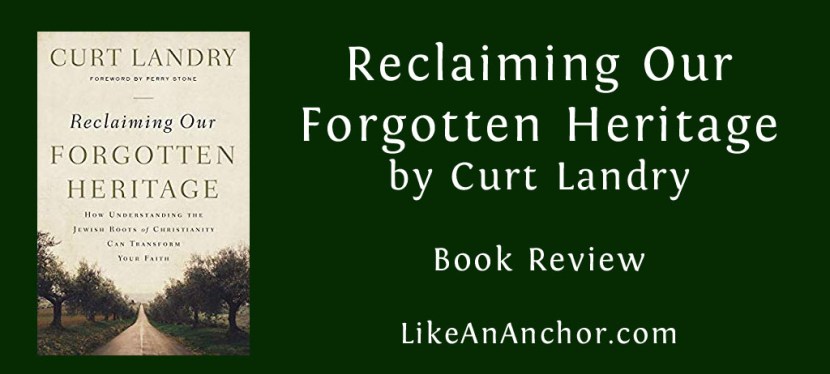
Book Review: Reclaiming Our Forgotten Heritage by Curt Landry

Back in February, I read an article on Bible Gateway interviewing Curt Landry about his new book Reclaiming Our Forgotten Heritage: How Understanding the Jewish Roots of Christianity Can Transform Your Faith. As a Messianic believer, I was excited that a book about appreciating the Jewish roots of our faith was being released by a mainstream Christian publisher like Thomas Nelson.

I didn’t get to read the book until recently because I was distracted by other new releases, some of which I had advance reader copies to review, and I was waiting for a library to buy it. I finally got a copy through an inter-library loan program and eagerly sat down to read. Unfortunately, while this book contains some really good content, I felt like it was too much about Curt Landry and not enough about its stated purpose of helping people understand how the Jewish roots of Christianity can transform their faith.

Our Forgotten Heritage

When Jesus arrived here on earth (or Yeshua, to use His Hebrew name), He didn’t come to bring a new religion. Yeshua came as the next stage in God’s plan which He’d laid out from the foundation of the world. What we now call Christianity has its roots in the faith of the ancient Israeli people and the Jews of Jesus’ time. Though this phrasing is mine, this is one of the main arguments of Landry’s book and it’s the part I found most fascinating.

Read more

Exodus To Corinthians: A Passover Message For The New Testament Church

In 1 Corinthians, Paul makes several references to leavening and to Passover. For many readers today, these references mean very little because so many Christian churches have left the roots of their faith, which Paul was referencing here. In order to really understand key passages of 1 Corinthians, we need to understand Passover and the Feast of Unleavened Bread.

I know some (perhaps quite a few) of you are Christians who don’t keep Passover, but I hope you’ll still keep reading today’s post. I think you’ll find it interesting and maybe it’ll give you something new to think about and study.

Passover Background

The Passover story begins in Exodus 12. We’re nearing the end of the plagues of Egypt, and the Lord is telling Moses what the Israelite must do to avoid the final plague — the death of the first born. In the first month of the year, on the evening that begins the 14th day (Hebrew days begin at sunset), Israel was to kill a young male lamb, paint the door posts of their houses with its blood, then roast the lamb whole and eat it with unleavened bread and bitter herbs (Ex. 12:1-13).

This day shall be to you for a memorial, and you shall keep it a feast to Yahweh: throughout your generations you shall keep it a feast by an ordinance forever. (Ex. 12:14, WEB)

The Lord goes on to describe a festival of unleavened bread (matzah) that follows the Passover. For seven days, no leavening (hametz) is permitted in anyone’s house and whoever eats leavened food will be cut off from God’s people (Ex. 12:15-20). Later instructions in Leviticus clarify the timing of all this, stating that Passover is on the 14th and Unleavened Bread begins with a holy convocation on the 15th, then ends with another holy convocation on the seventh day (Lev. 23:4-8). The two holy days are Sabbaths of rest where you are not to work, much like the weekly Sabbath.

The New Covenant Passover

Moving into the New Testament, the gospels make careful note of Passovers that Jesus kept during his ministry. The first is recorded in John 2:13-23. The second is skimmed over, though Luke 6:1 probably references the last day of Unleavened Bread. John 6:4 mentions the third Passover, and Christ’s final Passover is recorded in detail by all four gospels because that was the day He died.

He said to them, “I have earnestly desired to eat this Passover with you before I suffer, for I tell you, I will no longer by any means eat of it until it is fulfilled in God’s Kingdom.” (Luke 22:15-16, WEB)

He then proceeded to institute new Passover symbols for New Covenant believers. Jesus will not partake of the Passover again until the kingdom of God comes in the future, but He tells us to do so in memory of Him (Luke 22:17-20).

For I received from the Lord that which also I delivered to you, that the Lord Jesus on the night in which he was betrayed took bread. When he had given thanks, he broke it, and said, “Take, eat. This is my body, which is broken for you. Do this in memory of me.” In the same way he also took the cup, after supper, saying, “This cup is the new covenant in my blood. Do this, as often as you drink, in memory of me.” (1 Cor. 11:23-25, WEB)

Exodus To Corinthians: A Passover Message For The New Testament Church | LikeAnAnchor.com
Photo credit: congerdesign via Pixabay

Honoring Jesus By Keeping The Passover

The passage we just read from 1 Corinthians 11 is part of the most obvious Passover reference in this letter. Paul goes on to share instructions on how we’re supposed to prepare for Passover, as well as warnings about the dangers of not keeping Passover the correct way. Read more