What Does “I Lift Up My Soul” Mean?

Have you ever been curious about the phrase, “I lift up my soul”? It’s something I’ve heard so much by this point in my life as a Christian that I don’t really think about it anymore. There’s even a “To Thee I Lift My Soul” song in our church hymnal. After hearing, reading, and singing it so often, I just assume I know what it means.

Then I read the first couple verses of Psalm 25 again this past Tuesday, and I started wondering. Is “I lift up my soul” just a poetic phrase for prayer–directing your soul up to God? Or might it be something else; like perhaps David saying he’s lifting up his soul like an offering? Maybe the meaning isn’t as clear as I thought. At the very least, I suspect there’s more here to learn.

Image of a woman with her hands raised to heaven, with text from Psalm 25:1-2, CJB version: "I lift my inner being to you, Adonai; I trust you, my God. Don’t let me be disgraced, don’t let my enemies gloat over me.”
Image by Ruby-Rose from Lightstock

Trusting With The Soul

We find the phrase “I lift up my soul” in three psalms where the writers talk about lifting up their souls to God. Let’s take a look at those verses:

To you, Yahweh, I lift up my soul.
My God, I have trusted in you.
Don’t let me be shamed.
Don’t let my enemies triumph over me.

Psalm 25:1-2, WEB

Preserve my soul, for I am godly.
    You, my God, save your servant who trusts in you.
Be merciful to me, Lord,
    for I call to you all day long.
Bring joy to the soul of your servant,
    for to you, Lord, do I lift up my soul.

Psalm 86:2-4, WEB

Cause me to hear your loving kindness in the morning,
for I trust in you.
Cause me to know the way in which I should walk,
for I lift up my soul to you.

Psalm 143:8, WEB

These psalms are all prayers directed at God asking Him for something. They’re also about trust; every one of these psalms mentions it when they’re talking about lifting up the soul. This makes sense since there isn’t much point in prayer if you don’t trust God enough to think He might answer.

As I read these psalms, I see a deeper level of trust than just the basic thinking God might be paying attention. There’s a hopeful expectation here and a certainty that God can and will respond. This type of trusting prayer involves the direction and dedication of the soul (naphesh in Hebrew, which means a breathing, living being). You don’t point your soul toward someone who doesn’t care or lift up your life to them if you don’t think they’ll help. We need trust if we’re going to have a “lift up the soul” type of relationship with God.
Image of a man walking in the woods reading a Bible, with text from Psalm 86:2-4, TLV version: “Watch over my soul, for I am godly. You are my God—save Your servant who trusts in You.
Be gracious to me, my Lord, for to You I cry all day. Gladden the soul of Your servant, for to You, my Lord, I lift up my soul.”
Image by HarveyMade from Lightstock

A Longing Soul

The NET translators opt for a less poetic and more literal phrase when translating “lift up my soul.” In this version, Psalm 25:1 reads, “O Lord, I come before you in prayer.” A footnote on that verse says, “To ‘lift up’ one’s ‘life’ to the Lord means to express one’s trust in him through prayer.” The translators opt for the “prayer” meaning in this verse, though they also see nuances in the Hebrew that they discuss in another footnote.

Hebrew words often have multiple meanings. The word “lift up” is nasa, and it’s no exception to this rule. The basic meaning is to lift, carry, or take. The phrase can gain slightly different meanings depending on context. In the Psalms, for example, it’s used figuratively rather than of literally picking up and carrying an object.

In a footnote on Psalm 143:8, the NET translators say, “The Hebrew expression נָאָשׂ נֶפֶשׁ (naʾas nefesh, ‘to lift up [one’s] life’) means ‘to desire; to long for.'” From this perspective, nasa seems synonymous with the longing soul spoken of in other psalms and songs where the writers want to be close with God more than anything else (Psalm 63:1; 84:1-2; 130:6).

Yes, in the way of your judgments, Yahweh, we have waited for you.
    Your name and your renown are the desire of our soul.
With my soul I have desired you in the night.
    Yes, with my spirit within me I will seek you earnestly;
    for when your judgments are in the earth, the inhabitants of the world learn righteousness.

Isaiah 26:8-9, WEB

This also makes me think of King Solomon’s prayer at the temple dedication. He asked that God would hear His wayward people’s prayers if they “return to you with all their heart and being … and direct their prayers to you” (1 Kings 8:48, NET). Similarly, Samuel urged Ancient Israel, “direct your hearts to Yahweh, and serve him only” (1 Sam. 7:3, WEB). Paul does much the same thing in one of his letters, praying, “may the Lord direct your hearts toward the love of God and the endurance of Christ” (2 Thes. 3:5, NET).

The desires of our souls and the directions of our hearts show God what matters to us. When things are right between us, our prayers show that He matters to us. Lifting up our longing souls to Him demonstrates that He’s our hearts’ desire.

Image of a woman worshiping with hand raised and a smile on her face, with text from Psalm 143:8, TLV version: “Make me hear Your lovingkindness in the morning,
for in You I trust. Show me the way I should go, for to You I lift up my soul.”
Image by Pearl from Lightstock

Other Things We Could Lift Up

Trusting God with our lives and showing our desire for Him in our prayers is a very good thing. There are also negative things that we could lift our souls to, but shouldn’t. In Psalm 24:4, the writer says that only someone “who has not lifted up his soul to falsehood” can dwell with God. In Hosea 4:8, God charges His people will wickedness when they “set their heart on their iniquity” (“set their heart” is the same phrase in Hebrew as “lift their soul”). We can choose whether we aim our souls in the right direction or turn them toward evil.

The Theological Wordbook of the Old Testament (TWOT) lists three categories of meaning for nasa. The first is a literal or figurative lifting up, which we’ve already looked at. The second is “bearing the guilt or punishment of sin” (entry 1421). There are several Bible verses that say the soul/person who sins will bear/lift/carry their iniquity for that transgression. Here are two examples:

“If anyone (naphesh) sins, doing any of the things which Yahweh has commanded not to be done, though he didn’t know it, he is still guilty, and shall bear (nasa) his iniquity. He shall bring a ram without defect from of the flock, according to your estimation, for a trespass offering, to the priest; and the priest shall make atonement for him concerning the thing in which he sinned and didn’t know it, and he will be forgiven.

Leviticus 5:17-18

The soul (naphesh) who sins, he shall die. The son shall not bear (nasa) the iniquity of the father, neither shall the father bear (nasa) the iniquity of the son. The righteousness of the righteous shall be on him, and the wickedness of the wicked shall be on him.

Ezekiel 18:20, WEB

When we sin, we’re carrying that like something we’ve lifted up and put on our shoulders. We don’t bear the iniquity of someone else, but we are responsible for the things that we do as a living, breathing naphesh. This would be a big problem for us if we had to keep carrying all our sins, but God provides a solution.

Carrying Away Our Sins

Image of a woman looking up at the sky with the blog's title text and the words "As people who've had Jesus lift away our sins, we can lift up our souls and lives to Him trusting that God will continue to hear and deliver us."
Image by Brightside Creative from Lightstock

The third category of meanings for nasa describes the solution to the problem of us bearing the load of our gilt and sin. If you’re carrying something, someone else can come in, lift that burden, and carry it away. That’s what Jesus does with our sins. Because of His sacrifice, “Sin can be forgiven and forgotten, because it is taken up and carried away” (TWOT entry 1421).

Yet it pleased Yahweh to bruise him.
    He has caused him to suffer.
When you make his soul (naphesh) an offering for sin,
    he will see his offspring.
He will prolong his days
    and Yahweh’s pleasure will prosper in his hand.
After the suffering of his soul (naphesh),
    he will see the light and be satisfied.
My righteous servant will justify many by the knowledge of himself;
    and he will bear (nasa) their iniquities.
Therefore I will give him a portion with the great.
    He will divide the plunder with the strong;
because he poured out his soul to death
    and was counted with the transgressors;
yet he bore the sins of many
    and made intercession for the transgressors.

Isaiah 53:10-12, WEB

There are so many verses that speak of Jesus taking away our sins, washing away our sins, and removing sin from us (for example, John 1:29; Rom. 11:26-27; Heb. 9:25-26; 1 John 3:5). Our souls were weighed down with sin, but He lifts that burden off our shoulders. We don’t have to carry our guilt anymore. We get to do something else with our souls now.

The psalmists wrote centuries before Jesus’s sacrifice but (judging by the Messianic psalms he wrote) we know at least David had an idea of the incredible deliverance God promised. These writers also had the Old Covenant sacrifices pointing toward the Messiah’s ultimate sacrifice that would take away sin once and for all. They knew less about God’s plan for redemption than we do today, yet they were still so filled with trust and confidence in God that they lifted up their souls to Him.

How much more should we lift our souls to God now that we’ve been freed from carrying around the burden of sin? Lightened and rescued by Jesus’s sacrifice, we lift our hands, hearts, and souls to God with joy and thanksgiving, confident in His goodness and faithfulness.

For there is one God and one intermediary between God and humanity, Christ Jesus, himself human, who gave himself as a ransom for all, revealing God’s purpose at his appointed time. … So I want the men in every place to pray, lifting up holy hands without anger or dispute.

1 Timothy 2:5-6, 8, NET

Featured image by Temi Coker from Lightstock

Song Recommendation: “Lift” by Sue Samuel

Pentecost: A Time of Joyful, Spiritual Life

Pentecost kinda sneaked up on me this year. This is the only one of God’s holy days where we’re not given a specific date to observe it on (like the 14th of Nissan or the 1st of the 7th month). It moves around a little each year, always 50 days after the wave offering on the Sunday following Passover. This year, Pentecost is happening tomorrow, on June 5th.

Many Messianics and Jews count the omer each evening as a new day begins, praying a specific blessing. In Leviticus, God told His people through Moses, “You must count for yourselves seven weeks from the day after the Sabbath, from the day you bring the wave offering sheaf; they must be complete weeks. You must count fifty days—until the day after the seventh Sabbath” (Lev. 23:15-16, NET). That’s what the word “Pentecost” means–it’s transliterated from the Greek word pentēkostē, or “fiftieth” (as in we’ve counted up to the fiftieth day).

Much like Passover, Pentecost takes on additional significance for the New Testament church. After Jesus’s resurrection and His ascension to the Father on the Sunday when priests in the temple did the wave sheaf offering, He remained here on earth with His disciples for 40 days. Then, He told them to stay in Jerusalem and wait (Acts 1:1-5). They did as they were told, no doubt expecting something to happen at Pentecost since it was coming up just 10 days from when they last saw Jesus. “Now when the day of Pentecost had come, they were all together in one place,” and the Holy Spirit came on them in a powerful way (Acts 2:1-4).

What about us today? We have instructions from the Old Testament about Pentecost, traditions that tell us God established his Sinai covenant with Israel on this day, and the story of the New Testament era of the church getting its start on Pentecost in the first century. Clearly this day is important and God tells us to keep observing it, but what is the significance for believers today?

A Time of Hope and Sharing

When I’ve written about Pentecost before on this blog, I usually focus on the book of Ruth. It’s traditionally read on Pentecost because of the connection with gleaning. In Leviticus 23, God included these instructions when He told us how to keep Pentecost, which coincided with the wheat harvest:

When you gather in the harvest of your land, you must not completely harvest the corner of your field, and you must not gather up the gleanings of your harvest. You must leave them for the poor and the resident foreigner. I am the Lord your God.’”

Leviticus 23:22, NET

It’s this instruction to landowners that allowed Ruth to glean for grain in Boaz’s field to keep herself and Naomi alive (Ruth 2). She started gleaning during the barley harvest (around Passover time) and continued on through the wheat harvest (around Pentecost time). This is one of the social safety nets God built into ancient Israel. He cares deeply about the poor, widow, and orphan–the people who struggle most to provide for themselves. A good man like Boaz would even order his workers to drop extra grain for someone like Ruth (2:16).

Ideally, harvest isn’t a time for hoarding your new wealth into a barn. It’s a time for sharing your bounty and offering hope for a brighter future. This principle works on a spiritual level as well. If we sow “in righteousness” and “reap according to kindness” while seeking the Lord and doing good, we will “from the Spirit reap eternal life” (Hos. 10:12-13; Gal. 6:7-10, WEB). Pentecost is a joyous festival day where we remember all the good Lord has given us to “harvest” in our lives and gather with others who are also doing their best to sow good things.

Gifts from the Lord

When we look at the book of Exodus, keeping in mind that the Israelites left Egypt right after Passover and it took about two months to travel all the way to Mount Sinai on foot, it seems reasonable to accept the Jewish tradition that says God gave the 10 commandments on Pentecost. That would place the establishment of one of the most important covenants in scripture on this holy day.

At Sinai, Yahweh set Israel apart to Himself as “a kingdom of priests and a holy nation.” He warned them to purify themselves and respect His holiness, then presented the terms of the covenant starting with the 10 commandments (Ex. 19-24). Finally, the people said, “We will do all that Yahweh has said, and be obedient” (Ex. 24:7, WEB). This covenant was an incredible gift–the only fault with it was in the people who couldn’t keep the covenant as perfectly as God did. That’s why we needed a New Covenant established on better promises (Heb. 8).

Jesus enacted this New Covenant on Passover when He shared bread and wine with His disciples (Luke 22:19-20), outlined the terms of the new covenant (John 13-17), and died to end the old covenant and establish the new (Heb. 9:11-28). Then on Pentecost, He started giving His New Covenant church the gifts involved in these better promises.

Now when the day of Pentecost had come, they were all together in one place. Suddenly a sound like a violent wind blowing came from heaven and filled the entire house where they were sitting. And tongues spreading out like a fire appeared to them and came to rest on each one of them. All of them were filled with the Holy Spirit, and they began to speak in other languages as the Spirit enabled them. …

Peter stood up with the eleven, raised his voice, and addressed them… “this is what was spoken about through the prophet Joel: ‘And in the last days it will be,’ God says, ‘that I will pour out my Spirit on all people, and your sons and your daughters will prophesy, and your young men will see visions, and your old men will dream dreams. Even on my servants, both men and women, I will pour out my Spirit in those days, and they will prophesy.'”

Acts 2:1-4, 14, 16-18, NET

Life in the Spirit

There is a beautiful symmetry to think that on the same day, centuries apart, God gave His people the Law and the Spirit. For us today who “serve in the new life of the Spirit,” we get to keep the law on a spiritual level as God always intended. Because of Jesus Christ’s sacrifice, “the righteous requirement of the law may be fulfilled in us who do not walk according to the flesh but according to the Spirit” (Rom. 7:5-6; 8:3-5).

Pentecost helps remind us to rejoice in the abundant gifts God gives us, particularly the gift of His Spirit. God Himself is dwelling in us. That’s a wonderful thing. With that in mind, it’s no surprise that Paul writes about the “joy that comes from the Holy Spirit” (1 Thes. 1:6, NET) and says joy is part of the fruit of the spirit (Gal. 5:22). Even after being thrown out of a city for preaching God’s word, “the disciples were filled with joy and with the Holy Spirit” (Acts 13:52, NET). The joy of the Lord is a persistent, irrepressible thing.

We can also have this same joy when we follow God in the spirit and intent of the law.  We know that God’s kingdom consists of “righteousness, peace, and joy in the Holy Spirit. For the one who serves Christ in this way is pleasing to God and approved by people” (Rom. 8:17-18, NET). As we use the gifts God gives us and cultivate spiritual lives, God’s holy days remind us to also embrace the joy that comes along with being a child of the living God.

Now may the God of hope fill you with all joy and peace as you believe in him, so that you may abound in hope by the power of the Holy Spirit.

Romans 15:13, NET

Featured image by J F from Pixabay

The Lord Is a Warrior, and That’s a Good Thing

I’ve been revisiting my Spiritual Warfare series of posts as I work on my next study guide about the Armor of God. While most of that series’ focus is on us fighting spiritual battles with God’s help, studying that topic also highlights a role God fills which I don’t think we talk about all that often. We often discuss the Lord as shepherd, priest, savior, king, deliverer, and much more. He’s also a warrior, but when was the last time you heard anyone quote Isaiah 63:1-6, where the Lord is dressed in garments stained red with the blood of those who opposed Him?

I suspect part of the reason we shy away from discussing verses like that is we’re not really sure what to do with them. I’m as much guilty of that as anyone else. Take, for example, God’s command that ancient Israel completely wipe out the inhabitants of the promised land when they went in to claim their inheritance. I understand that God is righteous in all He does and that His perspective is different than mine, and I know this is a command He was within His rights to give. I trust Him, but I still don’t want to think too much about the violence of that.

At the same time, knowing God can and does fight is strangely comforting. I want the Warrior God by my side when I read that “our struggle is not against flesh and blood, but against the rulers, against the powers, against the world rulers of this darkness, against the spiritual forces of evil in the heavens” (Eph. 6:12, NET). I can’t fight that on my own. Maybe knowing what kind of enemy we face and how helpless we’d be against it on our own is why so many Bible writers find the image of God as a warrior something to rejoice about.

The Warrior God

It’s a long passage when typed out in verse like this, but I want to quote the first part of Isaiah 63 so we can take a closer look at it together. While the violent imagery is probably the first thing we notice when reading this, I also want to notice the tone. How does the author want us to feel about this picture of God?

Who is this who comes from Edom,
with dyed garments from Bozrah?
Who is this who is glorious in his clothing,
marching in the greatness of his strength?
“It is I who speak in righteousness,
mighty to save.”
Why is your clothing red,
and your garments like him who treads in the wine vat?

“I have trodden the wine press alone.
Of the peoples, no one was with me.
Yes, I trod them in my anger
and trampled them in my wrath.
Their lifeblood is sprinkled on my garments,
and I have stained all my clothing.
For the day of vengeance was in my heart,
and the year of my redeemed has come.
I looked, and there was no one to help;
and I wondered that there was no one to uphold.
Therefore my own arm brought salvation to me.
My own wrath upheld me.
I trod down the peoples in my anger
and made them drunk in my wrath.
I poured their lifeblood out on the earth.”

Isaiah 63:1-6, WEB

Isaiah isn’t startled or horrified by the idea of God trampling His enemies in a winepress. He’s impressed. He uses words like, “glorious,” “greatness,” and “righteousness” to describe the Lord in this passage. When Yahweh is speaking, He talks of His vengeance and wrath as being connected to salvation and redemption.

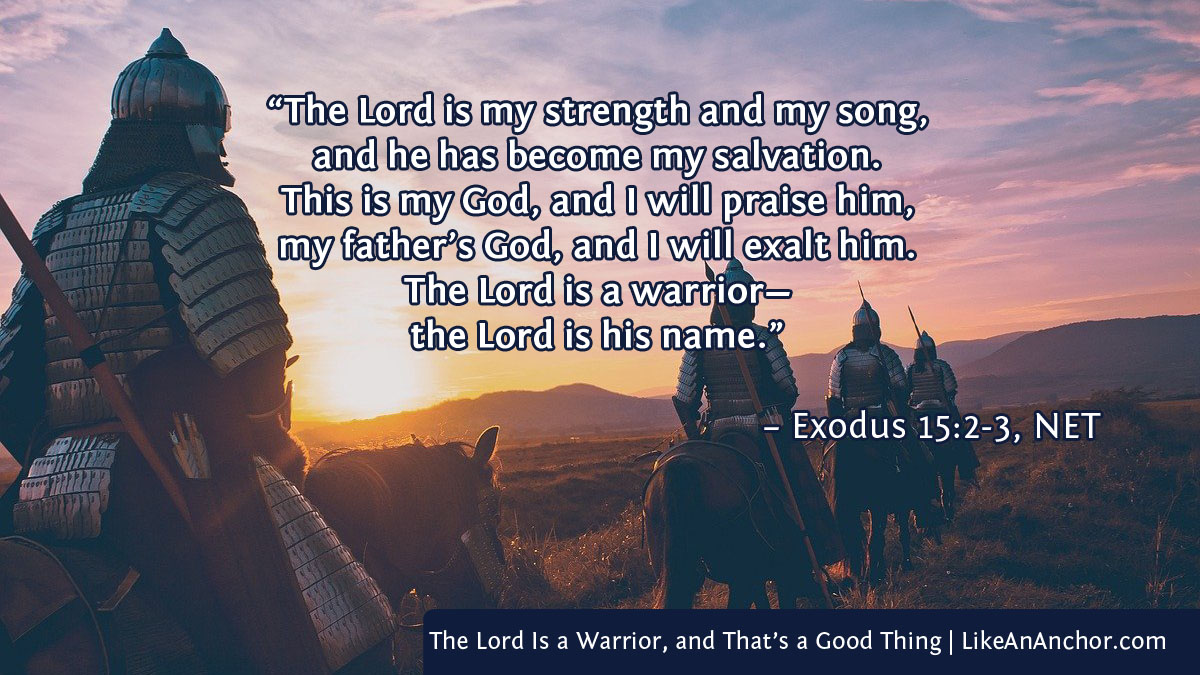
It might not be the first thing that comes to mind when we think of God, but the Lord as a warrior is a solidly Biblical image. And, like everything else God is, His actions as Warrior are a good thing. There are many other passages that speak to this theme as well, particularly in songs praising the Lord for filling the role of warrior king. For example, after ancient Israel crossed the Red Sea and saw the Egyptian army destroyed, the song they sang started out like this:

“I will sing to Yahweh, for he has triumphed gloriously.
He has thrown the horse and his rider into the sea.
Yah is my strength and song.
He has become my salvation.
This is my God, and I will praise him;
my father’s God, and I will exalt him.
Yahweh is a man of war.

Exodus 15:1-3, WEB

We’re probably far more familiar with “God of peace” as a title for Yahweh, but “man of war” is just as valid a description. That seems contradictory at first, but sometimes peace requires a warrior to maintain it. For example, Paul writes, “The God of peace will quickly crush Satan under your feet” (Rom. 16:20, NET). There’s no disconnect for God to fill both roles.

Warrior Messiah

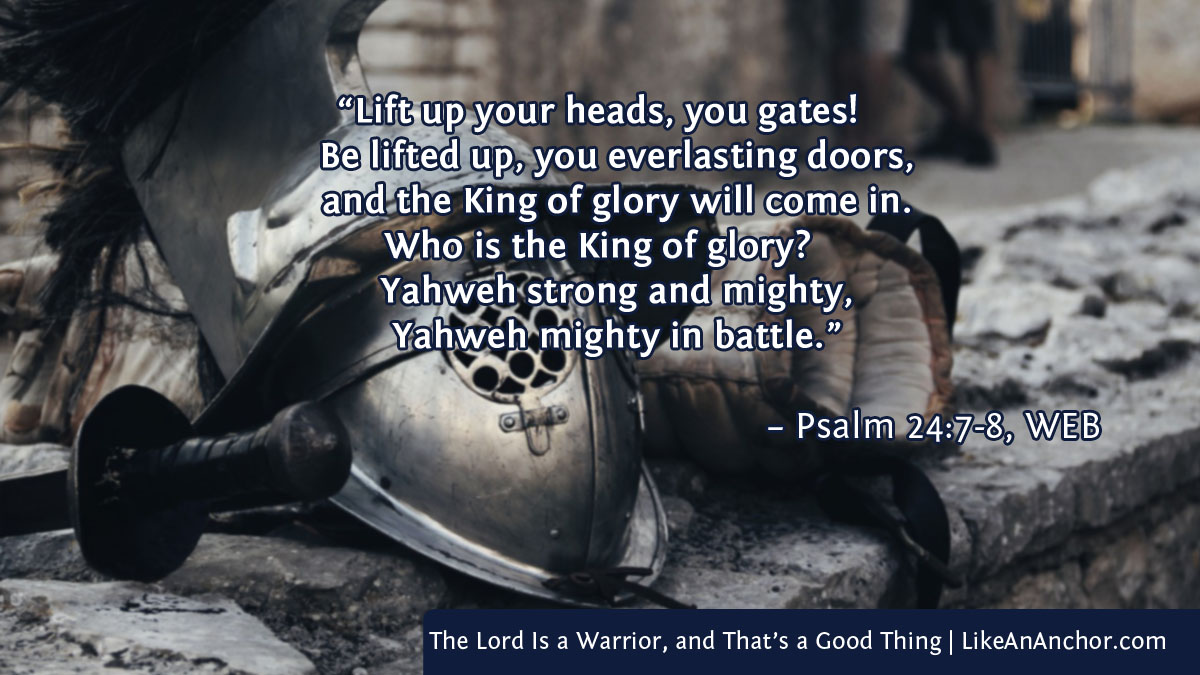
Continuing this theme of exalting God as a Warrior, David praises “the King of glory” who is “Yahweh strong and mighty, Yahweh mighty in battle. … Yahweh of Armies is the King of glory!” (Ps. 24:8, 10, WEB). That’s a Messianic psalm, which means this mighty warrior God is the being we now know as Jesus Christ. This psalm isn’t an isolated passage. The sons of Korah also write a similar Messianic psalm:

My heart overflows with a noble theme.
I recite my verses for the king.
My tongue is like the pen of a skillful writer.
You are the most excellent of the sons of men.
Grace has anointed your lips,
therefore God has blessed you forever.
Strap your sword on your thigh, mighty one:
your splendor and your majesty.
In your majesty ride on victoriously on behalf of truth, humility, and righteousness.
Let your right hand display awesome deeds.
Your arrows are sharp.
The nations fall under you, with arrows in the heart of the king’s enemies.
Your throne, God, is forever and ever.
A scepter of equity is the scepter of your kingdom.
You have loved righteousness, and hated wickedness.
Therefore God, your God, has anointed you with the oil of gladness above your fellows.

Psalm 45:1-7, WEB

Reading these messianic prophecies, it’s easy to understand why so many Jewish people of Jesus’s day were confused about why He wasn’t overthrowing the Romans and restoring the kingdom to Israel right then. Even the 11 apostles thought He might do that (Luke 19:11; Acts 1:6). They didn’t realize until later that Jesus fulfilled the prophecies of a Messiah who would suffer for our sins in His first coming–winning victory in the spiritual battle against the devil–and that He’d return a second time with His warrior role more visible.

Then I saw heaven opened and here came a white horse! The one riding it was called “Faithful” and “True,” and with justice he judges and goes to war. His eyes are like a fiery flame and there are many diadem crowns on his head. He has a name written that no one knows except himself. He is dressed in clothing dipped in blood, and he is called the Word of God. The armies that are in heaven, dressed in white, clean, fine linen, were following him on white horses. From his mouth extends a sharp sword, so that with it he can strike the nations. He will rule them with an iron rod, and he stomps the winepress of the furious wrath of God, the All-Powerful. He has a name written on his clothing and on his thigh: “King of kings and Lord of lords.”

Revelation 19:11-16, NET

This sounds a lot like that passage where we started in Isaiah, doesn’t it? Here’s the King of kings and Lord of lords wearing a garment dipped in blood and treading the winepress of God’s wrath. This shouldn’t surprise us, knowing that “Jesus Christ is the same yesterday and today and forever!” (Heb. 13:8, NET). He’s just as much a warrior today as He will be in the future and as He was in the past.

Making Warriors of Us

As we continue to walk with God, we learn more and more about the spiritual warfare that’s part of our Christian experience. When God called us to join His family, He also revealed our part in a grand metanarrative that spans creation’s history. There’s a battle going on in the spiritual realm between good and evil and we’re right in the thick of it. As a Warrior, God is perfectly capable of defending us. He also equips us to defend ourselves and to fight alongside Him.

Now I, Paul, appeal to you personally by the meekness and gentleness of Christ (I who am meek when present among you, but am full of courage toward you when away!)— now I ask that when I am present I may not have to be bold with the confidence that (I expect) I will dare to use against some who consider us to be behaving according to human standards. For though we live as human beings, we do not wage war according to human standards, for the weapons of our warfare are not human weapons, but are made powerful by God for tearing down strongholds. We tear down arguments and every arrogant obstacle that is raised up against the knowledge of God, and we take every thought captive to make it obey Christ.

2 Corinthians 10:1-5, NET

Here again we have this contrast between peace (in this case meekness and gentleness) and war. Paul is appealing to His readers using Jesus’s meek, gentle character in order to stir them up to fight. I think part of this seeming disconnect has to do with the way God fights. When God goes into battle, He does so from a standpoint of righteousness, justice, and faithfulness (Is. 11:5; 59:17). His warfare is consistent with the rest of His character, and ours should be too.

Paul told Timothy that in order to “fight the good fight,” he “must hold firmly to faith and a good conscience” (1 Tim. 1:18-19). God equips us with weapons that are effective against spiritual enemies and even for taking our own thoughts captive as we wage war inside our own minds (Rom. 7:23). As we draw nearer to Him and learn more and more about who He truly is, we’ll be better equipped to face spiritual battles with the Warrior God at our side.

Featured image by azboomer from Pixabay

Song Recommendation: “Out of Bozrah” by The Lumbrosos (this video also shows a dance that goes with the song; I always loved dancing this one)

Being Careful With Our Ideas of God

I’ve been reading the books of Judges and 1 Samuel recently. These books chronicle a time of transition and trouble in ancient Israel’s history. After Joshua’s death, Israel struggled with settling into the promised land and staying faithful to God. They compromised, their hearts strayed from true worship, and their enemies enslaved them. God raised up judges like Gideon, Deborah, and Samson to rescue His people and turn them back to Him but their recommitment never lasted long. Then, when we get to Samuel’s day, even the priesthood was so corrupt that Eli’s sons were stealing sacrifice meat and sleeping with women who served in the tabernacle (1 Sam 2:12-7, 22-25). It got so bad their father called them evil and Yahweh decided to kill them, replacing Eli’s family’s priesthood with Samuel as a prophet and judge.

The last thing Eli’s sons, Hophni and Phinehas, did was go into battle with the Israelites against the Philistines. Israel had just lost a battle where 4,000 men died and they thought if they went back with the Ark of the Covenant they’d fare better next time. Just having the ark there doesn’t mean God is with you, though. “The Philistines fought, and Israel was defeated,” losing 30,000 men. Moreover, “God’s ark was taken; and the two sons of Eli, Hophni and Phinehas, were slain” (1 Sam. 4:1-12).

You can read how the Philistines handled capturing the ark in 1 Samuel 5:1-6:16. In short, they realized beating Israel’s God was not as easy as beating His disobedient people. Their idols fell before the ark and their people were hit by plagues of tumors and mice. It wasn’t long before they sent the ark back, deciding it was far more trouble than it was worth. What happens next is the event that inspired today’s post. Israel rejoiced at getting the ark back, but they misjudged something and many of them also died for how they treated God’s ark.

Image of a Bible with sunlight shining on it, with text from Leviticus 26:2, NET version: "You must keep my Sabbaths and reverence my sanctuary. I am the Lord."
Image by Lamppost Collective from Lightstock

Unexpected Consequences

The people of Beth Shemesh were reaping their wheat harvest in the valley; and they lifted up their eyes and saw the ark, and rejoiced to see it. The cart came into the field of Joshua of Beth Shemesh, and stood there, where there was a great stone. Then they split the wood of the cart and offered up the cows for a burnt offering to Yahweh. The Levites took down Yahweh’s ark and the box that was with it, in which the jewels of gold were, and put them on the great stone; and the men of Beth Shemesh offered burnt offerings and sacrificed sacrifices the same day to Yahweh.

1 Samuel 6:13-15,WEB

There’s so much joy here when the ark came back. It just rolls up in a wood cart pulled by two cows and all this seems like such a perfect, felicitous event. There’s a big stone here that fulfills the requirement to use uncut stones for an altar, we’ve got wood for a burnt offering, a couple cows to sacrifice, and the Philistines even sent some gold along. What could possibly go wrong now?

He struck of the men of Beth Shemesh, because they had looked into Yahweh’s ark, he struck fifty thousand seventy of the men. Then the people mourned, because Yahweh had struck the people with a great slaughter. The men of Beth Shemesh said, “Who is able to stand before Yahweh, this holy God? To whom shall he go up from us?” They sent messengers to the inhabitants of Kiriath Jearim, saying, “The Philistines have brought back Yahweh’s ark. Come down and bring it up to yourselves.”

1 Samuel 6:19-21

This is such a huge number of people dead that the NET Bible translators only use the number 50,070 “reluctantly” because it “finds almost unanimous textual support in the … ancient versions” (footnote on 1 Sam. 6:19). Considering the high death tole for treating God’s ark with irreverence, it’s little wonder that the people of Beth Shemesh contacted the people of Kiriath Jearim begging them to take the ark away.

Image of a Bible with praying hands clasped over it, with text from Leviticus 16:2 WEB version: "and Yahweh said to Moses, “Tell Aaron your brother not to come at just any time into the Most Holy Place within the veil, before the mercy seat which is on the ark; lest he die; for I will appear in the cloud on the mercy seat."
Image by Jantanee from Lightstock

A Serious Irreverence

We can get additional insight into what might have happened here, and how the people responded, by looking at a very similar incident during King David’s reign. After becoming king over all Israel, moving into Jerusalem, and winning a battle against the Philistines (2 Sam. 5), David decided it was time to bring the ark of God from Kiriath Jearim to Jerusalem.

They loaded the ark of God on a new cart and carried it from the house of Abinadab, which was on the hill. Uzzah and Ahio, the sons of Abinadab, were guiding the new cart. They brought it with the ark of God from the house of Abinadab on the hill. Ahio was walking in front of the ark, while David and all Israel were energetically celebrating before the Lord, singing and playing various stringed instruments, tambourines, rattles, and cymbals.

When they arrived at the threshing floor of Nacon, Uzzah reached out and grabbed hold of the ark of God, because the oxen stumbled. The Lord was so furious with Uzzah, he killed him on the spot for his negligence. He died right there beside the ark of God.

2 Samuel 6:3-7, NET

In the Torah, God provided detailed instructions for how to move His ark. There were rings in the four feet of the ark and poles through the rings, and that’s what priests used to carry the ark (Ex. 25:10-22). Carrying the ark and other holy items was the responsibility of “the sons of Kohath.” They weren’t allowed to look at or touch the most holy things, though. They could only carry them after the sons of Aaron wrapped them in layers of fabric and sealskin (Num. 4:1-20).

Here in 2 Samuel, David and the people put the ark in a cart instead of having priests carry it. There’s also no indication that the ark was covered, as it should have been. God didn’t strike anyone down for those offenses. But He did kill Uzzah for grabbing the ark. Various translations call this an “error” (WEB), an “irreverent act” (NIV), or “offense” (CJB). It was one step way too far in mishandling a holy thing. It did not demonstrate respect for God or an understanding of who He is.

Image of a Bible, with text from Numbers 4:18-20, WEB version: 
“Don’t cut off the tribe of the families of the Kohathites from among the Levites; but do this to them, that they may live, and not die, when they approach the most holy things: Aaron and his sons shall go in and appoint everyone to his service and to his burden; but they shall not go in to see the sanctuary even for a moment, lest they die.”
Image by Lamppost Collective from Lightstock

When God’s Not What you Thought

Before Uzzah died, David was “energetically celebrating before the Lord, singing and playing various stringed instruments, tambourines, rattles, and cymbals.” He was happy. He thought he was doing the right thing. Then God did something he hadn’t expected and it made David both angry and afraid.

David was angry because the Lord attacked Uzzah; so he called that place Perez Uzzah, which remains its name to this very day. David was afraid of the Lord that day and said, “How will the ark of the Lord ever come to me?” So David was no longer willing to bring the ark of the Lord to be with him in the City of David. David left it in the house of Obed-Edom the Gittite.

2 Samuel 6:8-15, NET

This reminds me of the Israelites standing at Mount Sinai. God warned them to purify themselves and stay at a respectful distance from the mountain while He was there. They were terrified, and said they wanted to go even farther than God asked them to; they wanted Moses between them and God rather than directly interacting with someone so awe-inspiring and dangerous (Ex. 19:1-20:21; Heb. 12:18-21). Similarly, David wasn’t sure he wanted the ark in Jerusalem now that God wasn’t acting the way David had expected.

When God isn’t what we expected Him to be, we’re often tempted to push Him away or back-up to put some distance between us. In some ways this is a rational reaction; people encountering God should be awed by His magnificence and power. We should tremble with reverent fear and realize that He’s far too awesome for our minds to fully comprehend. But He doesn’t want that realization to distance us. He wants us to know that we can come to Him and that He will bless us when we interact with Him appropriately.

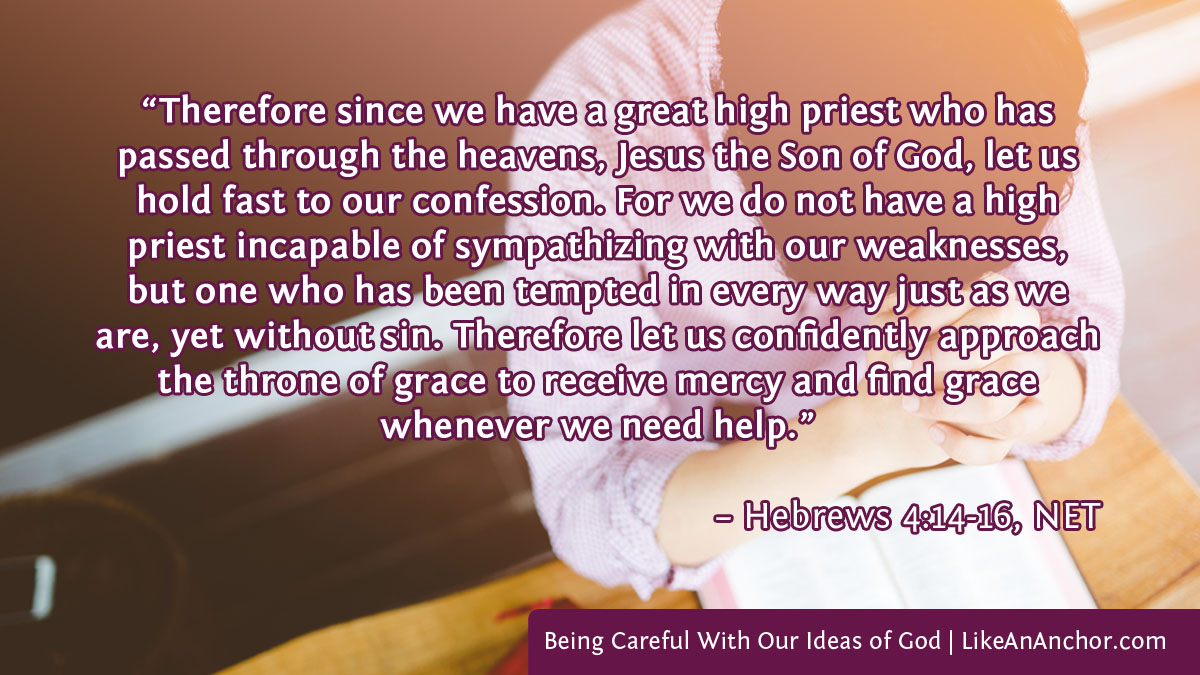
Image of a man praying, with text from Hebrews 4:14-16, NET version: “Therefore since we have a great high priest who has passed through the heavens, Jesus the Son of God, let us hold fast to our confession. For we do not have a high priest incapable of sympathizing with our weaknesses, but one who has been tempted in every way just as we are, yet without sin. Therefore let us confidently approach the throne of grace to receive mercy and find grace whenever we need help.”
Image by WhoisliketheLord Studio from Lightstock

Appropriate Interactions

When the writer of Hebrews talked about Israel’s inability to handle God’s command to keep back from His holy mountain, they contrast this with our state today. We aren’t coming to that mountain, but to a heavenly city populated with angels and other believers, all made possible through “Jesus, the mediator of a new covenant” (Heb. 12:18-24).

Take care not to refuse the one who is speaking! For if they did not escape when they refused the one who warned them on earth, how much less shall we, if we reject the one who warns from heaven? Then his voice shook the earth, but now he has promised, “I will once more shake not only the earth but heaven too.” Now this phrase “once more” indicates the removal of what is shaken, that is, of created things, so that what is unshaken may remain. So since we are receiving an unshakable kingdom, let us give thanks, and through this let us offer worship pleasing to God in devotion and awe. For our God is indeed a devouring fire.

Hebrews 12:25-29, NET

Remember, this is the same author who said we can “confidently approach the throne of grace to receive mercy and find grace whenever we need help” through our “great high priest” (Heb. 4:14-16, NET). The more accurate our conception of God is, the greater our reverence and our confidence. It might be shocking to learn God is different than you expected. But when we approach Him on His terms rather than trying to fit Him into our expectations, we can have both confidence and joy in his presence. And if we go back to 2 Samuel, we see that David found this out as well.

The ark of the Lord remained in the house of Obed-Edom the Gittite for three months. The Lord blessed Obed-Edom and all his family. King David was told, “The Lord has blessed the family of Obed-Edom and everything he owns because of the ark of God.” So David went and joyfully brought the ark of God from the house of Obed-Edom to the City of David. Those who carried the ark of the Lord took six steps and then David sacrificed an ox and a fatling calf. Now David, wearing a linen ephod, was dancing with all his strength before the Lord. David and all Israel were bringing up the ark of the Lord, shouting and blowing trumpets.

2 Samuel 6: 11-15, NET

This time, David did things right. People carried the ark rather than putting it on a cart. David offered sacrifices, likely to go above and beyond what God required and/or as a request for God to forgive any trespasses they might commit this time through ignorance. They were careful, they were respectful, and God honored their efforts.

Not A Tame Lion

Image of a woman with her hands raised in prayer with the blog's title text and the words "If we ever hit a point where our expectations of God don't line up with reality, we need to be able to accept that with humility and adjust our ideas so they line up with His truth."
Image by Pearl from Lightstock

I’m currently reading On the Shoulders of Hobbits: The Road to Virtue with Tolkien and Lewis by Louis A. Markos. One of the scenes he mentions in that book, and which I quoted in a blog post last year, comes from The Lion, The Witch, and the Wardrobe. When Susan first hears about Aslan (Lewis’s version of Jesus in the world of Narnia), she says, “Is he-quite safe? I shall feel rather nervous about meeting a lion.” To this Mr. Beaver replies, “Safe? … Who said anything about safe? ‘Course he isn’t safe. But he’s good. He’s the King, I tell you.” Later in the book, Mr. Beaver adds, “He’s wild you know. Not like a tame lion.”

These quotes from C.S. Lewis remind us of is something we all too often forget. God isn’t someone we can tame, or fit into a box, or standardize and predict. He is both dangerous and good; both unapproachably awesome and comfortingly close.

We don’t find ourselves facing situations where we could be struck down dead on the spot for mistreating the holy things of God’s temple. But we still need to be careful with our ideas of God. We still need to treat His temple (which is now made up of all believers) with reverence and care (1 Cor. 3:16-17). And if we ever hit a point where we realize that our expectations of God or our ideas about who He is don’t line up with reality, we need to be able to accept that with humility and adjust our ideas so they line up with His truth.

Featured image by Alyssa Marie from Lightstock

Song Recommendation: “Revelation Song” by Kari Jobe

“Who Is the One Who Will Condemn?”

Sometimes, I’ll come across something during Bible study that makes me sit up and think, “Oh! That’s what that means.”

I suspect this is one of the ways God keeps me humble; by reminding me that I haven’t figured anything out yet, even things that in hindsight seem obvious. It’s also one of the ways He keeps me interested in Bible study; I’m not very motivated to keep studying something after I’ve figured everything out, and thankfully that doesn’t happen when you’re studying scripture.

So, Romans 8:34 typically reads something like this: “Who is he who condemns? It is Christ who died, yes rather, who was raised from the dead, who is at the right hand of God, who also makes intercession for us” (WEB).

One thing I’ve learned studying Greek and French (the two languages other than English I’ve spent the most time with) is that sentence structures don’t always translate well from other languages into English. Word orders are different in many cases, and sometimes you need to add or rearrange things to get the same intention in English as there was in Greek. Figuring out how to do that is complicated by the passage of time. If we have a harder time guessing what Paul meant here because we can’t talk with him or anyone else who used this particular Greek; they all died centuries ago.

That’s a long, rambling introduction to saying that this particular sentence structure kinda makes it seem like Christ is the answer to the question, “Who is he who condemns?” We know from context that Paul is not saying Jesus condemns us; he’s saying the opposite. It still seems odd the way it’s setup in English, but I just read over it and didn’t really think about why it looks odd and if there might be a translation that would make more sense to me.

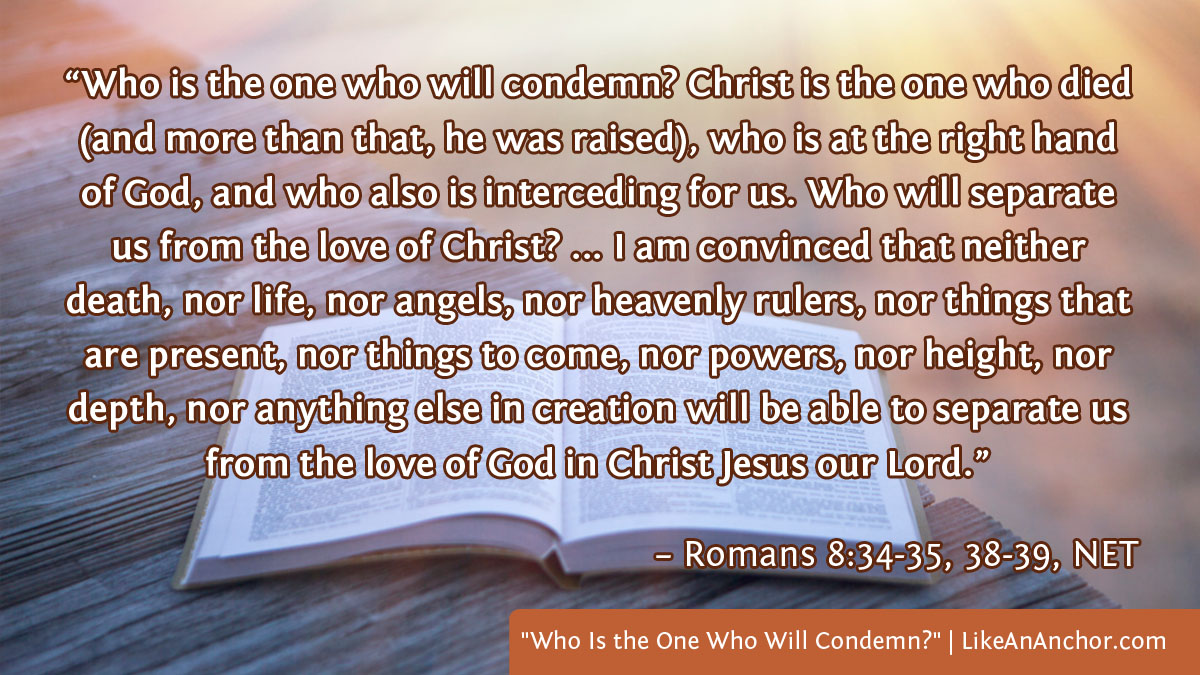
Image of a Bible laying on a deck in the sunset, with text from Romans 8:34-35, 38-39, NET version: “Who is the one who will condemn? Christ is the one who died (and more than that, he was raised), who is at the right hand of God, and who also is interceding for us. Who will separate us from the love of Christ? ... I am convinced that neither death, nor life, nor angels, nor heavenly rulers, nor things that are present, nor things to come, nor powers, nor height, nor depth, nor anything else in creation will be able to separate us from the love of God in Christ Jesus our Lord.”
Image by Lamppost Collective from Lightstock

Setting Up A Contrast

I started reading the NET Bible a few years ago, and I’m still finding translation choices that make me notice verses in a slightly new way. It’s one of the best translations I’ve found for balancing a desire to stay as close to the original languages as you can with transferring the sense of the original into English. I particularly like reading the New Testament in this translation. For Romans 8:34, the NET translators make it extra clear that Paul is setting up a contrast here rather than saying that Christ is the one who condemns.

What then shall we say about these things? If God is for us, who can be against us? Indeed, he who did not spare his own Son, but gave him up for us all—how will he not also, along with him, freely give us all things? Who will bring any charge against God’s elect? It is God who justifies. Who is the one who will condemn? Christ is the one who died (and more than that, he was raised), who is at the right hand of God, and who also is interceding for us.

Romans 8:31-34, NET

In other words, verse 34 continues the exact same pattern as the previous sentences. Do you think anyone can stand up against us or charge us with wrong doing? Don’t worry–God is for us and He’s the one who justifies His people. Do you worry about people who might condemn us? No need–Jesus Christ died for us and He’s interceding on our behalf with God, so we’ve got nothing to worry about. With Jesus mediating for us, not even the “the one called the devil and Satan … the accuser of our brothers and sisters” can condemn us (Rev. 12:9-10, NET).

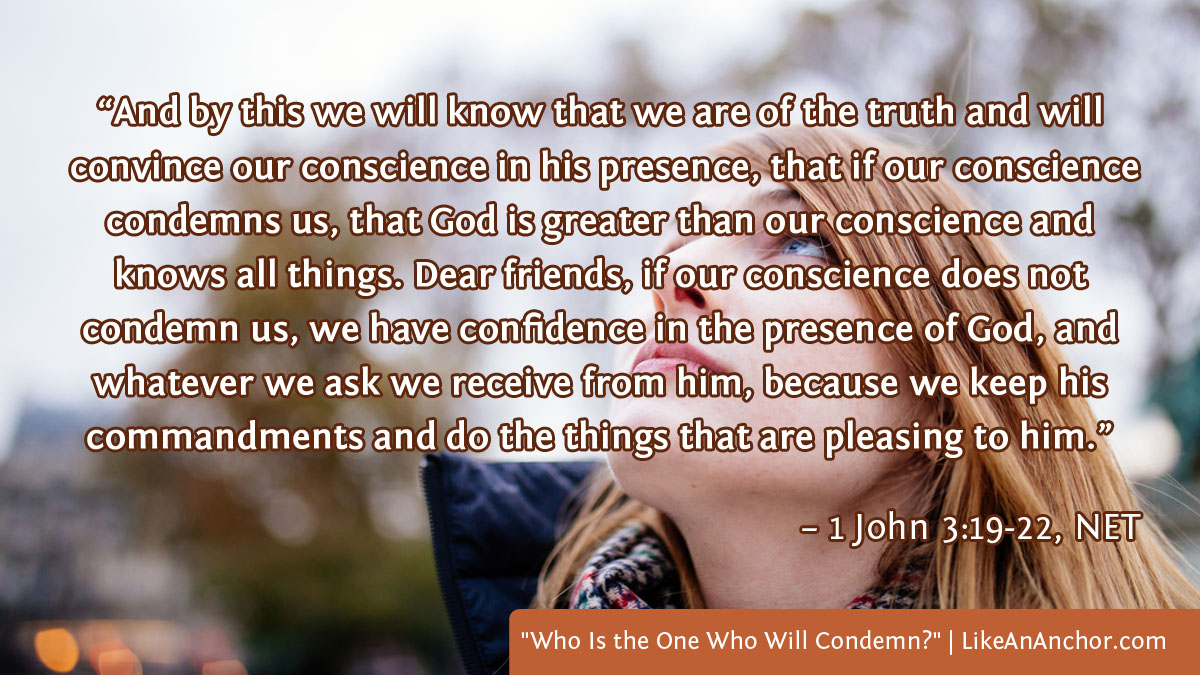
Image of a woman looking up at the sky, with text from 1 John 3:19-22, NET version: "And by this we will know that we are of the truth and will convince our conscience in his presence, that if our conscience condemns us, that God is greater than our conscience and knows all things. Dear friends, if our conscience does not 
condemn us, we have confidence in the presence of God, and whatever we ask we receive from him, because we keep his commandments and do the things that are pleasing to him."
Image by Brightside Creative from Lightstock

No Condemnation

Paul addressed the topic of condemnation earlier in this same letter as well, just a page or so farther back in our Bibles. It’s part of a point he’s been building up to through the whole letter of Romans about how we relate to God’s law in the New Covenant.

There is therefore now no condemnation for those who are in Christ Jesus. For the law of the life-giving Spirit in Christ Jesus has set you free from the law of sin and death. For God achieved what the law could not do because it was weakened through the flesh. By sending his own Son in the likeness of sinful flesh and concerning sin, he condemned sin in the flesh, so that the righteous requirement of the law may be fulfilled in us, who do not walk according to the flesh but according to the Spirit.

Romans 8:1-4, NET

Paul is not contradicting Jesus’s statement that He did not “come to abolish the law or the prophets.” Rather, Paul is clarifying what Jesus meant when He said, “I have not come to abolish these things but to fulfill them. … whoever obeys them and teaches others to do so will be called great in the kingdom of heaven” (Matt. 5:17-20, NET). Jesus removes the condemnation that the Law placed on us as sinners by taking our sin away and paying the penalty for it Himself. Now, we’re free to keep God’s law by living in the Spirit, fulfilling the righteous requirements of the law as God’s grace covers our mistakes.

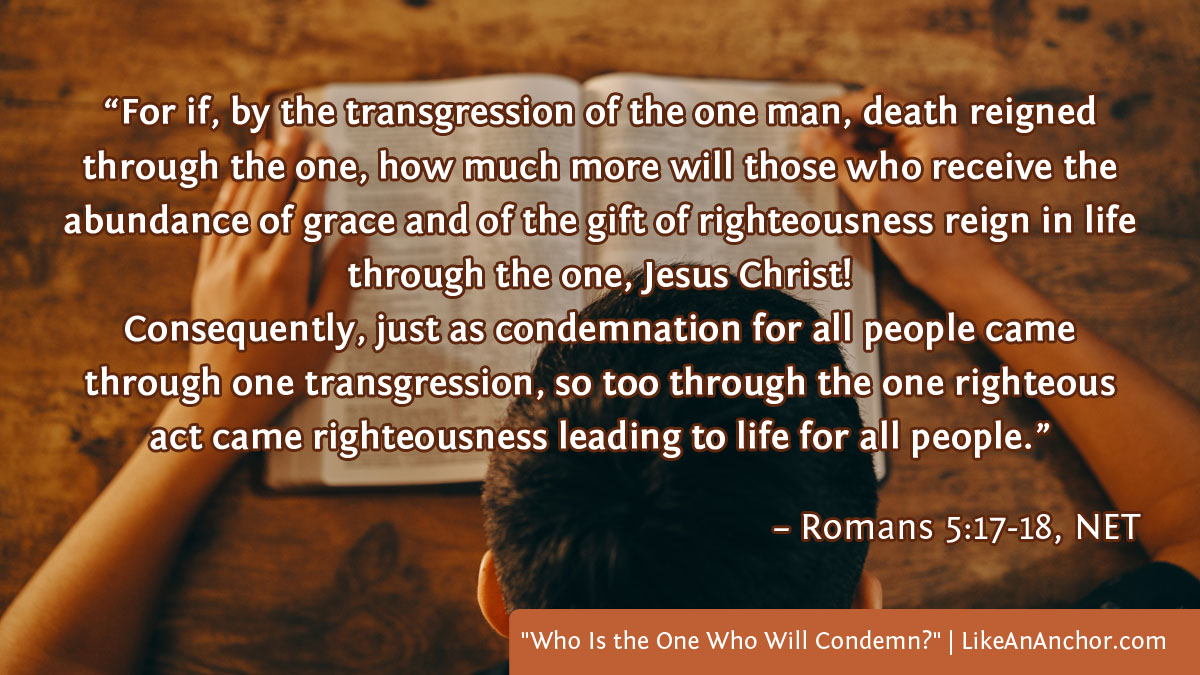
Image of a man reading a Bible, with text from Romans 5:17-18, NET version: "For if, by the transgression of the one man, death reigned through the one, how much more will those who receive the abundance of grace and of the gift of righteousness reign in life through the one, Jesus Christ!
Consequently, just as condemnation for all people came through one transgression, so too through the one righteous act came righteousness leading to life for all people.”
Image by Matt Vasquez from Lightstock

Salvation and Belief

There’s a delicate balance in how we understand God’s grace. I think we often error toward one extreme or another. On the one hand, we might make the mistake of thinking grace means we don’t have to obey God’s law and He’ll just give us salvation no matter what we do. On the other hand, we might stray too close to an idea of “salvation by works” and think our actions play a bigger role in salvation than they really do. The truth is something much more amazing.

Image of  a woman reading a Bible with the blog's title text and the words "We can live lives of righteousness with confidence, knowing all we need to do if we make a mistake is repent. There is no condemnation when we have Jesus interceding for us."
Image by Pearl from Lightstock

For this is the way God loved the world: He gave his one and only Son, so that everyone who believes in him will not perish but have eternal life. For God did not send his Son into the world to condemn the world, but that the world should be saved through him. The one who believes in him is not condemned. The one who does not believe has been condemned already, because he has not believed in the name of the one and only Son of God.

John 3:16-18, NET

God offers us salvation that we had nothing to do with; we cannot save ourselves. In return, He asks for life-changing belief. There’s a reciprocal aspect to grace. It’s part of a covenant agreement God offers us and if we accept this covenant we also accept our role as lovers of God who want to become like Him and follow His commands.

When we enter a relationship with God, we can trust that He is all-in with His commitment as well. He’s already demonstrated this in a spectacular way with Jesus dying for our sins. Moreover, He continues to demonstrate it today with Jesus acting as our mediator and advocate “who is at the right hand of God, and who also is interceding for us” (Rom. 8:34, NET). We can live lives of righteousness with confidence, knowing that if we make a mistake all we have to do is repent and ask forgiveness. There’s no condemnation for us when we have Jesus interceding for us.

Featured image by Aaron Kitzo from Lightstock

Song Recommendation: “Our God” by Chris Tomlin

Why Does the Bible Say to Pray for People in Authority?

The idea that a human being should be treated with a certain amount of respect based on a position they hold has fallen out of fashion in Western society. We routinely complain about U.S. Presidents and some people even display banners and signs cursing their names. We say no one has the right to tell us what to do. We treat “authority” like it’s a bad thing to have, assuming it will only be misused. There are still pockets of authority we might respect–patients may respect a doctor, and students a university professor, for example–but even those are being chipped away as corruption comes to light, our faith in institutions erodes, and our sense of individualism increases.

In sharp contrast to this attitude are passages from New Testament epistles talking about how Christians ought to submit to human authority. I’ve written about this before, near the start of the pandemic when I and many people across the world were struggling with questions like whether to submit to rules forbidding church groups to gather. In that post, we talked about a sermon I heard covering the question of how a Christian can know when to obey human authorities and when to follow the apostle’s example of disobedience when they said, “We must obey God rather than men” (Acts 5:29, WEB)

I’m approaching this question from a different angle today. We know from scripture that we’re supposed to obey human authorities because God tells us to. Submission to authority is a way for us to honor God. We also know that that obedience to human beings only goes so far because our primary loyalty lies with God. We do not obey laws that command us to do things God forbids or that command us not to do things God requires. However, appropriate submission and respect aren’t the only things the Bible says we should do for people in authority. We’re also supposed to pray for them.

Image of a man praying with text from Romans 12:11-12, NET version: “Do not lag in zeal, be enthusiastic in spirit, serve the Lord. Rejoice in hope, endure in suffering, persist in prayer.”
Image by Jantanee from Lightstock

Two Reasons Why We Pray

A command to pray for authority figures shouldn’t surprise us. There aren’t many limits on who we ought to pray for. Jesus even told us, “love your enemy and pray for those who persecute you” (Matt. 5:44, NET). If Jesus told us to love and pray for our enemies I doubt He’s going to say it’s okay to avoid praying for people in authority who might not even be enemies to the faith.

Sometimes, you might hear arguments that instructions to submit to and pray for rulers were added by translators. For example, I’ve heard people say the KJV includes verses about honoring the king because the men translating it wanted to curry favor with King James. Those men might have been happy to find they could include a verse like that, but they’re not where the idea came from. It came from Jesus, Paul, Peter, and other writers inspired by God. Paul explains why it’s so important to include authority figures in our prayers when writing to Timothy.

First of all, then, I urge that requests, prayers, intercessions, and thanks be offered on behalf of all people, even for kings and all who are in authority, that we may lead a peaceful and quiet life in all godliness and dignity. Such prayer for all is good and welcomed before God our Savior, since he wants all people to be saved and to come to a knowledge of the truth. For there is one God and one intermediary between God and humanity, Christ Jesus, himself human, who gave himself as a ransom for all, revealing God’s purpose at his appointed time.

1 Timothy 2:1-6, NET

I like the NET translation for this verse because it acknowledges that some readers might balk at the idea that praying for “all people” includes “kings and all who are in authority.” Paul had experience living in a world where the culture and the authority figures were hostile to his faith. He knew it wasn’t easy to pray for people who’d martyred your fellow believers or kicked them out of a guild, ruining their livelihood. But we need to pray for them anyways, and he gives two main reasons why:

  • It’s good for us. We pray for authorities so that we can lead “a peaceful and quiet life in all godliness and dignity.” Ideally, “rulers cause no fear for good conduct but for bad” (Rom. 13:3, NET). We pray that people in authority would be that kind of ruler, leaving us alone to worship God freely and working to keep society peaceful and safe.
  • It’s good for them. God welcomes prayers for everyone, even our enemies or those in positions of power, because “he wants all people to be saved and to come to a knowledge of the truth.” That should be our desire as well. Jesus “gave himself as a ransom for all,” and knowing that should motivate us to pray everyone would see His Light.
Image of a girl standing in church reading a Bible, with text from Colossians 4:2-3, NET version: “Be devoted to prayer, keeping alert in it with thanksgiving. At the same time pray for us too, that God may open a door for the message so that we may proclaim the mystery of Christ, for which I am in chains.”
Image by José Roberto Roquel from Lightstock

Praying for Peace

God has called us to live in peace (1 Cor. 7:15; Col. 3:15). He wants us to have peaceful lives that aren’t characterized by quarreling, tumult, fear, and other things that would destroy our inner or outer peace. We can have God’s peace inside us and cultivate lives of peace and joy even when the world around us is far from peaceful. However, we should still do everything in our power to live peacefully with all people (Rom. 12:16-21; Heb. 12:4). That includes praying for those who have the power to make things un-peaceful for others.

Yahweh of Armies, the God of Israel, says to all the captives whom I have caused to be carried away captive from Jerusalem to Babylon: … “Seek the peace of the city where I have caused you to be carried away captive, and pray to Yahweh for it; for in its peace you will have peace.”

Jeremiah 29:4, 7, WEB

There’s nothing wrong with wanting peaceful lives. Paul even tells one church that it should be their “ambition to lead a quiet life, and to do your own business” (1 Thes. 4:11, WEB). Life is better for us, the Christian community, and for everyone else living here if there’s peace in our communities and countries. Peace is a good thing to pray for. We can ask God to share His peace with us and to inspire people in authority to work towards peace in their spheres of influence.

Image of a woman sitting at a table with a Bible in front of her with text from Philippians 4:6-7, NET version: “Do not be anxious about anything. Instead, in every situation, through prayer and petition with thanksgiving, tell your requests to God. And the peace of God that surpasses all understanding will guard your hearts and minds in Christ Jesus.”
Image by Prixel Creative from Lightstock

Praying for Others’ Salvation

The second reason we should pray for people in authority is because, “Such prayer for all is good and welcomed before God our Savior, since he wants all people to be saved and to come to a knowledge of the truth” (1 Tim. 2:3-4, NET). We’re supposed to be praying for all people, and those with authority are included in that category.

God offers humanity two very clear choices: choose life with Him, or choose death without Him. That’s simply how the world works. There are no other options. Walking with God leads toward eternal life, and walking away/apart from God leads to nothing. God also makes it very clear that we each have individual choices, and that it’s possible for people to change the course of their lives. If someone is heading toward death, God wants that person to turn around and choose life (Ezekiel 18:1-32; 33:1-20).

The Lord is not slow concerning his promise, as some regard slowness, but is being patient toward you, because he does not wish for any to perish but for all to come to repentance. … Since all these things are to melt away in this manner, what sort of people must you be, conducting your lives in holiness and godliness, while waiting for and hastening the coming of the day of God?

2 Peter 3:9, 11-12, NET

In this letter, Peter reminds us that the end of this present world is coming. While it might sometimes seem like Jesus’s return is taking an awfully long time to get here, what’s really happening is that God is being very patient with people because He wants everyone to choose life. Keeping in mind both this aspect of God’s character and the knowledge that Jesus will return, Peter asks us this: “What sort of people must you be?” He partly answers that question by saying we’ll be “conducting our lives in holiness and godliness” as we wait on God. Being holy and godly involves mimicking God’s character, including His perspective on other people. We need to love earnestly and pray sincerely for other people.

But the end of all things is near. Therefore be of sound mind, self-controlled, and sober in prayer. And above all things be earnest in your love among yourselves, for love covers a multitude of sins.

1 Peter 4:7-8, WEB

Showing God Who We Are

Image of a man praying in a church with the blog's title text and the words "Following God’s instruction to pray for people in authority demonstrates our character to God. It is good for us, and it is good for other people."
Image by Shaun Menary from Lightstock

God is never happy when someone chooses death; it’s His desire that everyone will choose life. When we pray for other people, we participate in that godly desire. We show God that we also want other people to choose life with Him because we’re learning to care about them in much the same way that He does.

By praying for those in authority, we demonstrate our character to God. We show that we care more about following His instructions than we do about our own irritations with political leaders. We show that we long for people to change, grow, and work toward peace rather than wanting them punished because they didn’t do things the way we think they should.

I don’t always remember to pray for people in power. I don’t particularly want to pray for people who plunge nations into wars, vote to continue abortions, or use their authority to avoid the consequences of wrong action. But it does no one any good if I just get angry about this and sit around fuming or refuse to pray about it.

Prayer is the best response for everyone. I can pray for God’s justice to intervene and I can pray for His mercy to soften people’s hearts. I can pray He’ll protect those in danger because of a human leader’s actions. Jesus’s example of viewing people with compassion and praying for them even while not excusing their wrong actions.

Featured image by Claudine Chaussé from Lightstock

Song Recommendation: “Blessings” by Laura Story