The INFJ Handbook is here!

Two years ago this weekend, I published my first INFJ blog post on this site. It seems fitting, then, that I’m releasing my first e-book this weekend and that it is all about INFJs. Inside, you’ll find:

  • Quick introduction to Myers-Briggs type theory
  • Thorough description of the INFJ personality type
  • Discussions of INFJ strengths and weakness
  • Tips for personal growth
  • List of things that INFJs want other people to know
  • Special section on how other types view INFJs
  • True-life stories from five INFJ contributors
The INFJ Handbook by Marissa Baker
click to purchase

A very special thanks to Kerry, Rachel, Johanna, Denise, and Yeni — the INFJs who contributed the stories appearing in this book. You should have already received a free PDF copy of this book at the e-mail address I have on record for you. If not, let me know.

You can purchase this book in the Amazon Kindle store. For this first week only, the book is on-sale for $0.99. It will go back to the regular price of $2.99 next Monday morning.

Finding Your Gifts

Do you know what your gifts are?

Sometimes when I ask people this, their first response is to ask “What gifts?” or to stall and say something flippant like “I can fry an egg.” I think that’s one of the most heart-wrenching things I hear on a fairly regular basis. So many of us believe that there really isn’t anything unique about us, that there’s nothing special we can offer the world, that we don’t have an aptitude for something useful or interesting. We think we’re boring, normal, or mundane, and even if we do recognize some good qualities in ourselves, we think they are too small to do any good. Gifts? me? I don’t think so.

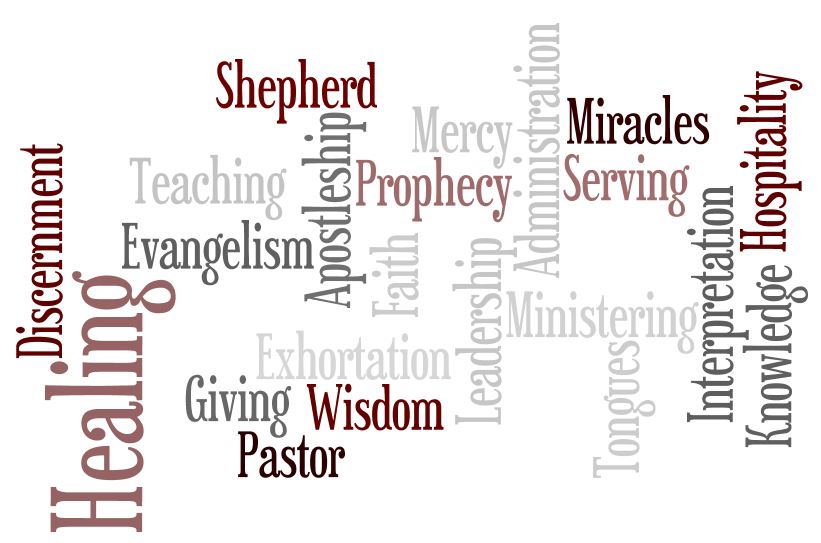
But everyone really does have gifts. Some of this is part of our personalities, and if you’re a Christian you probably believe in Spiritual gifts as well. I guarantee that there’s at least one thing (and probably several) gifts that you have. Even if you can’t see it yet there really is something that you are ridiculously good at, or a core part of yourself that offers something good to you and the world, or a talent just waiting to be used.

Hidden Gifts

Finding Your Gifts | marissabaker.wordpress.comI recently read an article titled How Your Greatest Insecurities Reveal Your Deepest Gifts by Ken Page (a psychotherapist, lecturer, and author who studies intimacy). He argues that the core parts of ourselves that we try to hide because we think we’re “too much” or “too little” are where our gifts dwell.

Over the years, I realized that the characteristics of my clients which I found most inspiring, most essentially them, were the ones which frequently caused them the most suffering.

Some clients would complain of feeling like they were “too much”; too intense, too angry, or too demanding. From my therapist’s chair, I would see a passion so powerful that it frightened people away.

Other clients said they felt that they felt like they were “not enough”; too weak, too quiet, too ineffective. I would find a quality of humility and grace in them which would not let them assert themselves as others did.

In his definition, your gifts are essential qualities that make you who you are. Most of us distance ourselves from our gifts and create “safe” versions of ourselves that don’t show the world who we really are. Ken Page’s focus is on expression our core gifts in intimate relationships, but if we discover who we are and what we have to offer it will impact other aspects of our lives as well.

His tips for discovering your core gifts are to look at the things that cause you the most joy, as well as the things that cause you the most pain. You will be most moved and inspired by positive experiences related to your core gift, and most hurt by negative experiences that touch on those sensitivities. For example, if one of your core gifts is honesty you will be drawn to other people who are honest and hurt deeply when someone you’re close to violates your trust. Here’s a link to one of Page’s more in-depth articles exploring this topic.

Personal Strengths

We spend quite a bit of time on this blog talking about personality types. Since I’m an INFJ on the Myers-Briggs scale, I’ll use my personality type as an example yet again. We can’t all be equally good at everything, and different personality types have different strengths. Some gifts that would be consistent with an INFJ personality type are a talent for reading other people, easily practicing empathy, and generating an inspiring vision for the future. On the other hand, most INFJs will not have a strong gift for impersonal evaluation of pros and cons in a situation, or for interacting with huge groups of people. For those tasks, you’ll need to track down a thinking type with a gift of logic or an extrovert with a gift for interacting with people.

Learning the strengths and weaknesses of your individual type is a good way to start tracking down your own unique gifts. The profiles on 16 Personality Types have a list of typical strengths and weaknesses associated with each type, and there’s also a free test you can take if you don’t know your type yet.

Often, the strengths of our personality types come to us so easily that we don’t think of them as a gift. It’s so easy for INFJs to pick up on other peoples emotions that it can seem like a slightly annoying thing we do automatically, rather than a unique gift we can use to relate to other people. ETSJs take charge of situations almost without thinking about it, and might not list leadership as a gift because it seems so normal to them.

Spiritual Gifts

God doesn’t make useless people. You are a child of God, and no matter how weak and helpless and even useless you feel God can work with you and make you strong (2 Cor. 12:10). If God is calling you and working with you through His Holy Spirit, then you’ve also been given one or more spiritual gifts. Paul tells us that “the manifestation of the Spirit is given to each one for the profit of all” (1 Cor. 12:7) and trust me, you’re not the exception to that rule.Finding Your Gifts | marissabaker.wordpress.com

Finding out what your particular spiritual gift is can be quite a challenge. Live Your Calling: A Practical Guide to Finding and Fulfilling Your Mission in Life by Kevin Brennfleck and Kay Marie Brennfleck has a chapter devoted to a spiritual gifts questionnaire. It’s more of a guideline than a definitive answer, though. When I took the evaluation, it told me I had and potentially used somewhere between 2 and 8 spiritual gifts. Didn’t really narrow it down much.

Other tests, like Spiritual Gifts Test, can also give you an idea of what your spiritual gift might be. It ranks your top three gifts, and gives a description of each. Ultimately, though, I think to discover what your spiritual gift really is requires prayer and action. Thinking about your spiritual gifts only gets you so far — you have to start using them and serving and seeing if you have a gift for that particular way of serving.

Learning about your particular gifts can give you more confidence in yourself, improve your relationships, and give you an idea of how you can serve others more effectively. I’m still discovering my gifts, but they’re already bearing fruit, including this blog. I wish you a similarly exciting journey!

Goals, Growth, and a Happy Birthday to Me

Today is my 25th birthday. Other than posting this, my birthday plans involve spending time with family and eating cheesecake. My original idea for this post was to write one of those “Letter To Me” things addressed to my 15 year old self (since 10 years is a nice round number). Part of that’s still here, but it’s not the focus. Why? because while a post all about me could be mildly entertaining, I doubt anyone will find it helpful. Instead, I want to encourage you to join me in thinking about how you’ve changed in the past ten years, and what you want the next 10 years to look like.

If you’re like me, looking at a more narrow time frame of your life to inspect how you’ve changed can be disheartening. I don’t usually feel like I’ve made much progress in a week or a month or sometimes even a year on things like personal growth, forwarding my publishing goals, and growing my business. But look at 10 years, and you can see how much you’ve accomplished, some of it in little steps that you probably didn’t notice when you were walking them."Happy Birthday To Me" marissabaker.wordpress.com

10 Years Ago

I tried to look back at my journal for the year I turned fifteen, but the only entry between November 2002 and June 2006  is an undated poorly-spelled complaint about not having many friends or knowing how to talk to people. It does look like a clump of pages was torn out, but I don’t remember why. Even without a record of my precise thoughts, though, there are plenty of specific things I remember that are pertinent to how much I’ve changed. Setting aside the potential implications contacting your past self might have on the time-space continuum, here are a couple suggestions I’d share with me then:

Dear 15-year-old-me,

Stop reading the Thoroughbred book series right now. I mean it — take that stack beside your bed back to the library immediately. Why? because you’re going to feel guilty when you turn sixteen without having ever been asked out on a date, because some of the characters teased Christina for turning “sweet sixteen and never been kissed.” Which is just plain ridiculous. And speaking of kissing, stop reading the Hardy Boy/Nancy Drew cross-over books as well. You don’t have to be 5′ 3″ and taste like mint for a guy like Joe Hardy to like you (and do you really want him to? this version is kissing a different girl in every book). Honestly, you have poor taste in fictional men. Go read Jane Austen.

Be nicer to your siblings. My brother asked me to include this, but he’s right. They’ll still be some of your best friends when you’re 25, and if you’d treated them as well as they deserved you’re probably all be even better friends. And on the subject of friends, don’t give-up because you can’t seem to make any new ones. You haven’t even met the person who will become your best-friend-who’s-not-a-sibbling yet.

Love,

25-year-old-me

When I was fifteen, I was still convinced that I didn’t need a plan for after high school because within a few years I was going to meet Prince Charming and live happily ever after. Aside from reading and my homeschool work, the only thing I really had interest in was gardening (I ran a little roadside greenhouse selling plants for two years in high school). I hadn’t even started writing yet (I mean, not seriously writing. I would jot down ideas), or really even cooking. Now I list writing and cooking as two things I can’t imagine not doing, largely because I love them so much.

  • What important aspects of your life now were missing 10 years ago?

Now

One thing I haven’t touched on yet is my spiritual walk. I knew at 14 that I wanted to be baptized, but I couldn’t find a minister who didn’t think I was too young. Which I probably was, but I was pretty sure of my faith when I turned 15. Without getting into too much details, that changed after I graduated high school. While I never actually left “the church,” when I again decided to be baptized at 19 it felt almost like coming back, and I’ve seen tremendous growth since then. Not, like, all the time of course — I have plenty of set-backs and doubts like everyone else, but I also think recognizing the fact that we’re nowhere near perfect and we can’t move toward perfection without God is a huge step towards spiritual growth.

  • How is your spiritual growth now different than it was 10 years ago?

As you all know if you’ve been reading this blog on any kind of a regular basis, my writing is now a huge part of my life (this blog, fiction, and copywriting). I love to cook and bake. I have an outlet for sharing my faith. I have a few close, stable friendships with dear people who I hadn’t even met 10 years ago and now can’t imagine life without.

  • Have you met any people who are now your “best friends” within the past 10 years?

Oh, and regarding the whole panic-about-not-having-a-boyfriend thing, I’ve still never been in a serious relationship and I’m actually okay with being unmarried at 25. I still want to get married, but I know that I wasn’t really ready for that kind of commitment during the time frame I was expecting marriage to happen and I’m willing to entertain the possibility that the same thing is true now. More importantly, I’ve actually started turning over my worries about the timing for this and other goals to God.

10 Years Ahead

  • Where do you want to be in 10 years?

My first impulse to this question is, “I have no idea.” I didn’t plan 10 years ago to end up where I am today, and I don’t really know if having a 10 year plan now would be any more advantageous. But I keep hearing about the importance of having a vision for your future, finding your passion, planning a life mission. And I can see the advantages.

In my life, the time period where I’ve felt most productive was my last three years of college. I had a goal (graduate with Latin honors and research distinction in my major), and I worked toward it. The more focused I got on projects, the more productive I was. For example, November 2011 I was was doing the final editing and writing on my thesis, wrote a 50,000 word novel for NaNoWriMo, and taking a full class load that included French (my hardest subject). I was exhausted by the end of the month, but I felt great (and yes, I met those academic goals next year when I graduated).

That’s kinda missing now, and it’s not a good thing. I don’t like being unfocused and not having a more definite goal to work toward. My faith provides a goal for spiritual growth toward eternal life, but it’s also supposed to be an integral part of my life and keep me moving forward personally and professionally as well. I need a direction on a physical level to go along with my direction on a spiritual level.

For my readers who are MBTI fans, personality type plays a role as well — INFJs like me must have a goal. We hate not having something clear (and preferably world-altering) to work toward. So, yea. Making better goals is next on my list.

  • What steps can you take now to move forward with focus and purpose into the next 10 years?

My Homeschool Socialization Story

An introverted homeschooler's views on socialization at school marissabaker.wordpress.com
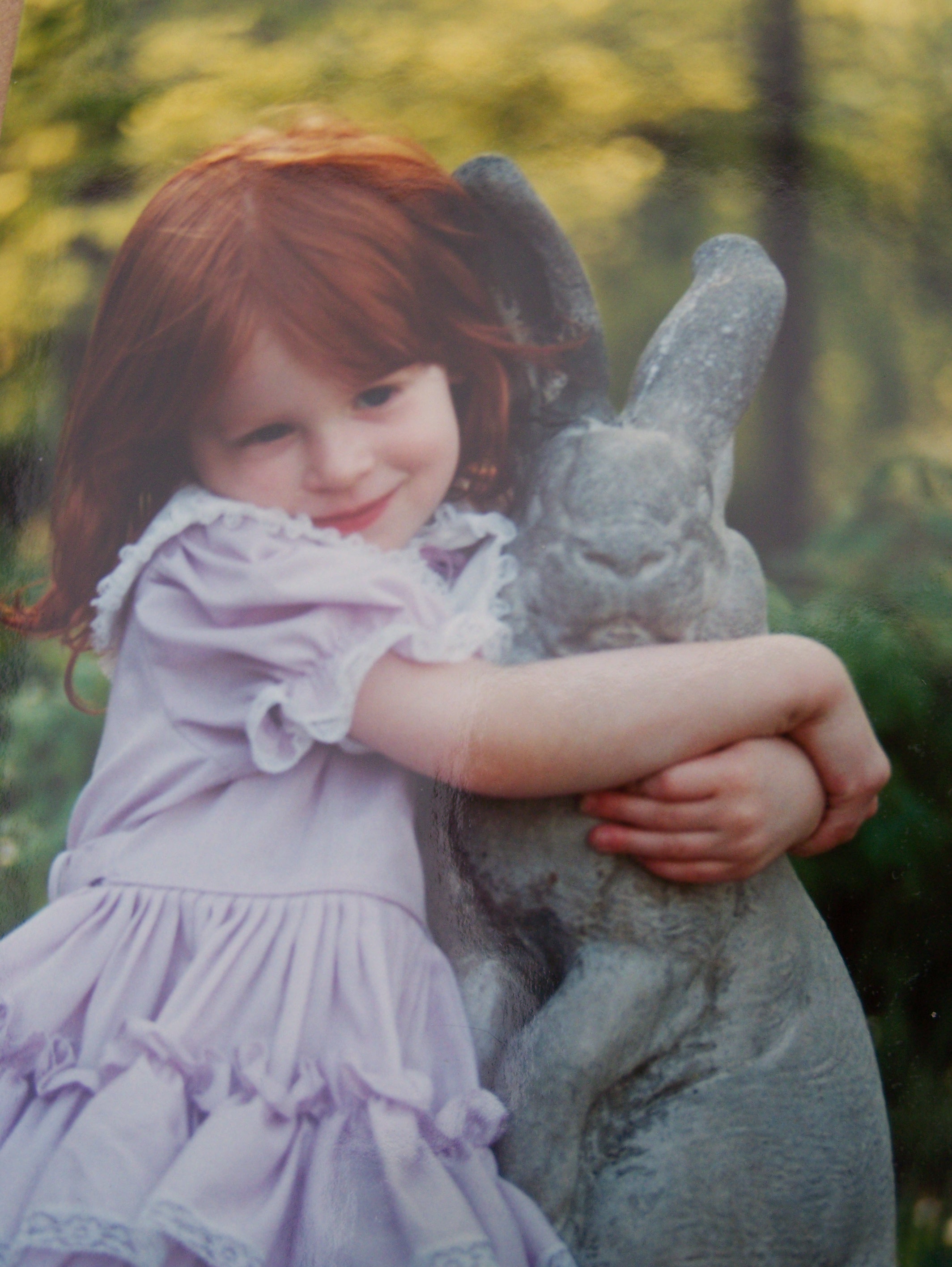
a picture of a much-younger me

Once upon a time, there was a little girl named Marissa whose parents were worried about her going to kindergarten. She was going to be away from home all day, five days a week for the first time in her life. So her mother enrolled her in a summer school program where she would only be gone half a day, to help her get accustomed to being away from home.

Every time Marissa was dropped off at this school, her little sister would cry because Marissa was being abandoned. Years later, there are only two things Marissa remembers about this experience. One was that the teachers wanted her to take naps on a thin blue pad in the middle of a large room filled with strange people. She never slept because she was too nervous, but she had to lay there anyway. The second is hiding under the playset outside the school when all the children were sent outside so she wouldn’t have to face the other children (her mother says one of the boys hit her, but she must have blocked this memory).

One day, when Marissa’s mother picked her up from school, Marissa was crying. She asked, “Have I been away long enough? Can I come home now?” This broke her father’s heart, and he decreed that Marissa would never have to go back to school again.

After this short summer, I was homeschooled through all twelve years of elementary, middle, and high school. My sister also graduated from our homeschool, and my brother is currently finishing up high school at home. I’m one of those homeschooling success stories who went to college, earned better grades there than I did in high school from my mom, and earned my B.A. along with an undergrad research project that I’ve been assured could have gotten me into grad school and on track for my English PhD.

Socializing Homeschoolers

The previous paragraph aside, my goal today is not to defend the academic merits of homeschooling. I want to talk about socialization. Last week, a friend shared with me a great blog post that covered everything from the hypocrisy of America’s talk about “diversity,” to the merits of homeschooling, to defending introverts. In this post, Matt Walsh addressed the frequent claim that we need to send our children to public schools so they can “be socialized.”

In fact, kids who are homeschooled tend to be much better in “social situations” because they learned how to socialize from adults, rather than aping the personality traits of their peers. Public school doesn’t make kids “sociable,” and I think you could more accurately argue for the opposite. The whole concept that we need to send our children to government facilities to be “socialized” makes me shudder. Our children aren’t animals, and I wish we’d stop speaking about them as if they were.

This is a common argument from homeschool families and homeschooling supporters. I don’t exactly want to argue against it, but I have to admit my experiences are somewhat different. While the homeschooled me was quite comfortable socializing with adults and people younger than me, I was never very comfortable in my peer group (a fact that hasn’t changed much, though I’m a little more confident around other young people since going through college). The flip side of this is public school kids I’ve met who ignore younger kids and make no effort to hide the fact that they don’t want to talk with adults. There are, of course, both homeschoolers and public schoolers who are comfortable socializing with anyone and everyone (I suspect this is a personality-type thing more than a where-they-went-to-school thing).

Introverts in School

In a book titled Introvert Power, Laurie Helgoe (who holds a PhD in psychology) discusses the pressures that introverts face in an extroverted society, including the public school system.

In an extroverted society, we rarely see ourselves in the mirror. We get alienating feedback. Alienating feedback comes in the form of repeated encouragement to join or talk, puzzled expressions, well-intended concern, and sometimes, all-out pointing and laughing. … Alienating feedback happens where neighborhoods, schools, and offices provide no place to retreat. Alienating feedback happens when our quiet spaces and wilderness sanctuaries are seen as places to colonize.

Unfortunately, I don’t have her book in front of me at the moment and can’t find the other quote I wanted online. I’ll have to make do with a paraphrase. In her discussion of the school system, Helgoe talks about how the emphasis on group projects and participation in class can sabotage introverted children’s efforts to learn. Her idea isn’t to completely do away with this kind of work, but that schools should cater to different learning needs instead of trying to fit everyone into the extrovert-ideal mold. In the absence of such an education environment, she suggest homeschooling can be the best environment for an introverted child to learn because it allows them to utilize their strengths and can more easily be designed to fit individual children.

My Experiences

An introverted homeschooler's views on socialization at school marissabaker.wordpress.com
from Pinterest

Though I did have friends my age while growing up — most through church, a few through homeschool groups — I did not really interact with a wide variety of people my age until I started college. There, I got a taste of what it might have been like for me to have gone to public school. After settling into life at college, I usually ate alone while reading, talked in class only when I was called on or had an idea I really wanted to share, and socialized with a few people one-on-one or in (very) small groups. And, in spite of the teacher who proclaimed that people eating alone was the most pathetic thing in the world because at heart we are (or should be) social animals, I was content with the level of socialization I enjoyed/avoided at college.

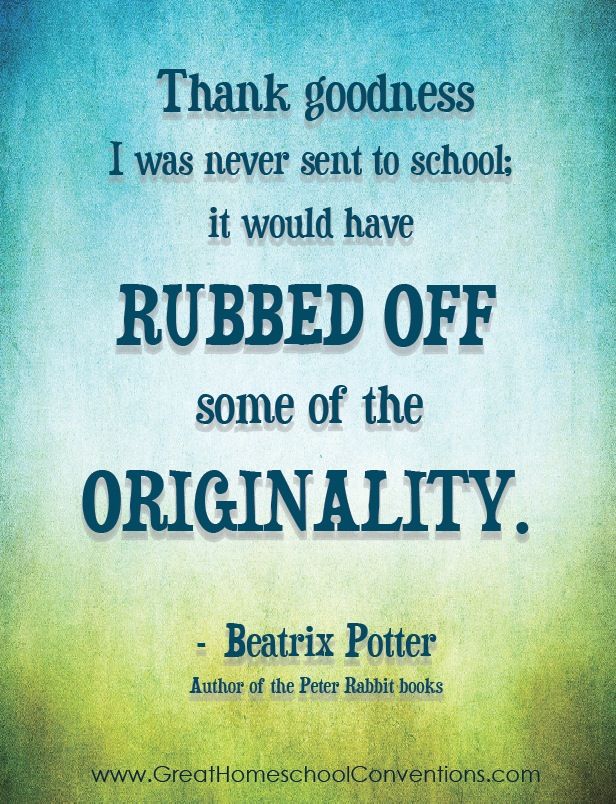
I don’t know exactly what would have happened had I been in public school instead of homeschooled those twelve years. If thrown into the social environment of public school while growing up, I might have made friends and “crawled out of my shell.” However, I suspect it would have been much more like my summer school experience and my first quarter of college, except without the confidence gained by twelve years of studying on my own and being told it was okay to be bookish. My basic personality would not have altered, but I would have felt pressured to hide my quietness and conform instead of being supported in my personal growth. Like Beatrix Potter says in this quote, “Thank goodness I was never sent to school; it would have rubbed off some of the originality.” The world doesn’t need cookie-cutter minions popped out of identical molds and taught identical things. It needs a wide variety of people who have been given the chance to shine using their individual talents. And that is something homeschooling is uniquely suited to do.