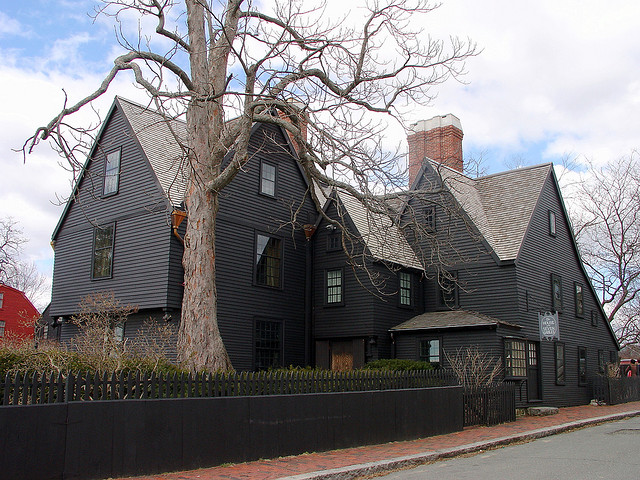
The House of the Seven Gables

 Elizabeth Thomsen, CC BY-NC-SA, via Flicker
Elizabeth Thomsen, CC BY-NC-SA, via Flicker

The House of the Seven Gables by Nathaniel Hawthorn was the book from my first Classics Club book spin. I was supposed to have it finished by January 5. I started it the last week of December, and didn’t finish until January 13. It wasn’t even that long, and I wasn’t reading anything else to distract me. I just found it terribly dull.

I had such high hopes for this book, since I didn’t dislike The Scarlet Letter, and my favorite English professor had told me this was the Hawthorne he taught in his American literature classes (I now half-suspect this was simply to convince students that British literature is more fun than American).

Top Reasons This Book Was Disappointing:

  • The author kept apologizing for his boring characters and plot. Page-space would have been better spent if he’d focused less on apology and more on actually making them interesting.
  • Hawthorn’s limited-omniscient narrator spent one. entire. chapter talking to a corpse. We all knew the character was dead, but the narrative voice just kept calling for him to rise up and get on with his schedule. Only one paragraph of this entire chapter was relevant to the plot.
  • The ending was happy. Usually I like happy endings, but when I’ve been miserable for the entire book, I expect at least a few characters to be miserable as well.

The House of the Seven Gables is a Gothic romance originally published in 1851, and set around the same time. It was the novel Hawthorne published after The Scarlet Letter, and never quite equaled its predecessor’s popularity. It was still plenty popular, though, and I found someone online comparing its reception in America to the UK’s reaction to Jane Eyre, which was published just 4 years earlier (and is a much better book, in case you were wondering).

I felt like this story wasn’t quite sure what it wanted to be. Sometimes it felt like a moral tale, sometimes like a supernatural story, sometimes like a revenge narrative, sometimes a class satire. But the moral is never really a clear part of the story, the apparently “supernatural” is meticulously explained, revenge just sort of happens by chance, and the class satire is only marginally more effective. Obviously it works for some readers, but not for this one.


Click here to get a copy of The House of the Seven Gables. Please note that this is an affiliate link. This means that, at no additional cost to you, I will receive a commission if you click on the link and make a purchase.

Classics Club Book Spin

Wasn’t sure which book on my Classics Club list to read next (keep an eye out for an upcoming post about my latest read), so I decided to participate in the latest Classics Spin. Basically, you pick 20 books from your list that you still haven’t read — five you are hesitant to read, five you can’t wait to read, five you are neutral about, and five free choice (I picked rereads) — then post them numbered 1-20 before next Monday, when The Classics Club will announce a number. Then I have to read the book corresponding to that number by January 5. Here’s my list:

  1. Burke, Edmund Burke: Reflections on the Revolution in France
  2. Burney, Frances: The Wanderer
  3. Dickens, Charles: Bleak House
  4. Poe, Edgar Allen: Collected Stories and Poems
  5. Rousseau, Jean-Jaques: Emile
  6. Austen, Jane: Lady Susan
  7. Montgomery, L.M.: Emily of New Moon
  8. Swift, Jonathon: Gulliver’s Travels
  9. Radcliffe, Ann: The Mysteries of Udolpho
  10. Beagle, Peter S: The Last Unicorn
  11. Bronte, Anne: The Tenant of Wildfell Hall
  12. Hardy, Thomas: Far From the Madding Crowd
  13. Hawthorne, Nathaniel: The House of the Seven Gables
  14. Shakespeare, William: Othello
  15. Shelley, Mary: Frankenstein
  16. Burney, Frances: Evelina
  17. Cooper, James Fenimore: The Red Rover
  18. Burnett, Frances Hodgson: A Little Princess
  19. Gaskell, Elizabeth: North and South
  20. Stevenson, Robert Louis: The Black Arrow

The Classics Club

In my never-ending search for new things to write about, I stumbled upon The Classics Club by way of Carissa’s post at Musings of an Introvert. I love classic literature (not really a surprise to most of you — if someone doesn’t like at least some classic literature they probably shouldn’t major in English), so why not come up with a reading list and blog about each title? That will give me topics for 10 of Mondays blog posts for the next five years.

The Classics Club | marissabaker.wordpress.com

The challenge for those who join The Classics Club is to make a list of at least 50 books and read through it in no more than 5 years. I thought 10 books a year would be thoroughly doable (to put this in perspective, I’ve read 45 books so far this year), and so I posted my list and I’m signing up today. Some of them are re-reads, but most of the ones on the list are new to me. The titles on the list may change as I read, but here are the one I’m starting out with (*indicates a re-read):

  1. Adams, Richard: Watership Down*
  2. Anonymous: The Arabian Nights
  3. Austen, Jane: Lady Susan
  4. Beagle, Peter S: The Last Unicorn
  5. Bradbury, Ray: The Martian Chronicles
  6. Bronte, Anne: The Tenant of Wildfell Hall
  7. Bronte, Charlotte: Villette
  8. Burke, Edmund Burke: Reflections on the Revolution in France
  9. Burnett, Frances Hodgson: A Little Princess*
  10. Burnett, Frances Hodgson: The Secret Garden*
  11. Burney, Frances: Evelina*
  12. Burney, Frances: The Wanderer
  13. Burroughs, Edgar Rice: Tarzan of the Apes*
  14. Cooper, James Fenimore: The Red Rover*
  15. Cooper, James Fenimore: The Water-Witch
  16. Dickens, Charles: Bleak House
  17. Dickens, Charles: Oliver Twist
  18. Dickens, Charles: The Mystery of Edwin Drood
  19. Dostoevsky, Fyodor: The Brothers Karamazov
  20. Doyle, Sir Arthur Conan: The Hounds of the Baskervilles
  21. Doyle, Sir Arthur Conan: The Memoirs of Sherlock Holmes
  22. Doyle, Sir Arthur Conan: The Sign of Four
  23. Dumas, Alexandre: The Count of Monte Cristo
  24. Eliot, George: Adam Bede
  25. Eliot, George: Middlemarch
  26. Gaskell, Elizabeth: North and South*
  27. Gaskell, Elizabeth: Wives and Daughters
  28. Hardy, Thomas: Far From the Madding Crowd
  29. Hawthorne, Nathaniel: The House of the Seven Gables
  30. Hawthorne, Nathaniel: The Scarlet Letter
  31. Homer: The Iliad
  32. Homer: The Odyssey
  33. Keats, John: Poems
  34. Leroux, Gaston: The Phantom of Opera
  35. Malory, Sir Thomas: Le Morte d’Arthur
  36. Montgomery, L.M.: Emily of New Moon
  37. Poe, Edgar Allen: Collected Stories and Poems
  38. Radcliffe, Ann: The Mysteries of Udolpho
  39. Rousseau, Jean-Jaques: Emile
  40. Scott, Sir Walter: Waverly
  41. Shakespeare, William: Henry IV, part 1
  42. Shakespeare, William: Henry IV, part 2
  43. Shakespeare, William: Measure for Measure
  44. Shakespeare, William: Othello
  45. Shelley, Mary: Frankenstein
  46. Stevenson, Robert Louis: The Black Arrow*
  47. Swift, Jonathon: Gulliver’s Travels
  48. Tolstoy, Leo: Anna Karenina
  49. Twain, Mark: The Adventures of Tom Sawyer*
  50. Wells, H.G.: The Invisible Man

Goals, Growth, and a Happy Birthday to Me

Today is my 25th birthday. Other than posting this, my birthday plans involve spending time with family and eating cheesecake. My original idea for this post was to write one of those “Letter To Me” things addressed to my 15 year old self (since 10 years is a nice round number). Part of that’s still here, but it’s not the focus. Why? because while a post all about me could be mildly entertaining, I doubt anyone will find it helpful. Instead, I want to encourage you to join me in thinking about how you’ve changed in the past ten years, and what you want the next 10 years to look like.

If you’re like me, looking at a more narrow time frame of your life to inspect how you’ve changed can be disheartening. I don’t usually feel like I’ve made much progress in a week or a month or sometimes even a year on things like personal growth, forwarding my publishing goals, and growing my business. But look at 10 years, and you can see how much you’ve accomplished, some of it in little steps that you probably didn’t notice when you were walking them."Happy Birthday To Me" marissabaker.wordpress.com

10 Years Ago

I tried to look back at my journal for the year I turned fifteen, but the only entry between November 2002 and June 2006  is an undated poorly-spelled complaint about not having many friends or knowing how to talk to people. It does look like a clump of pages was torn out, but I don’t remember why. Even without a record of my precise thoughts, though, there are plenty of specific things I remember that are pertinent to how much I’ve changed. Setting aside the potential implications contacting your past self might have on the time-space continuum, here are a couple suggestions I’d share with me then:

Dear 15-year-old-me,

Stop reading the Thoroughbred book series right now. I mean it — take that stack beside your bed back to the library immediately. Why? because you’re going to feel guilty when you turn sixteen without having ever been asked out on a date, because some of the characters teased Christina for turning “sweet sixteen and never been kissed.” Which is just plain ridiculous. And speaking of kissing, stop reading the Hardy Boy/Nancy Drew cross-over books as well. You don’t have to be 5′ 3″ and taste like mint for a guy like Joe Hardy to like you (and do you really want him to? this version is kissing a different girl in every book). Honestly, you have poor taste in fictional men. Go read Jane Austen.

Be nicer to your siblings. My brother asked me to include this, but he’s right. They’ll still be some of your best friends when you’re 25, and if you’d treated them as well as they deserved you’re probably all be even better friends. And on the subject of friends, don’t give-up because you can’t seem to make any new ones. You haven’t even met the person who will become your best-friend-who’s-not-a-sibbling yet.

Love,

25-year-old-me

When I was fifteen, I was still convinced that I didn’t need a plan for after high school because within a few years I was going to meet Prince Charming and live happily ever after. Aside from reading and my homeschool work, the only thing I really had interest in was gardening (I ran a little roadside greenhouse selling plants for two years in high school). I hadn’t even started writing yet (I mean, not seriously writing. I would jot down ideas), or really even cooking. Now I list writing and cooking as two things I can’t imagine not doing, largely because I love them so much.

  • What important aspects of your life now were missing 10 years ago?

Now

One thing I haven’t touched on yet is my spiritual walk. I knew at 14 that I wanted to be baptized, but I couldn’t find a minister who didn’t think I was too young. Which I probably was, but I was pretty sure of my faith when I turned 15. Without getting into too much details, that changed after I graduated high school. While I never actually left “the church,” when I again decided to be baptized at 19 it felt almost like coming back, and I’ve seen tremendous growth since then. Not, like, all the time of course — I have plenty of set-backs and doubts like everyone else, but I also think recognizing the fact that we’re nowhere near perfect and we can’t move toward perfection without God is a huge step towards spiritual growth.

  • How is your spiritual growth now different than it was 10 years ago?

As you all know if you’ve been reading this blog on any kind of a regular basis, my writing is now a huge part of my life (this blog, fiction, and copywriting). I love to cook and bake. I have an outlet for sharing my faith. I have a few close, stable friendships with dear people who I hadn’t even met 10 years ago and now can’t imagine life without.

  • Have you met any people who are now your “best friends” within the past 10 years?

Oh, and regarding the whole panic-about-not-having-a-boyfriend thing, I’ve still never been in a serious relationship and I’m actually okay with being unmarried at 25. I still want to get married, but I know that I wasn’t really ready for that kind of commitment during the time frame I was expecting marriage to happen and I’m willing to entertain the possibility that the same thing is true now. More importantly, I’ve actually started turning over my worries about the timing for this and other goals to God.

10 Years Ahead

  • Where do you want to be in 10 years?

My first impulse to this question is, “I have no idea.” I didn’t plan 10 years ago to end up where I am today, and I don’t really know if having a 10 year plan now would be any more advantageous. But I keep hearing about the importance of having a vision for your future, finding your passion, planning a life mission. And I can see the advantages.

In my life, the time period where I’ve felt most productive was my last three years of college. I had a goal (graduate with Latin honors and research distinction in my major), and I worked toward it. The more focused I got on projects, the more productive I was. For example, November 2011 I was was doing the final editing and writing on my thesis, wrote a 50,000 word novel for NaNoWriMo, and taking a full class load that included French (my hardest subject). I was exhausted by the end of the month, but I felt great (and yes, I met those academic goals next year when I graduated).

That’s kinda missing now, and it’s not a good thing. I don’t like being unfocused and not having a more definite goal to work toward. My faith provides a goal for spiritual growth toward eternal life, but it’s also supposed to be an integral part of my life and keep me moving forward personally and professionally as well. I need a direction on a physical level to go along with my direction on a spiritual level.

For my readers who are MBTI fans, personality type plays a role as well — INFJs like me must have a goal. We hate not having something clear (and preferably world-altering) to work toward. So, yea. Making better goals is next on my list.

  • What steps can you take now to move forward with focus and purpose into the next 10 years?
Kate Morton’s novels

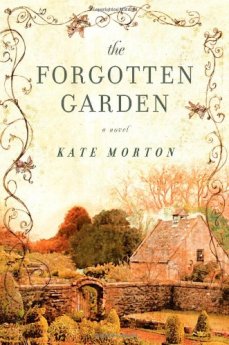
I love Kate Morton’s books. The first one I read, about 2 years ago now, was The Forgotten Garden. It was her second novel, and spans several time periods to discover the history of a girl abandoned on a ship sailing for Australia in 1913. It is not told in chronological order, and moves between the little girl, Nell, and her granddaughter Cassandra as they both travel to England and investigate Nell’s past as tied to the Blackhurst Manor on the Cornish coast.

One of the things I enjoyed most about this novel was the way it wove two different time periods together. If told in chronological order, the story may have been interesting but there would have been no mystery. This way of telling the story does not feel contrived, however, or as if the writer is telling the story out of order simply to confuse the reader with an elaborate plot.

The same is true of Morton’s third book, The Distant Hours, which I read last year.This one has more of a Gothic element. Though the story takes place in both present-day and the relatively modern World War II era, it still has clear ties to the more distant and mysterious past.

It was not until I read Daphne du Maurier’s book Rebecca for the first time a couple weeks ago that I realized what a great influence her writing style had been on Kate Morton (the inside cover of the dust jacket on one of Morton’s books even references du Maurier). A mystery uncovered through flash-backs. A young woman who discovers the past is even darker and more convoluted than she imagined. An ancestral home filled with secrets.

And that brings us to Kate Morton’s first novel, The House At Riverton, which I finally started reading. I’m about 2/3 of the way through now. This most likely means that I’m at the point in the book where I think I have everything pretty much figured out, and all my suppositions are about to be turned upside down. As I read this book, I realize another reason I love Morton’s writing style — there isn’t an extraneous scene in the book. Everything that happens builds the plot or contributes to essential character development. In novels this size (the shortest is 480 pages), that is an achievement.

I’m enjoying this novel quite a lot, partly for the reason that Morton’s writing style is just as enjoyable in her first novel as in later works, and partly because of the many parallels with Dowton Abbey (Morton’s book was published 3 years before the first season aired, so any similarities are coincidence or the script-writer pilfering from her). Unlike the other two novels, where one character in the present is investigating another in the past, the 98-year-old narrator of this book is looking back on her own life and telling her secrets to her grandson and a film maker.

There is one more novel to read once I finish this one, Morton’s latest book The Secret Keeper. I think I will wait a little while before reading it, though, perhaps a whole year like I did in between her other books. I don’t like the thought of not having another one waiting for me when that one is over.

TheGeekSpa.com
don’t forget to check out new Sherlock and Doctor Who themed items in my Etsy store


Empathic Feeling

I realized Tuesday night when I was reading Fire by Kristin Cashore and crying into the bath water that I wasn’t crying because I felt sad a character had died. I was crying because someone in the book felt sad that this character had died. Once I thought about it, I realized that at least half of the times when fiction moves me to tears, it is in empathy with the characters rather than my own feelings being affected. In other words, I’m crying because the character is crying, not because of what moved the character to tears. Sometimes it is both (Ender’s Game, for example).

This feeling other people’s feelings (fictional and real) is something I didn’t have much of a grasp on until I discovered my Myers-Briggs type and started reading what other INFJs wrote about being overwhelmed with the emotions of others. Adding high sensitivity to the mix only heightens this (here is a wonderful article about Elaine Aaron’s research on the Highly Sensitive Person).

A Range of Empathy

The extent to which INFJs report feeling other people’s emotions range from an awareness of how others are reacting, to not being able to remember the last time you experienced a feeling that belonged only to you. “You feel it, I feel it,” an anonymous INFJ wrote. I may not be quite ready to claim my feeling of and for others reaches that extent, but I share her decision to try and avoid encountering strong negative emotions (e.g. a news story about child molestation, a film where a family is torn apart, real-life conflict) because of how overwhelming it is — emotionally as well as physically in terms of headaches and stomach pain.

Managing Feelings

In INFJ Coach’s series of blog posts on “10 Steps to an Amazing INFJ Life,” part two is “Manage Those Pesky Emotions.” Her article is mainly about dealing with our own emotions when they surface, but the comments point out that this is only part of the problem. One commenter named Jennie wrote that she asks herself,

“Is this my emotion that I’m feeling, or is it someone else’s emotion?’ Many of us INFJs are emotional sponges for the emotions that other people are feeling. Our NF gives us a very high degree of empathy, but sometimes taking on other people’s emotions can be too much to handle.

The other side to this is what INFJ writer Cheryl Florus points out in Personality Junkie’s INFJ Strategies for Dealing with Emotions: Part I. Because an INFJ’s feeling is extroverted, we often have an easier time understanding the emotions of other people than our own emotions (for more on function stacks, see this post). We feel emotions strongly, but need to make an effort to learn how to experience and express them in a way that doesn’t seem overwhelming or uncontrolled. Often, writing down or talking about our emotions is a way to get them outside us so we can look at them more objectively (I keep a journal and talk to my closest family members). Sometimes, until I’ve done this, I’m not exactly sure what it is I’m feeling, let alone how it should be expressed and dealt with.

What about you? Are you an INFJ with experience feeling other people’s feelings (or a non-INFJ who does the same thing, because I’d love to hear from you)? Or are you someone who has never had this happen and thinks we’re crazy?