How Do We “Eat” Jesus Christ, and What Does That Even Mean?

As we approach Passover (Pesach) and the Feast of Unleavened Bread (Chag HaMatztot), I like to think about Jesus Christ’s sacrifice and the symbolism associated with that. For New Covenant believers, the principal symbols of Passover are foot washing, eating unleavened bread, and drinking red wine. Those are the three things Jesus did at His last Passover here on earth that He told His followers to continue doing (John 13:1-17; Luke 22:14-20).

Today, I want to specifically focus on the bread that symbolizes Jesus’s body. At first, I’d intended to study altars in the New Testament to dig into Hebrews 13:10 more deeply, but I was only a few minutes into that study when I felt prompted to take things in a different direction this week. We’ll still go to Hebrews, but from a different direction than I’d expected when I first started thinking about the topic.

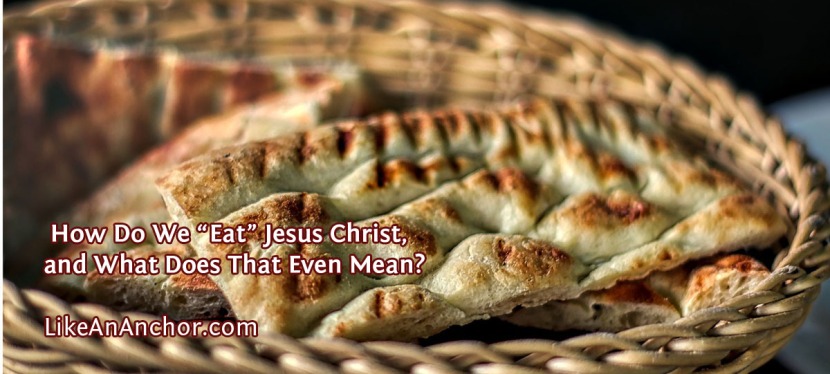
Image of a piece of flatbread overlaid with text from John 6:35, NET version: Jesus said to them, “I am the bread of life. The one who comes to me will never go hungry, and the one who believes in me will never be thirsty.”
Image by Matt Vasquez from Lightstock

The Bread of Life

Because of my focused interest in covenants, I typically spend more time in my Passover studies focused on the wine that Jesus described as “the new covenant in my blood” (Luke 22:20, NET). Today, though, let’s take a look at the bread part of the Passover service. Matthew and Mark’s accounts are nearly identical, so I’ll just quote one of them and Luke.

 So the disciples did as Jesus had instructed them, and they prepared the Passover. When it was evening, he took his place at the table with the twelve. … While they were eating, Jesus took bread, and after giving thanks he broke it, gave it to his disciples, and said, “Take, eat, this is my body.” 

Matthew 26:19-20, 26 NET

Now when the hour came, Jesus took his place at the table and the apostles joined him. And he said to them, “I have earnestly desired to eat this Passover with you before I suffer. … Then he took bread, and after giving thanks he broke it and gave it to them, saying, “This is my body which is given for you. Do this in remembrance of me.” 

Luke 22:14-15, 19, NET

Here, Jesus and His disciples were observing the first holy time of the year on God’s sacred calendar. As commanded, they’re eating the Passover meal on the evening that begins Nisan 14 on the Hebrew calendar. Per Exodus 12:8, that meal includes “bread made without yeast” or “unleavened bread.” The bread was already there, but Jesus assigned a new, deeper meaning to it. Now when we take Passover, the unleavened bread we eat reminds us of Jesus’s body and His sacrifice. It might also remind us of a discussion recorded in John’s gospel.

Jesus’s miraculous feeding 5,000 people is recorded in every gospel (Matt. 14:13-21; Mark 6:30-34; Luke 9:10-16; John 6:1-13). Interestingly, John includes an extra piece of information: “Now the Jewish Feast of the Passover was near” (John 6:4, NET). This would be the Passover one year before Jesus’s death (NET footnote on John 6:4). John also goes on to describe what happened after the miracle. The crowds followed Jesus to the other side of the lake, hoping for more food. Jesus used the opportunity to talk to them about “food that remains to eternal life—the food which the Son of Man will give to you” (John 6:27, NET). Now, they thought this sounded like a pretty good deal, maybe even better than the manna in the wilderness (Ex. 16.4-36; John 6:28-34). They challenged Him to perform a miracle, and He challenged them to understand at a deeper level.

“I tell you the solemn truth, the one who believes has eternal life. I am the bread of life. Your ancestors ate the manna in the wilderness, and they died. This is the bread that has come down from heaven, so that a person may eat from it and not die. I am the living bread that came down from heaven. If anyone eats from this bread he will live forever. The bread that I will give for the life of the world is my flesh.”

 Then the Jews who were hostile to Jesus began to argue with one another, “How can this man give us his flesh to eat?” Jesus said to them, “I tell you the solemn truth, unless you eat the flesh of the Son of Man and drink his blood, you have no life in yourselves. The one who eats my flesh and drinks my blood has eternal life, and I will raise him up on the last day. For my flesh is true food, and my blood is true drink. The one who eats my flesh and drinks my blood resides in me, and I in him. Just as the living Father sent me, and I live because of the Father, so the one who consumes me will live because of me. This is the bread that came down from heaven; it is not like the bread your ancestors ate, but then later died. The one who eats this bread will live forever.”

John 6:47-58, NET

My guess is that Jesus was thinking ahead one year, to the next Passover when He would tell His disciples the unleavened bread represented His body and the red wine His blood. He wants us to understand how much we need Him. Physical food keeps us alive for a while, but “eating” Him–taking Him inside us and accepting His sacrifice–is far more important. A real relationship with Jesus will keep us alive forever.

Inheritance and Sacrifice

The author of Hebrews spends a lot of time explaining how the Old Testament sacrifices, tabernacle/temple, and priesthood all pointed to Jesus. Near the end of the book, the author says, “We have an altar that those who serve in the tabernacle have no right to eat from” (Heb. 13:10, NET). This hearkens back to an Old Covenant practice: the priests serving in the tabernacle or temple ate from the meat of the sacrifices offered in the temple (Lev. 10:10-18; Num. 18:22-24; 1 Cor. 9:13-14).

The priests and the Levites—all the tribe of Levi—shall have no portion nor inheritance with Israel. They shall eat the offerings of Yahweh made by fire and his portion. They shall have no inheritance among their brothers. Yahweh is their inheritance, as he has spoken to them. This shall be the priests’ due from the people, from those who offer a sacrifice, whether it be ox or sheep, that they shall give to the priest: the shoulder, the two cheeks, and the inner parts. You shall give him the first fruits of your grain, of your new wine, and of your oil, and the first of the fleece of your sheep. For Yahweh your God has chosen him out of all your tribes to stand to minister in Yahweh’s name, him and his sons forever.

Deuteronomy 18:1-5, WEB

The Levites–the tribe that all priests came from under the Old Covenant–didn’t inherit land with the rest of the tribes of Israel. Instead, they inherited a special relationship with Yahweh God. New Covenant believers do not directly correlate to the Old Testament priesthood, but we do have similarities with them and the Levites. Peter tells us we’re part of a “priesthood” and Revelation describes the saints as “priests” (1 Pet. 2:5, 9; Rev. 1:5-6; 20:5-6). We also don’t have an inheritance or citizenship on this earth; our citizenship is in heaven and our inheritance is connected with Jesus Christ (Rom. 8:16-17; Phil. 3:20). The verse we opened with from Hebrews indicates we have another similarity with them as well: we’re allowed to “eat from” the altar.

Jesus Christ is the same yesterday and today and forever! Do not be carried away by all sorts of strange teachings. For it is good for the heart to be strengthened by grace, not ritual meals, which have never benefited those who participated in them. We have an altar that those who serve in the tabernacle have no right to eat from. For the bodies of those animals whose blood the high priest brings into the sanctuary as an offering for sin are burned outside the camp. Therefore, to sanctify the people by his own blood, Jesus also suffered outside the camp. We must go out to him, then, outside the camp, bearing the abuse he experienced.

Hebrews 13:8-14, NET

The author of Hebrews just spent a huge section of this letter explaining that Jesus Christ is both the High Priest and the perfect, once-for-all-time sacrifice offered for sins (Heb. 8-10). If we get to “eat from” the altar where He offered His sacrifice, then we’re eating from Jesus Himself. It’s about partaking of His sacrifice, just like we do at Passover.

Our Participation in Passover
1 Corinthians is a letter closely tied to Passover and the Feast of Unleavened Bread. In that letter, Paul asks a rhetorical question about the Israelite priesthood: “Are not those who eat the sacrifices partners in the altar?” (1 Cor. 10:18, NET). The Greek word translated “partners” is koinonos (G2844), which also means “associate, comrade, companion … sharer, in anything” (Thayer’s Dictionary). It is the root word of “fellowship,” the Greek word koinonia (G2842), which describes a believer’s proper relationship with God and His whole family as a “fellowship, association, community, communion, joint participation” (Thayer’s Dictionary; see 1 John 1:3-7). It’s the word that’s translated “sharing” in the verses leading up to the one we just quoted:

 I am speaking to thoughtful people. Consider what I say. Is not the cup of blessing that we bless a sharing in the blood of Christ? Is not the bread that we break a sharing in the body of Christ? Because there is one bread, we who are many are one body, for we all share the one bread. Look at the people of Israel. Are not those who eat the sacrifices partners in the altar?

1 Corinthians 10:15-18, NET

When we “eat” Jesus Christ’s symbolic body, we’re participating in the altar. Our part in the Passover service is to accept deliverance from God and confirm our covenant commitment to Him. Jesus is the only way to salvation; His sacrifice atones for our sins (Acts 4:11-12; 1 John 2:1-3; 4:9-10). It doesn’t just happen automatically, though: we’re expected to participate to a certain degree, namely, by repenting and believing and committing to follow Him (Mark 1:14-15; 16:16; Acts 2:37-38; Rom. 10:8-11). Once we do that, our lives should change. Passover reminds us of that every year.

For I received from the Lord what I also passed on to you, that the Lord Jesus on the night in which he was betrayed took bread, and after he had given thanks he broke it and said, “This is my body, which is for you. Do this in remembrance of me.” In the same way, he also took the cup after supper, saying, “This cup is the new covenant in my blood. Do this, every time you drink it, in remembrance of me.” For every time you eat this bread and drink the cup, you proclaim the Lord’s death until he comes.

For this reason, whoever eats the bread or drinks the cup of the Lord in an unworthy manner will be guilty of the body and blood of the Lord. A person should examine himself first, and in this way let him eat the bread and drink of the cup. For the one who eats and drinks without careful regard for the body eats and drinks judgment against himself. That is why many of you are weak and sick, and quite a few are dead. But if we examined ourselves, we would not be judged.  But when we are judged by the Lord, we are disciplined so that we may not be condemned with the world.

1 Corinthians 11:23-32, NET

As Thayer’s Dictionary says when defining koinonia, our fellowship with God as part of His body of believers involves “joint participation.” When we participate in Passover, symbolically taking in the body of Jesus that He sacrificed for us, we’re part of something much bigger than ourselves. We’re reminding ourselves of the covenant commitment we made with God, of His sacrifice that we’ve accepted on our behalf, and of the way we ought to live as people transformed by Jesus. That’s one of the reasons we’re supposed to examine ourselves before taking the Passover–to make sure we’re doing so “in a worthy manner” that correctly values Jesus’s sacrifice and the fellowship God invites us into as part of His family.


Featured image by WorldInMyEyes from Pixabay

Exodus To Corinthians: A Passover Message For The New Testament Church

In 1 Corinthians, Paul makes several references to leavening and to Passover. For many readers today, these references mean very little because so many Christian churches have left the roots of their faith, which Paul was referencing here. In order to really understand key passages of 1 Corinthians, we need to understand Passover and the Feast of Unleavened Bread.

I know some (perhaps quite a few) of you are Christians who don’t keep Passover, but I hope you’ll still keep reading today’s post. I think you’ll find it interesting and maybe it’ll give you something new to think about and study.

Passover Background

The Passover story begins in Exodus 12. We’re nearing the end of the plagues of Egypt, and the Lord is telling Moses what the Israelite must do to avoid the final plague — the death of the first born. In the first month of the year, on the evening that begins the 14th day (Hebrew days begin at sunset), Israel was to kill a young male lamb, paint the door posts of their houses with its blood, then roast the lamb whole and eat it with unleavened bread and bitter herbs (Ex. 12:1-13).

This day shall be to you for a memorial, and you shall keep it a feast to Yahweh: throughout your generations you shall keep it a feast by an ordinance forever. (Ex. 12:14, WEB)

The Lord goes on to describe a festival of unleavened bread (matzah) that follows the Passover. For seven days, no leavening (hametz) is permitted in anyone’s house and whoever eats leavened food will be cut off from God’s people (Ex. 12:15-20). Later instructions in Leviticus clarify the timing of all this, stating that Passover is on the 14th and Unleavened Bread begins with a holy convocation on the 15th, then ends with another holy convocation on the seventh day (Lev. 23:4-8). The two holy days are Sabbaths of rest where you are not to work, much like the weekly Sabbath.

The New Covenant Passover

Moving into the New Testament, the gospels make careful note of Passovers that Jesus kept during his ministry. The first is recorded in John 2:13-23. The second is skimmed over, though Luke 6:1 probably references the last day of Unleavened Bread. John 6:4 mentions the third Passover, and Christ’s final Passover is recorded in detail by all four gospels because that was the day He died.

He said to them, “I have earnestly desired to eat this Passover with you before I suffer, for I tell you, I will no longer by any means eat of it until it is fulfilled in God’s Kingdom.” (Luke 22:15-16, WEB)

He then proceeded to institute new Passover symbols for New Covenant believers. Jesus will not partake of the Passover again until the kingdom of God comes in the future, but He tells us to do so in memory of Him (Luke 22:17-20).

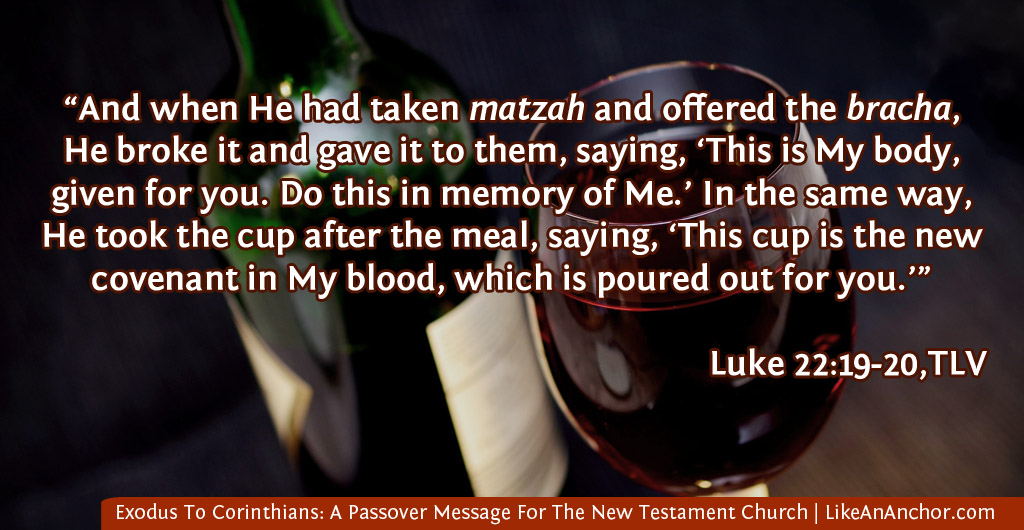
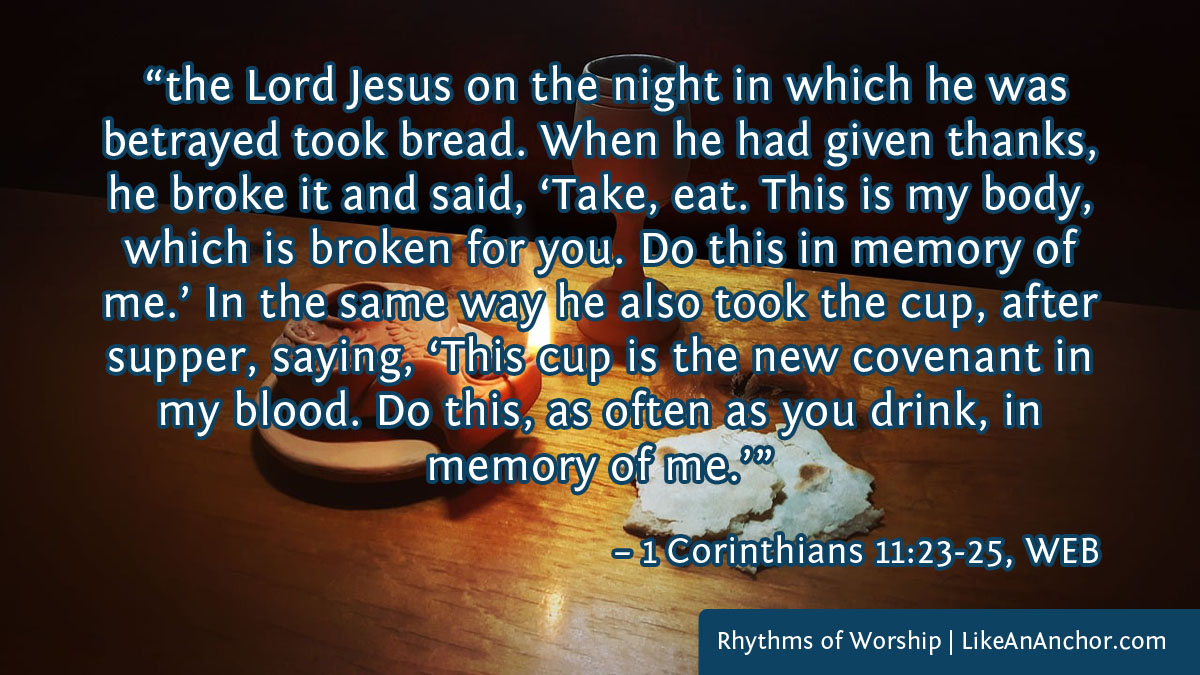
For I received from the Lord that which also I delivered to you, that the Lord Jesus on the night in which he was betrayed took bread. When he had given thanks, he broke it, and said, “Take, eat. This is my body, which is broken for you. Do this in memory of me.” In the same way he also took the cup, after supper, saying, “This cup is the new covenant in my blood. Do this, as often as you drink, in memory of me.” (1 Cor. 11:23-25, WEB)

Exodus To Corinthians: A Passover Message For The New Testament Church | LikeAnAnchor.com
Photo credit: congerdesign via Pixabay

Honoring Jesus By Keeping The Passover

The passage we just read from 1 Corinthians 11 is part of the most obvious Passover reference in this letter. Paul goes on to share instructions on how we’re supposed to prepare for Passover, as well as warnings about the dangers of not keeping Passover the correct way. Read more

Beware Leavened Doctrine

“Every word of God is pure,” but the same can’t be said of all the words human beings say about God’s words (Prov. 30:5, KJV). This is one of the problems Jesus called attention to in His earthly ministry. The religious leaders of His day bound heavy burdens on their followers, got distracted by seeking recognition, shut the kingdom against God’s people, greedily profited off the offerings made to God, misrepresented the truth, and focused on minutia while ignoring weighty matters of the law. In short, they were hypocrites (Matt. 23).

In Matthew 16, Jesus told His disciples, “Take heed and beware of the leaven of the Pharisees and of the Sadducees” (Matt. 16:6, KJV). The disciples were confused at first, but after some discussion they realized He wasn’t telling them to “beware of the leaven of bread, but of the doctrine of the Pharisees and of the Sadducees” (Matt. 16:12, KJV).

How Leavening Works

The New Testament speaks of leavening representing hypocrisy, malice, and wickedness (Luke 12:1; 1 Cor 5:8). And when we consider the physical affect of a leavening agent like yeast, we see leaven as something souring, spreading, fermenting, and puffed-up.

Matthew Henry suggests that the warning “take heed and beware” in Matthew 16 is given because disciples are especially vulnerable to this type of deception. We can easily fall victim to those like the “Pharisees, who are great pretenders to devotion, and Sadducees, who pretend to a free and impartial search after the truth” (MHC on Matt. 16:5-12).

We’re not talking about a corrupting influence from outside the church. These people operate within, corrupting the doctrine that came direct from God. Read more

Top 5 Reasons for Christians to Keep God’s Holy Days

Today we celebrate Yom Teruah, also called Feast of Trumpets and Rosh Hashanah. But why? After all, I’m Christian and most people think of this as a Jewish holiday. Same goes for Yom Kippur/Day of Atonement, which we’ll observe 10 days from now, and Sukkot/Feast of Tabernacles that starts in two weeks.

I believe these festival observances, along with others already completed this year, are for Christians today. When Jesus came to this world, it wasn’t to set up a new religion. He was the next step in God’s plan for the world and these days are part of the covenant He makes with His family. He’s still inviting us to gather for “reunions” at certain times of the year.Top 5 Reasons for Christians to Keep God's Holy Days | marissabaker.wordpress.com

1. They Belong To God

And the Lord spoke to Moses, saying, “Speak to the children of Israel, and say to them: ‘The feasts of the Lord, which you shall proclaim to be holy convocations, these are My feasts.” (Lev. 23:1-2)

The holy days aren’t Jewish or exclusively Old Testament. They belong to God Himself. We talk about Leviticus 23 as the chapter where God gives Israel the Feasts, but that’s not quite accurate. God doesn’t say, “Here are your holy days, Israel.” He says, “These are the feasts of the Lord, holy convocations which you shall proclaim at their appointed times” (Lev. 23:4). Read more

Rhythms of Worship: God’s Plan and the Sacred Calendar

The people of God are set apart, with different priorities, habits, and festivals than the rest of the world. We may celebrate national holidays of our homelands, such as July 4th for Americans, but those are not the observances that shape our identities as God’s people. The kingdom we belong to under Christ’s authority has a different calendar.

A couple months ago, I read Desiring the Kingdom by James K.A. Smith. In “Chapter 5: Practicing (for) the Kingdom,” he discusses “rhythms and cadences of hope” that Christians observe in weekly and annual practices. For him, this means Sunday, Easter, Lent, Advent, Christmas and others. He connects the observances to a rich history of “a people gathered to worship the Messiah, who does not float in some esoteric, ahistorical heaven, but who made a dent in the calendar — and will again” (p. 157).

However, when you read the Bible, you won’t find the days Smith talks about on God’s calendar. Even the one mention of Easter in the KJV is a mistranslation of pascha, or Passover (Acts 12:4, Strong’s G3957). Rather, we find the church from the Torah to Revelation on a calendar even more unique than the one Smith claims for Christians. I know it puzzles many Christians that I would keep the “Jewish holidays,” but I find it equally puzzling that they would continue a tradition of co-opting pagan holidays and attaching them to Biblical events God gave no instructions to observe. When we search the scriptures looking for God’s version of liturgical rhythms, we find a worship pattern far more richly layered and deeply rooted in God’s plan than what man has invented.

Photo by Megs Harrison on Unsplash

Weeks and Months

The observance of time in the Bible begins at Creation. On the fourth day, God said, ““Let there be lights in the expanse of the sky to divide the day from the night; and let them be for signs to mark seasons, days, and years” (Gen 1:14, WEB). On the seventh day God rested “from all his work which he had done. God blessed the seventh day, and made it holy, because he rested in it from all his work of creation which he had done” (Gen. 2:2-3, WEB; see also Ex. 20:11; 31:17).

From the very beginning, God set up a world that allowed for marking time in weekly, monthly, and yearly rhythms. The Sabbath was established from the foundation of the world, and there’s no scriptural evidence that it was ever moved from the seventh to the first day (click here for my Sabbath post). The other holy days were set in place as God revealed His plan and established His covenants, but the Sabbath was there since the beginning and will be with us forever (Is. 56:2-7; 66:22-23; Mark 2:27-28; Heb. 4:9).

The months were marked by new moons, making the Hebrew calendar lunar (which is why the holy days “move around” on the Gregorian calendar). Exodus establishes which month begins the year (Ex. 12:2) and calls it Abib (Ex. 13:4). The new moons aren’t counted as Sabbaths and we know very little about how they were observed. We’re told there was trumpet blowing and offerings (Num. 10:10; 28:11-15), we read about people gathering together (1 Sam. 20:5, 18, 24, 27; 2 King. 4:22-23), observance is mentioned in a  Millennial setting (Is. 66:23), and once they’re mentioned in the New Testament alongside holy days and Sabbaths (Col. 2:16-17). Most of us aren’t sure what to do with them today and ignore them, and I confess I’m guilty of that as well.

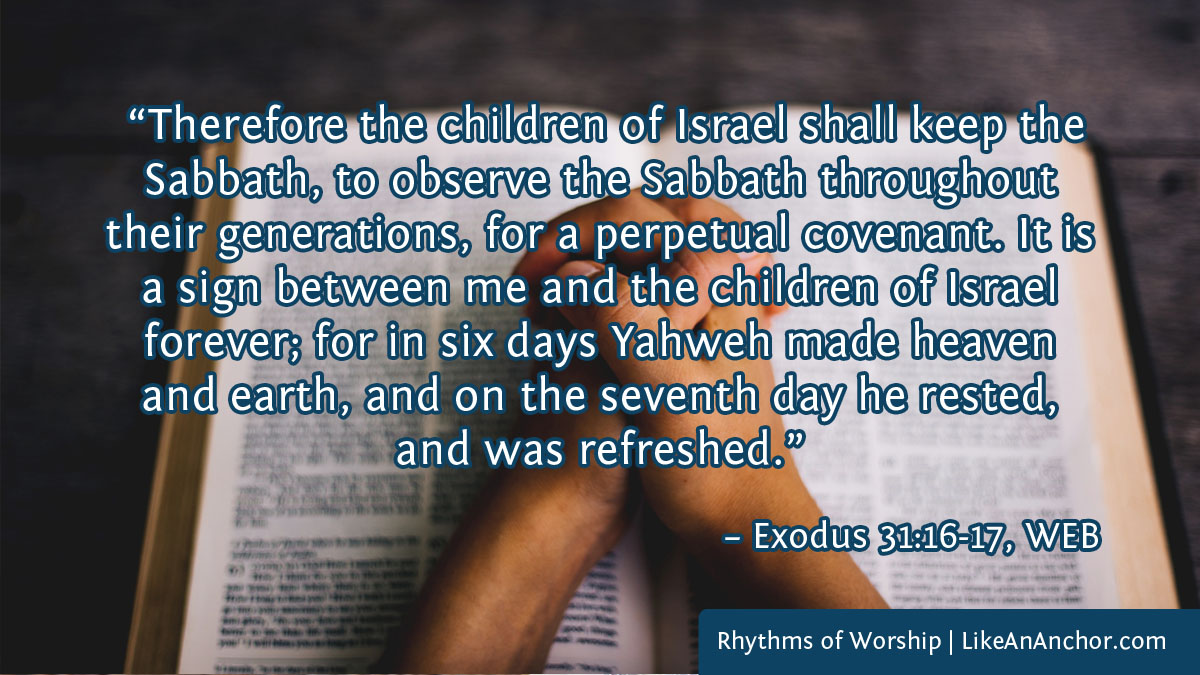
Image of hands folded on a Bible, overlaid with text from Exodus 31:16-17, WEB version: "Therefore the children of Israel shall keep the Sabbath, to observe the Sabbath throughout their generations, for a perpetual covenant. It is a sign between me and the children of Israel forever; for in six days Yahweh made heaven and earth, and on the seventh day he rested, and was refreshed.”
Image by Jantanee from Lightstock

Remembering Our Savior

The first month, Abib, begins the holy day cycle with Passover on the 14th. Originally, the Passover (Pesach in Hebrew) was kept as a memorial of God rescuing Israel from Egypt and sparing their firstborn by passing His vengeance over the houses covered by the blood of a lamb. Jesus Christ fulfilled what was pictured here when He died as our Passover lamb, and He up-dated Passover observance for His new church.

Many churches today keep the Passover, but in many Christian denominations it has been replaced with Easter and the ceremony Jesus instituted on His last Passover is done regularly as Communion. However, Jesus never tells us to mark His resurrection day with a yearly observance. Rather, He says during the Passover ceremony, “Do this in remembrance of me” (Luke 22:19, NET). Even if we did remember Him in communion throughout the year (there are some scriptures you could use to support that practice), it would not eliminate the need to observe Passover the way that Christ did. The resurrection was incredibly important, but Jesus didn’t want us to stop keeping Passover and replace it with Easter.

In his book Surprised by Hope, N.T. Wright laments how little time is spent in celebrating Easter and argues “it ought to be an eight day festival” (p. 256). If he were to step back from Easter and take another look at Passover, he would see God did indeed set up eight days of observance. Passover starts things off, then the following day begins the seven-day festival of Unleavened Bread (Chag HaMatzot). If we look at a timeline of Jesus’ death and resurrection, we find that He rose from the dead when the sun set on Saturday, ending the weekly Sabbath and starting the first day of the week. He ascended to His father the following Sunday morning (John 20:1-17), which corresponds to a special ceremony outlined in Leviticus 23:9-15 called the Wave Sheaf or First Fruits. This ceremony marked the beginning of a 50-day count to Pentecost.

Set back in the context of the Biblical holy days, our remembrance of Christ’s Passover sacrifice kicks-off a week long festival where we remember that because “Christ, our Passover, has been sacrificed in our place” we are being made into a people untainted by the yeast of sin (1 Cor. 5:6-8). It should be a time of rejoicing and appreciation for all that’s pictured in His sacrifice and in His resurrection. When we mark the Wave Sheaf as the day He ascended to His Father following His resurrection and start counting to Pentecost (Shavuot), we have a reminder built into God’s holy calendar that without the resurrection of Jesus the church wouldn’t have the holy spirit. And so we celebrate Pentecost, the day God poured His spirit out on the New Testament church (Acts 2:1-4) as a direct result of the resurrection of Jesus Christ and the work He’s currently doing in and with His church to make us firstfruits.

Image of unleavened bread and wine on a table, overlaid with text from 1 Corinthians 11:23-25, WEB version:  “the Lord Jesus on the night in which he was betrayed took bread. When he had given thanks, he broke it and said, ‘Take, eat. This is my body, which is broken for you. Do this in memory of me.’ In the same way he also took the cup, after supper, saying, ‘This cup is the new covenant in my blood. Do this, as often as you drink, in memory of me.’”
Image by Jeff Jacobs from Pixabay

Looking To The Future

On the first day of the seventh Hebrew month, the Lord commanded Israel, “you must have a complete rest, a memorial announced by loud horn blasts, a holy assembly” (Lev. 23:24, NET). Many interpret this day as picturing the return of Jesus Christ because “the Lord himself will descend from heaven with a shout, with the voice of the archangel and with God’s trumpet” (1 Thes. 4:16, NET). In Jewish tradition, trumpets were blown the entire month leading up to the Feast of Trumpets (Yom Teruah). Messianic rabbis teach the trumpet calls proclaim, “The Bridegroom is coming! get ready to meet Him.” What could be more relevant for the church today as we draw ever closer to Jesus’ second coming?

Ten days after Trumpets, we cycle through to a solemn, serious holy day called the Day of Atonement (Yom Kippur). This day is marked by fasting, prayer, and a complete Sabbath rest from all work. Judging by the amount of scripture space devoted to its observance (Lev. 16:1-34; 23:26-32, and others), this day was very important to God, and it still is. Atonement was called an “everlasting statute” and Paul was still marking it in the New Testament (Acts 27:9). Unfortunately, it’s been so stereotyped as a Jewish holiday that most Christians don’t even consider the depth and meaning this day takes on following Christ’s atoning sacrifice, His resurrection, and His exaltation to the role of High Priest. Instead, they’re distracted during the fall season of the year by thoroughly pagan Halloween and non-scriptural All Saints and All Souls days.

The holy day cycle, like the plan of God, culminates in a celebration. Every weekly Sabbath looks forward to the time when Christ will reign on this earth as present, powerful, King of kings and Lord of lords, but the Feast of Tabernacles (Sukkot) takes the picture further. We dwell in temporary shelters as a reminder that we are sojourners here on this earth awaiting the return of our Lord and looking forward to a time when His kingdom will be here on earth. Sukkot also looks back, at the children of Israel who God made to live in tabernacles, or “temporary shelters,” when He “brought them out of the land of Egypt” (Lev. 23:42-43, WEB). Jesus kept this Feast (John 7:2-10, 14, 37) and it will be kept in God’s future kingdom (Zech. 14:16). We can’t argue it’s irrelevant to the church today; it hasn’t even been fulfilled yet by God’s Millennial Kingdom. Wrapping up the holy day cycle, the Feast ends with an eighth day, the Last Great Day, pointing to the final judgement day and the New Jerusalem (Revelation chapters 20-22).

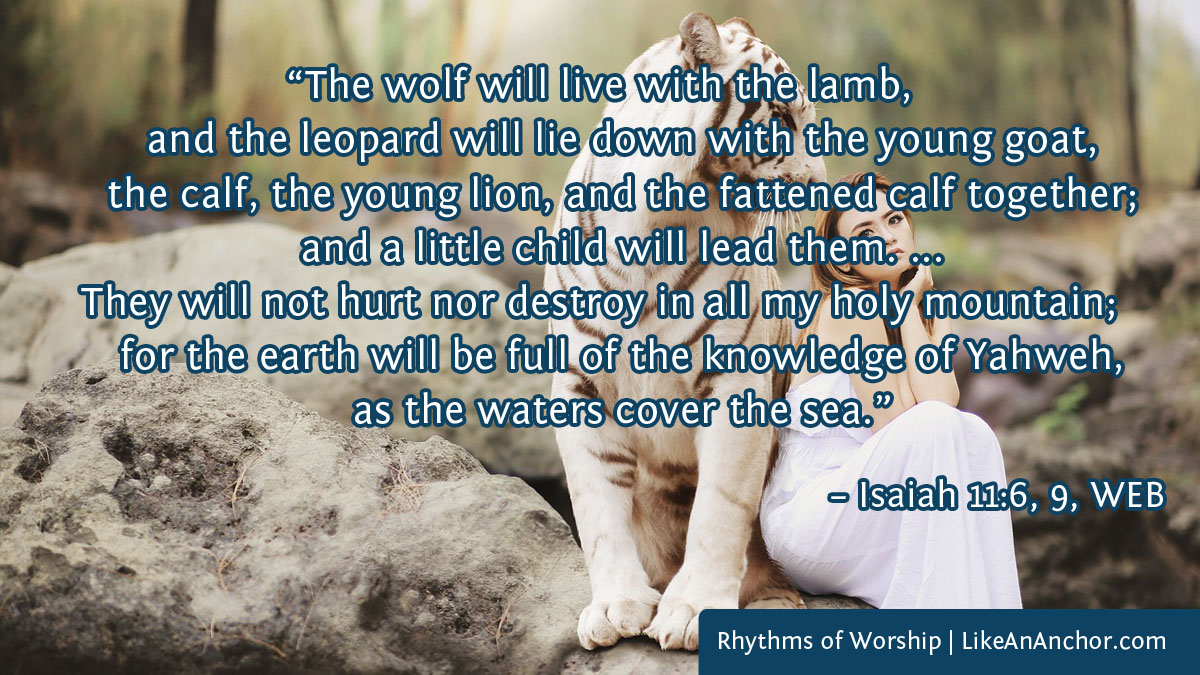
Image of a young woman sitting by a tiger, overlaid with text from Isaiah 11:6 and 9, WEB version: “The wolf will live with the lamb, and the leopard will lie down with the young goat, the calf, the young lion, and the fattened calf together; and a little child will lead them. ... They will not hurt nor destroy in all my holy mountain; for the earth will be full of the knowledge of Yahweh, as the waters cover the sea.”

Aligned With The Lord

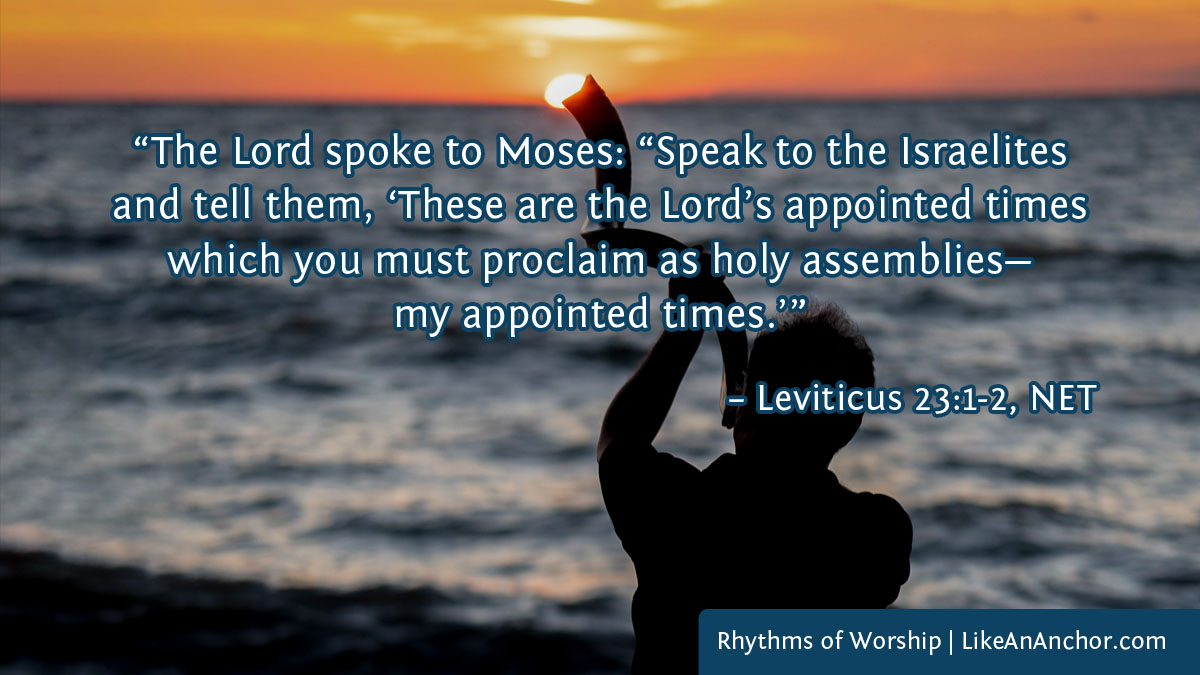
So why aren’t all the Christian churches on God’s calendar? I’ll be honest, this is something I really don’t understand. To be clear, I under stand why people who never learned about God’s holy days and who are members of churches that dismiss these days don’t keep them. Unless you study God’s holy days for yourself, you’re unlikely to hear about them in most churches. But I don’t understand how Bible teachers justify the omission. Why distance yourself from the rhythms of worship God says belong to Him? In Leviticus, before outlining all the holy days, God says, “These are the Lord’s appointed times which you must proclaim as holy assemblies—my appointed times” (Lev. 23:1-2, NET). They are days Holy to our great God, not something just for a specific group or time. So why abandon them for days with observances rooted in pagan holidays like the worship of Ishtar/Astarte (for Easter) and mid-winter Saturnalia (for Christmas)?

Images from OpenClipArt

I’m not just talking about Christian leaders today. This substitution of man’s days for God’s days goes back centuries–so far that Easter and Christmas are called “Christian” traditions and the days Christ Himself kept are a distant memory. It’s time for the church to ask itself some tough questions. Is God pleased when we use pagan holidays to “worship” Him, even after we pretty them up and associate them with events in the Bible? Or would God be more pleased if we value the holy days He set aside for His people from the establishment of His covenants? The way we live our lives matters to God, and He’s watching to see whether we’ll cling to traditions of men or whether we’ll cling to His word, His kingdom, and His plan.

I hope no one feels like I’m attacking them or their beliefs. I’ve thought long over how to phrase this post, and even debated whether or not to share it. I truly feel, though, that the closer we align ourselves with God’s word, the more He will reveal of His plan and the closer our relationships will be with Him. May God’s blessing rest on you all, my friends.


Featured image by José Roberto Roquel from Lightstock

All-In

Today is the first day of Unleavened Bread on God’s Holy Day calendar (Lev. 23:6-8). We just observed Passover, and now we’re starting a season of purging the leaven of sin our of our lives. Even if you’re not one of the Christians observing the Passover season, putting sin our of our lives is a necessary part of our walk with God so I hope you’ll keep reading.

Therefore purge out the old leaven, that you may be a new lump, since you truly are unleavened. For indeed Christ, our Passover, was sacrificed for us. Therefore let us keep the feast, not with old leaven, nor with the leaven of malice and wickedness, but with the unleavened bread of sincerity and truth. (1 Cor. 5:7-8)

In my personal pre-Passover studies, I spent time in Romans 12 and 13. This section of scripture covers what my study Bible calls “practical living.” It lists instruction, reminders, and exhortations that are crucial to our walk as Christians. I found it helpful as a guide for self-examination, and there was one thing in particular that I want to share today.

Time To Wake Up

The last few verses of Romans 13 are a summation of the previous exhortation to practical, godly living, as well as a call to active de-leavening.

And do this, knowing the time, that now it is high time to awake out of sleep; for now our salvation is nearer than when we first believed. (Rom. 13:11)

Let’s just pause for a moment and consider this verse. If we have to awake, then that means we’ve fallen asleep much like the ten virgins of Matthew 25:1-13. This subject of spiritual sleepiness also comes up in connection with the Passover.

But let a man examine himself, and so let him eat of the bread and drink of the cup. For he who eats and drinks in an unworthy manner eats and drinks judgment to himself, not discerning the Lord’s body. For this reason many are weak and sick among you, and many sleep. For if we would judge ourselves, we would not be judged. (1 Cor. 11:28-31)

Where it talks about judging ourselves, the Greek word is diakrino (G1252). It means to discern, to make a determination, to separate something and come to a judgement. I think of it as sorting through our thoughts, motives and actions to judge them in the light of God’s word. It’s when we stop doing that that we fall asleep. So it follows that when we wake up, we have to go back to the light in order to stay awake.

Putting on Light

We’ll get back to Romans 13 in a moment, but first let’s look at another passage that talks about what to do once we wake up.

You are all sons of light and sons of the day. We are not of the night nor of darkness. Therefore let us not sleep, as others do, but let us watch and be sober. For those who sleep, sleep at night, and those who get drunk are drunk at night. But let us who are of the day be sober, putting on the breastplate of faith and love, and as a helmet the hope of salvation. (1 Thes. 5:5-8)

All-In | marissabaker.wordpress.comSleepiness on a spiritual level is connected here with darkness and drunkenness. When we fall asleep, we’re stumbling around in a dark place, and we need light to wake us up. This light must come from God, but we also have a responsibility to take what He referees. We have to be the virgins who were ready to fill their lamps when they woke up, not the ones who had to run back to the shops.

The night is far spent, the day is at hand. Therefore let us cast off the works of darkness, and let us put on the armor of light. Let us walk properly, as in the day, not in revelry and drunkenness, not in lewdness and lust, not in strife and envy. (Rom. 13:12-13)

Once we commit our lives to God, that’s not the end of our responsibilities. He will help us, but we also have a role to play. We can’t put on light by ourselves, or put leaven our by ourselves, but it also doesn’t just happen without any action on our part. God wants us involved in working out our own salvation and resisting sin (Phil. 2:12-13; Rom. 6:12-13).

The Role of Christ

In John 1:9, Jesus is described as “the true Light which gives light to every man coming into the world.” it should come as no surprise, then, that both passages we’ve quoted about waking up and walking in the light conclude by talking about Jesus.

For God did not appoint us to wrath, but to obtain salvation through our Lord Jesus Christ, who died for us, that whether we wake or sleep, we should live together with Him. (1 Thes. 5:9-10)

God has not set us up for punishment, even those of us who have fallen asleep. His own Son died to offer us salvation – -surely He wants us to embrace that opportunity! We have the chance to be like the wise virgins who woke up from their sleep and were still ready to meet the bridegroom.

 But put on the Lord Jesus Christ, and make no provision for the flesh, to fulfill its lusts. (Rom. 13:14)

If we’re truly committed to putting on the character of Jesus Christ, we can’t try to keep one foot in the world at the same time. Paul tells us here that we shouldn’t make any provisions for fulfilling the lusts of the flesh — there shouldn’t be any part of us that’s holding back from God hoping to enjoy the temporary pleasures of sin. Easier said than done, I know, but that should be our goal. Let’s use this Passover season and the days of Unleavened Bread to continue de-leavening our lives, and filling the spaces that are left when we get rid of leaven with the light of Jesus Christ’s mind and character.