Consider Our Temples (Lessons from Haggai, part one)

The book of Haggai largely concerns rebuilding on the site of Solomon’s temple, which was destroyed in the Babylonian invasion chronicled in 2 Kings 25 (around 586 B.C.). A group of Jewish exiles under the leadership of Zerubbabel returned to the land in 536, but by the time Haggai wrote in 520 they’d not yet rebuilt the temple.

Considering that the church today is called God’s temple, I wondered what spiritual parallels there might be between Haggai’s call for obedience in rebuilding the the temple, and us today. This book begins by quoting people who said it wasn’t yet time to build God’s house (Hag. 1:2). God challenged them whether it was right for them to have spent the past 16 years on their own projects instead of His temple (Hag. 1:3-4)

Now therefore, thus says the Lord of hosts: “Consider your ways! You have sown much, and bring in little; you eat, but do not have enough; you drink, but you are not filled with drink; you clothe yourselves, but no one is warm; and he who earns wages, earns wages to put into a bag with holes.” (Hag. 1:5-6)

Let’s suppose for a moment that this isn’t just talking to the people tasked with rebuilding God’s temple 2,500 years ago – that this is speaking to the church today as a spiritual temple. What is it telling us?

Consider Our Temples | marissabaker.wordpress.com

Sowing

you have sown much, and bring in little

In one of Christ’s parables, sowing seeds in a field is compared to spreading God’s world (Mark 4:14-20). Many churches are good at the sowing part – we scatter the gospel out over the internet, radio, television and into people’s homes as magazines. Truly, we “have sown much.”

The first part of this phrase applies to us, so what about the second? We’ve sown, but is it bearing fruit as God intended, “some thirtyfold, some sixty, and some a hundred”? I think the state of the church and the world today answers this question for us. Churches are divided, scattered and squabbling. Growth is down, and the world has lost respect for Christianity.

“Do you not know that you are the temple of God and that the Spirit of God dwells in you? If anyone defiles the temple of God, God will destroy him. For the temple of God is holy, which temple you are.” (1 Cor. 3:16-17)

If our efforts aren’t bringing forth the fruits they should, perhaps we should follow the instructions in Haggai to consider our ways in regards to God’s temple. The defilement Paul talks about in 1 Corinthians doesn’t come from an attack on God’s temple from the outside. It comes from within individuals — those of us who aren’t keeping our hearts and minds pure as we follow after Christ — and it hurts the temple as a whole.

Eating

you eat, but do not have enough

One of the ways the Bible talks about the World of life is as nourishment, comparing it to food. Jesus Himself, the living Word, is called the Bread of Life (John 6:35). If we’re studying our Bibles and going to church then we are eating from the words of God, but are we eating enough?

For though by this time you ought to be teachers, you need someone to teach you again the first principles of the oracles of God; and you have come to need milk and not solid food. For everyone who partakes only of milk is unskilled in the word of righteousness, for he is a babe. But solid food belongs to those who are of full age, that is, those who by reason of use have their senses exercised to discern both good and evil. (Heb. 5:12-14)

If we’re not studying more deeply on our own, and if the teachers in the temple aren’t providing strong meat, then God’s church won’t grow. It won’t have enough food.

Drinking

you drink, but you are not filled with drink

Though it does require some action on our part, the blood of Jesus Christ’s sacrifice is the only way to cleanse a defiled, polluted temple. The law requires blood purification of holy things, and the only sacrifice precious enough to cleanse a spiritual temple was that of Jesus Himself (Heb. 9:22-24).

Then Jesus said to them, “Most assuredly, I say to you, unless you eat the flesh of the Son of Man and drink His blood, you have no life in you. Whoever eats My flesh and drinks My blood has eternal life, and I will raise him up at the last day. For My flesh is food indeed, and My blood is drink indeed. He who eats My flesh and drinks My blood abides in Me, and I in him. (John 6:53-56)

1 Corinthians 11 helps clarify this by quoting Jesus at the Passover, saying, “This cup is the new covenant in My blood. This do, as often as you drink it, in remembrance of Me” (1 Cor. 11:25). To drink of Jesus Christ, we have to enter into covenant with the One who gave His life for His temple. It can’t just be lip-service either or sipping at the cup but not letting Him in. We have to be “filled with drink.”

Clothing

you clothe yourselves, but no one is warm

We often say the “poor, blind and naked” church of Laodicea represents the end-time church (Rev. 3:17-18). It follows, then, that if we are living in the end times we should expect to see Laodicean attitudes in our lives and churches. Jesus wouldn’t have sent this letter if it wasn’t a very real issue that we need to recognize and take steps to correct.

We don’t like to think about this, though, so we say the Philadelphian and Laodicean eras overlap and that we’re Philadelphians living in a Laodicean world. But the letters weren’t written to the world – they were written to us. A self-assured comment that, “Well, at least I’m not a Laodicean,” sounds an awful lot like, “I am rich and have need of nothing.” We say we’re clothed, but many in the church are not warmed.

If a brother or sister is naked and destitute of daily food, and one of you says to them, “Depart in peace, be warmed and filled,” but you do not give them the things which are needed for the body, what does it profit? (James 2:5-1)

This example works on a spiritual as well as a physical level. If someone is hungering after the word of God and yearning for the warmth of companionship with brethren, we’re not helping them by simply handing them a pamphlet or ignoring them while we hang out with our friends. We have to be the type of temple that can truly fill those needs for nourishment and warmth.

I dare say the Laodiceans weren’t literally walking around in the nude, but they were missing a key component of spiritual clothing. In Rev. 19:8, it says the bride’s white garment “is the righteous acts of the saints.” Perhaps these righteous actions are what is missing in the lives of those in churches where “no one is warm.”

Working

he who earns wages, earns wages to put into a bag with holes

The person described in this part of Haggai is working, but to no effect. Everything he struggles to earn is immediately lost because it’s not stored properly.

Do not lay up for yourselves treasures on earth, where moth and rust destroy and where thieves break in and steal; but lay up for yourselves treasures in heaven, where neither moth nor rust destroys and where thieves do not break in and steal. For where your treasure is, there your heart will be also. (Matt. 6:19-20)

Even if we’re working on things that could be good and useful, it’s not beneficial unless we’re doing it for God. We should be His workmen, serving the High Priest in His temple. Paul tells us to present ourselves to God as able and willing workers (2 Tim. 2:15). It’s impossible to work for God without earning wages which will endure into the next world, but it’s equally impossible to lay up treasure for ourselves if we are not working for the things of God.

Consider Our Temples | marissabaker.wordpress.com

Ever since reading Haggai, I can’t get the subject of rebuilding temples off my mind. I think it’s clear to most of us today that the church isn’t everything that it could, or should, be as the body of Jesus Christ. We lay blame in all sorts of places — church leadership, other organizations, the state of the world today — but those excuses only go so far. If we believe that nothing can stand against us while God is on our side, then these obstacles lose their power. If we believe that the church is defined as the individuals who make of the body of Jesus Christ, then the state of the church is the responsibility of each individual.

I plan to spend quite a bit of my study time over the next few weeks on this topic, and I expect it will fill at least two more blog posts. I invite you to join me in diving into God’s word, studying what He has to say about His temple, and praying for the state of His church.

What’s one change you think is key to strengthening God’s church? Comment below!

 

Replacing Worry (Lessons from Zephaniah)

We live in the midst of a dangerous, confusing world, and it’s getting worse as we move ever closer to the time of Christ’s return.

And you will hear of wars and rumors of wars. See that you are not troubled; for all these things must come to pass, but the end is not yet. For nation will rise against nation, and kingdom against kingdom. And there will be famines, pestilences, and earthquakes in various places. All these are the beginning of sorrows. (Matt. 24:6-8)

Our first instinct when things get bad is to worry and panic. This is precisely what we’re told not to do. Easier said than done, though, isn’t it? Worry’s not something you can just turn off — you have to replace it with something else.

No Reason for Fear

Zephaniah prophesied during the reign of King Josiah, so things were going pretty well at the time for the nation of Judah. Even so, he warned about a time much like our own when things would start looking pretty bleak for God’s people. In the midst of these dark prophecies, though, Zephaniah’s book gives great reason for not giving in to fear.

In that day it shall be said to Jerusalem: “Do not fear; Zion, let not your hands be weak. The Lord your God in your midst, the Mighty One, will save; He will rejoice over you with gladness, He will quiet you with His love, He will rejoice over you with singing.”(Zeph. 3:16-17)

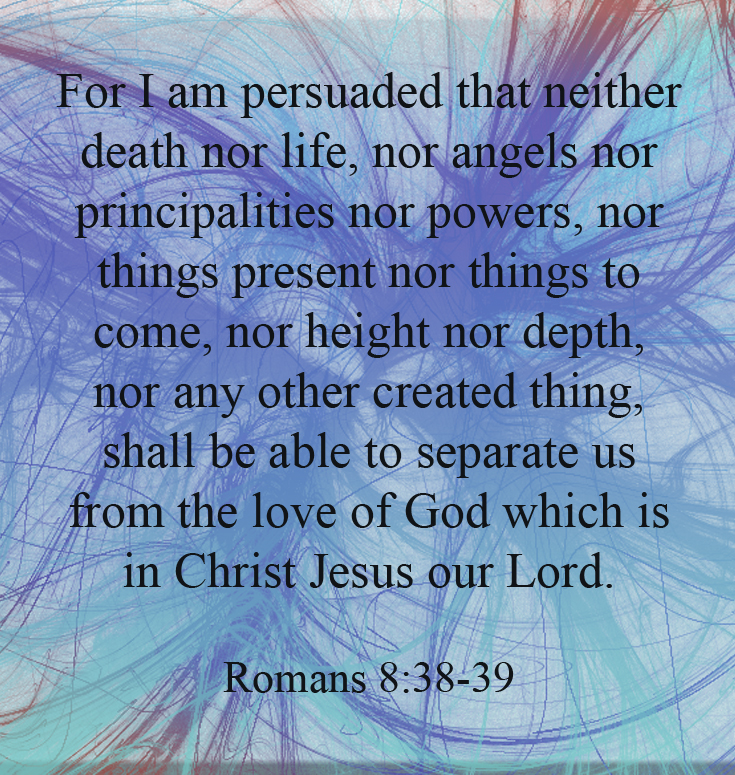
Replacing Worry | marissabaker.wordpress.comGod doesn’t just tell us not to have fear. He gives us assurances designed to make fear impossible. “Fear not” because God Himself is with you to save you. “Fear not” because of His steadfast love, which Paul says nothing can separate us from (Rom. 8:35-39). “Fear not” because the Lord delights in you (Deut. 10:15; Is. 62:4).

He Himself has said, “I will never leave you nor forsake you.” So we may boldly say: “The Lord is my helper; I will not fear. What can man do to me?” (Heb. 13:5-6)

I still struggle with removing fear on a practical level, but abstractly I know fear simply doesn’t make sense for a Christian. The God who created the universe personally guarantees that He won’t abandon you. I always find things I’m scared of less frightening if there’s a good friend beside me, and what better friend could we have to cling to for assurance and stability in times of fear than God Himself?

Live By Faith

We replace worry with faith by consistently turning to God.

Seek the Lord, all you meek of the earth, who have upheld His justice. Seek righteousness, seek humility. It may be that you will be hidden in the day of the Lord’s anger. (Zeph. 2:3)

Seeking after God and consistently following His commands is the best way to get close to Him, which is the best place to be in times of trouble. No matter what happens, our focus must stay on God as we live by faith.

Therefore you also be ready, for the Son of Man is coming at an hour you do not expect. (Matt. 24:44)

Living without fear doesn’t involve burying our heads in the sand and ignoring things that might make us afraid. Rather, it involves a watchful readiness while living in the faith and confidence of our Messiah.

Who then is a faithful and wise servant, whom his master made ruler over his household, to give them food in due season? Blessed is that servant whom his master, when he comes, will find so doing. (Matt. 24:45-46)

Replacing Worry | marissabaker.wordpress.comWhen we stand before Christ at the end of this earth or the end of our lives — whichever comes first — we want to be found “so doing.” Consistent growth and faithfulness will be rewarded.

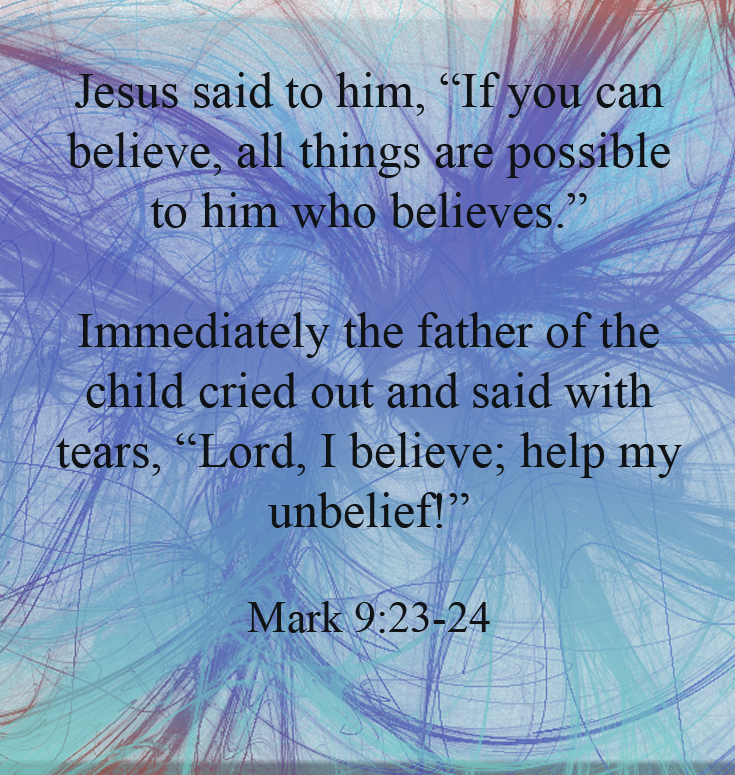
But what if you’re lacking in faith, and still suffering from worry? Ask God for help. He won’t turn down a sincere plea for help, even if it’s help with our unbelief.

 But let him ask in faith, with no doubting, for he who doubts is like a wave of the sea driven and tossed by the wind. For let not that man suppose that he will receive anything from the Lord; he is a double-minded man, unstable in all his ways. (James 1:6-8)

Brethren, let us pray for stability in our walk with God — to be grounded so firmly on the Rock of Jesus Christ that we won’t be tossed about with fear. Wavering and worry go hand-in-hand, and we need God’s help to overcome that and “continue in the faith, grounded and steadfast” (Col. 1:23).

Are Yoga and Meditation Okay For Christians?

I do yoga. I am a Christian.

This doesn’t bother me or seem like a contradiction. I avoid yoga teachers that give me “the creeps,” I’m so much healthier than I was before I started yoga (physically and in terms of dealing with anxiety), and far as I can tell it hasn’t had any sort of negative effect on my walk with God. But it bothers other Christians, so I don’t post about yoga on Facebook and rarely talk about it except with friends who I know also practice yoga.

Last week, a friend posted a link to this article: New Age, Occultism, and Our Children in Public Schools, which is an excerpt about yoga and meditation from the book How to Protect Your Child From the New Age and Spiritual Deception by Berit Kjos. In general, I tend to think writers like this are over-reacting in how they talk about yoga. Proponents of natural healing don’t refuse to use a medicinal herb because it was once linked with a religious healing ritual, so why should I worry that the asanas (physical movements of yoga) have roots in Eastern religions?

And yet, my research on the background of yoga has been cursory until very recently. I knew there were aspects of yoga that I was comfortable with (e.g. the movements and focused breathing) and aspects I was not (e.g. transcendental mediation), but I hadn’t done much study of the history and all the practices involved if you fully embrace all levels of yoga. Before I really responded to my fellow, genuinely concerned, Christians, I had to know more. Read more

Struggling With Questions For God (Lessons from Habakkuk)

As I study the minor prophets, I’m struck by how relevant their messages are today. Habakkuk wrestled with much the same questions that trouble believers in our own culture.

O Lord, how long shall I cry, and You will not hear? Even cry out to You, “Violence!” and You will not save. Why do You show me iniquity, and cause me to see trouble? For plundering and violence are before me; there is strife, and contention arises. Therefore the law is powerless, and justice never goes forth. For the wicked surround the righteous; therefore perverse judgment proceeds. (Hab. 1:2-4)

Why would God let a country founded on His law get so bad? How can He stomach the violence and corruption and rampant sin? Why isn’t He listening to us?

Struggling With God

The entire short book of Habakkuk is a back-and-forth between God and His prophet. After Habakkuk opened with his familiar questions, God responded. It wasn’t what Habakkuk was hoping for, though.

Look among the nations and watch — be utterly astounded! For I will work a work in your days which you would not believe, though it were told you. For indeed I am raising up the Chaldeans, a bitter and hasty nation which marches through the breadth of the earth, to possess dwelling places that are not theirs. (Hab. 1:5-6)

Habakkuk's Question | marissabaker.wordpress.comHabakkuk was understandably confused. He wanted action from God, but not this. The Chaldeans were a cruel people and God confirmed that their invasion would be “terrible and dreadful” as they “all come for violence” (Hab. 1:7, 9). Did the punishment really have to be so bad?

Are You not from everlasting, O Lord my God, my Holy One? We shall not die. O Lord, You have appointed them for judgment; O Rock, You have marked them for correction. You are of purer eyes than to behold evil, and cannot look on wickedness. Why do You look on those who deal treacherously, and hold Your tongue when the wicked devours a person more righteous than he? (Hab. 1:12-13)

I find it encouraging to read this and other stories where men of God struggled to understand His will. God is not obligated to explain Himself to man, and yet sometimes He does. He isn’t threatened or irritated by sincere, searching questions.

God’s Answer

What follows in chapter 2 answers Habakkuk’s question about why God would use a heathen nation to punish His own people. It is also a general statement about how God responds to wickedness.

Write the vision and make it plain on tablets, that he may run who reads it. For the vision is yet for an appointed time; but at the end it will speak, and it will not lie. Though it tarries, wait for it; because it will surely come, it will not tarry. (Hab. 2:2-3)

God basically starts out by telling Habakkuk to follow His instructions and be patient. Even when we don’t understand, God expects obedience. He doesn’t just leave Habakkuk with the answer, “Because I said so,” though.

Behold the proud, his soul is not upright in him; but the just shall live by his faith. (Hab. 2:4)

The Lord gives Habakkuk a guide we’re still using today, and which Paul quotes twice (Rom. 1:17; Gal. 3:11). “The just shall live by faith,” but that is not how Israel was living. Earlier, Habakkuk asked why God would punish Israel’s sin using a nation that was even more sinful than they. God points out here that no matter what Habakkuk thought about the Chaldeans, Israel’s sin still deserved judgement.

Chapter 2 proclaims “Woe” to people who are drunken, proud and never satisfied (2:5), to the violent (2:8, 17), to the covetous and those who plan to escape God’s wrath by their own strength (2:9-12), to those who scheme and take advantage of others (2:15-16), and to the idolaters (2:18-19). These problems were not limited to Israel or to a specific time, but God could not let His chosen people continue in such sin.

All For Us

Chapter 3 records a prayer that my study Bible notes was intended for singing as a Psalm and isn’t part of the exchange between Habakkuk and God. Given the subject matter, though, I suspect Habakkuk did write it after mulling over his talk with God and the answers he was given.

O Lord, I have heard Your speech and was afraid; O Lord, revive Your work in the midst of the years! In the midst of the years make it known; in wrath remember mercy. (Hab. 3:2)

Though he accepted God’s answer and knew his nation deserved punishment, there was nothing wrong with Habakkuk asking for mercy. We can do that today as well. His mercy is abundant (1 Pet. 1:3), and He has a long history of pardoning iniquity and holding back His wrath if we come to repentance, and of protecting His people in the midst of trouble.

If you have some extra time, click here to read all of Chapter 3. It’s an interesting picture Habakkuk paints of God — one full of power to execute vengeance, as well as one of a God full of glory and worthy of praise, who always acts for the good of His people even if it’s not how they expected.

You marched through the land in indignation; You trampled the nations in anger. You went forth for the salvation of Your people, for salvation with Your Anointed. You struck the head from the house of the wicked, by laying bare from foundation to neck. (Hab. 3:12-13)

Habakkuk's Question | marissabaker.wordpress.comNo matter how bad it gets, Habakkuk says, “Yet I will rejoice in the Lord, I will joy in the God of my salvation” (Hab. 3:18). We can do the same thing, secure in the knowledge that God is committed to saving us who stay committed to following Him.

The Lord God is my strength; He will make my feet like deer’s feet, and He will make me walk on my high hills. (Hab. 3:19)