How Much Have You Grown In A Year?

As we approach the Passover season, it’s traditionally a time of reflection and self-examination. It’s good to have moments like that where we consider what God has to say about our lives, the areas where we need to repent, and different ways we can continue to grow and change.

At my Messianic congregation, they’ve shared that certain rabbis teach that if you are still in the same place you were a year ago you have backslid. We can’t maintain a sort of “status quo” in our walk of faith. Either we’re moving toward God or we’re moving away. There’s no place for complacency in a Christian life.

God expects growth. That doesn’t mean we need to be constantly on-edge and second guessing if we’re “good enough,” though. He doesn’t expect us to already be perfect, but He does expect us to keep going that direction. Such growth involves becoming more like God in every aspect of our lives. The more we grow, the more His character, desires, priorities, etc. are reflected in our own lives.

How Much Have You Grown In A Year? | marissabaker.wordpress.com
Photo credit: Pearl via Lightstock

In Touch With The Great  Commandments

What are the most important things to focus on as we try to grow as Christians and learn more about God? You’ll hear various answers. Some say preach the gospel, citing the great commission as our primary goal. Others devote themselves to good works. Some study prophecy. I like to point to the passage where Jesus identified the greatest commandments.

Jesus answered, “The greatest is, ‘Hear, Israel, the Lord our God, the Lord is one: you shall love the Lord your God with all your heart, and with all your soul, and with all your mind, and with all your strength.’ This is the first commandment. The second is like this, ‘You shall love your neighbor as yourself.’ There is no other commandment greater than these.” (Mark 12:29-31, WEB)

We can all tell how important these commands are from the way Jesus describes them. But I think we too often see them just as a starting place when they should be a continuing focus. We should never stop learning how to love God and our neighbors.

In Jesus’ letter to the Ephesian church, He said, “I have this against you, that you left your first love” (Rev. 2:4, WEB). We’re not told exactly what that first love is, but since the first commandment is to love the Lord your God I don’t think it’s too much of a stretch to say the Ephesians’ problem was related to losing touch with the greatest commandments. Read more

Who Was “God” In The Old Testament?

Almost four years ago, I wrote a post addressing the phrase “the God of the Old Testament.” Little did I know then that it was going to explode from being an interesting point of doctrinal dispute into a contention that could split churches. I know of at least one group that has already divided over the question, “Who was the God of the Old Testament?” And now the related issue of whether Jesus was created by the Father or existed before His human birth is starting to tear apart one of my local churches.

In the post from four years ago, I described the phrase “God of the Old Testament” as coming under the category of “stupid things we say in the church.” I still believe that. The wording is misleading and confusing, often causing inaccurate statements and doctrinal fallacies. In reality, the God we worship today is the exact same God (two beings in one) that has always existed. Scripture is quite clear on this point. And trying to argue that either the Word who became Jesus OR the Being we now know as the Father was the only “God of the Old Testament” is an exercise in futility (and quite possibly blasphemy as well).

The arguments on both sides are no longer just an intriguing discussion about scripture. They’re becoming a stumbling block . I’ve heard that some people in the group I mentioned which has already split are so confused they don’t even know who to pray to anymore. And studies into this topic, which may have started out with good-hearted Christians seeking to understand the word of God more fully, are turning into schisms, contentions, and heresies that cannot be pleasing to God. He does not look kindly on those who generate endless debates (Tit. 3:9), fracture His body (1 Cor. 1:10; 12:25), or lead His little ones into error (Matt. 18:6). This has to stop.Who Was "God" In The Old Testament? | marissabaker.wordpress.com

Why Is This So Contentious?

I think part of the issue with resolving questions like this is that we often fail to look at the Bible as a whole. We get so focused on digging out the slightest variations in meaning for a specific scripture that we don’t look up from analyzing a single sentence long enough to see there’s a whole narrative that clears things up. That’s something I talked about in my post titled, “Why Does It Matter If Jesus Existed Before He Was Human?

Another way we fall prey to deception in this area is what I call the two ditches problem. Human beings aren’t good at finding balance in our ideas. We tend to avoid the middle of the road. So if we discover that we’ve been taught an extreme view in one direction (for example, that Jesus is the only “God of the Old Testament”), there’s a temptation to head straight for the opposite ditch (e.g. that Jesus wasn’t around at all in the Old Testament). In trying to avoid one error we come up with a new one.

Something else that might be playing a role for certain people is the temptation to come up with their own doctrine. If you’ve been lied to by church leaders in the past (and far too many of us have), we might want to question everything we’ve been taught. There’s nothing wrong with that in and of itself. In fact, following blindly is a great way to end up in errors that could be avoided if we were studying the Bible for ourselves. But if you start feeling like you have to come up with a new or alternative way of seeing scripture that is “your own,” then you can run into problems. Chances are, you’re not the only person God is revealing “new truth” to. And if you have to argue your point out of obscure commentaries or a possible mistranslation when the people who believe something else have myriads of clear scriptures and the bulk of Biblical scholarship to back them up, then there’s a good chance you’re the one who’s wrong.

“God” Has Always Been Two

Let’s dive into the scriptures now. Some of this is going to be a repeat of the post I wrote four years ago, but I doubt most of you have read that and it’s good for context. We’ll begin in Genesis. Read more

Fictional MBTI – T’Challa (ISFP)

I saw Black Panther yesterday, so naturally today’s post is a new installment in the superhero Myers-Briggs types series. I know I get pretty excited about most of the MCU films, but this one is seriously good. I love the hero characters and the principles they stand for like loyalty and peace. The acting is great, the plot’s tight, I love the music (I’m listening to the score as I type), and while it still has a superhero-movie feel it doesn’t shy away from digging into some really deep and difficult subjects.

T’Challa’s judging functions are pretty easy to pin-point: Fi/Te. But the fact that he uses Introverted Feeling and Extroverted Thinking when making decisions only tells us that he’s either a TJ or FP type. We’re going to need a little more to go on than just those two functions if we’re going to narrow-down a type for him. After Captain America: Civil War came out, most people typed T’Challa as an ISFP. However, a couple of the discussions I found online pointed out that he’s an ENTJ in the comics. I haven’t read the comics, though, so this typing is only going to focus on his film portrayal. From that, I ended up going with ISFP.

A Personal Code

Everyone has and uses both a Thinking and a Feeling mental process as part of their personality type. They’re both a “Judging” function, which means you use them to make decisions and answer “should” questions. The one you’re most comfortable with is either your driver process or co-pilot, and then its opposite is either your inferior or tertiary process.  Personality Hacker uses nicknames for the Jungian cognitive functions, and I think they make it easier to talk about exactly what I mean when saying T’Challa uses Fi/Te when making decisions.

Fictional MBTI - T'Challa (ISFP) | marissabaker.wordpress.com

Introverted Feeling is nicknamed “Authenticity” and it’s an ISFP’s primary function. It’s an internally focused, subjective process that mostly boils down to making decisions based on what “feels right” to you. Unlike the Extroverted Feeling process, it’s not primarily worried about what other people think. Authenticity is concerned with making a decisions that lines up with one’s own personal beliefs. And that’s what we see in T’Challa.

Though T’Challa certainly cares for other people, when he makes decisions they’re in line with what he believes is right rather than what will make the majority of the people around him happy. Fi is the mental process that drives his decision at the end of the film to share Wakanda’s resources with the world (see — I told you we were going to talk spoilers). And this personal code is also why he let his father’s killer live at the end of Civil War. He discovered that killing an unarmed man for revenge wasn’t in line with his moral compass (though making sure he faces justice is). Similarly in this new film, he offered to save his cousin’s life even after the man tried to kill him and steal Wakanda.

Impersonal Logic

Fictional MBTI - T'Challa (ISFP) | marissabaker.wordpress.com

Extroverted Thinking, or “Effectiveness,” is a much more impersonal function than Introverted Feeling, though it’s still used for making decisions. It’s an ISFP’s fourth function — the one they’re least comfortable using.

Effectiveness users look for the most efficient answer to a question. In other words, this process makes decisions based on what’s going to work. This is why in Civil War T’Challa tells Natasha that he doesn’t approve of all the politics. It’s because a hundred people arguing in a room doesn’t seem like an effective or efficient way to actually get things done.

I also don’t think his decision to go after Bucky himself was just fueled by an emotional type of revenge. It was also a coldly logical assessment of the most efficient way to handle the problem since he knows that, as Black Panther, he can take down a super assassin. Since Te is where an ISFP goes when stressed, it makes sense that one of the times we most clearly see T’Challa using it is after his father’s murder.

Interacting With The Real World

Fictional MBTI - T'Challa (ISFP) | marissabaker.wordpress.com

SP types have a certain advantage in physically-demanding tasks since this mental process is so focused on real-time interaction with the outer world. While being the Black Panther certainly enhances T’Challa’s abilities as a warrior, this new film shows us that he’s quite capable without them. He displays the sort of “real-time kinetic” intelligence that Personality Hacker says characterizes types that use the Extroverted Sensing, or “Sensation,” process. On a side-note, the ritualistic combat you see in Black Panther is inspired by real-world African martial arts, which is pretty cool.

SP types thrive on being in the middle of the action. And since Sensation is their Learning/Perceiving function, this is also how they prefer to learn new information. The things they can experience and verify with their five senses are the things that seem most reliable. And they often use their skill for interacting with the real world in creative, productive ways, earning ISFPs nicknames like Artist, Composer, and Producer.

As an SP type, T’Challa isn’t content with delegating tasks and that he can do himself. He goes after his enemies personally, even when not required by tradition and ritual. And he doesn’t just want to read reports or have people come to him to say what’s going on in Wakanda. We see him visiting his people and interacting with their worlds first-hand. He’s also interactive when planing missions. For example, there’s an early scene in Black Panther where he’s watching a projection of a convoy he’s about to attack as part of a rescue mission and he picks up one of the projected trucks to move it around and get a closer look.

Possibilities and Patterns

Fictional MBTI - T'Challa (ISFP) | marissabaker.wordpress.com

As far as we know, T’Challa is the first Black Panther to reveal his powers to the world at large. And he’s certainly the first king of Wakanda to share their country’s secrets with the world. While there is a struggle between the part of him that believes in a vision for Wakanda’s future where they help the world and his duty as king to protect his own people above the others, the idealistic visionary side wins out.

An ISFP has Introverted Intuition as their tertiary or “10-year-old” mental process. It’s also called “Perspectives” and it functions as a pattern-recognition system. ISFPs typically have conscious access to their Perspectives function, but it’s not always reliable.  T’Challa is mature enough to recognize this and does not rely on his Ni too much or make a rash decision based on it.

However, he’s also comfortable enough with Intuition to not shy away from what his friend Nakia and sister Shuri have to say about considering a future where Wakanda and its technology play a larger role in the world. And as an Ni-user myself, I find it very satisfying that Wakanda’s first outreach center will be built in the location where T’Challa’s father killed his own brother and abandoned the brother’s son to protect Wakanda’s secret. It brings the pattern together in a way that feels right.


If you enjoyed this post, check out my other MCU typings:

Bucky Barns – ESTP

Loki – INFJ

Scott Lang -ISFP

Steve Rodgers – ISFJ

Thor – ESTP

Tony Stark – ENTP

A Story of Battle And Victory

Once upon a time, a great King and Prince decided to they didn’t want to be alone anymore. There were other beings in their realm, but none like them. No one else to share their love and unity with, at least not in the way they longed for. So they came up with a plan. They created a beautiful garden and from the earth they molded living, breathing people patterned after their own image. They wanted these people to be their companions, but not as servants or slaves, and that meant the people had to be given free will. They would need the opportunity to choose the King and Prince just as the King and Prince chose to want them.

But there was an evil force at work. One of the other beings, prideful and jealous of the King, led a revolt and became the Adversary. And as Adversary, he made it his goal to thwart the King’s plan, including the great plan to grow his family. The Adversary was not powerful enough to destroy the King. But he knew if he could kill these new people who the King wanted to become his children he would have his revenge.

When tempted by the Adversary, the King’s new creation fell into his lie. They chose a path that led away from the king their Father and the Prince their brother. And that choice changed the battle field between the King and Prince and the Adversary. Now they fought over the fate of the King’s children.

The King and Prince weren’t caught off-guard by the Adversary, though. They already had a plan, but it seemed a strange sort of plan for going into battle. Rather than using force to get the King’s children back they used love. The Prince came as a suitor asking for his adopted sister’s hand in marriage. And some of the people made a covenant with him, but there was still a death penalty hanging over their heads. The Adversary had talked them all into breaking the King’s law and someone had to pay the price justice demanded. So that’s what the Prince did, leaving his kingdom and making himself vulnerable on the battlefield.

The Adversary threw everything he had against the Prince, but he didn’t win. The Prince conquered the Adversary personally and then gave his own life to pay the penalty hanging over his beloved’s head. In doing so he sealed the ultimate victory. The Adversary keeps fighting though, trying to destroy as many people as he can before his time is up.

But even though the Adversary is still doing damage in the world, the King is holding off on the final battle. He wants to get as many people as possible on his side because he knows if they don’t accept the victory he and the Prince already won that they’ll take part in the Adversary’s defeat. And his goal all along was to make every single person part of His family. He’s not giving up on reaching as many of them as he can. So he keeps calling people to join in following the Prince as the Adversary keeps trying to yank them away.

A Story of Battle And Victory | marissabaker.wordpress.com
Photo credit: Ruby-Rose via Lightstock

Called To Fight

That is the situation we’re called into today when we begin a walk as Christians. Our Prince, brother, and rescuing lover Jesus has achieved victory. But His people here on earth are still fighting the Adversary Satan, waiting for the final battle to end all this. Read more

Watership Down’s HSP Rabbit

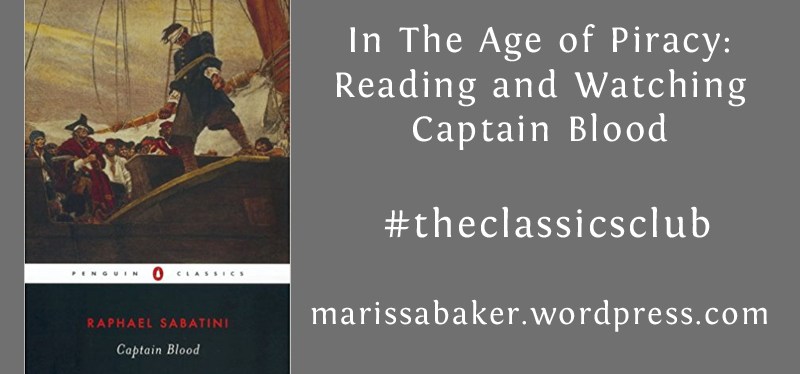
I just started rereading Watership Down by Richard Adams last night. Normally I wait to write about the books on my Classics Club list until after I’ve finished them, but I’m also rereading Elain Aron’s The Highly Sensitive Person In Love and I was struck by a connection between the two books.

In her research on high sensitivity (also known as Sensory Processing Sensitivity), Aron discovered that it’s found in 15 to 20% of the population. And it’s not just humans. The trait “can be observed in all higher animals — mice, cats, dogs, horses, [and] monkeys” at about the same percentage. I’m going to add rabbits to the list as well.

Research on HSPs had barely started by the 1970s, so I doubt Richard Adams would have been familiar with it as a scientifically validated trait when he published Watership Down in 1972. I think he was writing about it anyway, though, with his character Fiver.Watership Down's HSP Rabbit | marissabaker.wordpress.com

When publisher Rex Collins acquired the book, he wrote to a friend saying, “I’ve just taken on a novel about rabbits, one of them with extra-sensory perception. Do you think I’m mad?” Fiver’s insights do go beyond simply being a highly sensitive rabbit, but it’s also true that Fiver would pass the HSP test. Easily overwhelmed by strong sensory input? Check. Aware of subtleties in the environment? Double check. Made uncomfortable by loud noises, startles easily, has a nervous system that feels frazzled, and so on down the list.

He was small, with side, staring eyes and a way of raising and turning his head which suggested not so much caution as a kind of ceaseless, nervous tension. His nose moved continually, and when a bumblebee flew humming to a thistle boom behind him he jumped and spun round with a start that sent two nearby rabbits scurrying for holes (Fiver’s introduction, Watership Down)

As a Highly Sensitive Person myself, I know that feeling all too well. The heightened awareness of the smallest noise. The tension so familiar you barely notice it until an unexpected sound startles you out of your chair (in fact, right after writing this sentence I jumped at a Facebook notification on my phone). And it’s kind of nice to see a character like that in a book, especially one with friends who don’t tell him he needs to change. They accept him for who he is, work with his weaknesses, and appreciate his unique strengths.

Can you think of any other HSP characters in fiction?


Click here to get a copy of Watership Down. Please note that this is an affiliate link. This means that, at no additional cost to you, I will receive a commission if you click on the link and make a purchase.

Praying At All Times

We’ve spent the last nine weeks looking at the famous Armor of God passage in Ephesians. There are six pieces of armor named there: the Girdle of Truth, the Breastplate of Righteousness, the Footwear of the Gospel, the Shield of Faith, the Helmet of Salvation, and the Sword of the Spirit. Those six character traits and spiritual items are where most lists stop, since they’re the ones compared to physical pieces of armor. But there’s a seventh item on the list.

with all prayer and supplication praying at all times in the Spirit, and to this end being alert with all perseverance and supplication for all the saints (Eph. 6:18, LEB)

All the armor must be put on and used with prayer. In this context, we can see prayer either as the connective tissue buckling the other armor on us or as a necessity before and when using the armor (or both). Whether you count prayer as a piece of armor or not, it’s clear that praying is essential when going into a battle we want God to fight for and with us.

Praying At All Times | marissabaker.wordpress.com
Photo credit: Ben White via StockSnap

Prayer Before Battle

As with the six pieces of armor listed earlier, we have examples of prayer being used in physical battles as well as spiritual ones. People of God have always recognized that even when facing physical enemies there’s a more important spiritual side to the battle. And it’s the Lord of Hosts who determines the outcome.

Three righteous kings left us records of their prayers before battle. Asa prayed when facing “an army of a thousand thousands” (2 Chr. 14:9-12), Jehoshaphat when facing “a great multitude” of Moabites and Ammonites (2 Chr. 20:1-29), and Hezekiah when threatened by a powerful Assyrian army (Is. 37:8-38).

In all three cases, God answered with a powerful victory. “Yahweh defeated the Cushites before Asa” and his army (2 Chr. 14:12, LEB). The Lord sent Jehoshaphat and his men armored into battle, but did all the fighting Himself (2 Chr. 20:16-29). And Hezekiah woke up one morning to find his enemy struck dead outside (Is. 37:36-37). Clearly, prayer is an effective battle strategy for those following God and fighting against His enemies. Read more