In John 8:32, Jesus said, “You will know the truth and the truth will make you free” (WEB). Truth from God is a powerful thing. And it’s something God wants to share with everyone, because He “desires all people to be saved and come to full knowledge of the truth” (1 Tim. 2:4, WEB). Knowing God’s truth is connected with the salvation offered in Jesus Christ and is a key component of the Christian faith.
according to the faith of God’s elect, and the acknowledging of the truth which is after godliness; in hope of eternal life, which God, that cannot lie, promised before the world began (Tit. 1:1-2, KJV)
But head knowledge isn’t enough. It’s absolutely essential that you study and know about the One you believe in, but knowledge doesn’t get you into the kingdom. Paul says you could even “understand all mysteries, and all knowledge” but without love it would mean nothing (1 Cor. 13:2, KJV). We’re meant to go beyond knowing about God’s truth to doing something with that knowledge. If you don’t care about the truth enough to put it into action, then it’s not making the difference in your life that God intends.
We Lose What We Don’t Love
Paul writes in second Thessalonians about a wicked one “whose coming is after the working of Satan” (2:9, KJV). He warns this one will come
with all deceivableness of unrighteousness in them that perish; because they received not the love of the truth, that they might be saved. And for this cause God shall send them strong delusion, that they should believe a lie: that they all might be damned who believed not the truth, but had pleasure in unrighteousness. (2 Thes. 2:10-12, KJV)
Paul doesn’t say these people didn’t know the truth. They weren’t ignorant about God’s message. But they did not believe the truth and they did not love it. Matthew Henry writes, “They could not bear sound doctrine and therefore easily imbibed false doctrines … Had they loved the truth, they would have persevered in it and been preserved by it; but no wonder if they easily parted with what they never had any love to (commentary on 2 Thes. 2:4-12, point #5). Read more →
Because INFJs and INTJs both use Introverted Intuition as their favorite mental process, the two types can appear very similar. Quite a few people who take a Myers-Briggs test and get either of these results (or both on different tests) are left wondering, how can I tell whether I’m an INFJ and INTJ?
My personality type is INFJ and my sister’s is INTJ. It would be well-nigh impossible to assume we share a personality type, but if you don’t have that contrast living with you (or if you’re a little less extreme on your T/F preference) I can see how deciding which type is your best fit could be a challenge. INFJs and INTJs lead with the same mental process and they react in very similar ways when stressed out. The main differences between the two types have to do with how they handle their Thinking/Feeling preference.
INFJs use auxiliary Extroverted Feeling as their copilot and support it with tertiary Introverted Thinking. INTJs use auxiliary Extroverted Thinking as their copilot and support it with tertiary Introverted Feeling. The auxiliary process is how they prefer to make decisions and interact with the outer world, but they can slip into their tertiary quite easily. It’s not as well developed or as reliable, but it can seem comfortable since it’s introverted (just like their dominant intuitive function).
How comfortable each INFJ/INTJ is with their thinking and feeling processes depends on a number of factors, including age, environment, and past experiences. You can find INFJs who are very people-oriented and social, or INFJs that seem distant and logical. Similarly, you’ll meet INTJs who are stereotypically blunt and calculating, and INTJs who are comfortable experiencing their own emotions. Even so, the way these functions shows up looks different for each type.
My Cup of T
An INTJ’s Thinking side is focused on the outer world. It’s also the function they’re most comfortable using when making decisions. While mature, well-balanced INTJs will take the human side of a question into consideration, it’s typically secondary to finding the most logical, fact-based solution. Personality Hacker calls this mental process “Effectiveness” and says it “focuses on impersonal criteria for making decisions” and prioritizes efficient problem solving.
INFJs, on the other hand, use an inward-focused Thinking process and they’re not usually as comfortable with it as they are with their Feeling side. Personality Hacker calls Introverted Thinking “Accuracy” and says this function gives users “the ability to reason through a subject or concept within one own’s understanding, even if it doesn’t match ‘outer world’ data.” Basically, this process is trying to work through things until they make sense.
INTJs are much more likely to express their Thinking judgements externally than an INFJ. They’ll often seem more blunt and direct because efficient communication is more important to them than worrying another person’s feelings. INTJs are also more likely to draw on objective, external facts to support their ideas. They want their ideas to work and they want outer world validation for their problem solving. That’s not nearly as important to INFJs, who need things to make sense personally more than to the people around them.
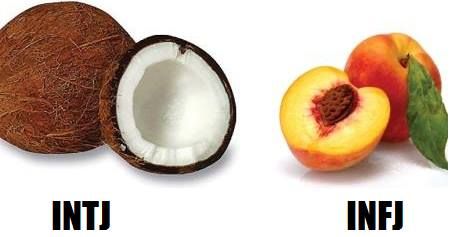
spotted this on Pinterest and I love it
Feeling The Feels
An INFJ’s Feeling side, like INTJ Thinking, is the function they use most comfortably when making decisions. It’s also outward focused, but it’s primarily people-oriented. Personality Hacker nicknames this function “Harmony” because it “makes decisions based on how things are impacting people on an emotional level.” The key thing to remember about this function is that it’s outward focused. INFJs are more in touch with other people’s feelings than they are their own.
INTJs use a Feeling process that’s introverted, which Personality Hacker calls “Authenticity.” While it’s also concerned with how decisions impact on an emotional level, it’s focused on one’s own emotions rather than other people’s. To again quote Personality Hacker, “Introverted Feeling is about checking in with all those inner parts and voices to determine what feels the most in alignment with oneself.” Somewhat ironically, the stereotypically cold and logical INTJs are often much more in-tune with their own feelings than the stereotypically emotional INFJs.
INFJs are more comfortable expressing feelings in the outer world and also more likely to pick-up on what other people are feeling. They’ll typically seem much more empathic and expressive than an INTJ. An INFJ who’s comfortable with their Extroverted Feeling side will also appear more social and “extroverted” than a typical INTJ. But INTJs are far more in-tune with their own emotions than most people (and many type descriptions) will give them credit for.
Even after you know about the technical differences between the ways INFJs and INTJs use thinking and feeling, you might still wonder they show up in real life. Let me give you some quick examples.
When making an everyday decision — an INFJ’s first impulse will be finding what makes as many people as possible happy, while an INTJ’s first impulse will be quickly finding the most logical answer. For me and my sister at least, the INTJ has a much easier time making simple decisions without overthinking them than the INFJ does.
In a stressful/emergency situation — I’m the one who’s in logic mode and my INTJ sister is the one indecisive and unsure. We’re talking something that calls for quick action and is stressful enough to push you out of your most comfortable mental processes (such as deciding to take someone to the hospital), Might not hold true for every INFJ or INTJ, but it’s an interesting observation I’ve made.
If asked to change their minds — an INTJ is most likely going to stick with what they’ve already decided because they know their idea is based on logic and that it feels right to them. To change their mind, you’ll need to present a fact-based counterargument that matches their deeply held beliefs about what’s right. A confronted INFJ will second-guess themselves because now they know someone isn’t happy with what they chose but they’ll also be reluctant to abandon something that makes sense to them. To change their mind, you’ll need to present an argument that hits emotion as well as logic.
I hope this helps you with telling the difference between these two types If you can’t tell if you’re an INFJ or and INTJ, looking at the differences in Thinking and Feeling functions is a good place to start figuring out your type. You’re not going to be a perfect 100% fit for every description of any one personality type, but there should be one that’s a “best fit” for your personality.
Your Turn: What are some differences and similarities you’ve noticed between INFJ and INTJ types?
So, which ones are your kids? I mean, your real children.”
The parent with adopted kids fights to stay civil. “They’re all my children.”
I’m not adopted nor am I an adoptive parent, but it’s a topic near my heart. Partly because I care deeply about helping children and partly because adoption is how God describes His process of making us His children.
Several years ago, I wrote a blog post addressing a booklet I’d read a couple years before that which claimed adoption wasn’t really how God puts us in His family. They said it was a misunderstanding to say Christians are adopted children of God “rather than His actual begotten sons.” And that thought is still around. Just a few weeks ago, I heard a message where the speaker read Romans 8:14-17 and said, “It’s not adoption it is sonship.”
As you might imagine, I’ve got a couple issues with the idea that teaching we’re adopted by God is the same as saying we’re not His “real children.” For one thing, it implies in way that’s not at all subtle that if you’re adopted you’re not really part of the family. And it’s not okay to say things like that to an audience that very likely includes adopted children (and if it doesn’t, it should. The Bible defines true religion as caring for orphans and there are 3 times as many churches as orphans in the U.S.). But as vital as it is to make sure our words don’t injure others, it’s also important to properly represent God’s teachings through scripture.
The word translated “adoption” in New Covenant writings is huiothesia (G5206). It’s a compound formed from the words huios (“son” G5207) and tithemi (“to place” G5087). Paul’s the only Biblical writer to use it and it’s not found in classical Greek either (though the phrase thetos huios is used for “adopted son”). Rather, it’s a technical term referring to a legal and social custom in Greek and Roman society.
This sort of “adoption, when thus legally performed, put a man in every respect in the position of a son by birth to him who had adopted him, so that he possessed the same rights and owed the same obligations” (Spiros Zodhiates The Complete WordStudy Dictionary, entry on G5206). While it can be translated “sonship,” it’s a sonship obtained through an adoption process (not sonship instead of adoption). Read more →
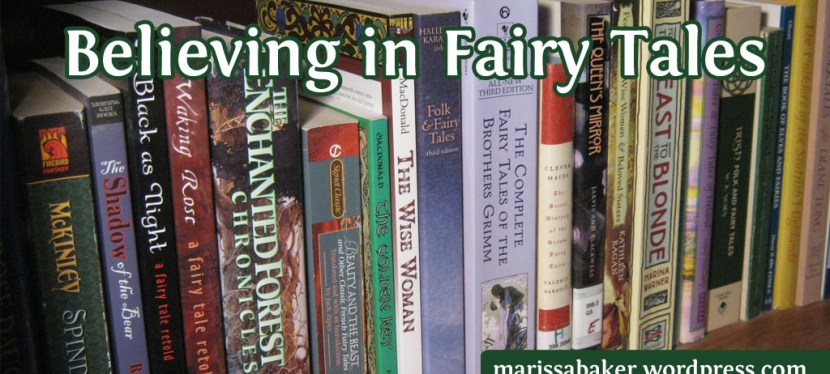
I was chatting on the phone with a friend on Friday and he asked me if I believed in fairy tales. I deflected the question onto, “What do you mean by ‘believe in fairy tales’?” Because it really is a deeper, more complex question than it seems on the surface. Usually, people think of believing in fairy tales as romantic daydreams all day long and a “happily ever after” at the end of every story.
But I’ve read fairy tales. In most of them, you go through hell several times over before getting to a happy ending (see the Handless Princess tales for one example). And sometimes there is no happy ending at all and they end with death or maiming or losing everything you love (such as when The Little Mermaid dissolves into sea foam).
So I’m not sure what to answer when asked if I believe in fairy tales (though I did have a good laugh after our conversion, when I realized I’d been wearing a shirt that says “I believe in fairy tales”). However, I suppose the short version would be to simply answer “yes” to any version of the question.
Do I believe in happily ever afters? yes, but only if 1) you work to make it happen and stay committed to falling in love with that person the rest of your life, or 2) if we’re talking about the Christian hope of spending eternity with God as Jesus’ bride.
Do you believe life can be cruel and horrible before you get a happy ending? Certainly. In fact, I’d say it’s much more rare to get happiness without having some kind of trial first. And without the contrast of highs and lows, I doubt we could truly appreciate the good things.
Do you believe happy endings aren’t guaranteed and life can feel senseless and hopeless? Yes. I’ve lost two friends close to my age to suicide, one to a car accident, and one to an illness. In my local church group, several families have lost young children or have kids and grandkids battling horrible illnesses. Sometimes there’s just no good explanation for why things turn out the way they do.
All too often, people dismiss fairy tales as out-dated children’s tales that teach things irrelevant to the modern world. I’ve heard the heroines are too passive, the dark tales too dark, the happy tales too unrealistic, the messages outdated. But I would argue the complicated nature of fairy tales is the aspect most relevant today.
Taken as a whole, fairy tales refuse to see life as easily explained. They present the strangeness, complexity, and downright cruelty of life in a stripped-down story form that refuses to be brushed aside. And many do earn their reputation for ending “happily ever after” because even after all the terrible things that happen they insist on hope. And that’s why I believe in fairy tales. I believe in the magic of storytelling, it’s power to hold a mirror up to our world, and our deep need for fantasy that illuminates reality. And I believe that in a world which refuses to make sense we need a hope that defies logic just as persistently.
In June, I’ll be giving my first seminar at a church-sponsored young adult retreat. The last time I spoke in front of an audience was in a college class five years ago, so I’m a bit nervous. On top of that, teaching the Lord’s people is a serious responsibility. But it’s also one I’m grateful to have an opportunity for here on this blog and soon in-person as well.
While the Bible does talk about female prophets, it’s a bit fuzzy on the subject of women teaching. On the one hand, we have examples of prophetesses advising and instructing and women like Priscilla going out and teaching God’s truth. On the other, we have Paul’s admonitions for women to keep silent in the churches. So if I am going to teach in writing or speech, I want to be particularly careful I go about it in the way God intends.
The New Testament contains several instructions, as well as warnings, for teachers. Many are aimed at people in ministry, but I think in most cases we can apply them to anyone teaching God’s way of life. And to a certain extent, that includes every one of us in the church. Even if we’re not a “teacher,” we’re still serving as examples of God’s way and have a responsibility to faithfully represent Him to others.
Teach Only Truth
The bulk of the instructions to teachers concerns what they teach. They’re given the responsibility to faithfully share God’s words without straying from His truth. Jesus told the religious leaders of His day that their worship was “in vain” because they taught human traditions instead of sound doctrine (Matt. 15:9; Mark 7:7). That’s a trap we mustn’t fall into.
Jesus’ parting command to His disciples, which we now call the Great Commission, tells them to teach the nations “to observe all things that I commanded you” (Matt. 28:20, WEB). The early disciples followed that command by teaching in Jesus’ name the same things He taught (Acts 4:18; 5:42; 15:35; 28:31).
In Paul’s first letter to Timothy, he spends quite a bit of time warning him not to get distracted from sound doctrine. There will be people people who teach other doctrines, who get distracted from God’s message, who pollute Christ’s teachings with their own ideas. But that’s not what a teacher of God does. They stick to the scriptures, use the law lawfully, and faithfully practice righteousness (1 Tim. 1:3-11; 4:1-12; 6:3-6). Read more →
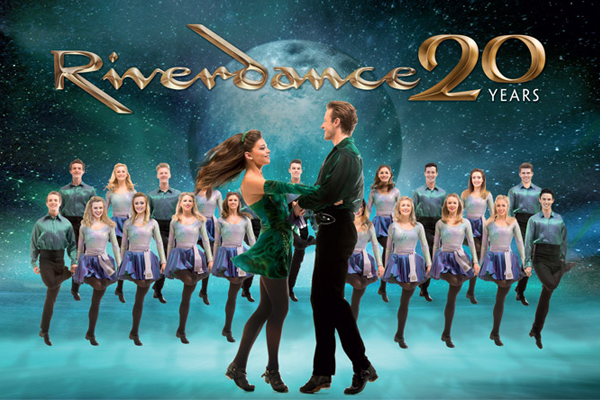
My family and I have been wanting to see Riverdance for years, so when we realized they were coming into Columbus Mother’s Day weekend we snatched up some tickets. And I’m so glad we did. Just watching the videos on YouTube is impressive, but seeing the entire show live was fantastic. I’m still in awe of how fast their feet were moving. And it’s so precise! I can’t even reliably walk down stairs without tripping over my own feet
Amusing side-note: since I started dancing at church, people compliment me about how graceful I am. But a couple months ago, I’m walking downstairs to where we practice before Shabbat services and managed to trip down the stairs hard enough to create an enormous, instantly purple bruise on my shin. Any gracefulness I display while dancing is a genuine miracle.
One thing I hadn’t expected from Riverdance was how much of a Celtic “feel” there was to the show. I supposed I’d expected it to be more “showy” and less cultural, if that makes any sense. The poetic voice-over played a big role in setting that tone, as well as the musicians (have I ever told you how much I adore Irish fiddlers and bodhran players?), and a singer who made me wonder if I’d wandered back into a Celtic Woman concert. The whole thing was fantastic.
Riverdance is actually the second Celtic show I’ve gone to this year. Emmet Cahill was on his first solo tour with his new album (if you don’t know who he is, drop everything and click here. You’ll thank me when he’s the biggest name in Irish music a few years from now). And I’m hoping to get to Dublin, Ohio’s Irish Festival this year, too. And see Albannach (a Scottish pipes and drums band) at the Renaissance festival. One can never get too much Celtic music!
Random thought: none of the people currently in Riverdance have red hair. This does not fit my assumtion that there must be tons of Irish redheads out there since everyone automatically assumes I’m Irish because of my hair.
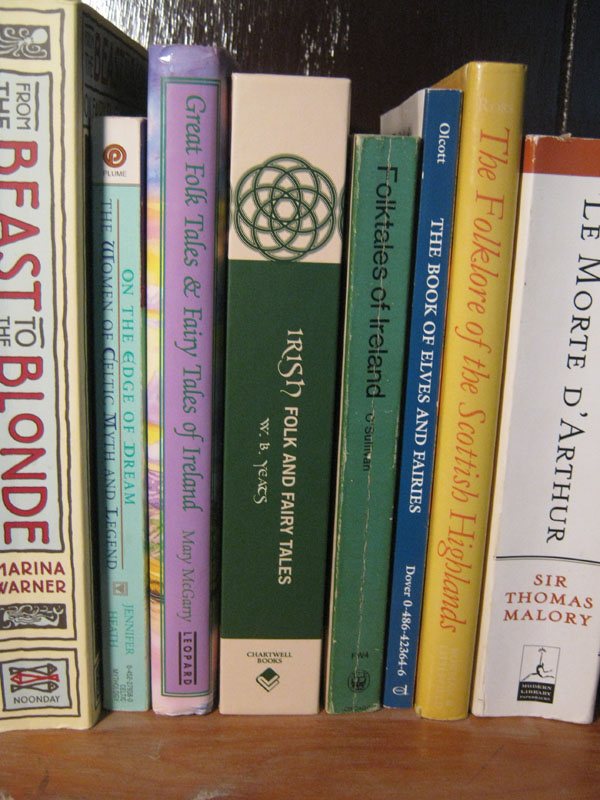
the Celtic section of my bookshelf
I can’t really pin-point a reason I love Celtic things so much. I do have some Celtic ancestors in my background (we’re English and Scottish on my dad’s side of the family and English, Scottish, and German on my mom’s side), but it’s so many generations back that I doubt we can say genetics play a role. But since my hair has been reminding me of my Scottish heritage my whole life, we’re going to say it still had some influence on how much I love Celtic culture, music, and dance.
Are any of you obsessed/in love with a culture that’s not the one you grew up in?






 Like An Anchor