Why Write Fiction?

“Why would you write fiction? Isn’t it just a bunch of lies?”

It’s been a while since someone asked me that question, but I can re-play the scene clearly. They look smug, like they’d just discovered a great argument against writing and reading fiction. Fiction is not true, and so therefore it is not good. Why make-up stories when there are plenty of good, wholesome things, people, and events that already exist? In fact, why tell stories at all, especially fantasy stories? They just give children unrealistic expectations of the world, and adults an excuse to ignore reality.

Obviously, since I’m still writing and reading fiction, I don’t buy into these arguments. But why?

Escape

Probably the simplest reason for writing fiction is to escape. Much of fiction — both good and bad — falls into this category. Sometimes life isn’t any fun, and reading and writing fiction gives us a way to escape for a while without actually leaving our location or situation. This can be as simple as diving into Middle Earth while waiting for the clothes to finish drying at the laundromat. Would you rather stare at your t-shirts spin, or canoe down the Rauros with the Fellowship of the Ring?

Connect

In a New York Times article, ‘Why Write Novels at All?’ Garth Risk Halberg talks about the idea that “the deepest purpose of reading and writing fiction is to sustain a sense of connectedness, to resist existential loneliness.” Now we’re getting closer to the reason I write fiction. Escape is all well and good, but what are you escaping to? It’s not enough to just take off for Narnia — we have to find Aslan there or the journey means nothing.

We write to share who we are and what we think, and we read to connect with something outside us. Usually this is a new world or characters, but if we’re very lucky we’ll also sense the author as they bleed through the pages of their work. This connectedness is one of the chief arguments for reading and writing, since it carries over into “real” life: people who read fiction are more emphatic than non-readers.

Think

Let’s say you have something you want to say about a controversial topic. We’ll use abortion as an example, and say you’re on the pro-life side. If you write an article telling people that abortion is bad, only the people who already agree with you are going to like it. If you tell a true story about a baby who survived an abortion or a mother whose life was ruined by an abortion, it will affect more people but you’ll still lose a large number of your readers.

Why Read Fiction?  | marissabaker.wordpress.com
Photo credit: Easa Shamih, CC BY, via Flickr

Now suppose you write a story where you climb inside the head of a character and show what they are struggling with as she decides whether or not to have an abortion. You don’t just put your words in the character’s mouth – you imagine yourself in her shoes, and realize that she has real reasons to consider both options. You sympathize with her, and whatever your readers believe they sympathize with her too. Your ideas will filter through in decisions you make about how see feels when she sees the baby on an ultrasound, or whether or not she keeps the child at the end of the story. You can let readers know what you think, but you don’t shove your ideas down their throat. You give them a chance to feel with you, and let them think for themselves.

Obviously, I think of the writer of novels and stories and plays as a moral agent. In my view, a fiction writer whose adherence is to literature is, necessarily, someone who thinks about moral problems: about what is just and unjust, what is better or worse, what is repulsive and admirable, what is lamentable and what inspires joy and approbation. This doesn’t entail moralizing in any direct or crude sense.

Serious fiction writers think about moral problems practically. They tell stories. They narrate. They evoke our common humanity in narratives with which we can identify, even though the lives may be remote from our own. They stimulate our imagination. The stories they tell enlarge and complicate—and, therefore, improve—our sympathies. They educate our capacity for moral judgment. ” – Susan Sontag, from a speech at the Los Angeles Public Library

This sort of literature may or may not be an escape for your readers, but should definitely let them connect with something or someone. It should make them think. It should give them a chance to “meet” types of people thy might never come in contact with in their real lives, to question ideas that they take for granted, to consider what is and is not moral. Fiction lets us talk about things that are uncomfortable to discuss in real life, or give a new perspective on issue too charged in reality to have a dialogue about. It lets us ask “what if?” and run with the potential answers before actually changing the world. Yet.
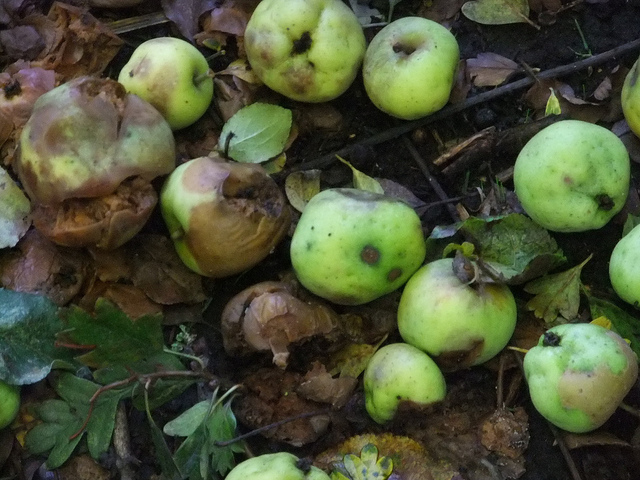
Good and Bad Fruits

As Christians, we’re asked to find a balance between being too judgmental and an “anything goes” mentality. We must not condemn others, but neither should we ignore sin. We have to exercise discernment, “judge righteous judgement” (John 7:24), and make decisions about right and wrong in our own lives, and in the lives of people we choose to associate with.

When we’re deciding that teachers to listen to, which groups to fellowship with, and who to count as our closest friends, God gives us guidelines for making decisions.

Beware of false prophets, who come to you in sheep’s clothing, but inwardly they are ravenous wolves. You will know them by their fruits. Do men gather grapes from thornbushes or figs from thistles? Even so, every good tree bears good fruit, but a bad tree bears bad fruit. A good tree cannot bear bad fruit, nor can a bad tree bear good fruit. Every tree that does not bear good fruit is cut down and thrown into the fire. Therefore by their fruits you will know them. (Matt. 7:15-20)

A parallel scripture in Luke 6:43-45 shows this principle applies to people in general, not just leaders. It also applies to us. Before we can recognize good and bad fruits in other people, we have examine ourselves. We must remove the plank from our own eye before we can clearly see the speck in our brother’s eye (Matt. 7:3-5). This is especially important as we approach the Passover season, traditionally a time of reflection and self-examination (1 Cor. 11:28-31).

Bad Fruits

When we’re trying to discern good and bad fruits, what should we be looking for? The Bible outlines many good and bad traits that individuals may have, but today let’s focus on a list given in Galatians. We’re very familiar with the fruits of the spirit, but leading up to that there is also a list of undesirable traits and actions.

 Now the works of the flesh are evident, which are: adultery, fornication, uncleanness, lewdness, idolatry, sorcery, hatred, contentions, jealousies, outbursts of wrath, selfish ambitions, dissensions, heresies, envy, murders, drunkenness, revelries, and the like; of which I tell you beforehand, just as I also told you in time past, that those who practice such things will not inherit the kingdom of God. (Gal. 5:19-21)

Credit:  oatsy40, CC BY, via Flickr
Credit: oatsy40, CC BY, via Flickr

This is serious stuff. Those who have these “bad fruits” in their lives will not be welcomed in God’s kingdom. It’s easy to just read over lists like these, pick out a few traits that seem particularly bad, then pat ourselves on the back because we’re not practicing witchcraft or murdering people. But let’s take a closer look. We need to be able to recognize these sort of bad fruits in church congregations, in leaders, and in ourselves.

Does a church congregation overlook sexual sins among its members or ignore them in society? Is that teacher impure in his deeds? Am I allowing an absence of restraint to characterize my life? Does this church group put anything before God on their priority list? Do they teach that it’s okay to dabble in the occult?

Is a minister acting out of hostility or hatred? Am I stirring up debates and contentions? Are we jealous of others, or easily made indignant? Are the people in that congregation known for their anger? Does their leader encourage strife and divisions, or teach things contrary to sound doctrine? Do we envy each other, or hate someone so much that we’ve wished them dead? Am I lacking self-control and moderation, or engaging in riotous conduct?

Christ made it clear in His sermon on the mount that the laws of God are still in effect, and operating on a spiritual plane. Even a longing to sin is a sin (Matt. 5:17-30). We need to be on guard against bad fruits showing up in our lives, as well as being wary of associating with a church or following a minister who is producing bad fruit. God expects better from us than that.

Good Fruits

God expects us to bear good fruits for His glory, and to associate with other Christians who are also bearing good fruits. We do this by developing a strong relationship with Him and with Jesus Christ.

Abide in Me, and I in you. As the branch cannot bear fruit of itself, unless it abides in the vine, neither can you, unless you abide in Me. I am the vine, you are the branches. He who abides in Me, and I in him, bears much fruit; for without Me you can do nothing. … By this My Father is glorified, that you bear much fruit; so you will be My disciples. (John 15:4-5, 8)

Credit: net_efekt, CC BY, via Flickr

If an individual or church group has a strong relationship with Jesus and the Father, it is made visible in the kind of fruits that show up in their lives.

But the fruit of the Spirit is love, joy, peace, longsuffering, kindness, goodness, faithfulness, gentleness, self-control. Against such there is no law. And those who are Christ’s have crucified the flesh with its passions and desires. If we live in the Spirit, let us also walk in the Spirit. Let us not become conceited, provoking one another, envying one another. (Gal. 5:22-23)

Let’s ask ourselves the same kinds of questions about this list. Is that church congregation characterized by active goodwill and godly love towards all? Is this minister filled with joy and gladness, and encouraging that in his brethren? Do I “live peaceably with all men”? (Rom. 12:18).

Do the people of our church congregation show self-restraint before acting, and choose to suffer long rather than taking vengeance? Does this teacher have a “grace which pervades the whole nature, mellowing all which would be harsh and austere”? (Zodhiates, G5544). Can God look at me and say that I am actively practicing goodness?

Is this church group defined by their faithfulness to the Word of Truth? Is that minister a humble man who calmly accepts God’s will in His life? Do I have self-control that lets me moderate my desires? If we can answer these questions with a “yes,” then we can be assured that our churches, our leaders, and we ourselves are bearing “good fruit.”

Examine Yourself

We’re less than three weeks away from Passover, and whether or not you observe it as part of your Christian walk this is a good season to take a close look at ourselves and what kinds of fruits we’re producing. When John the Baptist was preaching, he warned the Pharisees about how important it was to produce good instead of bad fruits

Therefore bear fruits worthy of repentance, and do not think to say to yourselves, ‘We have Abraham as our father.’ For I say to you that God is able to raise up children to Abraham from these stones. And even now the ax is laid to the root of the trees. Therefore every tree which does not bear good fruit is cut down and thrown into the fire. (Matt. 3:8-10)

A sense of complacency will not get you in to the kingdom of God. Jesus told the Jews near the end of His ministry, “the kingdom of God will be taken from you and given to a nation bearing the fruits of it” (Matt. 21:43) We don’t want that to happen us us as individuals. We must abide in Christ and bring forth good fruits while getting rid of bad fruits in our lives.

And those who are Christ’s have crucified the flesh with its passions and desires. If we live in the Spirit, let us also walk in the Spirit. Let us not become conceited, provoking one another, envying one another. (Gal. 5:24-26)

That’s the concluding thought at the end of the “works of the flesh” and “fruits of the spirit” lists. We belong to Jesus – there should be no room in our lives for evil fruits. We have to battle against that fleshly, rotten side and truly walk in the spirit as we follow Jesus

What Is A “Shadow” In Myers-Briggs Theory?

When you’re browsing the internet reading about Myers-Briggs types, you’ll probably see people talking about “shadow functions.” This is a confusing concept, because people use the term “shadow” to refer to several different things related to personality types.

What Is A
background photo credit: Georgie Pauwels, CC BY 2.0, via Flickr

Inferior Function

Every type in the Myers-Briggs system has what we call a “function stack,” which describes how they interact with the outer world, process information, and make judgements. There are 8 possible functions (extroverted and introverted versions of Sensing, Intuition, Feeling, and Thinking), and each types uses four functions:

  1. Primary Function
  2. Auxiliary Function
  3. Tertiary Function
  4. Inferior Function

The primary and auxiliary functions are the ones we use most comfortably, the tertiary function develops as we mature, and the inferior function is largely outside our conscious control. Much of what makes one type distinct from another has to do with how we use our particular combination of four functions. I have a blog post explaining exactly how the four-letter type relates to function stacks. I won’t take the time to repeat that information here, but here are a couple examples:

  • INFJ function stack: 1) Introverted Intuition, 2) Extroverted Feeling, 3) Introverted Thinking, 4) Extroverted Sensing.
  • ESFP function stack: 1) Extroverted Sensing, 2) Introverted Feeling, 3) Extroverted Thinking, 4) Introverted Intuition.

Disclaimer: some of the links in this post are affiliate links. This means that, at no additional cost to you, I will receive a commission if you click on the link and make a purchase on that website.

Often when you’re reading about functions, the “shadow” is treated as just another name for the “inferior function.” I’ve done that myself in several posts. This is also what Isabel Briggs Meyers implies in her book Gifts Differing.* She describes the shadow as “the product of the least-developed part, which a person rejects and disowns. The shadow uses relatively childish and primitive kinds of judgements and perceptions, not intentionally in the service of conscious aims” (Meyers, 1995, p.84). She doesn’t spend much time talking about the shadow, but I get the sense reading her description that she thinks it can include both the tertiary and the inferior function if they are not well developed.

The Jungian Shadow

The best resource I’ve found for explaining the role of inferior functions is the book Was That Really Me? by Naomi L. Quenk. In her introductory chapters, she addresses the concept of the inferior function and the shadow.

Many people confuse the inferior function with the concept of the shadow and use the terms interchangeably (Quenk, 1982). In Jung’s system, the shadow is an archetype, one of our innate modes of responding to important universal psychological realities. The shadow includes those things people are unable or unwilling to acknowledge about themselves, such as undesirable character traits, weaknesses, fears, and lapses in morality, or desirable qualities such as intelligence, attractiveness, and leadership skills. The shadow is a key component of a person’s personal unconscious, a layer of the psyche that is more accessible than its much larger counterpart, the collective unconscious. (Quenk, 2002, Was That Really Me?* p.49)

Quenk draws a distinction between the inferior function as a sort of “doorway” to our unconscious, and the shadow. Our shadow informs our inferior functions, but is not the inferior function itself. Together, our inferior function and the shadow make up our personal unconscious (Jung, 1970, Mysterium coniunctionis).  This is made more confusing by the fact that Jung himself referred to the shadow as an “‘inferior’ personality.” He still draws a distinction between the fourth function and the shadow, though.

The individuation process is invariably started off by the patient’s becoming conscious of the shadow, a personality component usually with a negative sign. This ‘inferior’ personality is made up of everything that will not fit in with, and adapt to, the laws and regulations of conscious life. … Closer investigation shows that there is at least one function in it which ought to collaborate in orienting consciousness. Or rather, this function does collaborate, not for the benefit of conscious, purposive intentions, but in the interests of unconscious tendencies pursuing a different goal. It is this fourth, ‘inferior’ function which acts autonomously towards consciousness and cannot be harnessed to the latter’s intentions. (Jung, 1969, Psychology and Religion: West and East*

So, in Jungian psychology the shadow isn’t composed of any of our four functions. It is outside our conscious control, and shows up through our inferior function, which most of us don’t understand well or use effectively. It’s not necessarily bad but it often shows up as our “dark side,” the part of us that appears when we’re under stress. The shadow and inferior function are very much connected, but they are still different (even though we may use them interchangeably).

Four “Shadows”

One other explanation of shadow functions that you’ll occasionally see is a claim that each type uses all 8 functions. This theory describes the four functions that we just discussed as the “dominant processes” and the other 4 as the “shadow processes.” Using the same examples from before, it looks like this:

  • INFJ
    • dominant processes: 1) Introverted Intuition, 2) Extroverted Feeling, 3) Introverted Thinking, 4) Extroverted Sensing.
    • Shadow processes: 1) Extroverted Intuition, 2) Introverted Feeling, 3) Extroverted Thinking, 4) Introverted Sensing.
  • ESFP
    • dominant processes: 1) Extroverted Sensing, 2) Introverted Feeling, 3) Extroverted Thinking, 4) Introverted Intuition.
    • shadow processes: 1) Introverted Sensing, 2) Extroverted Feeling, 3) Introverted Thinking, 4) Extroverted Intuition.

It’s basically a way to quantify our unconscious and describe how it manifests through our inferior function. However, I don’t think Jung assigned “functions” within the shadow or thought the unconscious could be understood in that way, and I haven’t read support for this theory of 8 functions from psychologists discussing the MBTI.

Probably the best way to understand the idea of a “shadow” is to say that it is the part of our personal unconscious that we have the most limited access to. We experience our shadow through our inferior function, which is a part of the unconscious that we can access more easily because it is still on our function stack. Usually it shows up in a negative way under stress, but there’s also a good side to explore as well.

But the shadow is merely somewhat inferior, primitive, unadapted, and awkward; not wholly bad. It even contains childish or primitive qualities which would in a way vitalize and embellish human existence, but — convention forbids! (Jung, 1969, Psychology and Religion: West and East)

*indicates affiliate links

Can We Lose Our Salvation?

The notion that we could lose our salvation is not a popular one among Christians. It is far more comfortable to believe that God will welcome us back with open arms no matter what we do. And yes, we do see that God rejoices over repentant sinners (Luke 15:4-7) and welcomes back prodigal children (Luke 15:11-32). We have all sinned and we’ve all been “justified freely by His grace through the redemption that is in Christ Jesus” (Rom. 3:24).

But where sin abounded, grace abounded much more, so that as sin reigned in death, even so grace might reign through righteousness to eternal life through Jesus Christ our Lord. What shall we say then? Shall we continue in sin that grace may abound? Certainly not! How shall we who died to sin live any longer in it? (Rom. 5:20-6:2)

Though we are not suddenly incapable of sin once we receive grace, the direction of our lives must be moving away from sin. God’s love covers a multitude of slips and stumbles on our walk with Him, but our hearts must change so we can learn to practice righteousness instead of sinfulness. We could talk about this in theory indefinitely, but let’s go to an example instead.

A Lost Kingdom

We all know about King David, the “man after God’s own heart” who was so faithful that God promised to establish his kingdom forever (1 Kings 9:5), even including him in the genealogy of Messiah (Matt. 1:1). David is an example to a man who sinned, sincerely repented, and received grace so he could continue to walk with God. He was even forgiven for what we think of as Really Big Sins, like committing adultery and then murdering the woman’s husband.

But before David, there was a king who did not measure up. Saul was offered the same promise made to David — that his kingdom would be established forever. He could have been in the line of Messiah. He could have been David, but he lost that opportunity.

And Samuel said to Saul, “You have done foolishly. You have not kept the commandment of the Lord your God, which He commanded you. For now the Lord would have established your kingdom over Israel forever. But now your kingdom shall not continue. The Lord has sought for Himself a man after His own heart, and the Lord has commanded him to be commander over His people, because you have not kept what the Lord commanded you.” (1 Sam. 13:13-14)

This happened after Saul’s first sin at Gilgal, when he stepped out of line by offering a sacrifice that could only be offered by a priest. On the surface, that doesn’t look as serious as David’s sins, but at it’s core there was a much bigger issue. Saul’s heart was not obedient, and he didn’t change. In fact, he just kept getting worse.

Can We Lose Our Salvation? | marissabaker.wordpress.comSaul’s second sin at Gilgal was also one of direct disobedience. He was ordered to “utterly destroy” Amalek, but he thought it would be a good idea to spare the king of Amalek’s life and save some of the best livestock. Compounding sin upon sin, Saul insisted that he had “performed the commandment of the Lord” (1 Sam. 15:13). When he was confronted about his disobedience, he kept back-peddling and blaming everyone but himself, insisting he was actually doing what was right because he intended to sacrifice the livestock to God. This is in stark contrast with David’s attitude after being confronted with his sins (2 Sam. 12:7-14; Ps. 51:1-19).

So Samuel said, “When you were little in your own eyes, were you not head of the tribes of Israel? And did not the Lord anoint you king over Israel? Now the Lord sent you on a mission, and said, ‘Go, and utterly destroy the sinners, the Amalekites, and fight against them until they are consumed.’ Why then did you not obey the voice of the Lord? Why did you swoop down on the spoil, and do evil in the sight of the Lord?”

So Samuel said: “Has the Lord as great delight in burnt offerings and sacrifices, as in obeying the voice of the Lord? Behold, to obey is better than sacrifice, and to heed than the fat of rams. For rebellion is as the sin of witchcraft, and stubbornness is as iniquity and idolatry. Because you have rejected the word of the Lord, He also has rejected you from being king.” (1 Sam. 15:17-23)

Saul was rejected because he thought he had a better idea for how to conduct himself than God did. He rejected the leadership of God, and so God said, “I greatly regret that I have set up Saul as king, for he has turned back from following Me, and has not performed My commandments” (1 Sam. 15:11).

Could that happen to us? could we do something that would make God “regret” choosing us? Are there things we read about in the Bible and rebel against, thinking we could come up with something better than what God commands? How about some of these (just as an example to give us something to think about):

“I Never Knew You”

Jesus told us that if we love Him, we will keep His commandments (John 14:15). The love comes first — what God is chiefly concerned with is having a relationship with us, like He had with David. But obedience is also essential, and that is something Saul lacked.

 Let us hold fast the confession of our hope without wavering, for He who promised is faithful. And let us consider one another in order to stir up love and good works, not forsaking the assembling of ourselves together, as is the manner of some, but exhorting one another, and so much the more as you see the Day approaching. (Heb. 10:23-25)

This is one reason why fellowship and friendship with other believers is so important. We help keep each other on-track and encourage each other to never give up. God gives us these people to help save us.

For if we sin willfully after we have received the knowledge of the truth, there no longer remains a sacrifice for sins, but a certain fearful expectation of judgment, and fiery indignation which will devour the adversaries. Anyone who has rejected Moses’ law dies without mercy on the testimony of two or three witnesses. Of how much worse punishment, do you suppose, will he be thought worthy who has trampled the Son of God underfoot, counted the blood of the covenant by which he was sanctified a common thing, and insulted the Spirit of grace? (Heb. 10:26-29)

Brethren, these are scary scriptures. It’s talking about turning our backs on and actually despising what God has offered us. This is doubly scary when we read Matthew 7:21-23, where Christ says that there will be people who thought they were being faithful but were really “practicing lawlessness.” To them, He will say, “I never knew you; depart from Me.”

Never Let Go

The good news is that this doesn’t have to happen. God is committed to pursuing a real, life-giving relationship with each one of us. He doesn’t just sit around twiddling His thumbs waiting for people to wander towards Him. He is constantly working to develop real relationships that save lives.

The Lord is not slack concerning His promise, as some count slackness, but is longsuffering toward us, not willing that any should perish but that all should come to repentance. (2 Pet. 3:9)

God gives us every opportunity to come to Him. We are precious in His sight, and He is pursuing our hearts in the greatest romance ever told (Is. 43:1-7). If we do lose our salvation, it will be because we turned away from Him and walked away, not because He gave up on us.

Therefore do not cast away your confidence, which has great reward. For you have need of endurance, so that after you have done the will of God, you may receive the promise: “For yet a little while, and He who is coming will come and will not tarry. Now the just shall live by faith; but if anyone draws back, My soul has no pleasure in him.” But we are not of those who draw back to perdition, but of those who believe to the saving of the soul. (Heb. 10:35-39)

Can We Lose Our Salvation? | marissabaker.wordpress.comThese are the verses which follow the warning in Hebrews about rejecting Christ’s sacrifice. It’s like the writer is telling us, “Look, you need to know how serious it is to turn away from God. Let that scare you — it should. Now that you know how bad it is to reject the Lord, don’t do it! We’re not that kind of people. We are the ones who can and will continue in the faith with God. Take courage, because the Creator of the whole universe is on your side and He wants you to succeed.”

Very Inspiring Blogger Award

very-inspiring-blogger-award1I was nominated by PearlGirl of INFJ Ramblings. Thank you so much! I wish I could nominate you back — you’re one of the bloggers whose posts I actually read on a regular basis 🙂 I’m so glad we connected through our blogging about INFJ things.

The Rules

  • Post the award on your blog
  • Thank your nominator because they’re awesome
  • List 7 facts about yourself
  • Nominate 15 other blogs for their awesomeness
  • Post the rules so people know them

Seven Facts About Me:

  1. I can’t decide whether my favorite color is rose-pink or grass-green. Or possibly plum-purple.
  2. Even though my “to-read” list is humongous, there are a few books I take the time to re-read every year or so. Mara: Daughter of the Nile by Eloise Jarvis McGraw is at the top of that list. Seriously, drop everything and go read that book. There’s danger, love, intrigue, sacrifice and the only romantic attempted murder I’ve ever seen in fiction.
  3. Much as I love Jane Austen, my favorite classic is actually Jane Eyre by Charlotte Bronte.
  4. I’d be happy if I could wear Ren Faire Costumes all the time.
  5. I love kayaking. It’s the only “sport” type of activity that I truly enjoy, even though it has been life-threatening twice (caught in bad weather on Lake George and knocked up-side-down in shallow, fast-moving water on the Mohican River).
  6. I’m considered a “Garden Specialist” on eHow, and publish quite a few articles on that site.
  7. Cheesecake is my favorite dessert, and since I started coming up with my own cheesecake recipes I’ve become something of a cheesecake snob.

My Nominees:

Yes, you’re supposed to nominate 15 other bloggers and I’ve only nominated 7. I’ll try and make up for that by telling you why I like each one.

2HelpfulGuys — I only recently started following them, but I like what I’ve read so far.

Baptism For Life — this is my dad’s blog, and while I know he won’t take the time to accept the nomination you really should check out his posts if you’re looking for inspiring bloggers.

Idle Wanderings — I always enjoy Charity’s posts and if you’re watching Grimm, I highly recommend her recent articles.

Introvert, Dear — a blog and Facebook group that is great to follow if you’re an introvert and/or HSP

Science and Faith — he’s a new blogger, and the first two posts are great. Looking forward to more!

See, there’s this thing called biology… — occasionally I disagree with this blogger. Usually, though, I’m bouncing up and down in my seat pointing at the screen and saying “That’s exactly what I think!”

SmileSupport313 — her posts are always encouraging. And she’s one of my very best friends, so of course her blog is worth reading.


All I Ask Of You

I’ve been reading Captivating by John and Stasi Eldredge (or rather, re-reading, though it’s been 6 or 7 years and I only realized I read it once before when I recognized passages that spoke to my heart the first time). One of the main themes, and the one that left an impression on me from my first reading, is how much God wants me. He truly longs for a relationship with each of us, and it goes far beyond what we often mean when we say “God loves me.” God loves everyone. He has to, right? But when God tells us He loves us, He doesn’t mean an automatic benevolence that happens just because “God is love.” He means a real, passionate desire to be in relationship with you.

To be spiritual is to be in Romance with God. The desire to be romanced lies deep in the heart of every woman. It is for such that you were made. And you are romanced, and ever will be.” – from Captivating

This is speaking directly to women, so perhaps it won’t resonate so much with my guy readers. But God’s longing to be in relationship with us applies to both men and women in His church. Perhaps a glimpse of how being romanced by God looks to a woman will give you gentlemen some insight into what it means when Christ calls the Church His bride.

Almost 10 years ago, I started collecting favorite quotes in a notebook. One of the very first things I wrote down were the lyrics to “All I Ask Of You” from The Phantom of the Opera. On the opposite page, I lined it up with scriptures that spoke about the love between us and Jesus. Years later, I turned that into a video I never shared. For today’s post, I went back and updated that video with a few new scriptures. I think perhaps this is the best way to share what I’m trying to say today. Enjoy 🙂