Being Born of God

But as many as received Him, to them He gave the right to become children of God, to those who believe in His name: who were born, not of blood, nor of the will of the flesh, nor of the will of man, but of God. John 1:12-13In many ways, this is a continuation of two previous posts, but I think it will be the last on this topic (at least for a while).  As part of the adoption process that makes us younger brothers and sisters of Jesus Christ, we must go be “born again” (most translations put it).

Seeing ye have purified your souls in obeying the truth through the Spirit unto unfeigned love of the brethren, see that ye love one another with a pure heart fervently: being born again, not of corruptible seed, but of incorruptible, by the word of God, which liveth and abideth for ever. (1 Pet. 1:22-23)

In James, it is said that the Father “brought us forth by the word of truth, that we might be a kind of firstfruits of His creatures.” (1:18, NKJV). This verse, along with many verses talking about the change wrought in us by the Holy Spirit, give us an idea of what being “born again”involves.

For as many as are led by the Spirit of God, they are the sons of God (Rom. 8:14).

Becoming God’s Family

Once we receive the Holy Spirit and God and Christ start working in our lives, we begin the process of becoming part of Their family. Because we have been adopted and redeemed, we are called children of God.

Behold, what manner of love the Father hath bestowed upon us, that we should be called the sons of God: therefore the world knoweth us not, because it knew Him not. Beloved, now are we the sons of God, and it doth not yet appear what we shall be: but we know that, when He shall appear, we shall be like Him; for we shall see Him as He is (1 John 3:1-2)

Though we are considered part of God’s family now, as long as we continue in faith, there is much more promised to us in the future.

Jesus answered and said to him, “Most assuredly, I say to you, unless one is born again, he cannot see the kingdom of God. … unless one is born of water and the Spirit, he cannot enter the kingdom of God. That which is born of the flesh is flesh, and that which is born of the Spirit is spirit. Do not marvel that I said to you, ‘You must be born again.’ The wind blows where it wishes, and you hear the sound of it, but cannot tell where it comes from and where it goes. So is everyone who is born of the Spirit.”  (John 3:3, 5-8, NKJV)

Being born “of the Spirit” involves a change of heart and character that will allow us to enter the kingdom of God. It is a process that begins with Jesus Christ’s sacrifice making us fit to be adopted into Their family, and continues until our death or Christ’s return.

New Life

The word used to describe us as “born” of God is gennao (G1080). It is a general word for producing offspring, used of both begetting and bearing children. Zodhiates says it is also “spoken of God begetting in a spiritual sense which consists in regenerating, sanctifying, quickening anew, and ennobling the powers of the natural man by imparting to him a new life and a new spirit in Christ (1 John 5:1). Hence, Christians are said to be the sons of God (Rom. 8:14; Gal. 3:26; 4:6).”

Beloved, let us love one another: for love is of God; and every one that loveth is born of God, and knoweth God. He that loveth not knoweth not God; for God is love. In this was manifested the love of God toward us, because that God sent his only begotten Son into the world, that we might live through Him. Herein is love, not that we loved God, but that He loved us, and sent His Son to be the propitiation for our sins. (1 John 4:7)

This new life and new spirit that we partake of when God and Christ begin the process of making us their children transforms our lives. As we become part of God’s family, the characteristics of God will become more and more evident in our lives until we receive “an inheritance incorruptible, and undefiled, and that fadeth not away, reserved in heaven for you, who are kept by the power of God through faith unto salvation ready to be revealed in the last time. (1 Pet 1:4-5).

Sesame Stir Fry

On Friday, my oven stopped working. I was in the middle of trying out a new recipe for snickerdoodle bars, and the oven refused to heat up beyond 165 degrees. The repair man said he wouldn’t make it out to our house until this Friday, so I’m stuck making stove-top meals.

sesame chicken stir-fry recipe
sesame chicken

Well, maybe “stuck” isn’t the right word when I can cook things like this wonderful stir fry. It is has a thick, sweet sauce and works equally well with chicken or beef. Unlike the sesame chicken or beef you usually find at Chinese take-out places, this meat isn’t deep fried. I like the un-fried taste for this dish, but if you want to try crispy chicken in the sesame sauce you could use the chicken from my General Tso’s recipe.

Sesame Stir Fry

print this recipe

3 whole boneless chicken breasts or 1 pound of beef

 Marinade

2 tablespoons soy sauce

1 tablespoon rice wine

1 tablespoon tapioca starch

a few drops of sesame oil

Cut the meat into 1-inch cubes. Mix the marinade ingredients and marinate the meat for 20 minutes.

ingredients for sesame beef stir-fry recipeSauce

½ cup water

¼ cup tapioca starch (or cornstarch)

1 cup chicken or beef broth

1/8 cup rice vinegar

¾ cup sugar

2 tablespoons soy sauce

2 tablespoons sesame oil

1 clove garlic (minced)

Mix together the water and tapioca starch in a small sauce pan. Add broth, and the remainder of the sauce ingredients. Set aside (you’ll be heating this to a boil in a little while).

Cooking

Sesame beef stir-fry recipe
Sesame Beef

Fry the meat in a wok or deep skillet until done. Add desired vegetables and stir fry. I typically use carrots, broccoli, cauliflower, and mushrooms. When I have them, I add bamboo shoots and cabbage. Really, you can use whatever you like.

Just before vegetables are finished cooking, bring sauce to a boil, stirring continuously. Pour the sauce over the chicken and vegetables. Sprinkle with sesame seeds and serve with rice.

print this recipe

Love in the Enderverse

Cover of the only version of Ender’s Game I could find in the library

Since the beginning of this year, I’ve been reading Orson Scott Card’s Ender books. Well, perhaps it would be more accurate to say I’ve been absorbed by them. So far, I’ve finished Ender’s Game, the three sequels, and four of the Shadow books (Shadows in Flight is waiting for me on the bookshelf). After finishing these books, I feel like I know the characters better than many people I’ve been friends with for years.

I’d been meaning to read more Orson Scott Card for some time, since I stumbled upon one of his short stories in a sci-fi collection. Ender’s Game moved to the top of my reading list after I found out it’s going to be a film. I wanted to read the book before Hollywood ruins it (don’t get me wrong — I’m going to see the movie and it might be good, but there’s no way it can be as good as the book).

The Ideas

It’s not just the amazing characters that make these books so compelling. The ideas that Card presents in his stories are some of the most fascinating I’ve ever encountered in fiction. Ender’s key to defeating an enemy is just a sample of these compelling ideas (quote is from Ender’s Game, the idea shows up in all the books).

In the moment when I truly understand my enemy, understand him well enough to defeat him, then in that very moment I also love him. I think it’s impossible to really understand somebody, what they want, what they believe, and not love them the way they love themselves. And then, in that very moment when I love them…. I destroy them.

Don’t you just want to give him a hug? Anyway, this is the idea I’ve pondered the most since starting this series: when you fully understand someone and see through their eyes, you can’t help but love them. This is underscored (for me at least) by my reaction to the characters. By the end of Ender’s Game, I knew him and felt for him. I had similar connections with Bean in Ender’s Shadow and Peter in the other Shadow books, especially Shadow of the Giant. Orson Scott Card wrote the characters so well that readers can understand them well enough to love them (to the point that I finished three of these eight books in tears not necessary because I was sad, but because I was overwhelmed by how much I sympathized with the characters).

A Spiritual Question

One of the thoughts this idea — the connection between understanding someone and loving them — has sparked in my mind is a possible answer to a spiritual question. Just reading though the Bible, I can accept “God so loved the world, that He gave His only begotten Son” (John 3:16). But when I start to think about this a little more deeply it’s mind-blowing. Christ didn’t come to die only for the good “lovable” people in the world. He died for and loved everyone, even the people we would classify as the most unlovable. How is such love possible?

Since reading books from the Enderverse, I’ve been wondering if God’s love for everyone might have something to do with the fact that He is all-knowing. He understands everything  and sees into our hearts, and even when He does not approve of our actions or is angry with us, He loves perfectly. It’s an interesting “something to think about.”

If you’d like to try reading these novels, here’s a list of books in the series. It shows both publication order and a (rough) chronological order in the Enderverse.

Our Elder Brother

Since writing about adoption last week, I’ve been pondering related aspects of becoming children of God. I described what is called “adoption” in Romans 8 and 9, Galatians 4, and Ephesians 1 as “the process by which we become God’s children.” There is much more to it, however, and I’m hoping this post will begin to explore our relationship to God and Christ as people who They want to become members of Their family. To do this, I think it is important to spend time studying our Elder Brother, Jesus Christ (see Hebrews 2:9).

Only Begotten

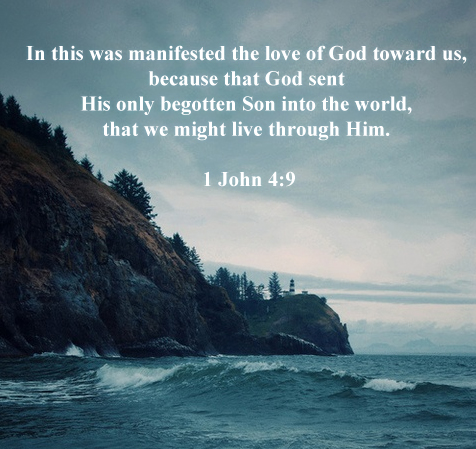
In this was manifested the love of God toward us,  because that God sent  His only begotten Son into the world,  that we might live through Him.   1 John 4:9It should be obvious that our relation to God as His children is different than the relationship Jesus has as His Son. After all, “the Word was with God, and the Word was God” before He became “flesh, and dwelt among us” (John 1:1, 14). As such, John uses a different Greek word to distinguish Jesus Christ from believers who are called children of God. The word is monogenes (G3439), meaning an only child. Zodhiates says the word appears to “serve to distinguish the Sonship of Christ to God from that spoken of other beings, i.g. Adam (Luke 3:38), angels (Job 1:6), or believers (John 1:12).”

For God so loved the world, that He gave His only begotten Son, that whosoever believeth in Him should not perish, but have everlasting life. For God sent not His Son into the world to condemn the world; but that the world through Him might be saved. He that believeth on Him is not condemned: but He that believeth not is condemned already, because He hath not believed in the name of the only begotten Son of God. (John 3:16-18)

Firstborn

Though He is described as the only begotten Son of God, Christ is not intended to be an only child. Rather, God has predestinated us “to be conformed to the image of His Son, that He might be the firstborn among many brethren” (Rom 8:29). The word for “firstborn” is prototokos (G4416), and it is used as a title of Jesus Christ in five NT passages. In all these cases, Zodhiates points out that the word can mean firstborn child, but also and identifies “Christ as the preeminent or ranking member of the group” in Romans 8, and indicates an “an inherent right [to rule] by virtue of His nature” when the word is used in Colossians 1.

In Whom we have redemption through His blood, even the forgiveness of sins: Who is the image of the invisible God, the firstborn of every creature: for by Him were all things created, that are in heaven, and that are in earth, visible and invisible, whether they be thrones, or dominions, or principalities, or powers: all things were created by Him, and for Him: and He is before all things, and by Him all things consist. And He is the head of the body, the church: Who is the Beginning, the Firstborn from the dead; that in all things He might have the preeminence. (Colossians 1:14-18)

One meaning Zodhiates does not discuss is the first one that popped into my head. I would be curious to know why it isn’t in his dictionary, simply because it seems to obvious to me and I wanted to at least read a reason for it’s exclusion.

“Firstborn” implies there are other children. If I did not have siblings, I would be an only child. Since I have a younger brother and sister, I am a firstborn. Similarly, Christ being called the “firstborn of the dead” reassures me that He is not the only one who will be resurrected, simply the first. Calling Him the “firstborn among many breathren” gives me hope that I might be counted worthy to be one of His younger siblings.

No-Bake Blueberry Cheesecake

No-Bake Blueberry cheesecake recipeThis is one of my favorite summer dessert recipes. As soon as the blueberries start getting ripe, I start stocking up on cream cheese so I can make this wonderful little cheesecake. It will not work with frozen blueberries, so this is the only time of year we get to eat it. Aside from tasting great, it is ridiculously easy to make. Just make or buy a crust, beat cream cheese with sugar, toss the blueberries in sugar, put it all together and pop it in the refrigerator.

Usually, I just make a graham cracker crust for this cheesecake. This time, however, I didn’t have enough graham crackers and found a substitute crust. It stuck the the pan, but I’m hoping that can be overcome because the taste was better and it didn’t fall apart. I’ve included it in this version of the recipe.

Fresh Blueberry Cheesecake

print this recipe

cheesecake crust
this new crust worked up much better than just graham crackers and butter

Crust

½ cup flour

½ cup graham cracker crumbs

5 Tablespoons butter, melted

3 Tablespoon brown sugar

Mix all crust ingredients in bowl and press into a greased, 9-inch pie pan. Set aside.


No-bake fresh blueberry cheesecake filling
cream-cheese filling

Filling

2 (8-oz) packages cream cheese, softened

¼ cup brown sugar, packed

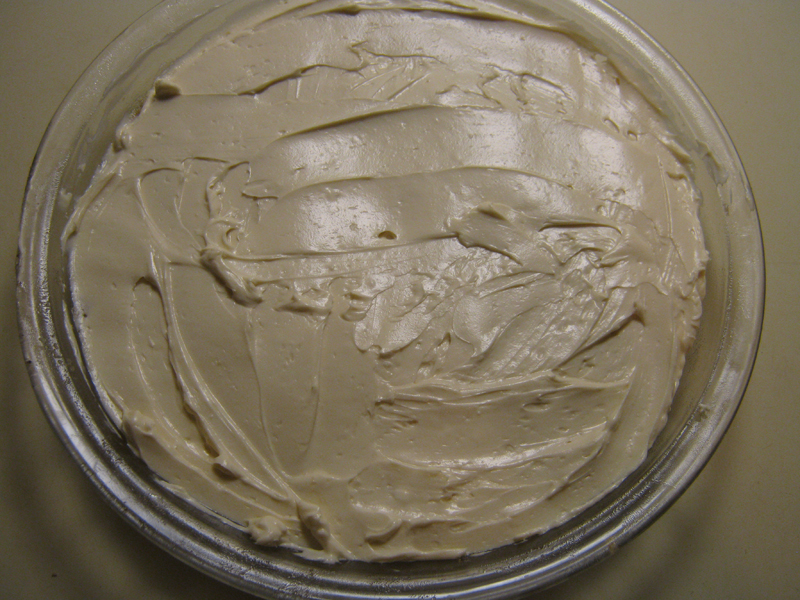
In small mixing bowl, beat cream cheese and brown sugar with an electric mixer until smooth. Spread the filling over the crust in the pie pan.


No-bake fresh blueberry cheesecake
The finished cheesecake

Topping

2 cups fresh blueberries

2-3 tablespoons sugar

1 teaspoon fresh lemon juice

In a bowl, toss the blueberries in sugar and lemon juice. Spoon blueberries over cheesecake. Place finished cheesecake in the refrigerator and chill for at least two hours before serving.

print this recipe

So Much Cooler Inside

Like many introverts (and a goodly number of extroverts, if some of my friends are any indication), I have an active imagination and “a rich inner life.” I’m daydreaming most of the time, even when it’s not readily apparent. I do let my musings out sometimes, here on this blog and over on my Pinterest boards, for example. The fact that I’m more comfortable expressing myself this way than in person reminds me of Brad Paisley’s song “Online,” except I’m telling the truth online and often masking my real self when I meet people in person. (Watch the music video if you haven’t yet — William Shatner is in it.)

This image by Gene Mollica makes me wonder how many fantastic things people hide behind their masks.

But even my online persona isn’t as “cool” as the me that stays inside my head. She joins the fellowship of the ring, travels with The Doctor, serves as an exopsychologist on the starship Enterprise, rules the world with Peter the Hegemon (if you don’t get this reference, you’re not reading enough Orson Scott Card), moves to a lake-side yurt to write books, marries Prince Charming, and adopts a couple of kids (just not all at the same time).

I spend a large (unreasonable?) amount of time thinking, daydreaming, and imagining. Sometimes I wonder if there’s something wrong with me — why don’t I spend more time making my real life interesting instead of constructing fantasies? As a fiction writer, I can call some of it research and story plotting, but I wouldn’t have to be in the stories myself if that were entirely the case. And I can only think of two such daydreams which have become full-fledged stories that can stand on their own.

INFJs hate conflict
Things You Should Know About INFJs

Partly because I spend so much time in my head, I often wonder what people think of me in real life. For someone who picks up on other people’s emotions intuitively, you’d think this would be easy. But I get so nervous when I think I’m under scrutiny that it’s hard to get past my own emotions enough to pick up on what other people think (unless their emotions are negative, in which case it’s time to flee the room). And then it’s easier to hide out in my head than spend time with “real” people, and the whole cycle begins all over again.

Well, I’m off to write a post for a different blog while talking over the direction of a novel with a couple of my characters (in my head of course — I’m sure my family would start worrying if such conversations were carried on out-loud).