First Do No Harm

Let-nothing-be-doneOften cited as part of the Hypocratic Oath, “First do no harm” is a motto of good doctors everywhere (thought is was actually written by an Englishman named Thomas Sydenham). The sentiment is one we in the church would do well to emulate.

Time and again I read or hear things like this: “I still love God, but I’ll never go back to a church again. The people are too cruel/hypocritical/shallow/judgmental.” One or two people saying this could perhaps be explained away, but it’s not just a few disgruntled individuals. It is becoming an epidemic.

A new commandment I give to you, that you love one another; as I have loved you, that you also love one another. By this all will know that you are My disciples, if you have love for one another. (John 13:34-35)

This sort of love is the very definition of doing no harm, since agape always seeks the well-being of its object. So what does it say about the church’s track-record of keeping this commandment when we are driving people away from church?

Love Your Neighbor

To get an increased sense of how serious God is about the need for us to love our neighbors as ourselves, and our brethren the way that Christ loves us, lets look at James 2.

If you really fulfill the royal law according to the Scripture, “You shall love your neighbor as yourself,” you do well; but if you show partiality, you commit sin, and are convicted by the law as transgressors. For whoever shall keep the whole law, and yet stumble in one point, he is guilty of all. (James 2:8-10)

We can’t tell ourselves, “Well, it’s okay if I don’t love everyone since its not like I’m murdering them.” This is not to belittle how serious murder is, but as far as you’re concerned not loving someone is just as serious a violation of God’s law (James 2:11-13).

You have heard that it was said to those of old, ‘You shall not murder, and whoever murders will be in danger of the judgment.’ But I say to you that whoever is angry with his brother without a cause shall be in danger of the judgment. (Matt. 5:21-22)

Someday, we will have to answer to God for every time we were angry with someone for no reason, every time we looked down on them, every time we treated them with disdain — in short, we will answer for every time we did not show God’s love in our interactions with other people. That’s a sobering (perhaps terrifying) thought.

Don’t Hinder Them

Though the phrase “do no harm” is not found in scripture, we do see several verses that express the same sentiment. God instructs us to put the welfare of others first and do all we can to not hurt them.

Let nothing be done through selfish ambition or conceit, but in lowliness of mind let each esteem others better than himself. Let each of you look out not only for his own interests, but also for the interests of others. Let this mind be in you which was also in Christ Jesus (Phil. 2:3-5)

Part of Jesus Christ’s mindset was to help, not hurt, those He came into contact with. He put His people’s needs above His own to the point of dying for them. Following His example, we must also focus on helping, not hindering, our brethren.

 But why do you judge your brother? Or why do you show contempt for your brother? For we shall all stand before the judgment seat of Christ. For it is written: “As I live, says the Lord, every knee shall bow to Me, and every tongue shall confess to God.” So then each of us shall give account of himself to God. Therefore let us not judge one another anymore, but rather resolve this, not to put a stumbling block or a cause to fall in our brother’s way. (Rom. 14:10-13)

In our dealings with other believers, one of our first priorities should be not giving them reason to stumble in their walk with God. Instead, we should be focused on building each other up.

Importance of Well-Doing

It is not enough to “do no harm,” though that is a good first step. It is also important to actively do good. On His last Passover as a human being, Jesus told His disciples that the Father is glorified when they “bear much fruit,” which is one of the signs that they are indeed followers of Jesus (John 15:8). We can say we’re following Jesus, but if we aren’t bearing some kind of good fruit then we are not glorifying God.

What does it profit, my brethren, if someone says he has faith but does not have works? Can faith save him? If a brother or sister is naked and destitute of daily food, and one of you says to them, “Depart in peace, be warmed and filled,” but you do not give them the things which are needed for the body, what does it profit? Thus also faith by itself, if it does not have works, is dead. (James 2:14-17)

This isn’t just James giving us an example of the kind of works we are supposed to do (e.g. help destitute brethren). He’s also making a comparison that tells us faith without works is as useless and empty as talk and no action.

You see then that a man is justified by works, and not by faith only. Likewise, was not Rahab the harlot also justified by works when she received the messengers and sent them out another way? For as the body without the spirit is dead, so faith without works is dead also. (James 2:24-26)

Rahab did have faith, but it wasn’t effectual until shown by her works. She could have just sat in her house believing “the Lord your God, He is God in heaven above and on earth beneath,” but she would have died along with everyone else in Jericho if she hadn’t taken action to help God’s people (Josh 2:9-11).

In Luke 10, Jesus was discussing the two greatest commandments with a lawyer who had a questions about the command to “love your neighbor as yourself.” When he asks, “and who is my neighbor?” Jesus replied by telling the story of the Good Samaritan. In this parable, a Jewish man is beaten and robbed and the spiritual leaders of the day declined to help him. It was a Samaritan — someone the Jews had no dealings with (John 4:9) — who saved the Jewish man’s life. At the end of the parable, Jesus asks, “So which of these three do you think was neighbor to him who fell among the thieves?” The lawyer says, “He who showed mercy on him.” Then Jesus said to him, “Go and do likewise” (Luke 10:36-37). The answer to the lawyer’s question is that we are obligated to love and help anyone who needs us, even if we don’t like them and especially if they are our brethren.

Do not be deceived, God is not mocked; for whatever a man sows, that he will also reap. For he who sows to his flesh will of the flesh reap corruption, but he who sows to the Spirit will of the Spirit reap everlasting life. And let us not grow weary while doing good, for in due season we shall reap if we do not lose heart. Therefore, as we have opportunity, let us do good to all, especially to those who are of the household of faith. (Gal. 6:7-10)

We’re supposed to do good and help others whenever we have the opportunity. That’s part of what love is, and love is essential in the type of church Christ is building. The closer we get to being the church that Christ is aiming for when He says “I will build My church,” the more likely we will be to welcome people toward God rather than push them away.

Download God's Love Story at https://www.smashwords.com/books/view/577523

Falling In Love With Anyone

Falling In Love With Anyone | marissabaker.wordpress.com
Renee Barron, CC BY-ND, via Flickr

The study is 20 years old, but I first became aware of it last week. In two days, I saw two different articles talking about falling in love and Dr. Arthur Aron’s “The Experimental Generation of Interpersonal Closeness.” (As an interesting side-note, this Dr. Aron is married to Dr. Elaine Aron, who we’ve talked about in connection to her research on Highly Sensitive Persons [HSPs].)

Aron’s study wasn’t actually intended to explore the science of falling in love — it was designed to study closeness and included both men-women and woman-woman pairs (because the sample group, a psychology class, was 70% women). The couples who fell in love were an unintended side-effect. Mandy Len Catron’s recent article “To Fall in Love With Anyone, Do This,” which called attention back to this study, demonstrates that the principles Aron used for studying accelerated intimacy between strangers can be applied to romantic relationships.

It’s a fascinating idea, made even more fascinating when you read his published research paper (what can I say? I’m a nerd) and find out about some of his other results. Is there a difference in closeness for introverts and extroverts? Can you truly become close to someone in less than an hour? What is it that effectively increases closeness?

Introverts and Extroverts

One thing I found fascinating about this study, which wasn’t brought out in any of the other articles I read, was Dr. Aron’s observations on the role introversion and extroversion played. In Study 3, Dr. Aron had the participants take a Myers-Briggs test, then used those results to create extrovert-extrovert, extrovert-introvert, and introvert-introvert pairs. Some of the pairs were told the experiment’s goal was to get close to the person you were paired with, and the others were told the study was about “dyadic interaction” and their job was simply to work through the questions.

Extroverts reported closeness in all cases, but introverts only reported closeness when they were told that closeness was a goal. Dr. Aron says, “these data shed doubt on the view that introverts are less social because they are less skilled at getting close. Indeed, when getting close is made an explicit task, introverts became as close as extraverts.” When introverts want to get close to someone, we’re just as capable of socializing with them as extroverts.

Is It Real?

The experiment succeeded in producing a feeling of closeness between two people, but is that closeness as real as a relationship that develops over time? Of the 58 people who completed follow-up questionnaires, 57% had a least one more conversation with their study partner, 35% got together to do something, and 37% started sitting together in class. One couple got married 6 months after the study.

So are we producing real closeness? Yes and no. We think that the closeness produced in these studies is experienced as similar in many important ways to felt closeness in naturally occurring relationships that develop over time. On the other hand, it seems unlikely that the procedure produces loyalty, dependence, commitment, or other relationship aspects that might take longer to develop.
In one of Dr. Aron’s tests, he paired individuals with shared interests, and individuals who shouldn’t have gotten along well based on their different responses to a questionnaire. He also conducted tests where pairs were assigned without filling out pre-tests to determine whether or not they were compatible. In all cases, participants reported similar levels of closeness. That indicates we can rapidly feel close with just about anyone, but on the long-term this closeness might not last because other considerations (like whether or not you share important values) will eventually come up.

Small Talk’s Not Enough

One thing Aron’s research found was that small-talk doesn’t do anything to bring people closer together (which I’m sure many of us have suspected for years). Talking about things people had done, what they liked and disliked, or other people they knew did not produce closeness between the two study participants. Here are some examples of the small-talk prompts used in his study:

  • If you could invent a new flavor of ice cream, what would it be?
  • Do you like to get up early or stay up late? Is there anything funny that has resulted from this?
  • What is the last concert you saw? How many of that band’s albums do you own? Had you seen them before? Where?

In contrast, the types of questions which did draw people closer together focused on how they feel about the way they live their lives, why they think the way they do, and what helps them connect with other people. Here are a few examples, and you can read the full list of closeness-generating questions at the end of his published research paper (which I linked in the intro), or by clicking this link.

  • What would constitute a perfect day for you?
  • Is there something that you’ve dreamt of doing for a long time? Why haven’t you done it?
  • Tell your partner what you like about them: be honest this time, saying things that you might not say to someone you’ve just met.

Maybe there is a reason people devote so much time to small talk, which we introverts find so frustrating because we crave deep conversations. If we were having deep conversations with everyone, though, we’d feel very close to a lot more people. Maybe small talk protects us in a way, though it can also hinder genuine conversation.

Some Thoughts

Now that I’ve read about this research, part of me would really like to try it out and part of me thinks it sounds scary. I always thought that love is a choice, but there’s a part of me that feels like falling in love should just happen, then once you commit to the relationship you choose to keep loving each other. But Dr. Aron’s research indicates that you can choose who you become close to in the first place, and you can reach a level of closeness in less than an hour that approaches closeness you feel for people you’ve known many years. I think I’d be rather picky about who I went through these questions with, but it might be a great way to let yourself be vulnerable and open up possibilities in a relationship.


Does The Physical Matter?

People in the churches can’t seem to make up their minds about whether or not physical things are important. Here are a few examples that came to mind. They’re all specific to the church I grew up in, but I’m sure the basic idea can apply to other groups.

  • We say it’s better to have a printed Bible than just read off an electronic device because holding a physical book connects you to scripture more, but we think kissing a Torah scroll at a Messianic congregation is borderline idolatry.
  • We teach physical things from the Old Testament/Judaism like tassels on our garments and prayer shawls are done away with under the New Covenant, but heaven forbid a man stand up to speak without wearing a suit and tie.
  • We say it’s important to preach the gospel and do good works in the world, but many groups refuse to purchase or rent church buildings that we can put a sign out in front of, or to have any sort of physical presence in our communities.

What’s going on here? If the spiritual is all that matters, why do we hang on to certain physical aspects of faith? If the spiritual and physical both matter, which I believe is the case, why are we so contradictory in how we approach that truth?

What Are We?

Jesus told us, “God is Spirit, and those who worship Him must worship in spirit and truth” (John 4:24). That tells us, at least on a basic level, what God is. But what are we?

Now may the God of peace Himself sanctify you completely; and may your whole spirit, soul, and body be preserved blameless at the coming of our Lord Jesus Christ. (1 Thes 5:23)

In the Greek, the word translated “body” simply refers to our physical bodies, “soul” refers to the life-essence we have in common with animals, and “spirit” is the part of us that makes us human and which is able to communicate with God’s spirit.

The Spirit itself bears witness with our spirit that we are children of God (Rom. 8:16)

Now, in this human life, we have a natural body that contains a spirit. After Christ’s return when we are resurrected or changed, we shall be like God and have a spiritual body with a spirit. We are “sown a natural body,” and “raised a spiritual body” (1 Cor. 15:44).

The part of ourselves that is enduring is our spirits. When God “looks on the heart,” He is checking the state of our spirits. He is concerned most with the condition of the inner man. That does not, however, mean God doesn’t care about the part of us that’s physical.

Romans 7 Analysis

In Romans, Paul discusses how our spirits are related to keeping God’s law. He tells us that the law in the Old Testament was not enough by itself ot lead to eternal life. Rather, since everyone has sinned (Rom. 3:23) and the law gives knowledge of sin (Rom. 7:7), we end up dead as an indirect result of knowing the law.

But sin, taking opportunity by the commandment, produced in me all manner of evil desire. For apart from the law sin was dead. I was alive once without the law, but when the commandment came, sin revived and I died. And the commandment, which was to bring life, I found to bring death. (Rom. 7:8-10)

Does The Physical Matter?  | marissabaker.wordpress.comIf we could keep the law perfectly, it would lead to life. But we can’t keep the law perfectly, and so we incur the death penalty for breaking God’s laws. That is how a law and commandment that is “holy and just and good” can result in our deaths (Rom. 7:12). That’s why we need Christ’s sacrifice to supply what was missing in the Old Covenant — a way for our sins to be removed and the penalty to be paid (Rom. 8:3-4).

For when we were in the flesh, the sinful passions which were aroused by the law were at work in our members to bear fruit to death. But now we have been delivered from the law, having died to what we were held by, so that we should serve in the newness of the Spirit and not in the oldness of the letter. (Rom. 7:5-6)

Serving in the spirit doesn’t mean we ignore the law, though. Even when we’ve been cleansed by Jesus and our spirits are in communication with God’s Spirit, we are still human and still capable of sin. To be righteous in the spirit, we have to obey God by rejecting sin on both a spiritual and a physical level (Rom. 6:14-23).

For we know that the law is spiritual, but I am carnal, sold under sin. For what I am doing, I do not understand. For what I will to do, that I do not practice; but what I hate, that I do. If, then, I do what I will not to do, I agree with the law that it is good. But now, it is no longer I who do it, but sin that dwells in me. (Rom. 7:14-17)

This isn’t Paul shirking responsibility for his actions. He’s telling us that, while his spirit recognizes and agrees with the law, his fleshly human nature is still slipping away from perfection. There’s a war going on between our spirits and our sinful desires.

For I delight in the law of God according to the inward man. But I see another law in my members, warring against the law of my mind, and bringing me into captivity to the law of sin which is in my members. O wretched man that I am! Who will deliver me from this body of death? I thank God—through Jesus Christ our Lord! So then, with the mind I myself serve the law of God, but with the flesh the law of sin. There is therefore now no condemnation to those who are in Christ Jesus, who do not walk according to the flesh, but according to the Spirit. For the law of the Spirit of life in Christ Jesus has made me free from the law of sin and death. (Rom. 7:22-8:2)

The only way we can win the war between our two natures is through Christ. His sacrifice removes our death penalty, His strength makes it possible for us to keep the law, and His grace covers us when we make mistakes. With His help, we can serve the law of God with our minds and spirits, and also keep the laws God gave us as a guide for how to behave as a physical being.

Some Concluding Thoughts

Does The Physical Matter?  | marissabaker.wordpress.comThe New Covenant doesn’t take away from the laws and commandments — it adds an additional spiritual dimension (Matt. 5:17-30). What we choose to do physically is not less important now. We could say it’s actually more important, because it is indicative of the state of our hearts. We are already in trouble if we intend to sin in our minds — actually going through with it adds the sin of hurting others on top of the damage sin does to us on the inside. We will be judged by how well we keep the law, and we must take this seriously (James 2:8-13).

I don’t think we can separate the physical and the spiritual, nor should we. It is true that God is chiefly concerned with the state of our inner man, but if the inside is right then it will show on the outside. We need to support our spiritual lives with our physical selves by actively doing good and keeping the commandments. As humans, we still have physical bodies and even inside us we have human nature struggling with God’s spirit. Keeping God’s laws is a physical reminder of how important the spiritual is.

In the churches of God that I’ve grown up in, we teach that one of the reasons God still expects us to keep His annual Holy Days and weekly Sabbath is because humans tend to forget things without something to physically remind them on a regular basis. This general idea is also related to my praise and worship series, since I think that if we take physical expressions of praise out of our church services we’re refusing to involve part of who we are in our woship of God. To keep on track with God, we need something to do as well as something to think about.


5 Weird Ideas I Picked Up From Courtship

If you grew up in a conservative Christian setting or the home-school community of the late 1990s and early 2000s, you mostly likely read I Kissed Dating Goodbye by Joshua Harris. After its release in 1997, it quickly became the go-to book in the courtship-vs-dating debate. If your friends didn’t hand it to you with an enthusiastic, “You have to read this book,” your mom probably thought it “would be good for you.” Or maybe you just picked it up on your own because of that suave guy on the cover tipping his hat (you know what I’m talking about, girls).

When I first read this book as a very “Christian” never-been-kissed teenager, all this courtship stuff seemed like a good idea. I mean, who doesn’t want a relationship guaranteed to lead to true love while keeping both God and your parent’s happy? The problem is, courtship doesn’t reliably work, and it gives you some pretty weird ideas to carry around if you eventually start trying to date like a semi-normal person.

Never Be Alone With A Guy

After reading I Kissed Dating Goodbye, my teenage self wrote up a list of things I would and wouldn’t do now that I knew the “right” way to interact with guys. Number 4 on my list was “ I will not put myself in a potentially compromising situation by being alone with a guy unless there are other people in the near vicinity.”

For us girls, this idea makes interacting with both married and single men awkward because you just know if you’re alone with them for any length of time you’re practically forcing them to have impure thoughts about you. This simply isn’t true (for one thing, people are responsible for their own feelings and thoughts), but having that idea in the back of your mind can make you feel guilty even in completely innocent situations.

Brothers, Not Boyfriends

That cute guy you walked past at the supermarket? the coworker who smiles at you every morning? They are not potential dating material–you’re are supposed to treat every man you meet just like you would your brother. If you start to even think about him as a potential boyfriend, you need to get your thoughts under control because you’re defrauding him and his future wife (who probably won’t be you). And courtship says the same thing to guys as well–think of every woman you meet as your sister until you’re ready to get married to her.

There are several problems with this idea. 1) Even after being told how “wrong” this is, you might still wonder (even briefly) if every attractive man or woman you meet is “the one.” The only difference is you feel guilty about it. 2) I’m perfectly comfortable leaning against my brother’s shoulder, looping my arm through his, going to him when I need help with something, and laughing and talking freely with him. That’s okay, because he actually is my brother. If I treat another guy like that, he’ll think I’m flirting and people will ask if we’re dating. 3) if you really do succeed in thinking of all your friends in a completely unromantic way, you’re less likely to pursue a romance.

Dad Has To Approve

Ideally in courtship, a man will decide he wants to pursue a relationship with a girl he is friends with, and then he will ask her father for permission to court her. As a young teen, having parental approval before you go out on a date makes sense when you have involved, caring parents. But courtship extends this principle to any age, and it becomes more and more impractical as you get older.  If a girl plans to move out of her parent’s house, go to school, or work outside their home, she’ll end up interacting with men who’ve never even met her parents and who haven’t heard of courtship. Have fun trying to explain to a really great guy who just asked you out for coffee that he needs to talk with your dad first because there’s no such thing as a casual date.

Personally, I have a good relationship with both my parents and I want them to approve any man I marry or even seriously date. However, they haven’t met all the guys I know, and I’d be comfortable going out with a guy who hasn’t met my parents but is respected by our mutual friends. Other girls don’t have a good relationship–or any relationship–with their parents. Courtship gives the impression that if her father is not in the picture, the guy better hope there’s a male authority figure in her life to talk to because heaven forbid she make up her own mind about something like this.

courtship

First Comes Courtship, Then Comes Marriage

Up until a couple is officially courting, they aren’t supposed to be alone or interact romantically in any way. Groups outings are the rule. Then as soon as they’re courting, they are set on the fast-track to marriage (it’s basically like an engagement, which makes proposals almost a moot point). Either you’re “just friends,” or you’re “exploring the possibility of marriage.” There’s no in between.

This brings us to a problem with courtship that underlies all the ones we’ve talked about already–courtship assumes that every interaction between men and women is extremely weighty and romantically charged. You can’t go on a casual date hoping to get to know someone better because courtship tells you  there’s no such thing as a “casual date.” You’re either friends, or you’re on the road to marriage.

Most people I know who’ve bought into the idea of courtship don’t actually get to the courtship part. It’s too intimidating of a commitment. When you leave courtship and try to date normally, though, you still have this idea that if a guy asks a girl out, that must mean he’s thinking of marrying her someday. It’s a really weird headspace to be in.

No Touching!

Courtship rules say absolutely no physical intimacy before you’re married. Depending on who you talk to, this even includes hand holding, hugs, or a quick kiss. Also, they add in the idea of “emotional sex” so that even having feelings for someone becomes wrong. Now, I do believe that God intends His people to save sex until marriage, but going to this extreme is a recipe for–you guessed it–more guilt.

People have written whole articles about how the teachings of physical and emotional purity from courtship books like I Kissed Dating Goodbye actually damage healthy relationships. You second-guess every hand-hold and shoulder touch, wondering if you’re sending the “wrong message.” You’re scared to fall in love because you don’t want to give pieces of your heart away to someone you might not marry, as if caring about someone leaves you with less capacity to care about someone else later (I wrote a whole post addressing this idea).

So what’s the alternative? The Christian community ran away from worldly dating for a reason, and problems like shallow short-term relationships and accelerated intimacy are still there. But courtship didn’t give us a viable alternative. Instead, I rather like the idea of going back to a more old-fashioned version of dating (as suggested by Thomas Umstattd, whom I also linked to in the intro). Debra Fileta supports a similar idea in her book and website True Love Dates. It’s not perfect, and I don’t think relationships will every be easy, but at least it sounds better than courtship!

Praise and Worship: What is Worship?

Praise and Worship blog series, "What is Worship?" | marissabaker.wordpress.comI’ve titled this blog series “Praise and Worship,” but so far we’ve only talked about praise and prayer. I think it’s typical to think of praise and worship going together, and perhaps you’re like me and the first thing you think of is praise and worship music. While praise is typically done aloud and often includes music and singing, worship in the Bible is actually quite different.

Defining Worship

In the Old Testament, most mentions of “worship” are translated from the Hebrew word shachah (H7812). It is a “verb meaning to bow down, to prostrate one self, to crouch, to fall down, to humbly beseech, to do reverence, to worship” (Baker and Carpenter). It was the accepted way of showing respect to powerful people, such as Boaz (Ruth 2:10) or David (1 Sam. 25:41).

While it was acceptable to bow before other people sometimes, when their position and character called for such a gesture of respect, it was never acceptable to do this before any deity other than the one True God (Josh. 23:7). When using shacha in the sense of worship, it may only be used toward God if you intend to worship properly.

Give to the Lord the glory due His name; bring an offering, and come before Him. Oh, worship the Lord in the beauty of holiness! (1 Chr. 16:29)

In the New Testament, there are several words translated “worship,” but we’ll only look at two of them right now. One, latreuo (G3000) is associated with the act of serving God, and involves the voluntary service of a hired servant rather than the compulsory service of a slave. We’ll get back to this word near the end of the post.

The Greek word most often translated “worship” has a meaning very similar to the Hebrew shachah. Proskuneo (G4352) means “to worship, do obeisance, show respect, fall or prostrate before. Literally, to kiss toward someone, to throw a kiss in token of respect of homage” (Zodhiates). I’ve written about this word before, in a post called “Blowing Kisses to God.” In the New Testament, the usual meaning is to bow or kneel before someone in reverence.

But if all prophesy, and an unbeliever or an uninformed person comes in, he is convinced by all, he is convicted by all. And thus the secrets of his heart are revealed; and so, falling down on his face, he will worship God and report that God is truly among you. (1 Cor. 14:24-25)

In Spirit

Praise and Worship blog series, "What is Worship?" | marissabaker.wordpress.comWe no longer use this form of salutation to show respect, at least in Western cultures. Bowing to someone seems very foreign, unless we are kneeling in prayer, and even then most of us aren’t crouching on the ground.

While the physical act of bowing before God does endure — for “at the name of Jesus every knee should bow” (Phil 2:10) — that is no longer the main definition of worship. Jesus pointed this out when talking with a Samaritan woman about whether God should be worshiped in a specific location.

Jesus said to her, “Woman, believe Me, the hour is coming when you will neither on this mountain, nor in Jerusalem, worship the Father. … But the hour is coming, and now is, when the true worshipers will worship the Father in spirit and truth; for the Father is seeking such to worship Him. God is Spirit, and those who worship Him must worship in spirit and truth.” (John 4:21, 23-24)

So, it is not enough to model the physical act of bowing down in worship. We have to find the “spirit and truth” at the heart of worship that pleases God, and then model that.

People in the Bible who rightly worship God do so when they are asking Him for something (Ex. 34:8-9), as part of their praise (Ps. 138:2), and with godly fear (Ps. 5:7). Reverence for God is at the core of true worship. We worship Him because we believe He is worthy of worship.

All nations whom You have made shall come and worship before You, O Lord, and shall glorify Your name. For You are great, and do wondrous things; You alone are God. (Ps. 86:9-10)

Worship seems to be the natural response to an encounter with God or one of His messengers. Abraham “bowed himself toward the ground” when the “Lord appeared to Him” (Gen. 18:1-2). Manoah and his wife “fell on their faces to the ground” after the angel of the Lord prophesied Samson’s birth (Judg. 13:20). Exekiel says, “I fell upon my face” when he saw his first vision (Ezk. 1:28), and Daniel describes the same reaction (Dan 8:17). John fell at the feet of two angels intending to worship them when he received the Revelation of Jesus Christ, though they corrected him since they were servants of God and not God Himself (Rev. 19:10; 22:8).

When we see a glimpse of who and what God the Father and Jesus the Son are and understand it at all, it’s impossible not to worship. The disciples worshiped Jesus when He demonstrated power over a storm (Matt 14:32-33), and when He ascended to heaven (Luke 24:51-52). Peter, James, and John fell on their faces when they heard a Voice from heaven while witnessing Jesus’ transfiguration (Matt. 17:5-6), and a blind man who was healed worshiped Jesus when he understood who He was (John 9:38). We were created to recognize our Creator and pay Him the honor He is due.

Sacrifice and Service

I mentioned earlier that one of the Greek words translated “worship” is connected with serving God. This is also the case in the Old Testament, where we often see worship and sacrifice paired (2 Chr. 29:27-30). Jesus also connected worship and service when rejecting Satan’s temptation, saying, “You shall worship the Lord your God, and Him only you shall serve” (Matt. 4:10).

Praise and Worship blog series, "What is Worship?" | marissabaker.wordpress.comIn the Old Testament, service to God involved animal sacrifices and a physical priesthood, but that was simply “a shadow of the good things to come,” and now a different sort of service is expected from God’s people (Heb. 10:1-4). Now, personally being “a living sacrifice” is described as our “reasonable service” (Rom. 12:1). This will likely involve a physical aspect, but that’s as a result of our spiritual worship (Phil. 3:3).

God, who made the world and everything in it, since He is Lord of heaven and earth, does not dwell in temples made with hands. Nor is He worshiped with men’s hands, as though He needed anything, since He gives to all life, breath, and all things. (Acts 17:24-25)

To repeat Christ’s words to the woman at the well, “God is Spirit, and those who worship Him must worship in spirit and truth” (John 4;24). In the New Testament church, God wants to be closer to His people than ever before. He’s not putting physical sacrifices and forms of service between us any more — those are done away with and we are brought near Him by the sacrifice of His Son (Eph. 2:13). His Spirit is communicating directly with our spirits, and He wants us to serve Him from the center of our being.

Therefore, since we are receiving a kingdom which cannot be shaken, let us have grace, by which we may serve God acceptably with reverence and godly fear. (Heb. 12:28)


Finding Your Gifts

Do you know what your gifts are?

Sometimes when I ask people this, their first response is to ask “What gifts?” or to stall and say something flippant like “I can fry an egg.” I think that’s one of the most heart-wrenching things I hear on a fairly regular basis. So many of us believe that there really isn’t anything unique about us, that there’s nothing special we can offer the world, that we don’t have an aptitude for something useful or interesting. We think we’re boring, normal, or mundane, and even if we do recognize some good qualities in ourselves, we think they are too small to do any good. Gifts? me? I don’t think so.

But everyone really does have gifts. Some of this is part of our personalities, and if you’re a Christian you probably believe in Spiritual gifts as well. I guarantee that there’s at least one thing (and probably several) gifts that you have. Even if you can’t see it yet there really is something that you are ridiculously good at, or a core part of yourself that offers something good to you and the world, or a talent just waiting to be used.

Hidden Gifts

Finding Your Gifts | marissabaker.wordpress.comI recently read an article titled How Your Greatest Insecurities Reveal Your Deepest Gifts by Ken Page (a psychotherapist, lecturer, and author who studies intimacy). He argues that the core parts of ourselves that we try to hide because we think we’re “too much” or “too little” are where our gifts dwell.

Over the years, I realized that the characteristics of my clients which I found most inspiring, most essentially them, were the ones which frequently caused them the most suffering.

Some clients would complain of feeling like they were “too much”; too intense, too angry, or too demanding. From my therapist’s chair, I would see a passion so powerful that it frightened people away.

Other clients said they felt that they felt like they were “not enough”; too weak, too quiet, too ineffective. I would find a quality of humility and grace in them which would not let them assert themselves as others did.

In his definition, your gifts are essential qualities that make you who you are. Most of us distance ourselves from our gifts and create “safe” versions of ourselves that don’t show the world who we really are. Ken Page’s focus is on expression our core gifts in intimate relationships, but if we discover who we are and what we have to offer it will impact other aspects of our lives as well.

His tips for discovering your core gifts are to look at the things that cause you the most joy, as well as the things that cause you the most pain. You will be most moved and inspired by positive experiences related to your core gift, and most hurt by negative experiences that touch on those sensitivities. For example, if one of your core gifts is honesty you will be drawn to other people who are honest and hurt deeply when someone you’re close to violates your trust. Here’s a link to one of Page’s more in-depth articles exploring this topic.

Personal Strengths

We spend quite a bit of time on this blog talking about personality types. Since I’m an INFJ on the Myers-Briggs scale, I’ll use my personality type as an example yet again. We can’t all be equally good at everything, and different personality types have different strengths. Some gifts that would be consistent with an INFJ personality type are a talent for reading other people, easily practicing empathy, and generating an inspiring vision for the future. On the other hand, most INFJs will not have a strong gift for impersonal evaluation of pros and cons in a situation, or for interacting with huge groups of people. For those tasks, you’ll need to track down a thinking type with a gift of logic or an extrovert with a gift for interacting with people.

Learning the strengths and weaknesses of your individual type is a good way to start tracking down your own unique gifts. The profiles on 16 Personality Types have a list of typical strengths and weaknesses associated with each type, and there’s also a free test you can take if you don’t know your type yet.

Often, the strengths of our personality types come to us so easily that we don’t think of them as a gift. It’s so easy for INFJs to pick up on other peoples emotions that it can seem like a slightly annoying thing we do automatically, rather than a unique gift we can use to relate to other people. ETSJs take charge of situations almost without thinking about it, and might not list leadership as a gift because it seems so normal to them.

Spiritual Gifts

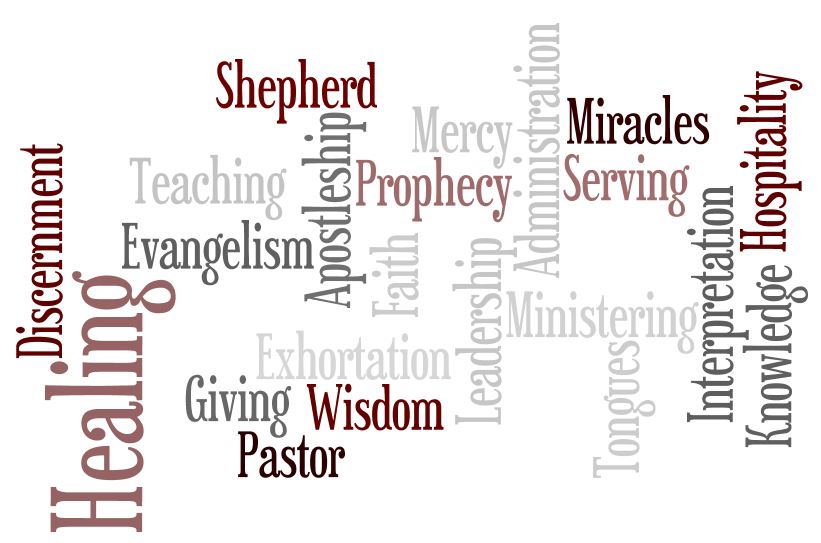
God doesn’t make useless people. You are a child of God, and no matter how weak and helpless and even useless you feel God can work with you and make you strong (2 Cor. 12:10). If God is calling you and working with you through His Holy Spirit, then you’ve also been given one or more spiritual gifts. Paul tells us that “the manifestation of the Spirit is given to each one for the profit of all” (1 Cor. 12:7) and trust me, you’re not the exception to that rule.Finding Your Gifts | marissabaker.wordpress.com

Finding out what your particular spiritual gift is can be quite a challenge. Live Your Calling: A Practical Guide to Finding and Fulfilling Your Mission in Life by Kevin Brennfleck and Kay Marie Brennfleck has a chapter devoted to a spiritual gifts questionnaire. It’s more of a guideline than a definitive answer, though. When I took the evaluation, it told me I had and potentially used somewhere between 2 and 8 spiritual gifts. Didn’t really narrow it down much.

Other tests, like Spiritual Gifts Test, can also give you an idea of what your spiritual gift might be. It ranks your top three gifts, and gives a description of each. Ultimately, though, I think to discover what your spiritual gift really is requires prayer and action. Thinking about your spiritual gifts only gets you so far — you have to start using them and serving and seeing if you have a gift for that particular way of serving.

Learning about your particular gifts can give you more confidence in yourself, improve your relationships, and give you an idea of how you can serve others more effectively. I’m still discovering my gifts, but they’re already bearing fruit, including this blog. I wish you a similarly exciting journey!