The Scriptures on My Wall: Three Encouraging Passages

I love having a toddler. For me personally, I think the toddler phase is much easier than the baby phase and it’s amazing to see my daughter’s sweet personality develop as she learns at an astonishing rate. As great as it is, though, toddlers can try your patience. Several weeks ago, I selected three scriptures that I placed on the wall beside my bed so I could see them first thing in the morning as I prayed before starting the day. Those scriptures are Galatians 5:22-25, Philippians 4:6-8, and 2 Corinthians 10:3-5. I thought for today’s post, it would be nice to walk through those three scriptures and think about how they can help us manage our thoughts and emotions in a godly way.
The Fruit of the Spirit

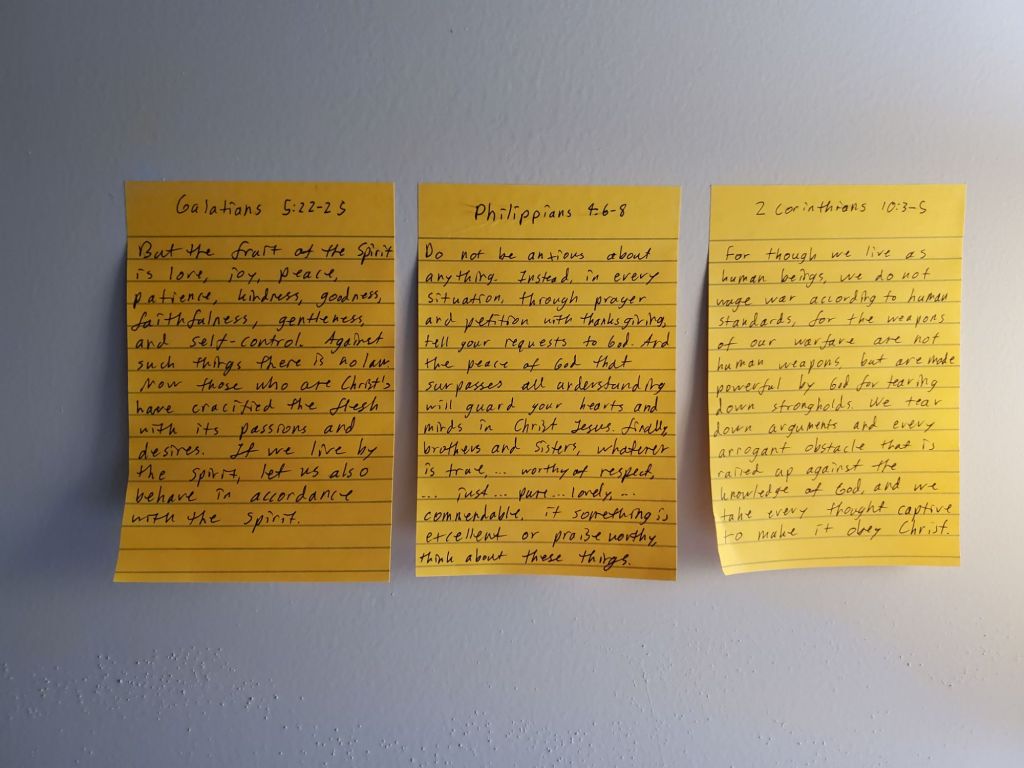
But the fruit of the Spirit is love, joy, peace, patience, kindness, goodness, faithfulness, gentleness, and self-control. Against such things there is no law. Now those who belong to Christ have crucified the flesh with its passions and desires. If we live by the Spirit, let us also behave in accordance with the Spirit.

Galatians 5:22-25, NET

I started out with this verse because it’s a reminder of the type of character we’re supposed to develop as we become more and more like God. When we enter a covenant with God at baptism and become part of His family, He gives us the Holy Spirit as a down payment on our full inheritance in His family (2 Cor. 1:22; 5:5; Eph. 1:13-14; 4:30). God’s spirit inside us transforms us to be like Him, and as we become more and more like Him we will see the fruits of His character more and more prominently in our lives.

Our transformation is a work that God accomplishes, but we are not just passive recipients of that change (Phil. 2:12-13). In fact, we won’t change at all if we don’t take an active part in the relationship. We can’t become like God on our own, but we also won’t become like God if we aren’t working with Him toward that goal. It is our responsibility to “behave in accordance with the Spirit.” Studying the fruit of the Spirit, praying for God’s aid, and cultivating those traits in us is one way to do that.

Taking Thoughts Captive

For though we live as human beings, we do not wage war according to human standards, for the weapons of our warfare are not human weapons, but are made powerful by God for tearing down strongholds. We tear down arguments and every arrogant obstacle that is raised up against the knowledge of God, and we take every thought captive to make it obey Christ.

2 Corinthians 10:3-5, NET

Thoughts often seem like they pop into our heads and there’s nothing we can do about them. It often seems impossible or counter-intuitive to be told that we are in control of what our minds think about. For many of us, thoughts and emotions just happen. For example, we don’t make the conscious decision to get angry when we read a news article or feel anxiety when hearing a strange noise at night.

While our first impulse might be out of our control, we do have the power to direct our thoughts where we want them to go. It’s not easy. That’s why this verse talks about warfare. But we can do it, especially when we are “made powerful by God” and ask Him to help us “take every thought captive to make it obey Christ.”

Peace In Your Mind
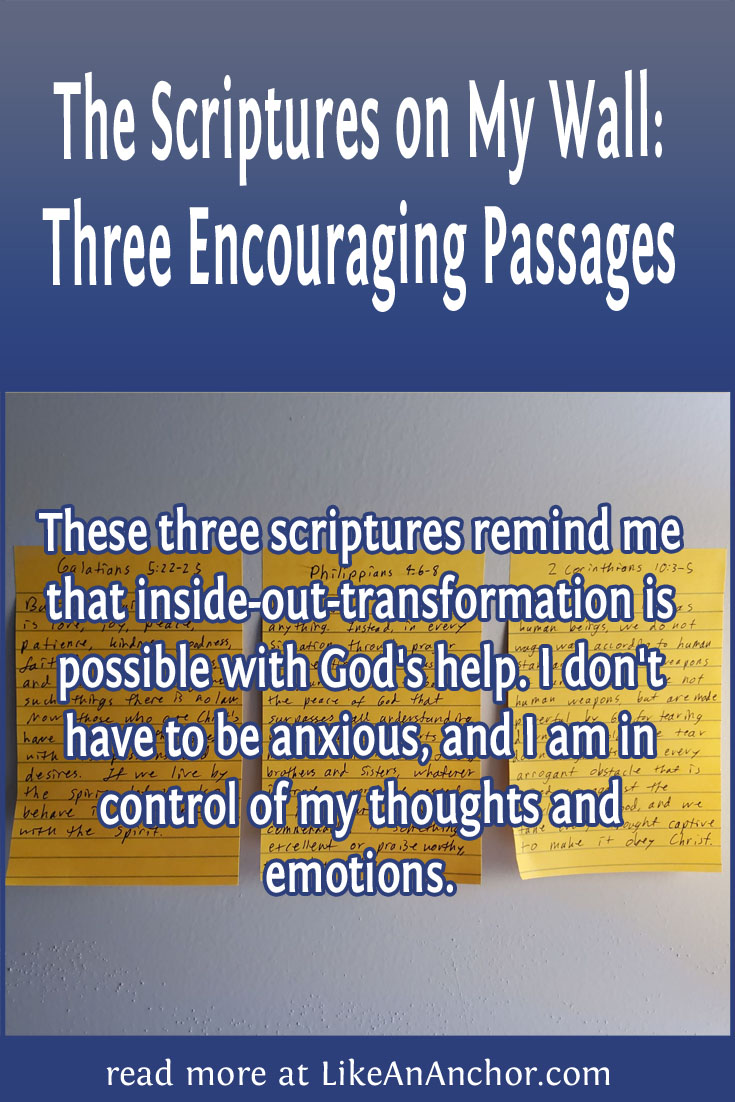
Image of three sticky notes on a wall, overlaid with blog's title text and the words, "These three scriptures remind me that inside-out-transformation is possible with God's help. I don't have to be anxious, and I am in control of my thoughts and emotions."

Do not be anxious about anything. Instead, in every situation, through prayer and petition with thanksgiving, tell your requests to God. And the peace of God that surpasses all understanding will guard your hearts and minds in Christ Jesus.

Finally, brothers and sisters, whatever is true, whatever is worthy of respect, whatever is just, whatever is pure, whatever is lovely, whatever is commendable, if something is excellent or praiseworthy, think about these things.

Philippians 4:6-8, NET

Anxiety has been a long-time struggle for me. This verse is a challenging one for me to believe because I have so much experience with having anxiety rather than peace even while praying faithfully and following God. But I also have experienced overwhelming peace that can only come from God. And I know that I have less anxiety when I pray for God’s help and do the hard work of taking control of my anxious thoughts.

This verse goes so well with 2 Corinthians 10:3-5 because it gives us specific things to think about when we take our thoughts captive. You can’t push wrong thoughts out and keep them out unless you replace them with something else.

As Christians, we know that we’re suppose to become like God. That often seems like an impossible goal, but impossible things are possible when God gets involved (Matt. 19:26). Inside-out-transformation happens as we cultivate the fruit of God’s spirit in us, fight with God’s power to take our thoughts captive, and dwell in the peace that He guards us with as we think on things pleasing in His sight.


P.S. For 10 years on my blog, I published a year-end review sharing site stats, most popular posts, etc. This year, I decided to move that into the newsletter. If you’re curious, make sure you subscribe so you’ll get that email when it goes out next week.


Featured image by Corey David Robinson from Lightstock

Song Recommendation: “My Feet Are On The Rock” by I AM THEY (one of my toddler’s favorite Christian songs)

Great Changes Begin Great Stories

Think about your favorite novel, movie, or TV show. It probably begins with the main characters going about their ordinary lives. Bilbo Baggins lives peacefully in his hobbit hole (The Hobbit). Elizabeth Bennet is socializing with her sisters and putting up with a mother eager to marry her off (Pride and Prejudice). Luke Skywalker is moisture farming on Tatooine (Star Wars). A pastor is sailing with his family to a colony in the South Pacific (The Swiss Family Robinson).

Then Gandalf arrives with a party of dwarves. Mr. Bingley moves to Netherfield. Droids arrive carrying secret plans that must be delivered to the Rebellion. The ship crashes on an uncharted island. Something changes, acting as an inciting incident to push the main character out of their normal life and into the events of the story.

We’re currently living in a time of great change. People are talking about what the “new normal” will look like and speculating about how much things will change now that there’s Covid-19 in the world. There have been many other times of great change throughout history — pandemics, the industrial revolution, natural disasters, colonization by European powers, terrorist attacks, the falls of empires, the birth of Jesus Christ. Some are terrible, some depend on your point of view, and a very few are spectacularly good.

We have very little control over how the world changes. But we do have some control over if and how we change in response to those changes. In many ways, we get to decide whether the effects of this pandemic will be an inciting incident for personal growth, a speed bump as we continue on much the same as before, or something that derails our path.

Great Changes Begin Great Stories | LikeAnAnchor.com
Photo credit: RÜŞTÜ BOZKUŞ via Pixabay

We would not have had a story if Bilbo stayed home, Elizabeth refused to speak with Darcy a second time, Luke didn’t follow R2-D2 into the desert, or the Swiss family had been rescued after only a week on the island. Now, I’m not saying you should ignore social distancing guidelines and go running off on a grand adventure. For us today I’m talking more about an internal adventure and a commitment to positive change.

Some of the greatest journeys we can go on are those of self-discovery, and they’re often prompted by change. The biggest moments that stand-out in my mind as times that sparked personal growth were starting college, beginning a dating relationship with a man I’d been friends with for years, and then the breakup which ended that relationship. Maybe this pandemic will be another one for me, and for many other people.

Whether you’re stuck at home and have some extra time on your hands or not, the changes in the world around us can serve as a reminder to look inwards and evaluate ourselves. We might ask questions like, “What impact am I having on the people around me for good or ill?” or “How can I become a healthier individual mentally, emotionally, and physically?” or “What do I want the next part of my story to look like?”

We can’t control when quarantine restrictions lift, who gets sick, or most other things associate with this pandemic. But we can control how we respond to the changes that are happening in our lives and the world around us. Let’s commit to making sure the great changes we’re going through now spark great next chapters in the stories of our own lives.


If you’re looking for some ideas for where to start working on personal growth, I’ve finally found an Enneagram book that I like. It’s called The Road Back to You: An Enneagram Journey to Self-Discovery by Ian Morgan Cron and Suzanne Stabile (please note this is an affiliate link, which means if you click and make a purchase I’ll receive a small commission at no additional cost to you).
I haven’t quite finished it yet, but even just reading the introduction and chapter on my enneatype has given me some additional clarity on a couple issues I’ve been struggling with for a while. You might want to check this book out if you’ve been curious about the Enneagram or want some ideas for personal growth. I borrowed it from a digital library, so that might be an option for those who (like me) prefer to try out a book before buying it.


Featured image credit: js j via Pixabay

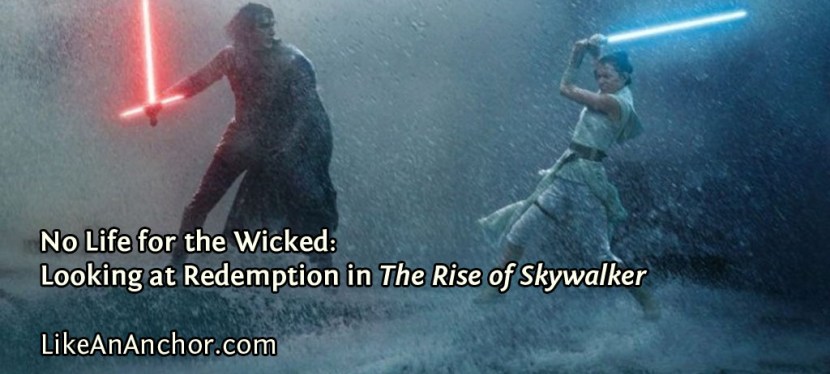
No Life for the Wicked: Looking at Redemption in The Rise of Skywalker

As many of you know, I’m an avid Star Wars fan. As such, you can imagine my excitement going to see The Rise of Skywalker last month wearing my ’50s style Anakin-inspired dress. I’ve seen the film twice now, and both times left the theater in tears. I hated the ending, for reasons I’ll discuss in a moment, and found it a heartbreaking, hopeless conclusion to the Skywalker story that I’ve been following my whole life.

Many people love this film and I don’t want to take away from their enjoyment of it or criticize them for disagreeing with me. I’m glad for those who could enjoy it, and saddened that I cannot since it’s the first Star Wars film that I haven’t loved despite whatever flaws it might have. I do, however, want to talk about a choice made regarding one character’s fate. And since I’m a Christian blogger, I want to talk about how much it relates to some Bible scriptures I happened to read the night I saw The Rise of Skywalker for the first time.

Warning: major spoilers follow for Star Wars: The Rise of Skywalker.

Read more

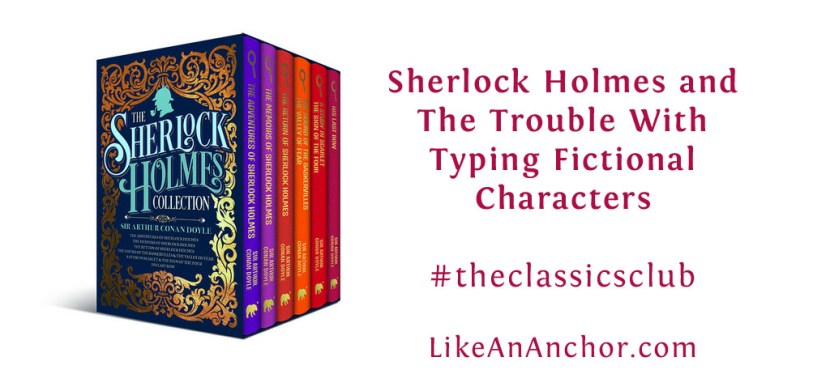
Sherlock Holmes and The Trouble With Typing Fictional Characters

Discussions about Sherlock Holmes’ Myers-Briggs® type can get pretty heated in the online community. He’s either an INTJ or INTP and whichever side you come down on (if you care about this sort of thing) is worth passionately defending. I’ve weighed-in on this myself in a blog post arguing that Sherlock as portrayed by Benedict Cumberbatch in the Sherlock BBC series, Robert Downy Jr. in the Sherlock Holmes movies, and even the Basil of Bakerstreet version from Disney’s The Great Mouse Detective are all INTPs.

I do think that’s the best-fit type for all three of those versions, but they aren’t the only portrayals of Sherlock Holmes. We ought not forget, for example, the original character in the stories penned by Sir Arthur Conan Doyle. I’ve been reading and re-reading several of those for my Classics Club book list and Sherlock doesn’t seem very much like an INTP in those stories. In fact, the only thing I can say with absolute certainty is that he’s a Thinking personality type.

Typing People Who Aren’t Real

Sherlock Holmes and The Trouble With Typing Fictional Characters | LikeAnAnchor.com
image courtesy of The Sherlock Holmes Museum

That brings us to the second part of this post’s title: the trouble with typing fictional characters. Though I love looking at fictional characters’ personality types, there are limits to how accurately you can type them. It gets especially tricky in the case of someone like Sherlock Holmes or Batman because so many writers and actors have been involved in portraying this character over quite a long period of time. There’s bound to be some inconsistencies in how each creative sees the character they’re working with. Plus, I doubt very many of them think about the character’s Myers-Briggs® type and how they can keep it consistent in every portrayal.

Going back to Sherlock Holmes as our example, Sir Arthur Conan Doyle sometimes writes him in a way that looks like ISTJ, sometimes more like one of the NTJ types, and sometimes with traits of a TP type. He also calls Dr. Watson by two different first names (John is used three times, James once), so I think it’s safe to say Doyle wasn’t all that concerned with consistency. In any case, Doyle’s Sherlock Holmes stories were written about 30 years before Jung published Psychological Types, so we know he wasn’t relying on those theories when writing the character.

So Why Type Fiction?

Since it’s difficult to type fictional characters with a high degree of accuracy, why do it? For one thing, it’s fun. It’s one of the ways to turn an interest in Myers-Briggs® into an entertaining pastime as well as a useful hobby.

Typing fictional characters can also sharpen our skills typing real people. It gives us a chance to study how characters react and puzzle out which psychological functions they’re using based on what they say and how they act. In addition, well-written characters provide familiar examples of the different types to use in every-day conversation. If someone asks me what an ENTP or ISFJ, for example, looks like in real-life then Tony Stark and Samwise Gamgee are there to help clarify things.

Do you enjoy trying to figure out fictional characters’ personality types? Tell us about your favorite characters and what you think their types are in the comments!

10 Stories You’ll Relate To If You’re An INFJ

What stories do you relate to as an INFJ? Not just a character in the story that you identify with, but also themes and plot points that speak to something inside you.

That’s what this blog post is about. It’s not necessarily a list of INFJs’ favorite books and movies (though there is some overlap). It’s not even about INFJ fictional characters, though they do appear in several of these stories. This list is about stories that INFJs can read or watch and see something of their dreams, desires, worldview, and personality. We love to find ourselves inside stories, and the 10 on this list are among the stories that INFJs find most relatable.

“We are all stories in the end, just make it a good one eh?”

― The Doctor (Matt Smith)

1. Amélie

Even though it’s always at the top of INFJ movie lists, I’d never seen Amélie (2001) until I watched it to write this post. I thoroughly enjoyed it, and I can’t think of any film character who’s more relatable for me as an INFJ than Amélie is in this film.

What INFJ hasn’t experienced random strangers pouring out their life’s stories? And how many of us have got so caught-up in our imaginations that we sit crying over our future on the couch? Or imagine that the person running late was kidnapped by bank robbers and through a weird series of events ended up living as a hermit in Afghanistan? Read more

When Heroes Can’t Save Themselves: Death and Loss in Infinity War

Even if you haven’t yet seen Avengers: Infinity War you’ve probably picked up on the vibe that not everything ends happy. Well before the film’s release there were charts out detailing which characters were safe, which ones in danger, and which ones we definitely expected to die. Even my cousin, who’s outside the MCU Fandom, wanted to see it because she had to find out who lived and who died.

Warning: Mild Spoilers Follow For Avengers: Infinity War

When Heroes Can't Save Themselves: Death and Loss in Infinity War | marissabaker.wordpress.comWhile the film has been well received overall, some are describing the deaths that do happen (and in some cases the whole movie) as pointless because we “know” pretty much how this is going to go. Coulson and Loki have already come back from death scenes in the MCU. It’s something we expect from the genre. And some of the characters that died at the end have sequel movies that are filming right now. We assume they won’t stay dead, and so might conclude that their deaths don’t matter.

It’s also been quite a shock to see earth’s and the galaxy’s mightiest heroes lose such an important battle. This isn’t the end of the story, since a sequel film is coming in May 2018, but the only one who gets a happy ending in this film is Thanos. This isn’t just the Empire scattered the rebellion and Han Solo is frozen in carbonite. This is Darth Vader got exactly what he wanted and retired to Mustafar to spend the rest of his life watching lava bubble.

Second Warning: Major Spoilers Follow For Avengers: Infinity War

Read more