Buying More Books

marissabaker.wordpress.comBefore I get into the subject of today’s post, I won NaNoWriMo! I hit the 50,000 word mark last Wednesday night. I think that puts me about 2/3 of the way through my plot outline, so I didn’t technically write a novel in a month. Still, 50,000 words is pretty impressive, if I may say so myself.

I have a fairly large library. Just over 1,100 books in total, according to the list I keep on my computer (I’ve been told this is “too many books” but I’m not convinced there’s any such thing). Even so, I’m constantly buying new books. The problem is, I have a limited book budget. That doesn’t mean I have to stop getting new books though. Here are some of my sources for finding more books without spending too much money.

Paper Back Swap

This is an amazing website: PaperBackSwap.com.  You post books you want to get rid of (yes, that sometimes happens), and when other members claim them you get a credit that can be used to request posted books. The only cost is shipping out books to other members. Unfortunately, many of the books I want have wait lists, but even so I’ve received enough books that the website estimates I’ve saved $84.17. Not too shabby. And I have 16 credits for whenever my wishlist books become available.

Trading Book Stores
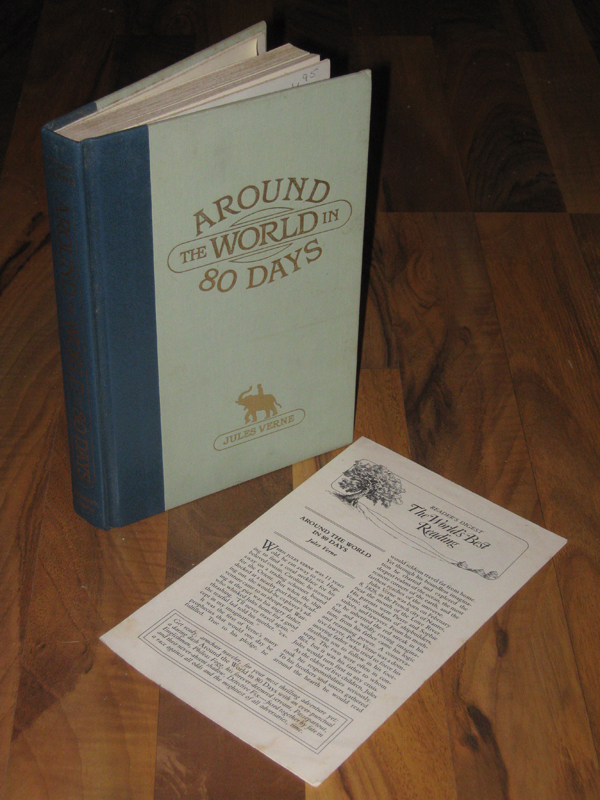
"Buying More Books," tips for economically growing your library. marissabaker.wordpress.comThere is a wonderful trading bookstore not half an hour’s drive from here that sells new and used books. My favorite way to approach this store is to turn in books my aunt no longer wants on her shelves, and then bring home books for me 🙂 That’s how I found books like my hardcover edition of Jules Verne’s Mysterious Island, several fairy tale volumes, and where I bought my first Reader’s Digest World’s Best Reading edition (not to be confused with those Reader’s Digest condensed book collections).

Library Book Sales

My local library has a book sale once a month. For a small fee, I’m a Friend of the Library and can get into the member pre-sale. Books sell for between $.025 and $1.00. Some months I buy nothing, sometimes I can hardly carry them all back to the car. If you don’t know when your local book sales are, try checking BookSaleFinder.com.

For Specific Books

For general book shopping, the three resources above are great. But if I’m looking for a specific title or edition. Amazon and Half.com are my go-to sites. If I want the book store experience, there’s three Half Price Books within about an hour’s drive.

Is there anywhere else you’d recommend looking for books to economically increase the size of your library? I’d love to hear your ideas. Also, if you have any ideas about finding more room for books, I’m starting to run out of space on my bookshelves …

My Favorite Fantasy Books

"My Favorite Fantasy Books" marissabaker.wordpress.comI’m writing a fantasy novel for NaNoWriMo this year, and since I have that genre on my mind, I thought I’d share a list of my favorite fantasy books. Maybe someday the novel I’m writing will be on another blogger’s favorite books list.

Books In No Particular Order

Concerning Hobbits

Though it is often considered childish compared to The Lord of the Rings, and I’ve heard that Tolkein wished he’d had time to re-write it, The Hobbit is my favorite book by J.R.R. Tolkein. I love all the books of Middle Earth for what Tolkein can teach me about writing fantasy, but just to sit down and enjoy reading a book I pick up The Hobbit.

“It’s all in the wardrobe just like I told you!”

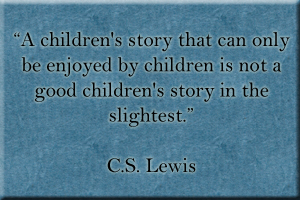
childrens_storyThe Chronicles of Narnia by C.S. Lewis are a few more “children’s books” that I didn’t read until I was in my late teens, and not all at once. I think I read The Lion, The Witch, and The Wardrobe when I was 16, then The Magician’s Nephew, and finished the series a few years after that. I suppose it is fitting that I didn’t appreciate Narnia until I was older, since it was C.S. Lewis who said, “Some day you will be old enough to start reading fairy tales again.”

I’m Okay With Corlath Kidnapping Me

I mentioned The Blue Sword by Robin McKinley on my previous book list, but it belongs on here as well. I like the way McKinley handles magic in this world, the lore she weaves through the story, and the strong characters she creates. Some of the most interesting characters are not even human — the heroine’s incredible war horse and a hunting cat named Narknon.

How To Melt Wizards

I don’t hesitate to laugh-out-loud when I’m reading books, and The Enchanted Forest Chronicles by Patricia C. Wrede kept me giggling most of the time I was reading. I received some pretty puzzled looks from my family, until my sister read the four books and laughed almost as much as I did. The first book, Dealing With Dragons, is the best, and features a princess who asks a dragon to take her captive so she can avoid marriage, then proceeds to chase off all the princes who try to rescue her.

Dancing Bears

The Shadow of the Bear by Regina Doman is the first in a series of modern fairy tale retelling. It’s based on “Snow White and Rose Red.” Bear (aka Arthur Denniston) is one of those fictional men I fell in love with as a teenager the moment I read the scene where he dances with Blanche. I also really like the cover art for the first edition.

“True love is the best thing in the world, except for cough drops.”

If you like the film The Princess Bride, you’ll love the book by William Goldman. I recommend the 30th Anniversary Edition, so you can read Goldman’s introductions. He talks about being on-set for filming (which was, of course, done on location in Florin). It can be fun trying to figure out what actually happened and what didn’t (and whether or not it really matters).

McKinley Fairy Tales

Rose Daughter by Robin McKinley is my favorite “Beauty and the Beast” retelling, and is also the only novel of hers that I’ve thought had a thoroughly satisfying ending. Her retelling of “Sleeping Beauty,” Spindle’s End, also deserves an honorable mention just for the fact that magic in that world is so thick and tangible they have to dust if off the kitchenware before cooking.

Visionary Fiction

A Sword For The Immerland King, by F.W. Faller, is the book that introduced me to “visionary fiction.” His website defines it this way:

a fiction, stated as fact to allow the reader to explore the greater life issues in the safety of a good armchair, to wonder at their own shortcomings and marvel at the confidence of others who inspire them to vision and purpose in their own lives. It is allegory and truth rolled together in a plausibility that transcends time and space and gives us pause to ponder who we are and where we are going.

What Faller does with his world of Tessalindria reminds me of Tolkein’s work with Middle Earth, and what I’m hoping to do with Ves’endlera.

An Oracular Pig

The Chronicles of Prydain by Lloyd Alexander, follow the adventures of an assistant pig-keeper named Taran. It spans five books and is, I suppose, technically another series of children’s books. One of the most interesting things about these novels is that they are based in part on Welsh legends. The author uses some names from the original legends and hints of Welsh geography (which he warns is “not to be used as a guide for tourists”), then inserts main characters born out of his own imaginings.

Worlds of Ink

Inkheart, Inkspell, and Inkdeath are the three books in the Inkworld series by Cornellia Funke. Setting aside the great fantasy content for a moment, these are beautiful books. Each chapter begins with a quotation and ends with a sketch. They are books about books, with main characters being read into the real world and back into books and blurring the lines between reality and fiction.

A Completely Subjective Book List

Sometimes I like reading posts titled things like “Books Every Family Should Have In Their Library,” “Best YA Books of All Time,” and “Top 100 Fantasy Books Ever.” While I’ll occasionally get an idea for a new book to read, I usually end up checking to see if they’ve “rightly” included any books I like or “wrongly” included books I hate. One thing that always amuses me, at least slightly, is how all these lists propose to be good for every family or include all the best books even though it’s clear all such lists are completely subjective.

For this list, I’m not even going to try to be objective or include all the best books. This is an unabashed list of my favorite books, which I irrationally think everyone should read and enjoy just as much as I do. They aren’t even organized alphabetically — just whichever popped into my head first.

My “Must Read” Books

Mara: Daughter of the Nile

My mother gave me Mara, by Eloise Jarvis McGraw, when studying ancient Egypt in elementary school and I’ve read it pretty much every year since. It has everything a book needs — strong characters, good writing, and intriguing plot. On top of the admirable writing is danger, mystery, and romance. Spies! Double agents! Political intrigue! It also features the most romantic (possibly the only romantic) attempted murder in literary history. If I’m forced to choose just one favorite book, this is the one I pick.

Ender’s Game

Moving from one of my oldest favorites to one of the newest. I first read Ender’s Game by Orson Scott Card at the end of last year. It’s brilliant. I’ve written about it before, so I won’t spend much more time telling you how wonderful this book is, especially the characters. I cried buckets of tears in the last chapter.

The Blue Sword

Written by Robin McKinley, this may very well be my favorite fantasy book. Like Mara, The Blue Sword features a strong female protagonist and an irresistible hero (let me just say Corlath is the only person who I wouldn’t mind being abducted by [this statement will make sense if you read the book]). McKinley’s world building, characters, and story are excellent. My only quibble with this story is that, like many of her books, it doesn’t really end. It’s as if the author wasn’t sure how to end the story, so she slapped an epilog on and called it the last chapter. Perhaps I should just say that is part of the book’s irresistible charm.

Pride and Prejudice

I know it’s a terribly predictable title to include — couldn’t I have at least chosen one of Jane Austen’s lesser-known works? But I’ve read all six of Austen’s major novels at least once (some two or three times), and Pride and Prejudice remains my favorite. Maybe it’s the fact that people type Lizzie Bennet as an INFJ (which I’m not entirely convinced of, but it would explain why I identify with her so much). Perhaps it’s because Mr. Darcy is my favorite of Austen’s men. Whatever it is, Pride and Prejudice is firmly on my recommended reading list.

Fairy Tales

Not a single book, but it would take to long to list them all separately. I recommend Jack Zipes’ translation of The Complete Fairy Tales of the Brothers Grimm, augmented liberally with Hans Christian Anderson and Charles Perrault. The reasons for this have been explored at length in my posts Fairy Tales and Dark Fairy Tales, so I’ll not devote any more time here on describing their merits.

A Gown Of Spanish Lace

Roses for Mama

I read Christian fiction on an irregular basis, usually because I want a easy-to-read book that doesn’t require much thought to digest and might supply some spiritual encouragement (yes, I know that sounds terrible). In spite of my generally low expectations, two books by Janette Oke have made it to my favorites list. A Gown of Spanish Lace has outlaws.  Roses for Mama is simply charming.

Dinotopia

If I was offered the chance to move to any fictional place I wanted, I’d pack up right this minute and relocate to James Gurney’s Dinotopia. Who wouldn’t want to live in world filled with dinosaurs and without any worries about money? Specifically, I want to visit Waterfall City and the coastal towns along Warmwater Bay where you can swim with cryptoclidus. Once you’ve read Gurney’s first book Dinotopia: A Land Apart From Time, I advise moving on to Dinotopia Lost by Alan Dean Foster. I’ve read that one at least four times.

So Much Cooler Inside

Like many introverts (and a goodly number of extroverts, if some of my friends are any indication), I have an active imagination and “a rich inner life.” I’m daydreaming most of the time, even when it’s not readily apparent. I do let my musings out sometimes, here on this blog and over on my Pinterest boards, for example. The fact that I’m more comfortable expressing myself this way than in person reminds me of Brad Paisley’s song “Online,” except I’m telling the truth online and often masking my real self when I meet people in person. (Watch the music video if you haven’t yet — William Shatner is in it.)

This image by Gene Mollica makes me wonder how many fantastic things people hide behind their masks.

But even my online persona isn’t as “cool” as the me that stays inside my head. She joins the fellowship of the ring, travels with The Doctor, serves as an exopsychologist on the starship Enterprise, rules the world with Peter the Hegemon (if you don’t get this reference, you’re not reading enough Orson Scott Card), moves to a lake-side yurt to write books, marries Prince Charming, and adopts a couple of kids (just not all at the same time).

I spend a large (unreasonable?) amount of time thinking, daydreaming, and imagining. Sometimes I wonder if there’s something wrong with me — why don’t I spend more time making my real life interesting instead of constructing fantasies? As a fiction writer, I can call some of it research and story plotting, but I wouldn’t have to be in the stories myself if that were entirely the case. And I can only think of two such daydreams which have become full-fledged stories that can stand on their own.

INFJs hate conflict
Things You Should Know About INFJs

Partly because I spend so much time in my head, I often wonder what people think of me in real life. For someone who picks up on other people’s emotions intuitively, you’d think this would be easy. But I get so nervous when I think I’m under scrutiny that it’s hard to get past my own emotions enough to pick up on what other people think (unless their emotions are negative, in which case it’s time to flee the room). And then it’s easier to hide out in my head than spend time with “real” people, and the whole cycle begins all over again.

Well, I’m off to write a post for a different blog while talking over the direction of a novel with a couple of my characters (in my head of course — I’m sure my family would start worrying if such conversations were carried on out-loud).

Vive Les Introverts

I’ve been fascinated by type psychology since high school. In lieu of a guidance counselor (since I was homeschooled), my mother suggested I see if the library had any books about career testing or if I could find websites that offered free tests. That was when I first stumbled upon the MBTI and discovered my personality type. I know there are many people who don’t find value in personality types, either because the type method doesn’t fit them well or they just don’t care, but when I found out what my type was, I suddenly felt like I wasn’t alone in the universe. Apparently this is a typical reaction for INFJs, since it is the least common type.

Before this turns into a post about my personality type, I want to get on to my real topic. Last week, I came across this video via the blog Personality Junkie. If you have 19 minutes, I highly recommend watching it. Even if you’re not an introvert, she has an interesting perspective on culture and the contributions of both introverts and extroverts to society.

I read Susan Cain’s book, Quiet: The Power of Introverts in a World That Can’t Stop Talking, a few months ago. If you like this talk, you should check it out. Her research is extensive, and it’s presented in a reader-friendly, almost conversational format.

“Introverts … may have strong social skills and enjoy parties and business meetings, but after a while wish they were home in their pajamas. They prefer to devote their social energies to close friends, colleagues, and family. They listen more than they talk, think before they speak, and often feel as if they express themselves better in writing than in conversation. They tend to dislike conflict. Many have a horror of small talk, but enjoy deep discussions.” – Susan Cain

Even though I grew up in one of the most introvert-friendly environments you can find (homeschooled by supportive, introverted parents), I’ve long felt like there was “something wrong with me.” This is apparently common for introverts, especially in western culture where we are constantly presented with extroversion as a cultural ideal. Fun, outgoing, talkative people are surrounded by friends and happy — melancholy, lonely bookworms who stay home on Saturday night can only wish they were that “cool.”

good grade, social life, adequate sleep. Pick Two [welcome to college]
I’ll take #1 and #3, please
By the time I was a couple years into my college studies, I’d become convinced that working alone was the best way for me to succeed. Writing my ideas was more productive than talking about them, working in groups just slowed me down. But even carrying a 3.98 GPA didn’t help much when favorite professors said, “You’d be the perfect student if only we could get you to talk more.” I was already talking more than I wanted — sometimes as much as once or twice per class to get those participation points I didn’t usually need, but was too contentious to just ignore.

Since reading Susan Cain’s book and another called Introvert Power: Why Your Inner Life if Your Hidden Strength by Laurie Helgoe, I’ve started to feel more comfortable embracing my introvertedness. Ironically, this has helped me when I need (or want) to extrovert — it’s easier to talk to people when I’m more comfortable being myself.

“Let’s clear one thing up: Introverts do not hate small talk because we dislike people. We hate small talk because we hate the barrier it creates between people.” – Laurie Helgoe

About 50% of the world’s population is introverted, and research indicates we are born with a base personality type. Though socialization plays a role, we can’t help being introverted or extroverted. And there’s really no reason we should want to “help it.” Introverts have just as much to offer the world as extroverts. We just approach life a little differently.

Fairy Tales

I love fairy tales. When I was little, my exposure to fairy tales was mostly through Disney films (my favorite is Beauty and the Beast, just in case anyone is wondering). I started seriously reading fairy tales just a few years ago, when my favorite English professor loaned me a collection of Celtic Fairy Tales. Since then, I’ve read all the Brothers Grimm tales, many of Andersen’s fairy tales, more Celtic folklore, and collections of French fairy tales including Perrault’s writings.

I’ve been reading some of C.S. Lewis’s essays collected in the book “Of Other Worlds.” I’ve enjoyed reading his fiction (Narnia and the Space Trilogy), as well as Mere Christianity, so it was nice to get insight into his mind and writing process. For the blogt I wrote to post on my writing website tomorrow (yes, I write under a pen name), I turned to one of these essays for inspiration. I liked writing it so much, that I decided to post it here as well.

C.S. Lewis on Children’s Writings

By tracking down a quote on Pinterest, I came across C.S. Lewis’s essay “On Three Ways of Writing For Children” (full text online here). Though I don’t write specifically for children, I like to think that my fantasy novels would appeal to (and be appropriate for) some young people. After all, I can’t be the only child who was reading Jules Verne by age 10 and searching for other stories of the fantastic.

The essay becomes most interesting to me when Lewis addresses the question of what kinds of stories are worth reading as children. Since he wrote children’s fantasy — not because he set out to write for children, but “because a children’s story is [sometimes] the best art-form for something you have to say” — he spends much of the essay defending fairy tales.

If I have allowed the fantastic type of children’s story to run away with this discussion, that is because it is the kind I know and love best, not because I wish to condemn any other. But the patrons of the other kinds very frequently want to condemn it. About once every hundred years some wiseacre gets up and tries to banish the fairy tale. Perhaps I had better say a few words in its defence, as reading for children.

Just as when Lewis was writing (in 1952), modern parents have been banning classic fairy tales. Hansel and Gretle and Little Red Riding Hood are not read because they are “too scary,” but there are other reasons as well. More than 50% of parents wouldn’t “read their kids Cinderella because the heroine spends her days doing housework. Many felt that this theme of female domesticity didn’t send a good message.” The politically incorrect word “dwarves” disqualifies Snow White from polite society. Rapunzel’s kidnapping and imprisonment is “too dark” a theme (actually, it is darker than they think– in the Grimms version she’s not actually kidnapped. Her father gives her to a witch to save his own life).

Whether or not to read fairy tales (and which ones to read) to children is a choice that will vary from parent to parent and also depends on the child. There are plenty of fairy tales I wouldn’t read to a very young or sensitive child (like The Little Mermaid, where she is in agony the entire time she has legs and dies at the end). But on the whole, I tend to agree with Lewis when he said,

Since it is so likely that they will meet cruel enemies, let them at least have heard of brave knights and heroic courage. Otherwise you are making their destiny not brighter but darker. Nor do most of us find that violence and bloodshed, in a story, produce any haunting dread in the minds of children. As far as that goes, I side impenitently with the human race against the modern reformer. Let there be wicked kings and beheadings, battles and dungeons, giants and dragons, and let villains be soundly killed at the end the book. Nothing will persuade me that this causes an ordinary child any kind or degree of fear beyond what it wants, and needs, to feel. …

It would be nice if no little boy in bed, hearing, or thinking he hears, a sound, were ever at all frightened. But if he is going to be frightened, I think it better that he should think of giants and dragons than merely of burglars. And I think St George, or any bright champion in armour, is a better comfort than the idea of the police.

As a child who was deeply afraid of things that go bump in the night, I can wholeheartedly support Lewis’s claim that a “bright champion in armour” is a far better comforter than the police. And if my mind had not been filled with fairy tales, fantasy, and knights in shining armor I would never have dreamed up Jamen and Karielle or Bryant and Aelis (who now live in my in-progress and finished novels) or invented Ves’endlara.

Which fairy tales would you read, or not read to children? As an adult, do you enjoy reading fairy tales?