Letting Death Give Us Perspective On Life

Ecclesiastes records the reflections of a deep thinker who works through an existential crisis and concludes meaning can only be found in God. While many people find this book depressing, I think taken as a whole it offers a remarkably hopeful perspective that can actually help us work through the sort of questions that were weighing on the author (most likely Solomon’s) mind.

When I recently went back to studying Ecclesiastes, I had this grand vision that I would write a post about the entire book (similar to “Crash Course in Romans”) in less than a week and post it today. I’m currently laughing at myself for thinking that was an attainable goal. Instead, we’re just going to talk about a handful of verses in the middle of the book that have captured my attention, and save the Crash Course in Ecclesiastes for next week.

The Vanity of Everything

Like Romans, Ecclesiastes is hard to understand if you take bits and pieces out of context, so before we get to the verses that I want to focus on today we need to take a quick look at what came before.

Solomon had shown the vanity of pleasure, gaiety, and fine works, of honour, power, and royal dignity … [and] there is as much vanity in great riches (Matthew Henry’s Commentary on Ecc. 5:9-17)

He has also been questioning the meaning of life. If all the things that people pursue on earth are meaningless, then what is there for us? Several times he argues that there is “nothing better” for men than to rejoice in this physical life (Ecc. 2:24; 3:13, 22; 5:18). But that’s still not a satisfactory answer for him. He wants more, something to explain why we should keep trying and what’s the purpose in living.

For who knows what is good for man in life, all the days of his vain life which he spends like a shadow? For who can tell a man what will be after him under the sun? (Ecc. 6:12, WEB)

A Different Perspective on Death

Up until this point, there has been a, “Let us eat and drink, for tomorrow we will die” theme running through Ecclesiastes (Is. 22:12-13). It seems that in Solomon’s mind at this time, death was the point at which hope falls apart. Sure you can enjoy this life, but it’s all emptiness because you still end up dead with no guarantee that you have anything to show for it. Now, though, Solomon suggests that we can use death to give us perspective on life.

It is better to go to the house of mourning than to go to the house of feasting: for that is the end of all men, and the living should take this to heart. Sorrow is better than laughter; for by the sadness of the face the heart is made good. The heart of the wise is in the house of mourning; but the heart of fools is in the house of mirth. (Ecc. 7:2-4, WEB)

We must not forget that there is “a time to be born, and a time to die … a time to weep, and a time to laugh; a time to mourn, and a time to dance” (Ecc. 3:2, 4, WEB). There’s nothing wrong with feasting and laughter in its proper time, but staying there makes your heart foolish. Wise men keep their ends in mind. Death reminds us that we only have so much time to decide how we’re going to live our lives and what we’ll be remembered for.

Letting Death Give Us Perspective On Life | LikeAnAnchor.com
Photo credit: Rosie Fraser via Unsplash

The End Is Better

We just talked about verses 2-4 in chapter 7. Now let’s go back to verse 1:

A good name is better than fine perfume; and the day of death better than the day of one’s birth. (Ecc. 7:1, WEB)

There is much value in a good life well-lived. Solomon has already concluded that “wisdom excels folly, as far as light excels darkness” (Ecc. 2:13, WEB). Here he reinforces that a good name — that is “a name for wisdom and goodness with those that are wise and good”(MHC on Ecc. 7:1-6) — is worth more than all the pleasures, wealth, etc. that he’d found so empty.

if we have lived so as to merit a good name, the day of our death, which will put a period to our cares, and toils, and sorrows, and remove us to rest, and joy, and eternal satisfaction, is better than the day of our birth, which ushered us into a world of so much sin and trouble, vanity and vexation. We were born to uncertainty, but a good man does not die at uncertainty. (MHC on Ecc. 7:1-6).

Death is not the end of the story, and for a man who considers his death and prepares for it (as Solomon goes on to say in the next verses, which we’ve already talked about) he has the opportunity to die with “a good name.” The word for “name” here is shem (H8034), and in the Hebrew concept it’s always connected with your reputation and character.

Those who die having a good reputation and a good character are no longer subject to the evils of this present life and await their resurrection to a much better life in the future. That gives those of us left behind great hope even in the midst of sorrow (1 Thes. 4:13-14).

Backing Into The Future

Letting Death Give Us Perspective On Life | LikeAnAnchor.com
Photo credit: Ashim D’Silva via Unsplash

The idea that the day of our death is better than the day of birth can be a hard one for people to come to grips with, even given the context we just talked about. We still grieve at death even though we know (as Solomon also concludes by the end of this book) that “the spirit returns to God who gave it” and that He will raise believers up in the last day (Ecc. 12:7; John 6:40). But maybe another verse in this section of Ecclesiastes can provide further explanation.

Better is the end of a thing than its beginning. (Ecc. 7:8, WEB)

The Hebrew word for “end” is achariyth (H319). To understand achariyth, we have to understand that the Hebrew concept of time is like “the view a man has when he is rowing a boat. He sees where he has been and backs into the future” (H.W. Wolff quoted in TWOT entry 68e). That’s why this word translated “end” can also mean last/latter days, after part, future, or reward. The end of a thing is better than the beginning because you will have arrived at the future goal and can now look back on where you’ve been with a better perspective.

If you’d rather not think about death then the idea that the end is better than the beginning can be a depressing one because it forces you to confront something uncomfortable. But ignoring the idea of our lives ending is foolish. Everyone is going to die whether we think about it or not, so why not use the fact that our lives will end as motivation to make the life we have a good one?


Featured image credit: carolynabooth via Pixabay

Here’s What Happens When Church Hurts An INFJ

INFJs can get hurt pretty easily. Usually, these hurts come from other people, but in some cases they come from institutions like a church. Of course groups like this are made up of people, but in many cases the hurts that happen within a group aren’t blamed on individuals. They’re blamed on the organization or sometimes, for churches and religious groups, on God.

So what happens when church hurts an INFJ? One thing I found most interesting about my article “Religion and the INFJ” is how many people I’ve heard from who relate to what I mentioned in that post about INFJs being turned-off from church/religion/God. This phenomena isn’t limited to Christian INFJs, but that is who I’ll be focusing on today.

Door Slamming God

You’ve probably heard of the INFJ door slam, right? That’s what happens when someone hurts an INFJ so much that they “slam the door” and stop investing energy in the relationship. In certain situations, INFJs can also door slam whole groups of people, or even concepts like “romance.” Some INFJs who’ve had particularly terrible experiences with religions even slam the door on God. Read more

God Wants The Real You

Unless you’re listening to a branch of Christianity that teaches God doesn’t expect anything from you, Christians talk about change quite a bit. We change our lives when we commit to leaving sin behind and following Jesus. We change how we think as we put on the mind of Christ. We change from being outside the faith to being grafted into God’s chosen people.

There are some things, though, that God doesn’t want to change about you. Or at least, that’s not quite the best way to describe what He’s doing. Rather, He wants to reveal the “you” that He created you to be. He doesn’t want us to get rid of our individuality, our gifts, or our true personalities (though it might feel that way at times).

The way God transforms us often involved quite a bit of change. But it’s not about turning you into someone you’re not. It’s more of a revelation of the truest, best version of you.

He Sees All Of You

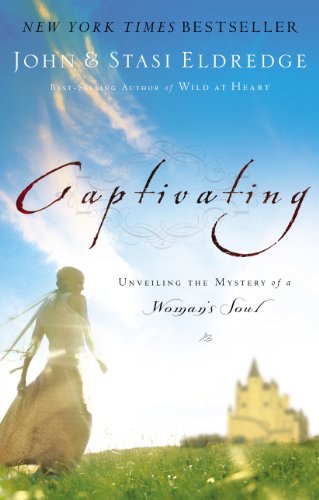
God wants a relationship with the real you. I’ve been reading Captivating by John and Stasi

Eldrege, and this quote caught my eye:

He wants your deep heart, that center place within that is the truest you. He is not interested in intimacy with the woman you think you are supposed to be. He wants intimacy with the real you (p. 123)

Though this book is specifically written to women, what I just quoted applies to both genders. Throughout the ages, God calls to our hearts. He longs for a relationship with people who aren’t going to hide themselves from Him. Read more

Reasons To Pray: Getting Involved With God’s Plan

Why doesn’t God answer more prayers? Why don’t we see dramatic miracles today as often as they happened in the book of Acts? Those are questions that puzzle many a modern Christian. We know God could do more, so why doesn’t He? Why does He choose to use His power in some situations, but not in others?

In other words: If God is love, why doesn’t He do something about all this suffering?

Those are some of the questions tackled in Philip Yancey’s book Prayer: Does It Make Any Difference? (which I highly recommend). One of the things that he points out should be pretty obvious, but it’s something I hadn’t thought of much before. To borrow Yancey’s analogy, God’s not a vending machine. You can’t pop prayers in like quarters and have the answer you requested fall out. There’s more going on.

Prayer is for building relationships as much (or more) as it is for making requests. And while God does answer prayers, he often answers in a different way than we might expect. The “something” that He does in response to prayer has a great deal to do with His people’s relationship to Him.

Partners in the Kingdom.

Let’s start out with a couple quotes from Yancey’s book:

“I will build my church,” Jesus announced, proclaiming the new reign of God’s kingdom on earth. That, too, has taken shape gradually and fitfully over twenty centuries with many embarrassing setbacks to go along with the advances. I think of the profound grief God must feel over some chapters of church history. Yet, as Paul put in an astonishing metaphor, “the head cannot say to the feet, ‘I don’t need you!'” God has made the work of the kingdom dependent on the notoriously unreliable human species (p. 110)

It’s an astonishing thing to think about, really. God calls the foolish, weak, lowly, and despised people, then He entrusts them to act as the body of His son operating in the world (1 Cor. 1:27-28). With that thought in mind, I look at myself (and often others as well) and shake my head wondering, “Oh, Lord, what were you thinking?” And yet, for some reason, He welcomes all believers as partners in the kingdom. Read more

Reasons to Pray: Building Relationship With God

I have very little trouble believing that God is here with me, real, and listening when I pray. But I do struggle believing He’ll do something about it. I know He can, but I doubt that He will. I don’t ask, “Where are you, Lord?” nearly as much as I do, “Why this and not that?”

This struggle is why I recently read a book called Prayer: Does It Make Any Difference? by Philip Yancey. I’d picked it up about a year ago and it’s been staring at me from my bookshelf ever since. I highly recommend you read it, even though it really didn’t answer my main questions about prayer. Instead, it shifted how I think about prayer.

Responding to God’s Presence

“I have learned to see prayer not as my way of establishing God’s presence, rather as my way of responding to God’s presence that is a fact whether or not I can detect it. … My feelings of God’s presence — or God’s absence — are not the presence or the absence. … God is already present in my life and all around me; prayer offers the chance to attend to and respond to that presence” (Yancey, p. 51-53)

The Bible does talk about people fleeing from the Lord’s presence, leaving His presence, or being unable to enter His presence. And since we’re told “seek Yahweh while he may be found. Call on him while he is near,” it seems that there are times when He cannot be found and is not near (Is. 55:6, WEB). We’re also told our sins can block relationship with God (Is. 59:2). But that doesn’t actually mean He’s not present. Read more

Are You Spiritually Minded Yet?

One of the many issues Paul addressed in his first letter to the Corinthians was that of disunity. The church of Corinth was suffering from a spiritual malady all too common among churches today. They were split into factions, squabbling over which leader to follow, happily tolerating sin, and looking down on fellow believers. Paul’s words to them can give us guidance for finding a way out of similar problems today.

Disunity is Ridiculous

Now I beg you, brothers, through the name of our Lord, Jesus Christ, that you all speak the same thing and that there be no divisions among you, but that you be perfected together in the same mind and in the same judgment. For it has been reported to me concerning you, my brothers, by those who are from Chloe’s household, that there are contentions among you. Now I mean this, that each one of you says, “I follow Paul,” “I follow Apollos,” “I follow Cephas,” and, “I follow Christ.” Is Christ divided? Was Paul crucified for you? Or were you baptized into the name of Paul? (1 Cor. 1:10-13, WEB)

Paul is begging these people in the name of our savior to stop their contentions and divisions. His questions, “Is Christ divided? Was Paul crucified for you” shine a spotlight on how ridiculous their squabbles and disagreements really are. Christ is not divided and He’s the one into whom we were baptized. There is no division when we’re in Him.

The Mind of Christ

When Paul talks about being like-minded with each other in Philippians, he follows it with “Let this mind be in you which was also in Christ Jesus” (Phil. 2:1-5, KJV). Our unity comes from all of us learning to think like Jesus. It is the height of arrogance to think we could come up with a better plan, interpretation, or idea than what He has given us. Read more