Getting Comfy With Your INFJ Personality Type

It’s been quite some time since I published a post about personality types. Since starting grad school last August, the time I have to spend writing on my more personal projects has been limited. I still Bible study every morning, which turns into the posts I share each Saturday, but I haven’t been researching and writing about personality types nearly as much.

Don’t get me wrong–I still find personality type fascinating and knowing I’m an INFJ is a key part of how I understand myself. I just haven’t had time to read typology books or blogs, or think all that much about topics related to Myers-Briggs® that I want to write about. My writing time is focused on things like “A Rhetorical Analysis of the Literature Surrounding Role-Playing Games, Race, and Identity” and a scholarly book review of John R. Gallager’s Update Culture. I might share links to those somewhere on this blog if/when they’re published, but they don’t really fit with the theme “finding our true selves in the people God created us to be” or with my interest in personality types.

One type-related topic I have been thinking about, though, is that I feel like I’m “settling in” to my type. Which I think is a good thing, but it also makes me feel a bit less motivated to constantly research and write about INFJs. Over the past several years, either in comments on this blog or emails through my contact form, I’ve occasionally heard from INFJs who talk about having (mostly) moved past the awkwardness of being INFJ. They talk about being happy, feeling balanced, and seeing their type as a strength or a neutral thing rather than a weakness or something that makes them particularly unique.

In the online INFJ community, we often talk about things like how different we feel from other people, how tempted we are to door slam those who irritate or hurt us, and how we’re a target for unhealthy people like narcissists. It’s easy to think of being INFJ as a burden, or a thing that sets us apart, or something people will never understand. I’ve been there, clinging to my INFJ label like a life preserver that makes the weirdness of your life make sense. And I think there’s a place for that, especially when you first learn about your personality type. The feeling of relief that you’re not alone or broken is one that many INFJ (most that I’ve talked with, in fact) mention when they talk about first discovering their personality type. Normalizing experiences like feeling alien, struggling to communicate, and seeing the world differently helps us realize that 1) there’s nothing inherently “wrong” with our personality and 2) other people really can understand us and they can help us figure out how to be in the world as INFJs.

That initial realization that we’re INFJ and embracing that identify is often the strongest way we relate to our personality type. But the way we relate to our type can change, and I think it probably should as part of personal growth. Based on conversations I’ve had with older INFJs, I suspect that if we were to chart the stages of a typical INFJ’s journey, it might look like this:

  • Recognizing that there’s something different about you
  • Learning about personality types and realizing that INFJ fits you really well
  • Seeking to learn about your type and learn from other INFJs
  • Accepting your personality quirks and figuring out how to manage your strengths and weaknesses
  • Settling into life as an increasingly mature, balanced example of an INFJ

Of course, this is an overgeneralization and it doesn’t account very well for the many people who aren’t sure if they’re an INFJ or another type like an INFP or INTJ. It does reflect what I’ve heard from many INFJs, though, and I think it will resonate with a lot of my readers. I’d love to hear what you think of this idea in the comments!

Right now, I think I’m somewhere in those last two bullet points. I’ve firmly embraced my weirdness, even more so than when I wrote a post about that topic two years ago. I finally went back to school. I’m managing the anxiety and depression I’ve struggled with for more than half my life in a much healthier way. I’m leaning in to the interpersonal strengths of my INFJ type and finally developing my Extroverted Feeling side so I can teach and tutor students. And it feels pretty good.

Wherever you are on your INFJ journey, I hope you’re doing well. I hope you’ve been able to connect with other INFJs (whether in person, on blogs like this one, or using social media), to learn helpful information about your personality type, and to grow toward living a fuller, happier life. And I hope we’ll all keep learning, keep being brave, and keep growing.

If you’d like to know more about personal growth tips for the INFJ personality type, check out my book The INFJ Handbook. I’ve updated this second edition with a ton of new information and resources. You can purchase it in ebook, paperback, or hardcover by clicking this link.

Featured image by StockSnap from Pixabay

Called by the Name of the Lord

Jesus’s prayer in John 17 gives us insight into where His mind was right before His crucifixion. If you’re reading this article the day I posted it, then today is the 14th day of the first Hebrew month–the anniversary of Jesus’s death. Following His instructions, we observed Passover last night in remembrance of Him.

The whole of Jesus’s prayer is an excellent thing to read this time of year, but for today’s post we’re focusing on the four times Jesus talks about His Father’s name. Here are those verses (click here to read them in context).

“I have revealed your name to the men you gave me out of the world. They belonged to you, and you gave them to me, and they have obeyed your word. …

“I am no longer in the world, but they are in the world, and I am coming to you. Holy Father, keep them safe in your name that you have given me, so that they may be one just as we are one. When I was with them I kept them safe and watched over them in your name that you have given me. …

“I made known your name to them, and I will continue to make it known so that the love you have loved me with may be in them, and I may be in them.”

John 17: 6, 11-12, 26, NET

There are two key points here: 1) Jesus revealed the Father’s name–who He is, what He is doing, and how to know Him (since in Hebrew thought, names have to do with character and reputation as well as identity). 2) Jesus kept His disciples safe in the Father’s name, and asked His Father to continue keeping them “safe in your name.” The first marked a deeper level of intimacy with God that’s available to New Covenant believers. The second continued a tradition going back to the Torah.

People Belonging To God

Numbers records a specific blessing the Lord gave to Moses and told the priests to use (click here to read my post about the Aaronic Blessing). After the text of the blessing, God says, “So they will put my name on the Israelites, and I will bless them” (Num. 6:27, NET). The reason God stated for the priests blessing Israel like this was to put His name on them.

God’s name is used to identify His people and claim them as His throughout scripture. In 2 Chronicles 7:14, He describes them as “my people, who are called by my name” (WEB). Isaiah 43:6-7 talks about God gathering “everyone who is called by my name” (WEB). Jeremiah speaks of himself as someone “called by your name, Yahweh, God of Armies” (Jer. 15:16, WEB). We don’t use this phrase much in modern English, so another way to think of this idea is as us “belonging to” God (that’s the translation the NET uses).

There are incredible blessings in belonging to God. And, as James points out in Acts 15:13-21 (quoting Amos 9:11-12), God can choose to call anyone by His name who turns to Him. It’s not just a specific nation that gets to receive this blessing; even in the Old Testament people outside Israel were allowed to become people of the Lord, and the invitation is even more open now that Jesus came bringing salvation for all who will believe in His name (John 3:16-18; 20:31).

Oneness

There’s an incredible blessing of belonging that comes with knowing God’s name and being kept in His name. Jesus “gave the right to become God’s children, to those who believe in His name” (John 1:12, NET). We who have received God’s spirit get to call Him by the name, “Abba! Father!” (Rom. 8:15, NET). There’s family, belonging, and unity found in knowing and being known by God by name. Indeed, Jesus talks about that in His prayer as well.

“Holy Father, keep them safe in your name that you have given me, so that they may be one just as we are one. …

“The glory you gave to me I have given to them, that they may be one just as we are one—I in them and you in me—that they may be completely one, so that the world will know that you sent me, and you have loved them just as you have loved me. …

“I made known your name to them, and I will continue to make it known, so that the love you have loved me with may be in them, and I may be in them.”

John 17:11, 22-23, 26, NET

Jesus asked for unity–oneness–among the people called by the name of the Lord. That request is backed-up by the power of His Father’s name. It also contains a promise of oneness between us, Jesus, and our Father. Being called by God’s name means we are part of the family.

The Place for His Name

As I was studying the phrase “called by My/the Lord’s name,” several passages in Jeremiah caught my eye. God keeps referring to the “house, which is called by my name” (WEB), also translated “this temple I have claimed as my own” (Jer. 7:11, NET. See also Jer. 7:30; 32:34; 34:15-16). All these passages talk about Israel breaking covenant and defiling a place where God put His name. Today, we are that place.

Do you not know that you are God’s temple and that God’s Spirit lives in you? If someone destroys God’s temple, God will destroy him. For God’s temple is holy, which is what you are.

1 Corinthians 3:16-17, NET

We belong to God. He puts His name on us, entrusting us with the reputation of His family as we carry His name into the world. There are incredible blessings associated with that, and also a lot of responsibility. Nothing we do can change who God is (e.g. His goodness and holiness don’t depend on anything we do). But as people called by God’s name, we can affect how other people see Him. Every time we say we’re “Christian,” we identify ourselves with the name of Jesus Christ and the way we live tells people something about Him.

Also, though it’s easy to forget because being Christian becomes such a familiar thing to us, we tell ourselves something about our faith when we identify as belonging to Jesus and the Father. We ought to live with a mindfulness of what it means to carry God’s name, to know His name, and to be kept safe in His name. Passover and the Feast of Unleavened Bread (Chag haMatzot) serve as a yearly reminder of that.

Featured image by Anggie via Lightstock

Shine! Let the Light Come Into Your Life

The word began with darkness overcome by light. Millenia after that, Light once again entered a world that had become dark and chaotic to start another great transformation–a recreation that will ultimately result in God’s kingdom being fully present here on earth. The opening sections of Genesis and John’s gospel both describe God as an active creator bringing light into darkness, and they talk about that action as profoundly meaningful. The contrast between light and darkness, and God’s role as Light, is mentioned again and again in scripture from psalmists and prophets to New Testament letter writers.

If you’ve ever had the power go out at night and couldn’t find a candle or flashlight, or been in a cave and turned out the lights to experience the profound blackness of being underground, then you know what a relief it can be to have light suddenly available when you’d been in darkness. But you might also know that light can hurt, such as when you step outside into blindingly bright sunlight or you’ve been half-dozing in a dark room and someone walks in and flips the light switch. In many ways, this is also how Light works on a spiritual level. We’ve all been in spiritual darkness, some longer or darker than others but all characterized by a separation from God. He’s in the business of bringing light to darkness, though, and when He enters our lives with Light it can be a relief, a shock, or both.

“Let There Be Light”

In the beginning there was formless emptiness, darkness, and chaos. Then God said, “Let there be light.” There’s depth to that phrase even in English, and it gets a whole lot deeper when we look at the Hebrew. First, right before God calls light into existence, the Hebrew word used in the creation story for water changes from “watery deep” (tehom, chaotic abyss, salty ocean) to “water” (mayim, general word for life-giving water). Then, “the first thing God does is correct the darkness; without light there is only chaos” (NET footnotes on Gen. 1:1-3). There’s also wordplay in the Hebrew so that “let there be” expresses “both the calling into existence and the complete fulfilling of the divine word” (NET). It’s a profound transformation accomplished by God speaking Light.

In the beginning was the Word, and the Word was with God, and the Word was fully God. The Word was with God in the beginning. All things were created by him, and apart from him not one thing was created that has been created. In him was life, and the life was the light of mankind. And the light shines on in the darkness, but the darkness has not mastered it.

A man came, sent from God, whose name was John. He came as a witness to testify about the light, so that everyone might believe through him. He himself was not the light, but he came to testify about the light. The true light, who gives light to everyone, was coming into the world.

John 1:1-9, NET

Light and dark, order and chaos, life and death. The contrasts are sharp between what God offers and any other option available in this world. And just like God spoke light into existence at the beginning, so He’s offering to speak light into our lives today. The Word–the Light–“took up residence among us,” and those who come to Him will be God’s children (John 1:10-14). That’s just as true now as it was for all of Bible history.

Children of Light

One of the most well-known passages in the Bible is John 3:16. Keep reading after that verse, and Jesus talks about how He was sent to save the world and that people are condemned (or not) based on whether they believe in Him (John 3:16-18). Then, He talks about light.

Now this is the basis for judging: that the light has come into the world and people loved the darkness rather than the light, because their deeds were evil. For everyone who does evil deeds hates the light and does not come to the light, so that their deeds will not be exposed. But the one who practices the truth comes to the light, so that it may be plainly evident that his deeds have been done in God.

John 3:19-21, NET

When I read this, I think of that fantasy/sci-fi trope of having nasty, skulking, dangerous creatures that want to eat you being unable to walk in sunlight (think vampires, fyrnocks from Star Wars Rebels, and Tolkein’s goblins). Light can be scary and even painful for the sort of people we are apart from God. Even after we’ve started following God, I dare say most of us have felt that urge to shy away from His light and try to hide the more shameful parts of ourselves. But even if we’re scared, deep down the truest version of ourselves is not the sort of thing that light kills. God’s light only burns away the things that don’t fit with who we’re truly meant to be–people made in the image of God with glorious potential to be just like Him one day.

for you were at one time darkness, but now you are light in the Lord. Live like children of light—for the fruit of the light consists in all goodness, righteousness, and truth—trying to learn what is pleasing to the Lord.

Ephesians 5:8-10, NET

Arise! Shine!

If we want to live as children of light, we need to be the sort of people who come to the Light. That’s just another way of saying we need to believe in and follow Jesus, who said “I am the light of the world! The one who follows me will never walk in darkness, but will have the light of life” (John 8:12, NET). It’s impossible to understate the importance of this idea; it’s at the center of the gospel.

Now this is the gospel message we have heard from him and announce to you: God is light, and in him there is no darkness at all. If we say we have fellowship with him and yet keep on walking in the darkness, we are lying and not practicing the truth. But if we walk in the light as he himself is in the light, we have fellowship with one another and the blood of Jesus his Son cleanses us from all sin.

1 John 1:5-7, NET

As I write this , we’re about a week away from Passover–the day commemorating Jesus’s sacrifice and the renewing of our commitment to follow Him. Before that day, Paul tells us in 1 Corinthians 11 to examine ourselves. Here, in these verses about light, we have a question we can ask as part of that: “I say that I’m walking with Christ, but is my life more reflective of His light or the world’s darkness?” If we can’t honestly answer that we’re walking in the light, then we need to change some things.

Arise! Shine! For your light arrives!
The splendor of the Lord shines on you!
For, look, darkness covers the earth
and deep darkness covers the nations,
but the Lord shines on you;
his splendor appears over you.

Isaiah 60:1-2, NET

I don’t know about you, but it often feels like there’s chaos and darkness pressing in on me, and I certainly see it filling up the world. But there’s good news! Our God is light. We can choose to walk in His light, and as we do the blood of Jesus covers our sins. We are not helpless victims of the darkness. We’ve been rescued and empowered. We get to shine, like Jesus does, because we’re sharing His light.

Featured image by DarkmoonArt_de from Pixabay

Looking for Jesus in All the Right Places

When Jesus was 12 years old, he and His “parents went to Jerusalem … for the Feast of the Passover,” as they did every year in obedience to the instructions in God’s law (Luke 2:41-42). After the Passover and the week-long Feast of Unleavened Bread (Chag haMatzot), his parents went a whole day’s journey home before realizing Jesus wasn’t with the traveling group and they’d lost the Son of God in Jerusalem. They went back, and searched for three days before finding Him in the temple. When Mary chided Him for making them so anxious, Jesus said they should have been able to figure out where He was.

But he replied, “Why were you looking for me? Didn’t you know that I must be in my Father’s house?”

Luke 2:49, NET

I wonder how many times when we’re running around anxiously wondering, “Where’s God when I need Him?” that we’re also looking in the wrong places. The “right place” isn’t a physical location, though; there isn’t an easy-to-find landmark spot for us to start our search like the temple in Jerusalem where Mary and Joseph found Jesus. For us, the task of looking for Jesus is both much simpler (because He is available anywhere) and also in some ways more challenging (since it’s not just about going to a certain place and doing a certain thing).

Seeking the Father and Son

A more literal translation of Jesus’s words to His parents would be, “Didn’t you know that I must be about the things of my Father?” (TLV). The “verse involves an idiom that probably refers to the necessity of Jesus being involved in the instruction about God” (NET footnote), which I suspect is why the Complete Jewish Bible opts for the translation, “Why did you have to look for me? Didn’t you know that I had to be concerning myself with my Father’s affairs?” The reason that so many modern translations say, “in my Father’s house” is because “the most widely held view today takes” the idiom used here “as a reference to the temple as the Father’s house” (NET footnote).

Whichever translation we think is correct, the basic meaning is the same. Jesus could be found associated with the things God was doing in the location where people who follow God gather. Even today, it is true that if we want to connect with God that is often easiest to do when associating ourselves with other believers. That’s not the only thing that’s involved in searching for Jesus or the Father, though.

“No one can come to me unless the Father who sent me draws him, and I will raise him up at the last day.”

John 6:44, NET

Jesus replied, “I am the way, and the truth, and the life. No one comes to the Father except through me.”

John 14:6, NET

We need the Father to open our eyes and invite us into the family if we want to get to Jesus, and then it’s through Jesus that we’re given access to God the Father at a level of intimacy that people who lived before Christ came in the flesh never had and relatively few people have today. Jesus and the Father are welcoming us into their oneness (John 17) and when we faithfully follow the Son, we have a relationship with the Father as well (1 John 2:22-24). We must seek Them both together.

The Temple of God Today

Back when 12-year-old Jesus went missing, He could be found at the temple. However, “the God who made the world and everything in it, who is Lord of heaven and earth, does not live in temples made by human hands” (Acts 17:24, NET), especially now that the veil separating the holy places of God and regular people is done away through Christ (Matt. 27:50-51; Eph. 2:13-19). Now, we are the temple of God.

For we are the temple of the living God, just as God said, “I will live in them and will walk among them, and I will be their God, and they will be my people.”

2 Corinthians 6:16, NET quoting Lev.26:11-12

Do you not know that you are God’s temple and that God’s Spirit lives in you?

1 Corinthians 3:16, NET

These verses tell us two things. One: if we are called by God to be part of His church and we’ve accepted that invitation, we are part of God’s temple and His spirit lives in each of us. Two: all the believers together make up God’s temple today (“you” is plural in Greek; “temple” is singular). If we’re seeking Jesus, we need to seek Him on both an individual and a cooperative level. The Lord wants to live in the midst of His people (Zec. 2:10-13), and being able to build each other up as we seek the Lord together is one of the most important reasons for God’s people to gather as a community of faith (Heb. 10:19-25). That community could be just “two or three assembled” in the Lord’s name (Matt. 18:20), or it could be a church group of hundreds.

Invited to be with the Lord

When Jesus was here on earth, He issued invitations to come to Him, seek Him, and become His friends. They’re not the first invitations from the Lord either; Jesus was making God more widely accessible, but God has always wanted relationships. Those same invitations are still open today, echoing down through thousands of years.

Pay attention and come to me.
Listen, so you can live.
Then I will make [an eternal covenant with] you,
just like the reliable covenantal promises I made to David.

Seek the Lord while he makes himself available;
call to him while he is nearby!

Isaiah 55:3, 6, NET (with footnote translation for v. 3)
Looking for Jesus in All the Right Places | LikeAnAnchor.com
Image by Pexels from Pixabay

Most of the Lord’s instructions for seeking Him involve “how” not “where.” We’re told to seek “diligently” (Prov. 8:17), with “prayer and worship” (Jer. 29:13), and “with all your heart and soul” (Deut. 4:29; 1 Chr. 28:9). And we ought to do this persistently and repeatedly, too–ask, and keep on asking; seek, and keep on seeking; knock, and keep on knocking (Matt. 7:7-8; Luke 11:9-10). But no matter how persistent you are, you’re also going to have trouble finding Him if you’re not looking in the right places.

We learn about God primarily through His word and His spirit, so it’s important to seek Him in the pages of the Bible and ask for understanding. There’s no substitute for reading God’s words (or listening ; I know several people who learn best from audio Bibles). We also learn about Him, and how to be like Him, though interactions with other believers. We are each part of God’s temple, but we’re not the only part and if at all possible it’s vital that we stay in contact with other Christians. So the next time you feel yourself wondering, “Where is God?” try looking in His word, seeking Him in prayer, and/or talking with a fellow believer. It may feel like it takes a while before He responds, but if we seek Him the way He tells us to in the places where He says He can be found, God will not fail to let us find Him.

Featured image by Jantanee via Lightstock

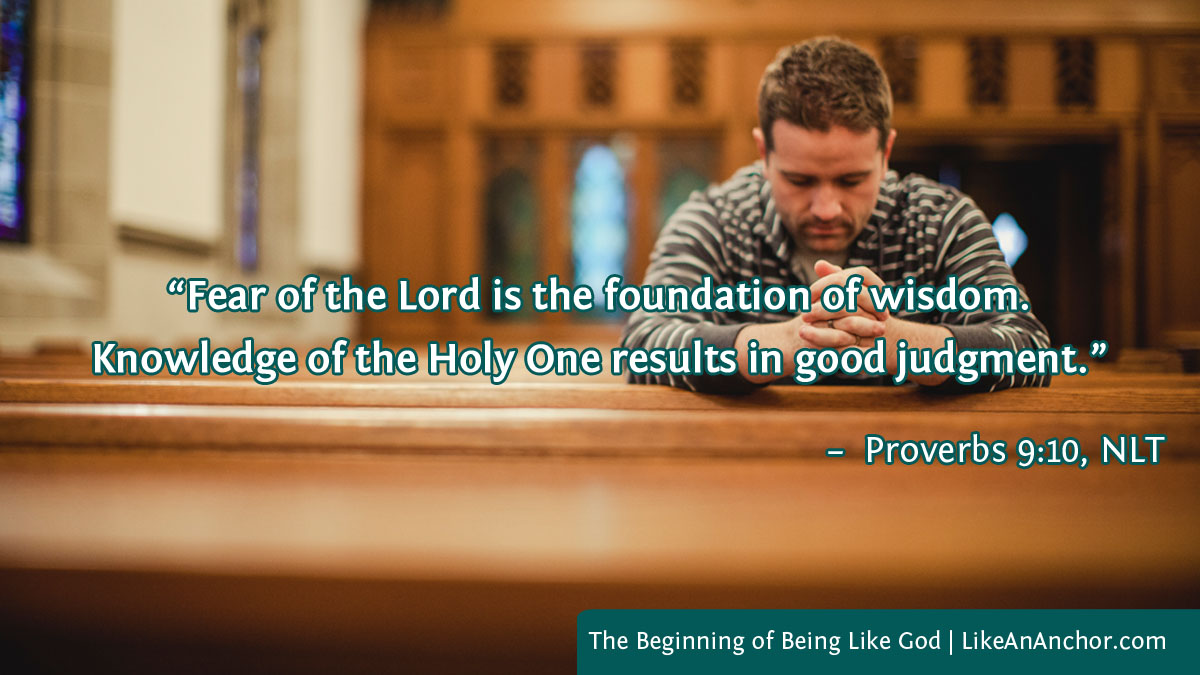
The Beginning of Being Like God

As we draw closer to the Passover and continue examining ourselves (as I talked about in last week’s post) I keep thinking about how vital our understanding of God is to understanding ourselves. Paul tells us to examine, evaluate, and discern ourselves (1 Cor. 11:28-32), but in order to do that we need the help of God’s spirit, as Paul talks about earlier in 1 Corinthians. To see ourselves clearly and know what needs to change (and how to make that change), we need a wisdom that we can only get by understanding God.

Understanding, Wisdom, and Fear

I like to study 1 Corinthians at this time of year because (as I wrote about in more detail a couple years ago), this epistle references the Exodus story, Passover, and the Feast of Unleavened Bread over and over. Before Paul begins talking directly about Passover, he expands on the idea that the wisdom of God is very different than what human beings speak of as wisdom (1 Cor. 1:18-31, quoting Jer. 9:23-24). Knowing and understanding the Lord is far more important than having wealth, power, or worldly wisdom. Echoing a sentiment expressed throughout scripture, Paul tells us a proper perspective on God is where true wisdom begins.

The beginning of wisdom is to fear the Lord,
and acknowledging the Holy One is understanding.

Proverbs 9:10, NET

The idea that we ought to fear a God of love seems odd to many of us, mostly because we think of fear in the sense of being terrified of something scary, dangerous, or bad. But I think the more we learn about God, the more we realize that our love for Him must also be mixed with awe, reverence, and even fear. A devotional book that I’ve been reading puts it this way:

when we approach the Holy One with casual familiarity, we do not take Him as seriously as we ought, and we do not take our sin as seriously as we ought. Fear–not of punishment but of the overwhelming greatness of God–sees Him correctly. When this fear grips us, we begin to understand the enormity of the gospel and of our God. That understanding begins to rearrange our lives. And that is what wisdom is all about.

CHRIS TIEGREEN, 365 POCKET DEVOTIONS, DAY 40

Understanding God leads to wisdom, which leads to us changing our lives. The more we know Him, the more we’ll want to be like Him, and the more clearly we’ll see what we need to keep working on in order to move closer to that goal. Wisdom begins with fearing the Lord, and change happens as we start to become wise.

Knowing God through His Spirit

After Paul explains that God’s people don’t often seem wise in the world’s eyes (and if they do, they’re not supposed to glory/boast about it), he starts to talk about “the wisdom of God hidden in a mystery.” God has decided to share with us deep, wonderful things that other people haven’t even imagined, and he has “revealed these to us by the Spirit” (1 Cor. 2:7-10, NET).

For who among men knows the things of a man except the man’s spirit within him? So too, no one knows the things of God except the Spirit of God. Now we have not received the spirit of the world, but the Spirit who is from God, so that we may know the things that are freely given to us by God. And we speak about these things, not with words taught us by human wisdom, but with those taught by the Spirit, explaining spiritual things to spiritual people. … we have the mind of Christ.

1 Corinthians 2:11-13, 16, NET

This is where we get wisdom–from God’s spirit working inside us and making our minds like Christ’s mind. The closer we draw to God the more we understand Him, and the more we understand Him the more in awe we are. And the more all of that comes together as we grow and change and learn, the more we become like God.

Wisdom Can Change Us

Real, godly wisdom is an incredible thing. Last year, I spent months studying and writing about wisdom in a series of 10 posts. We could write whole books about Godly wisdom, but a quick summary of the things God reveals about His wisdom can be found in James’s epistle.

Who is wise and understanding among you? By his good conduct he should show his works done in the gentleness that wisdom brings. … the wisdom from above is first pure, then peaceable, gentle, accommodating, full of mercy and good fruit, impartial, and not hypocritical. And the fruit that consists of righteousness is planted in peace among those who make peace.

James 3:13, 16-18, NET

A proper perspective on God is the starting place for this kind of wisdom. And much like fear is the beginning of wisdom, I think we can also say that wisdom is a beginning to being like God. Notice how much of this description of godly wisdom involves character traits we can develop and/or actions that we can take. If we want to examine ourselves, this is an excellent place to start. As we consider God’s goodness and greatness, learning more and more about who He is and how we can be like Him, we ought to meditate on the characteristics of His wisdom. Every aspect of “the wisdom from above” is a part of God; are they also a part of us?

Featured image by Pearl via Lightstock

Extroverts With Social Anxiety: A Rare Sighting?

This article by Katie Tyrrell first appeared on eCounseling.com on February 1, 2021. I love sharing posts about personality and mental health, and I’m so happy to have the chance to share this one about how social anxiety affects extroverts. It reappears here with permission of eCounseling. If you’d like to read an article about introverts and social anxiety, you can click here.

Social anxiety occurs when a person experiences anxiety symptoms in social situations or large groups. It is commonly considered to be an issue for people who are more introverted by nature. An introverted person may be someone who prefers to be alone and stay away from groups. An extrovert is seen as someone who enjoys being around other people and socializing in groups. It would seem obvious that only an introvert would experience social anxiety due to their preference of being alone. But what about extroverts? Do they experience social anxiety? 

Extraversion vs. Intraversion

Extraversion is a personality trait commonly associated with outgoing, social, and loud people. Introversion personality traits are associated with people who are quiet, reserved, and often keeps to themselves. These two concepts are viewed as absolutes in modern society, meaning a person is either an introvert or an extrovert. But is that true?

While there are only two groups for extroverts and introverts, each person has varying characteristics within those categories. Extroversion traits are not universal! People who consider themselves extroverts may have different comfortability in social situations than other extroverts. 

The traits fall along a spectrum from the most outgoing or social person to a very isolated or reserved individual. People tend to lean towards extroversion or introversion and have varying degrees of comfortability in different social situations. It is common that people have tendencies that would be attributed to both extroversion and introversion.

Some facets of extroversion include being sociable, warm, assertive, active, excitement-seeking, and having positive emotionality. Every extrovert’s scores in these facets will vary and are important to note as they account for the differences in extrovert personalities. 

For example, a person may love going out to a party but hate public speaking. This person would likely score high on the sociable and excitement-seeking spectrum but lower on assertiveness. Another extrovert may feel completely at ease in front of a crowd but struggle to make conversation at a party.

One way to evaluate if you lean towards extroversion or introversion is to consider what brings you joy and energizes you. For example, if you prefer to go out for drinks with friends after a hard day at work and enjoy the social life, you may lean towards extroversion. If you prefer to go home and relax on the couch in comfy clothes, you may lean towards introversion. Everyone likely enjoys these activities at different times; however, this simplified example may help you determine which way you lean on the spectrum.

family cooking a meal together

What is Social Anxiety?

Social anxiety is the fear of social situations usually associated with the fear of others’ judgment. Social anxiety disorder often leads to a person’s avoidance of social situations. When social situations are unavoidable, anxiety symptoms such as sweating, heart palpitations, shaking, or shortness of breath may occur. 

Social anxiety is a disorder that develops over time and is thought to result from environmental and genetic factors such as a bad social experience, early childhood trauma or family history of mental health issues. It is typically treated by seeking out a psychotherapist, with CBT [cognitive behavioral therapy] believed by many to be among the more effective treatments.

Extroverts with Social Anxiety

So, the question remains, do extroverts struggle with a social anxiety disorder? The answer is yes. Any person, regardless of personality traits, can develop a social anxiety disorder. Extrovert-leaning people tend to be drawn to social interactions more than introvert-leaning people; however, this does not keep them from developing anxiety in social situations.

While extroverts do struggle with social anxiety disorder, they may be less likely to develop social anxiety than introverts. Studies suggest that extroverted individuals are less likely to develop social anxiety disorder if they have high scores in the positive emotionality facet of extroversion. 

Positive emotionality is the tendency towards positive mood states such as happiness, excitement, confidence, and joy. This facet of extroversion is linked to lower levels of social anxiety and depression. Positive emotionality appears to be a protective factor reducing the risk of developing social anxiety.

Interestingly, extroverts tend to have higher positive emotionality levels, meaning they score higher on happiness assessments, positive social relationships, and emotional regulation than introverted individuals. These traits seem to serve as buffers guarding against social anxiety disorder.

How Common is It?

While it may be just as possible for extroverts to develop social anxiety disorders, it appears there are protective factors that extroverts possess more easily than introverted individuals. However, when social anxiety symptoms are present, they may be more debilitating for extroverts as they struggle to engage in the social environment. 

Social anxiety may interfere with the activities and events that bring extroverts pleasure, impacting their mental health more intensely than introverts. An introvert struggling with social anxiety can still engage in the reserved and quiet pastimes that bring them pleasure, despite the social anxiety struggles. 

It is not a rare sight for people with extroversion tendencies to experience a social anxiety disorder, though it is less likely than people with introversion tendencies. It seems more likely for people with introverted tendencies to experience social anxiety disorder exaggerated by their natural tendency for isolation.

About the author: Katie Tyrrell, MS, LPCC, is a licensed professional clinical counselor (LPCC). She has a passion for healing trauma using body-based somatic therapy. Katie believes that healing trauma and restoring physical and emotional health comes from healing the body and nervous system.

Featured image by Free-Photos from Pixabay