HSPs, Violence, and Guardians of the Galaxy

Honestly I have no idea what to write about for today’s post. Guardians of the Galaxy, which I recently watched? The book I just read about HSPs? How much I hate the head cold that kept me from attending a friend’s wedding?

Let’s go with a combo of the first two. My sister talked our whole family into going with her to see Guardians of the Galaxy yesterday. After being … less than impressed with the trailers, I found that I actually enjoyed the film for the most part. I’d thought it would be the characters or humor or plot that I didn’t enjoy, but that that wasn’t what bothered me.

It was the violence. You expect a certain level of violence in a Marvel superhero film. But at least in The Avengers they were trying to minimize casualties and none of the main characters enjoys killing. The Guardians (spoiler warning) do save an entire planet, but there’s a lot of collateral damage in a mining colony that no one seems concerned about, and Rocket Raccoon, Drax, and Groot are all seen laughing or grinning while killing people. The deaths are played for audience laughs too, like when Groot grows a tree limb through about 5 bad guys and batters them around inside a spaceships corridor to kill them and their companions. I think Peter Quinn and I were the only ones in the theater not laughing.

Sensitive to violence

If you take Elaine Aron’s self-test for High Sensitivity, one of the questions is “True or False: I make a point to avoid violent movies and TV shows.”

When I first took the test, I answered “false.” I wouldn’t watch things with what I considered excessive violence, but I would watch the occasional Criminal Minds episode and I had seen too many R-rated movies to count on one hand (but just barely, and most in a film class at college). Even so, during our yearly re-watching of The Lord of the Rings, I’d leave the room for most of the Battle of Helm’s Deep and if I was watching Henry V on my own I hit the skip button for Agincourt.

Now I think I’d answer “true,” mostly because I’m becoming more aware of how violence affects me and I’ve stopped trying to pretend that it doesn’t. I had to stop watching Criminal Minds because the nightmares got too bad (and even after I quit, they came back after reading Kristin Cashore’s Bitterblue). I wish I hadn’t seen X-Men: Days of Future Past in theaters because the battle scenes were so dark and raw. I’d still see it, but I’d have enjoyed it more on a smaller screen since I’m much more interested in character development than in impressive battle sequences. And now more recently, I find myself troubled by Guardians of the Galaxy.

Please tell me I’m not the only one who flinches when a character gets stabbed, punched, kicked, shot or otherwise maimed? That there’s other people who think even superhero movies could do with fewer explosions, mayhem, and destruction?

I suppose one solution would be to give up watching moves, but I’ll still go see Avengers: Age of Ultron for the same reason I let my sister talk me into seeing Guardians of the Galaxy. Marvel films are addictive. And hopefully in this one, there won’t be so much casual violence.

The Potter’s Hands (Free Will, Part 1)

A few weeks ago, a friend asked for my thoughts on “free will.” He’d written a blog post about the subject, and someone contacted him to say they didn’t believe in free will. The ongoing discussion has prompted a fascinating Bible study for me, and I think I’ll have to make this a two-part post to fit everything in.

The idea of predestination has a long history in Christianity. My understanding is it basically says God has foreknowledge of all things that will happen and predetermines who will receive salvation and who will not. The idea that God is all knowing would imply He knows things like how and when we will die and whether or not we’ll be in His family. And if He already knows the course of our lives, doesn’t that mean we don’t have free will?

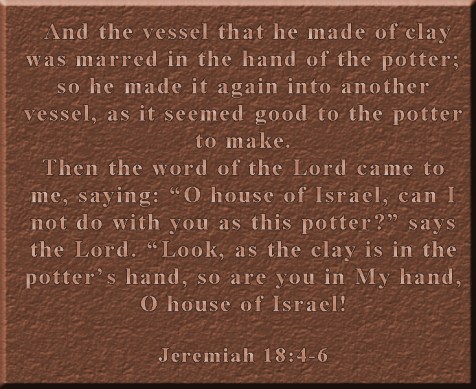
Does not the potter have power over the clay, from the same lump to make one vessel for honor and another for dishonor? What if God, wanting to show His wrath and to make His power known, endured with much longsuffering the vessels of wrath prepared for destruction, and that He might make known the riches of His glory on the vessels of mercy, which He had prepared beforehand for glory (Rom. 9:21-23)

At first, this scripture does seem to indicate that God determines our fates and we do not have free will because He shapes our lives. However, when we start looking at examples of how God deals with people, I think we see more evidence for free will than against it. While God does directly intervene to shape the course of some individual’s lives, we also have choices.

Dealing With Jonah

Let’s take the case of Jonah. If it looks like anyone in the Bible didn’t have freedom to choose his own path, it’s Jonah. He was told, “go to Nineveh, that great city, and cry out against it; for their wickedness has come up before Me” (Jon. 1:2). He decided that wasn’t a good idea, and we all know how God used a storm and a big fish to override Jonah’s decision and get him back on track.

So Jonah arose and went to Nineveh, according to the word of the Lord. Now Nineveh was an exceedingly great city, a three-day journey in extent. And Jonah began to enter the city on the first day’s walk. Then he cried out and said, “Yet forty days, and Nineveh shall be overthrown!” (Jon. 3:3-4)

The people of Nineveh responded with repentance, and “God relented from the disaster that He had said He would bring upon them, and He did not do it”( Jon. 3:10) The prophecy of Nineveh’s destruction still happened, but God changed the time-table to spare all these people who chose to repent (my study Bible says the destruction happened 100 years later). The Ninevites had free will.

And really, so did Jonah. God was determined to use him for the purpose of contacting Nineveh, but that didn’t stop Jonah from choosing to try running away and then choosing a bad attitude about God’s mercy toward Nineveh (Jon. 4:1-11).  Though God directly molded Jonah’s life, Jonah still chose how he would respond to God’s work.

Abraham’s Children

The life of Abraham is another example. In Genesis 15, the Lord promised Abraham a son and made a covenant with him. Then, after living in Canan for 10 years and having no children, Abram and Sari took matters into their own hands and conspired to create a son using Sari’s Egyptian servant, Hagar (Gen 16:3, 15). But this was not how God planned to give Abraham a son.

And Abraham said to God, “Oh, that Ishmael might live before You!” Then God said: “No, Sarah your wife shall bear you a son, and you shall call his name Isaac; I will establish My covenant with him for an everlasting covenant, and with his descendants after him. And as for Ishmael, I have heard you. Behold, I have blessed him, and will make him fruitful, and will multiply him exceedingly. He shall beget twelve princes, and I will make him a great nation. But My covenant I will establish with Isaac, whom Sarah shall bear to you at this set time next year.” (Gen. 17:18-21)

Though Abraham and Sarah did not act in the way God had intended, He worked with His peoples’ choice. God’s plan moved forward as He willed, but with the addition of Ishmael and all the consequences of his birth.

Ananias and Sapphira

A New Testament example of free will can be seen in Ananias and Sapphira. God does not tempt anyone with evil and does nothing for our harm (James 1:13), so I don’t think we can say that He set them up to fail or that they had no choice but to sin. This is born out by the wording in Acts when Peter confronts each of them about keeping back part of the price of the land they sold as a donation to the church.

But Peter said, “Ananias, why has Satan filled your heart to lie to the Holy Spirit and keep back part of the price of the land for yourself? While it remained, was it not your own? And after it was sold, was it not in your own control? Why have you conceived this thing in your heart? You have not lied to men but to God.” (Acts 5:3-4)

Though Satan is identified as putting the evil idea in his head, the blame for choosing to do wrong is laid squarely on Ananias (and later on Sapphira as well in Acts 5:8-9). Both these individuals had the power to chose what they did with their possessions, and they chose wrong.

Authority to Plan

I think the point of Romans 9:21-23 is not that we have no choice, but rather that God has the authority to make decisions regarding how He deals with individuals and shapes future events. If we back-up and look at the verses leading to this point in Romans, Paul is talking about Israel. He covers the issue of Abraham’s children (Rom. 9:6-9), and then moves on to Isaac’s sons.

And not only this, but when Rebecca also had conceived by one man, even by our father Isaac (for the children not yet being born, nor having done any good or evil, that the purpose of God according to election might stand, not of works but of Him who calls),  it was said to her, “The older shall serve the younger.” As it is written, “Jacob I have loved, but Esau I have hated.” (Rom. 9:10-13)

This is not telling us that Esau had no choice when he sold his birthright (Gen. 25:29-34), or that Jacob had no choice but to steal Esau’s blessing (Gen. 27:1-40). Nor does it mean Isaac and Rebekah were fated to pick favorites and set up a rivalry between their sons. It means God has a plan and He was going to carry it out using or (in spite of) the good and bad choices His people made.

What shall we say then? Is there unrighteousness with God? Certainly not! For He says to Moses, “I will have mercy on whomever I will have mercy, and I will have compassion on whomever I will have compassion.” So then it is not of him who wills, nor of him who runs, but of God who shows mercy. For the Scripture says to the Pharaoh, “For this very purpose I have raised you up, that I may show My power in you, and that My name may be declared in all the earth.” Therefore He has mercy on whom He wills, and whom He wills He hardens. (Rom. 9:14-18)

God chooses who to work with and who not to. I suppose you could say there are elements to predestination in this, since God pre-determines which people He will call in this life, which will be nudged toward completing His will, and which will be left to “time and chance” and their own devices.

You will say to me then, “Why does He still find fault? For who has resisted His will?” But indeed, O man, who are you to reply against God? Will the thing formed say to him who formed it, “Why have you made me like this?” Does not the potter have power over the clay, from the same lump to make one vessel for honor and another for dishonor? (Rom 9:19-21).

In my mind, this is actually one of the stronger arguments in favor of free will. We have free will, and God has free will. He get’s to choose how He interacts with His creation, and to a certain extent we get to choose how we interact with God. Even being chosen by God doesn’t necessarily mean we’ll end up in His family — Hebrews 6:4-6 tells us it is possible to “fall away” and reject God’s calling. And if someone is not being called by God right now, that doesn’t mean He is ignoring the choices they make. It’s possible to get His attention (Matt. 15:21-28) and to call upon His name (Rom. 10:13).

Any thoughts or comments? Notice something I missed? Have a scripture to add? One closely related topic that might come to mind is God’s omniscience and the extent of His foreknowledge. That’s what I’m focusing on next week.The Potter's Hands (Free Will, Part 1) | marissabaker.wordpress.com

Summer Cheesecake Bars

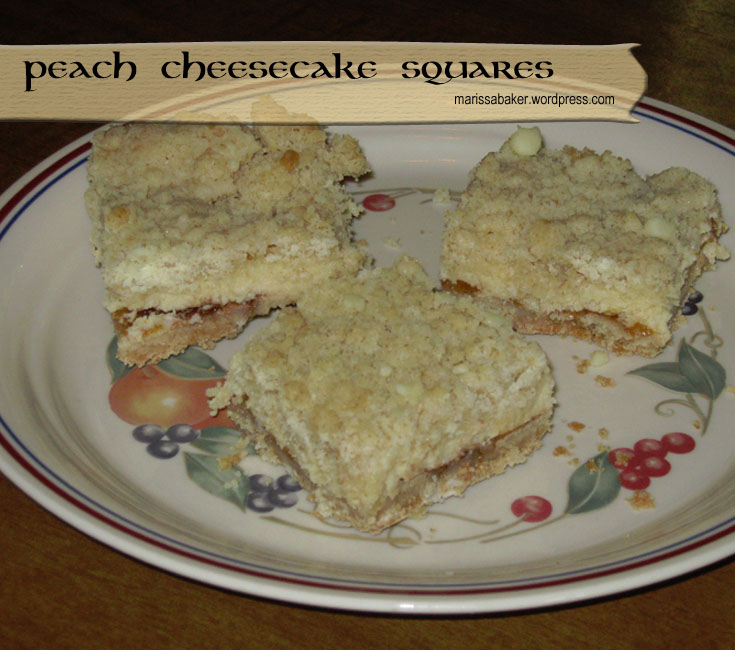
I’m re-sharing two recipes today that I’ve already posted because they’re just way too tasty to only share once. I’ve been making these fruit cheesecake bars for most of our get-together this summer, and they’re always popular. Both need fresh fruit, so this is the best time of the year to plan on enjoying them.

Peach Cheesecake Squares | marissabaker.wordpress.com
Click here to visit the recipe page for Peach Cheesecake Squares


Lemon-Blueberry Cheesecake Bars | marissabaker.wordpress.com
Click here to visit the recipe page for Lemon-Blueberry Cheesecake Bars

Best INFJ Images and Cartoons

I’m usually focused on serious stuff when discussing INFJs, but today I wanted something more lighthearted. We INFJs are deep thinking and often come across as serious, but we can also be fun-loving and positive. Many of us also like art and creative things, so you end up with doodles, comics, and cartoons describing us that range from screenshots with a caption to the elaborate “Care and Feeding of INFJs” Prezi. Here are a few of my favorites, but before we go any farther in this post …

A reminder

… I just wanted to remind you all that you’re invited to a Live Facebook event this Thursday evening (August 7th) at 8:00 pm EST for a company called Trades of Hope. Their mission is to give women around the world a chance to provide for themselves and their families by selling beautiful handmade items. The artists are from all over the world, and  you’ll learn more about them if you join us Thursday (you will need to friend me to access the event). There’s no pressure to buy, and I really do think you’ll find this company interesting and inspiring, as I do.

INFJ Images

I’m not sure this one was put together by an INFJ, but it was posted on the Introvert, Dear Facebook page, which is focused toward INFJs along with other introverts and HSPs.

It’s so true. People would tell me I should talk more in class, and one of the reasons I didn’t was because there’s so many ideas to sort through before you can decide what to actually say.

Love these “Type Heads.” They made some for each personality type.

click for more type heads

INFJ “Motivational Posters”

There’s a whole collection of those ubiquitous motivational posters made by and for INFJs. I found most on Pinterest and don’t know who originally put each one together.

Pin link
pin link
pin link

Just in case you were wondering, “No, we don’t see anything incompatible between the appreciation of love and beauty and that dangerous prairie dog.”

INFJoe Comics

The artist for these little comics is INFJoe. On his wordpress, he describes himself as “an INFJ joe amid extroverts, sensors, thinkers, and perceivers, and still trying to come to terms with it on a daily basis.”

from INFJoe
original post from INFJoe

INFJ Doodles

In my completely subjective opinion, I saved the best for last. The artist at Introvert Doodles posts one of these every day.

from INFJ Doodles. The artist said, “To enjoy any entertainment (book, movie, video game, tv show) I have to feel connected to the characters. That feeling of closeness lets me get lost in fictional worlds.”
from INFJ Doodles. I love this one. I can be obsessive about organizing some things, and others look like a tornado went through them.
from INFJ Doodles

Glory Shared With Us

One of the oft-repeated words in Christ’s prayer recorded in John 17 is “glorify” or “glory.” The very first words He says  are, “Father, the hour has come. Glorify Your Son, that Your Son also may glorify You” (John 17:1).  A few verses later, He adds,

I have glorified You on the earth. I have finished the work which You have given Me to do. And now, O Father, glorify Me together with Yourself, with the glory which I had with You before the world was. (John 17:4-5)

The subject of glorification starts becoming more personal to us a bit later, when Jesus says of His people, “I am glorified in them” (John 17:10). If having Christ glorified in you sounds spectacular, just wait until we read verse 22:

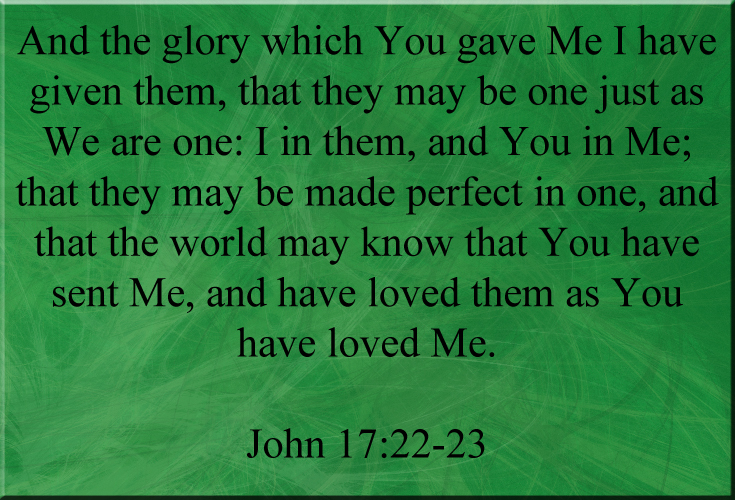
And the glory which You gave Me I have given them, that they may be one just as We are one (John 17:22)

At this point, we’re starting to see something incredible, something glorious, is being discussed here in John 17. We see Jesus and the Father glorifying each other, and Jesus sharing His glory with us. That last part is the one which most intrigues me. What does it mean?

δόξα

The word used for “glorify” is doxazo (G1392), which is derived from the word translated “glory.” That word is doxa (G1391). Zodhiates says it “can mean appearance, reputation, glory. It basically refers to the recognition belonging to a person, honor, renown.” It can also denote the “appearance, form, aspect” of someone, as in “God’s image and character. … It comprises all that God will appear to be in His final revelation to us.”

As Zodhates shifts his discussion to a Christian’s future glory, he says that doxa does not refer only to an outwardly glorious appearance, but to a glory within that makes the outside splendid. Doxa‘s derivative, doxazo, means “to glorify, recognize, honor, praise.” Most of Zodniates’ definition for this word in my study Bible is devoted to it’s use in John’s writings.

In the writings of John, the doxa of God is the revelation and manifestation of all that He has and is. It is His revelation in which He manifests all the goodness that He is (John 12:28). Since Christ made this manifest, He is said to glorify the Father (John 17:1, 4); or the Father is glorified in Him (John 13:31; 14:13). When Christ is said to be glorified, it means simply that His innate glory is brought to light, made manifest (John 7:39; 11:4; 12:16, 23; 13:31; 17:1, 5).

This definition explains several verses we quoted in John 17. Jesus glorified His Father by teaching people about the Father’s glory and revealing His character. God the Father glorified His Son by exalting Him and making His glory manifest in roles like High Priest, Good Shepherd, and Head of All Things to the Church. Their mutual glorification is about revealing Who and what They are to people.

Glory and God’s People

John 17:10, where Christ says, “all Mine are Yours, and Yours are Mine, and I am glorified in them,” shows we are to play a role in manifesting Christ’s glory to the world. If Jesus is being glorified in us, then our lives will be testaments to the honor and praise that belong to Him.

And whatever you do in word or deed, do all in the name of the Lord Jesus, giving thanks to God the Father through Him. (Col. 3:17)
Glory Shared With Us | marissabaker.wordpress.comWe talked about this idea two weeks ago, in the context of “whatever you do, do all to the glory of God” (1 Cor. 10:31). Our inside character, which comes out in our words and actions, should be proclaiming God’s glory, and attracting honor to Him.

The most intriguing verse, however, (to me at least) is when Christ says He’s given us His glory in verse 22. Let’s read some of the verses leading up to that.

I do not pray for these alone, but also for those who will believe in Me through their word; that they all may be one, as You, Father, are in Me, and I in You; that they also may be one in Us, that the world may believe that You sent Me. (John 17:20-21)

Jesus makes it clear that He’s talking about future believers — including us — as well as His disciples then. He emphasizes unity among the believers, and between us and God.

I, therefore, the prisoner of the Lord, beseech you to walk worthy of the calling with which you were called, with all lowliness and gentleness, with longsuffering, bearing with one another in love, endeavoring to keep the unity of the Spirit in the bond of peace. (Eph. 4:1-3)

Paul connects unity with walking in way that properly fits with our calling from God, and Jesus connects it with showing the world that He was sent by the Father. Much the same way, having love shows that we’re Christ’s disciples (John 13:35). It’s starting to sound like the ideas of manifesting, recognizing and showing forth that are carried with the word “glorify” are connected to this idea as well. And now we come to verse 22:

And the glory which You gave Me I have given them, that they may be one just as We are one: I in them, and You in Me; that they may be made perfect in one, and that the world may know that You have sent Me, and have loved them as You have loved Me. Father, I desire that they also whom You gave Me may be with Me where I am, that they may behold My glory which You have given Me; for You loved Me before the foundation of the world. (John 17:22-24)

Christ’s Glory

Jesus Christ has given us His glory? It seems astonishing, but that’s what He says. based on the definition of glory, this tells us that Jesus is giving us His form and appearance, His honor, reputation and character. (Just to clarify, I mean “give” in the sense of “share” rather than passing it along).

This just boggles my mind. To quote King David, “What is man that You are mindful of him?” (Ps 8:4). We don’t deserve God’s attention, let along a share in His Son’s glory. Yet that is what He is doing in, for, and to us.

Let this mind be in you which was also in Christ Jesus (Phil. 2:5)

And He said to me, “My grace is sufficient for you, for My strength is made perfect in weakness.” (1 Cor. 12:)

My little children, for whom I labor in birth again until Christ is formed in you (Gal. 4:19)

Christ’s mind in us … His strength in our weakness … His character formed in us … could these be other ways to express the same thing that’s going on when He says, “the glory which You gave Me I have given them”?

the mystery which has been hidden from ages and from generations, but now has been revealed to His saints. To them God willed to make known what are the riches of the glory of this mystery among the Gentiles: which is Christ in you, the hope of glory. (Col. 1:26-27)

Christ in us gives us present glory by association with His glory, and He is our hope of future glory where “we shall be like Him, for we shall see Him as He is” (1 John 3:2). I said earlier that glorification in John 17 is connected with revealing Who and what the Father and Jesus Christ are to the world. Their work to glorify us is connected with this same goal.

We are called “the light of the world,” and told “Let your light so shine before men, that they may see your good works and glorify your Father in heaven” (Matt. 5:14-16). As we press on toward future glory, let’s also be mindful of the glory we’ve been given now as Christ’s own special people, to glorify Him and the Father by how we live.
Glory Shared With Us | marissabaker.wordpress.com

Creamy Pesto Chicken

Creamy Pesto Chicken | marissabaker.wordpress.com

I made pesto a little while ago to go with some bread. Now we’re out of bread and I’m left with almost a full batch of pesto. Whatever should I do with it all? Here’s one answer (also yet another way to use the monster heads of broccoli out in the garden).

I’m sure it would taste even better with fresh pesto but, alas, I didn’t get my herb garden planted and I have no basil. Instead, I used a recipe I pulled off the Internet some years ago for dried basil pesto. It’s not as good, but it works in a pinch. If you haven’t any other pesto you like to use, scroll down to the end for that recipe.

Creamy Pesto Chicken

Creamy Pesto Chicken | marissabaker.wordpress.com1 pound chicken breast, thinly sliced

1 Tablespoon olive oil

2 to 3 cups rotini or bow-tie pasta

2 cups broccoli florets

1 can cream of chicken soup or substitute

1/3 cup pesto

1/2 cup milk

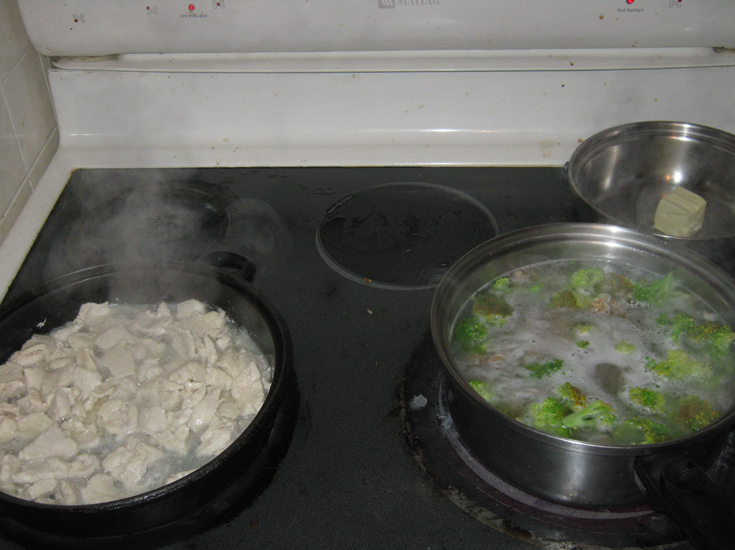
Cook pasta with broccoli until al dente according to package directions. Meanwhile, heat olive oil in skillet. Cook chicken until no pink remains.

Creamy Pesto Chicken | marissabaker.wordpress.com

Add cream of chicken soup, pesto, and milk to the skillet with the chicken. Bring to a boil and cook on low for 5 minutes. Add cooked pasta and heat through before serving.

Creamy Pesto Chicken | marissabaker.wordpress.com

Dried Basil Pesto

Homemade pesto from dried basil | marissabaker.wordpress.com
up close with the pesto

1/2 cup dried basil

1/4 cup walnuts

3 cloves garlic

1/2 cup Parmesan cheese

1/2 – 3/4 cups olive oil

Pulse first four ingredients in food processor until walnuts are chopped. Add olive oil and run blender for about 30 seconds. Chill until ready to use.