Thoughts On The New Doctor

I started watching Doctor Who a few years after “new Who” started, beginning with Eccleston and continuing on in order. I liked Nine, but fell in love with Ten. Even though I was still catching up at that point, knew it was coming, and had Matt Smith episodes that I could watch, I went into mourning for a month after he regenerated and refused to watch any of Eleven’s episodes. But I finally did, and I liked him almost instantly.

And then just a few years later he left. By that time I’d caught up with all the episodes, so there wasn’t the assurance of knowing who’d replace him. It was, in many ways, more traumatic than David Tennant leaving because on top of losing a Doctor I loved, I didn’t know who might replace him. It could have been anyone — a woman, an American (the Horror!), a non-Whovian …

… and then it was Peter Capaldi, and I stopped freaking out. That’s when some of my friends started freaking out, though — he’s too old and too grumpy and shouldn’t be trusted with our favorite character. But I had a good feeling about him for some reason.

SPOILER WARNING

I think I was right. It takes a while the first episode after the Doctor regenerates for him to settle into a personality, and he flitted through a few of the old ones before we got a good sense of who he’ll be now (including asking for a very long scarf and screaming “Geronimo”). Still, I think I’m going to like the Doctor this way. And I have very, very high hopes for the upcoming “Robot of Sherwood” episode (I’m a bit obsessed with Robin Hood legends. Actually Medieval things in general).

There’s plenty of in-depth reviews already, so I’ll just touch on a couple things I though were of note …

Steampunk title sequence! Last time they changed the title and music I was upset, but this time I liked it. I suppose the gears are actually supposed to make me think of time and watches rather than steampunk, but who cares — it was cool. Like bow ties.

The cameo appearance of Matt Smith might not have been surprising for some people, but it was for me. And it was splendid. Clara needed it, and I think some of Matt’s fans probably did, too. *cue sobbing*

“Girl In The Fireplace” is my favorite episode, so I loved the parallels here. Well, “loved” in the sense that I liked how it reminded me of this episode even though robots harvesting human beings for spare parts is bloody creepy.

Clara was splendid. There have been rumors floating around that Jenna Coleman will be leaving in the Christmas episode, and I really hope that’s not true. I’ve liked her as a companion, and I like her even more after seeing her stand up to Madam Vastra and try to convince The Doctor that she’s not an egomaniac by shouting “Nothing is more important than my egomania!”

One of my favorite scenes is where the Doctor is talking with a homeless man (didn’t catch his name, but planetclaire.org says it’s Barney) about his new face.

The Doctor: Why this one? Why did I choose this face? It’s like I’m trying to tell myself something. Like I’m trying to make a point. But what is so important that I can’t just tell myself what I’m thinking? I’m not just being rhetorical here. You can join in.
Barney: I don’t like it.
The Doctor: What?
Barney: Your face.
The Doctor: Well I don’t like it either. I mean it’s alright up to the eyebrows. Then it just goes haywire. Look at the eyebrows! These are attack eyebrows. You could take bottle caps off with these.
Barney: They are mighty eyebrows indeed sir.
The Doctor: They’re cross. They’re crosser than the rest of my face. They’re independently cross! They probably want to cede from the rest of my face and set up their own independent state of eyebrows. That’s Scot, I am Scottish and I’ve gone Scottish.
Barney: Yes you are. You are definitely Scot sir. I hear it in your voice.

Love the bit of Scottish attitude that’s showing up along with his new accent, and I particularly like the more reflective side we’re glimpsing in this Doctor as he puzzles over why he chose this face — what message his past selves are trying to send him. On the same subject, there’s a particularly heart-tugging line of dialogue at the end where he tells Clara, “You can’t see me, can you? You look at me and you can’t see. Do you have any idea what that’s like? I’m not on the phone, I’m right here. Standing in front of you. Please just… just see me.”

We see you, Mr. Capaldi. And you look like The Doctor. Not my Doctor perhaps, but certainly a Doctor we can learn to love.
Low Self-Esteem vs. Esteeming Self Less

One of the foundational things we have to recognize when coming to Christ is that we’re not worthy. The Bible makes it clear that the human “heart is deceitful above all things, and desperately wicked” (Jer. 17:9). We can’t earn salvation, and we have not done anything to deserve God’s love. This should fill us with humility as we enter a relationship with God, knowing He loves us even through we are nothing without Him.

But I know far too many people who get stuck on the “I am undeserving” part of this truth. Instead of finding our identity in Jesus Christ  and defining ourselves by our relationship with Him (“I’m a Christian”), we can be tempted to find our identity in the fact that we don’t deserve His forgiveness and love (“I’m worthless”). Maybe you’ve been told your whole life that “you’re not good enough,” and you’ve carried that into your relationship with God. Maybe you’re a perfectionist who’s stopped using your attention to detail to get things done right and started letting it rule your life so you feel useless unless you’re constantly giving 110%. Or maybe your self-lies are more like mine — that I’m not brave, strong, or clever enough to be of use to God.

Is this what God wants when He asks for humility? Do His instructions to think less of ourselves than of others mean He wants us to have low self-esteem? What does the Bible say about our value?

Marvelous Love

But God demonstrates His own love toward us, in that while we were still sinners, Christ died for us. (Rom. 5:8)

Low Self-Esteem vs. Esteeming Self Less | marissabaker.wordpress.comEven when we were sinners — working at cross-purposes to God — He loved us enough to die for us. God is love, and there is no greater example of this than the sacrifice of Jesus Christ to transform broken people who had done nothing to deserve His attention into something special.

Greater love has no one than this, than to lay down one’s life for his friends. You are My friends if you do whatever I command you. No longer do I call you servants, for a servant does not know what his master is doing; but I have called you friends, for all things that I heard from My Father I have made known to you. (John 15:13-15)

Look how Jesus describes His followers, as friends so valued He was willing to die for and share His thoughts with them. And those who follow Christ are not only His friends, but His family as well, and “He is not ashamed to call them brethren” (Heb. 2:11). Think of that. The One who knows you best — all your sins, weakness, foibles, and most secret thoughts — is not ashamed to say you are His family.

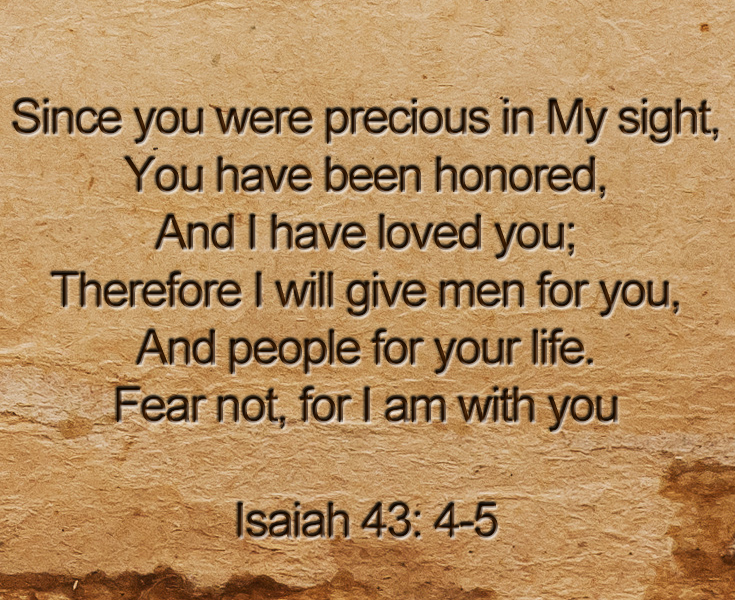
But now, thus says the Lord, who created you, O Jacob, and He who formed you, O Israel: “Fear not, for I have redeemed you; I have called you by your name; you are Mine.  … For I am the Lord your God, the Holy One of Israel, your Savior … since you were precious in My sight, you have been honored, and I have loved you; therefore I will give men for you, and people for your life. (Is. 43:1, 3, 4)

These early verses of Isaiah 43 are some of my favorite scriptures. I read them when I’m feeling lonely or doubtful of my worth in God’s eyes. Isn’t it a lovely reassurance of how highly God values His people? When God looks at you, He doesn’t think, “that person is worthless,” He thinks, “that person belongs to Me, and I love them.”

What We Are

So far, we’ve seen God call us precious, beloved, family, and friends. When we look a bit deeper into how He interacts with the church for today, we see even more evidence of how highly He values us.

Do you not know that you are the temple of God and that the Spirit of God dwells in you? If anyone defiles the temple of God, God will destroy him. For the temple of God is holy, which temple you are. (1 Cor. 3:16-17)

God must value us highly to call us “holy,” dwell inside us, and to destroy those who “defile” us. This part of the verse can be read as a warning to individual parts of the temple that we not become corrupt, and also as a warning to those who would set out to “subvert or corrupt” us as God’s temple. In that sense, it’s similar to God’s Isaiah 43 promise to protect and defend us. God is saying, “They are mine. I prize them highly, and I will fight for them.”

Or do you not know that your body is the temple of the Holy Spirit who is in you, whom you have from God, and you are not your own? For you were bought at a price; therefore glorify God in your body and in your spirit, which are God’s. (1 Cor. 6:19-20)

Jesus Christ thought we were worth paying the price of His life to redeem. In the words of Matthew Henry, “A spouse so dearly bought and paid for could not but be dearly loved. Such a price being given for her, a high value must needs be put upon her accordingly” (commentary on Song 4:8-14). Jesus did not redeem us so we could be worthless, weak, uninteresting, or whatever it is we call ourselves. He redeemed us to adopt as His siblings (Rom. 8:15-17), marry as His bride (2 Cor. 11:2), and give us a share in His glory (John 17:22; 1 John 3:2).

A Proper Attitude

So, what attitude are we supposed to have about ourselves? One thing we absolutely cannot do is allow the knowledge of how much God loves us lead to an idea that we’re something amazing in and of ourselves. God hates pride, arrogance, and vanity. When He says He values us highly, that’s not the reaction He’s looking for in return. Rather, the Lord requires us “to do justly, to love mercy, and to walk humbly with your God” (Mic. 6:8)

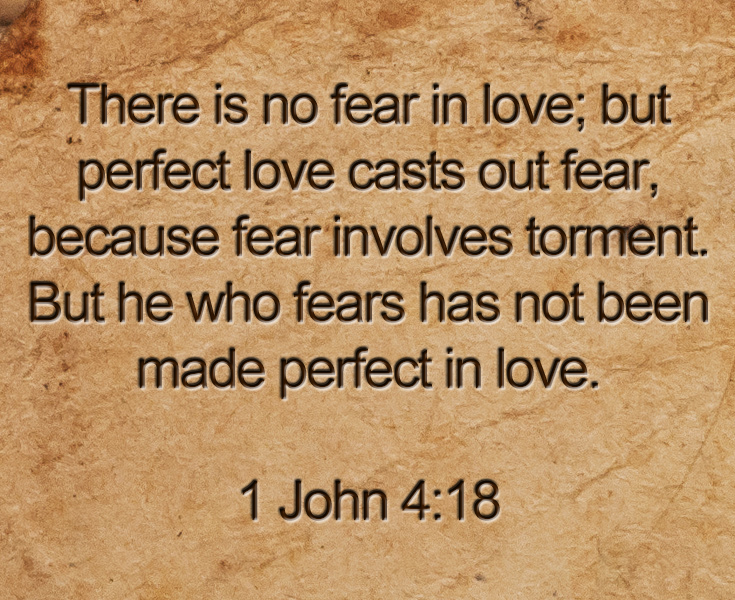
Low Self-Esteem vs. Esteeming Self Less | marissabaker.wordpress.comBut we can’t go to the opposite extreme either. If we tell ourselves we have no value, there’s a danger of becoming paralyzed by fear of doing something wrong and attracting attention to our own worthlessness. But that kind of fear has no place in a person where God’s love dwells (1 John 4:18).

Let nothing be done through selfish ambition or conceit, but in lowliness of mind let each esteem others better than himself. Let each of you look out not only for his own interests, but also for the interests of others. Let this mind be in you which was also in Christ Jesus (Phil. 2:3-5)

This is the key — having the mind of Christ. His was the most valuable human life ever, and yet He chose to use His greatness to serve others, first by giving up the glory He had before the world existed, then in how He lived His life, then by dying for us, and now by living as our High Priest and the Head over all things to the church. His every act on this earth was one of love and service and esteeming the needs of others as more important than His own. That’s the example we should be following.

When we find our identity in Christ and believe we are precious in God’s sight, we can be bold, courageous, and strong in Him (Heb. 4:16; John 16:33; Eph. 6:10). We are also humble, knowing the things that make us valuable come from our relationship with God and not from ourselves. And we esteem our brethren higher than ourselves, because they are also temples of God and we are called to serve and love them as Christ serves and loves us.

What to do with Zucchini?

It’s the Great Garden question — what do I do with all that zucchini taking over my garden? It seems to grow overnight. One moment it’s shorter than the length of my hand and the next moment it’s the size of a baseball bat. I usually stir-fry zucchini or turn it into bread (see recipe here), but I needed more options. So I turned to the ever-trusty Google for answers and found several recipes to try.

Do you have any favorite zucchini recipes to share? Link them in the comments below 🙂

Zucchini Recipes

Zucchini Muffins from Simply Recipe  is the first of these zucchini recipes that I tried. They have a really good flavor  — love the cinnamon and nutmeg. They’re neither too dry nor too moist. We had a Lord of the Rings-like conversation here when my mother, sister, and I were talking about how filling these muffins were and my brother got this guilty Hobbit-ish look on his face and said, “I’ve had three.”

Verdict: This recipe is definitely a keeper!

Roast Carrots and Zucchini “Fries” from Voracious Veggie. This is the very best way to cook carrots. They’re healthy and taste like candy. Since we like them so well, we thought we’d follow this blogger’s suggestion and cook zucchini the same way. Maybe I did something wrong, but they were gross. Soft, squishy, slimey — the texture was so bad I couldn’t even tell you if the taste was any good.

Verdict: keep the carrots, toss the zucchini

Zucchini Pistou from Baked Bree uses as it’s base a French version of pesto made with zucchini  as well as basil. It caught my attention because Bree’s pictures are so gorgeous. Mine didn’t look much like this (for one thing I ran out of basil and used walnuts instead of pine nuts in the pistou), but it had a pretty good flavor.

Verdict: I cooked too much pasta, which spread the sauce around too much, so I plan to try this one again and see if I can get it right.

Julia Child’s Zucchini Tian. This one is still on my to-do list. It’s doesn’t look hard, just a bit time consuming. I’m sure anything baked in that much cheese has to taste good, though 🙂


The Classics Club

In my never-ending search for new things to write about, I stumbled upon The Classics Club by way of Carissa’s post at Musings of an Introvert. I love classic literature (not really a surprise to most of you — if someone doesn’t like at least some classic literature they probably shouldn’t major in English), so why not come up with a reading list and blog about each title? That will give me topics for 10 of Mondays blog posts for the next five years.

The Classics Club | marissabaker.wordpress.com

The challenge for those who join The Classics Club is to make a list of at least 50 books and read through it in no more than 5 years. I thought 10 books a year would be thoroughly doable (to put this in perspective, I’ve read 45 books so far this year), and so I posted my list and I’m signing up today. Some of them are re-reads, but most of the ones on the list are new to me. The titles on the list may change as I read, but here are the one I’m starting out with (*indicates a re-read):

  1. Adams, Richard: Watership Down*
  2. Anonymous: The Arabian Nights
  3. Austen, Jane: Lady Susan
  4. Beagle, Peter S: The Last Unicorn
  5. Bradbury, Ray: The Martian Chronicles
  6. Bronte, Anne: The Tenant of Wildfell Hall
  7. Bronte, Charlotte: Villette
  8. Burke, Edmund Burke: Reflections on the Revolution in France
  9. Burnett, Frances Hodgson: A Little Princess*
  10. Burnett, Frances Hodgson: The Secret Garden*
  11. Burney, Frances: Evelina*
  12. Burney, Frances: The Wanderer
  13. Burroughs, Edgar Rice: Tarzan of the Apes*
  14. Cooper, James Fenimore: The Red Rover*
  15. Cooper, James Fenimore: The Water-Witch
  16. Dickens, Charles: Bleak House
  17. Dickens, Charles: Oliver Twist
  18. Dickens, Charles: The Mystery of Edwin Drood
  19. Dostoevsky, Fyodor: The Brothers Karamazov
  20. Doyle, Sir Arthur Conan: The Hounds of the Baskervilles
  21. Doyle, Sir Arthur Conan: The Memoirs of Sherlock Holmes
  22. Doyle, Sir Arthur Conan: The Sign of Four
  23. Dumas, Alexandre: The Count of Monte Cristo
  24. Eliot, George: Adam Bede
  25. Eliot, George: Middlemarch
  26. Gaskell, Elizabeth: North and South*
  27. Gaskell, Elizabeth: Wives and Daughters
  28. Hardy, Thomas: Far From the Madding Crowd
  29. Hawthorne, Nathaniel: The House of the Seven Gables
  30. Hawthorne, Nathaniel: The Scarlet Letter
  31. Homer: The Iliad
  32. Homer: The Odyssey
  33. Keats, John: Poems
  34. Leroux, Gaston: The Phantom of Opera
  35. Malory, Sir Thomas: Le Morte d’Arthur
  36. Montgomery, L.M.: Emily of New Moon
  37. Poe, Edgar Allen: Collected Stories and Poems
  38. Radcliffe, Ann: The Mysteries of Udolpho
  39. Rousseau, Jean-Jaques: Emile
  40. Scott, Sir Walter: Waverly
  41. Shakespeare, William: Henry IV, part 1
  42. Shakespeare, William: Henry IV, part 2
  43. Shakespeare, William: Measure for Measure
  44. Shakespeare, William: Othello
  45. Shelley, Mary: Frankenstein
  46. Stevenson, Robert Louis: The Black Arrow*
  47. Swift, Jonathon: Gulliver’s Travels
  48. Tolstoy, Leo: Anna Karenina
  49. Twain, Mark: The Adventures of Tom Sawyer*
  50. Wells, H.G.: The Invisible Man

Time and Foreknowledge (Free Will, Part 2)

Last week, I started writing about a question one of my friends asked regarding my views on free will. That post was part 1 and it has lots of background info for this post, so if you haven’t read it yet you can check it out here. Another aspect  of the question he asked, which I didn’t have time to get to last week, was “Do you believe God is omniscient, or do you believe there are limits to His knowledge of the future, etc.”

Omniscience basically means “all knowing,” and I suppose given these two options I’m going to have to go with saying that I believe there are some limits to God’s knowledge of the future. That’s the short answer 🙂 Here’s the long one …

God Knowing Us

Prophecy teaches us that God has knowledge of future events — fulfilled prophecy gives us proof that He was correct in the past and we have faith that He will also be correct about the future. God has a plan for where the world is heading, and He certainly has the power to get it there. This is the kind of thing we talked about last week when looking at the examples of Jonah and Abraham.

Continuing with these two examples, I’ve said I believe that Jonah, Abraham, and Sarah had free will in how they responded to God’s work in their lives. But the fact that God didn’t make the decisions for them doesn’t prove that He didn’t know how they would respond.

O Lord, You have searched me and known me. You know my sitting down and my rising up; You understand my thought afar off. You comprehend my path and my lying down, and are acquainted with all my ways. (Ps. 139:1-3)

Many verses speak of God knowing our hearts, but these are mostly present-tense, as far as I can tell. From perfect knowledge of what we are now, I suppose God has a pretty good idea of what we will be and how we will act in the future. I think we still have the potential to surprise Him, through.

I, the Lord, search the heart, I test the mind, even to give every man according to his ways, according to the fruit of his doings. (Jer. 17:10)

If God did know exactly how we were going to live our lives, however, why does He need to search our hearts to determine how to reward us? Probably the best example of this is Abraham’s test. God commanded him to sacrifice his only son, and Abraham was prepared to do so right up to the moment God stopped him. Up until Abraham was at the point where he was about to kill Isaac, it seems that God didn’t know how far Abraham would go to obey Him.

And He said, “Do not lay your hand on the lad, or do anything to him; for now I know that you fear God, since you have not withheld your son, your only son, from Me.” (Gen. 22:12)

God’s Foreknowledge

Some people use Psalm 139:16 to say God knows the day we will die and has all our days mapped out. The King James Version doesn’t give that sense at all, but other translations could. Here’s a few:

Thine eyes did see my substance, yet being unperfect; and in thy book all my members were written, which in continuance were fashioned, when as yet there was none of them. (KJV)

Your eyes saw my substance, being yet unformed. And in Your book they all were written, the days fashioned for me, when as yet there were none of them. (NKJV)

Your eyes saw my unformed body; all the days ordained for me were written in your book before one of them came to be. (NIV)

I really have doubts about this interpretation, though. Going back to the story of Nineveh, God told those people through Jonah that He would destroy their city in 40 days. We know “it is impossible for God to lie” (Heb. 6:18), so I can’t believe He told them this if he already knew He would delay Nineveh’s punishment (Jon. 3:1-10).

A similar case occurs in 2 Kings 20. King Hezekiah falls ill, and the Lord sends Isaiah the prophet to tell him, “Set your house in order, for you shall die, and not live” (2 Kings 20:1). Hezekiah prayed to the Lord …

And it happened, before Isaiah had gone out into the middle court, that the word of the Lord came to him, saying, “Return and tell Hezekiah the leader of My people, ‘Thus says the Lord, the God of David your father: “I have heard your prayer, I have seen your tears; surely I will heal you. On the third day you shall go up to the house of the Lord. And I will add to your days fifteen years. I will deliver you and this city from the hand of the king of Assyria; and I will defend this city for My own sake, and for the sake of My servant David.”’” (2 Kings 20:4-6)

Again, why would God tell Hezekiah that he was going to die if He already knew that He would give Hezekiah 15 years? This story is one of the reasons we have hope when we pray — because we know God hears us and can intervene to answer our prayers. If everything was predestined, what would be the point of praying? For that matter, what would be the point of obeying the commandments or being loving and faithful? As a commenter on last week’s post pointed out, “If there were no free will, then whether we believe in God & Jesus, and whether we love them or not, would be determined by God, not us. And if that were the case, then it would not be true faith and it would not be true love. For faith and love to be real, there must be a choice.”

Some Ideas About Time

From what I read in the Bible, along with a dab of theoretical physics and a heavy dollop of sci-fi, here’s my pet theory: assuming time and space are connected, then “a God who is not limited by space is not limited by time” (I got that from an old Moody science tape).  I hypothesize that God can step outside of time in a way and see how the potential outcomes are changing. He can look at the whole breadth of human history, read every nuance of the present, and predict and direct the course of events. He has a definitive end goal in mind, and He can directly intervene to accomplish that goal, but I think our specific futures are in a state of flux, changing as we make decisions.

Time and Foreknowledge (Free Will, Part 2) | marissabaker.wordpress.comI’m perfectly willing to admit there are flaws and gaps in my theory, and it might even be totally worthless, but it is what makes sense to me. I’d love to hear your thoughts/ideas/theories if you’d like to share them. 🙂 I really don’t think we can fully understand how God relates to time and the future right now — we can just see glimpses and try to make sense of the clues we are given.

“For My thoughts are not your thoughts, nor are your ways My ways,” says the Lord. “For as the heavens are higher than the earth, so are My ways higher than your ways, and My thoughts than your thoughts. (Is. 55:8-9)

In keeping with the fact that God’s thoughts are very different and much higher than ours, He has a unique view of time as well.

But, beloved, do not forget this one thing, that with the Lord one day is as a thousand years, and a thousand years as one day. (2 Pet. 3:8)

For a thousand years in Your sight are like yesterday when it is past, and like a watch in the night. (Ps. 90:4)

This is very confusing for us, trapped in a single moment of linear time. We have imperfect recall of our own past, second-hand knowledge of history and other people’s lives, limited understanding of the present, and dim ideas about the future. Compared to us, God is indeed omniscient, even if there are what we think of as “limits” to His foreknowledge.

Chicken and Broccoli Shells

Chicken and Broccoli Shells | marissabaker.wordpress.comThis recipe is one of the answers to the question, “What do you do with broccoli heads the size of bowling balls?” Seriously, that’s how big these things are. I’ve never seen broccoli grow this large. We weren’t able to use it all before they started to bloom, but the plants we cut are already producing side-shoot broccoli heads. If you’ve grown broccoli, you know the second heads are significantly smaller than the first ones. For these plants, that means they are size of broccoli you see in the grocery store.

Chicken and Broccoli Shells

2 whole skinless, boneless chicken breasts cut in 1″ cubes

2 teaspoons vegetable oil

1 1⁄2 cups chopped broccoli, fresh or frozen

2 cups chicken broth

1 can (10.5 ounces) cream of chicken soup

1/2 teaspoon pepper

2 cloves garlic, minced

2 cups small shell pasta, uncooked

1 cup (4 ounces) cheddar cheese, shredded

Heat oil in skillet over medium-high heat. Add chicken and cook until no longer pink. Add broccoli, broth, soup, pepper, garlic and pasta. Bring to a boil.

Chicken and Broccoli Shells | marissabaker.wordpress.com

Reduce heat to lowest setting, cover, and simmer for 15-20 minutes, or until pasta is tender. Stir occasionally to prevent sticking. Check near the end of cooking and add a small amount of water, if needed. Stir in cheese during last two minutes of cooking.

Chicken and Broccoli Shells | marissabaker.wordpress.com