10 Self-Care Tips for Highly Sensitive People and Introverts

When was the last time you did something to care for yourself?

According to a definition used on PsychCentral, “Self-care is any activity that we do deliberately in order to take care of our mental, emotional, and physical health.” Most of us practice at least a little bit of self-care every day with basic tasks like brushing our teeth and making sure we eat something. But self-care should go farther than just enough to keep us functioning.

Self-care isn’t a selfish thing. It’s about recognizing and meeting our own needs and taking the time to recharge so we can bring the best version of our authentic selves into every area of our lives.

While self-care is important for everyone, I want to focus today’s post on self-care tips for highly sensitive persons and introverts. Even though there are highly sensitive extroverts, it’s still true that HSPs and introverts have similar self-care needs. It’s easy for both to get overwhelmed by the demands of every-day life and we need time to slow down and take care of ourselves. I hope the 10 tips in today’s post will help you do just that.

1) Listen to yourself

It’s amazing how easy it is to ignore what your own body is trying to tell you. We often keep pushing ourselves, trying to get through things without caring how it’s affecting us. Something as simple as taking a few minutes to pause and assess yourself can do wonders for your mental and physical health. It’s always good to catch negative feelings or stress early and take the time and do some quick self-care right then. The sooner you deal with something, the less likely it is to come back and bug you later.

2) Drink tea

I used to hate tea, but a couple years ago I discovered I just didn’t like (most) teas from the tea plant. Herbal teas on the other hand are a wonderful thing. Whatever type of tea flavor you prefer, consider picking one without caffeine so it’s more relaxing and won’t increase anxiety. Read more

How Do I Know If I’m an INTJ or an ENTJ?

When someone’s looking for their Myers-Briggs® type I usually suggest they take several different tests and compare results. But what happens when you get different results, say, INTJ in one test and ENTJ on another? Or maybe you take the tests a couple months apart and get different answers, or start reading about the different types and discover more than one that sounds a lot like you.

If you’re trying to decide whether you’re an INTJ or an ENTJ, I hope this article will help. Just looking at the names of these personality types, we might think the only difference is that one is more extroverted than the other. That’s only party true, though. When we dive deeper into the cognitive functions that describe the mental processes each Myers-Briggs® type uses, it gets easier to see the differences and similarities between these two types more clearly.

If you’re not familiar with cognitive functions, click here to read “The Simplest Guide to Myers-Briggs® Functions Ever.” INTJ and ENTJs both use the same cognitive functions. They just use them in a different order of preference, as shown in this graphic:How Do I Know If I'm an INTJ or an ENTJ? | LikeAnAnchor.com

The way these cognitive functions work together makes ENTJs and INTJs very different in certain ways and very similar in others. Thankfully for those wanting to figure out which of these two types they are, several key differences in how INTJs and ENTJs learn information and approach the world make it possible for us to tell these types apart. Read more

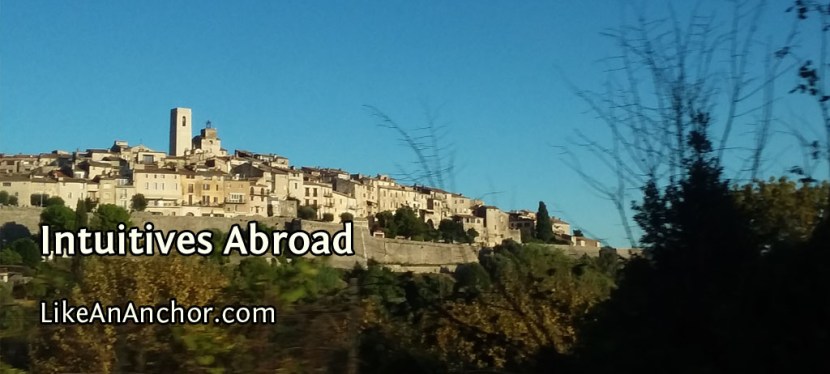
Intuitives Abroad

I’ve safely returned from my trip to France, though not without a few complications. Flying with a nasty headcold scores a 0 out of 10 and I would not recommend it. Thankfully my brother and sister were healthy and navigated the airports for me so I could just follow them around in a congestion-induced stupor and focus on breathing.

That was only a shadow over the last couple days of trip, though. Most of the experience was fantastic. Before this, I’d never been any farther outside the United States than the Canadian side of Niagara Falls. Then all the sudden I’m getting on a plane in Detroit, waking up the next morning in Paris, and walking down streets older than the country I live in. We had one day in Paris, then flew to Nice and took a bus to Saint-Raphaël. We were there on the Mediterranean coast for about a week, during which we also visited Saint Paul de Vance (pictured in the featured image for this post), Monaco, and Cannes.

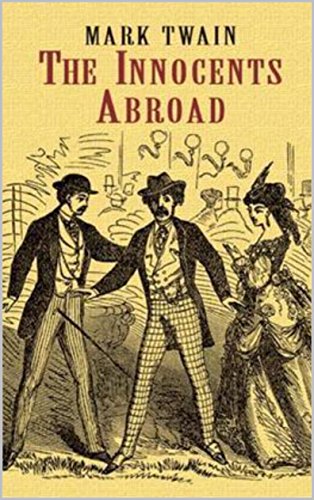
Visiting Paris with Mark Twain

I took this trip with my siblings, so our little group consisted of an INFJ, INTJ, and ENFJ (hence the title of this post, which I’ve been planing on using for a while now and am still endlessly pleased with). I started reading Mark Twain’s Innocents Abroad while on the trip, mostly because I wanted to nod to it in a blog post title once we got home. I love the books by Twain that I’ve read, but even though this was the one that sold best during his lifetime I hadn’t read it before.

It’s interesting to read Twain’s record of his visit to Paris in 1867 with our own visit 152 years later. Our experience with French food was similar, with unfamiliar dishes accompanied by “wine with every course, of course, being in France.” Like Twain, on visiting Notre Dame “we recognized the brown old Gothic pile in a moment” even with the recent fire damage making it impossible for us to go inside. We also visited the Louvre like Twain and his companions, though we seem to have been more impressed by “its miles of paintings by the old maters” than he was. Read more

How Do I Know If I’m an INFJ or an ENFJ?

One of the questions that often comes up after someone learns about Myers-Briggs® types is how to tell which of two similar types they are. Maybe you took a few different online tests and they gave you a couple different results. Or maybe you started reading about the types and discovered more than one that sounds a lot like you.

If you’re trying to decide whether you’re more of an INFJ or an ENFJ type, I hope this article will help. Just looking at the names of these personality types, we might think that the only difference between them is that one is more extroverted than the other. This is only party true. When we dive deeper into the cognitive functions that describe the mental processes each Myers-Briggs® type uses, it become easier to see the differences and similarities between these two types more clearly.

If you’re not familiar with cognitive functions, click here to read “The Simplest Guide to Myers-Briggs® Functions Ever.” INFJ and ENFJs both use the same cognitive functions. They just use them in a different order of preference, as shown in this graphic:How Do I Know If I'm an INFJ or an ENFJ? | LikeAnAnchor.com

The way these cognitive functions work together makes ENFJs and INFJs very different in certain ways and very similar in others. The two types can often find lots of common ground and make great friends. But there are also several key differences in how they learn information and approach the world that makes it possible for us to tell these two types apart. Read more

Personality Type Myth-Busting: What’s The Rarest Personality Type?

Note: before you read this post, you should know that it quotes outdated information about type distributions. Currently, ENTJs are the rarest type in the population. I may rewrite/update this post at some point in the future, but for now you can read more about current type distributions at this link: “How Rare Is Your Myers-Briggs® Personality Type?”

As an INFJ, I often see people talking about how it’s the rarest personality type. According to every type distribution I’ve seen this statement is true. However, I’ve also seen quite a few INFJs treat this rarity as if there’s a huge gap between how rare we are compared to the other personality types. Some also treat this rarity as meaning that we INFJs are so rare no one else can relate to us and/or that it makes us extra special.

While INFJs are the rarest type overall, there are other types that are almost as rare. And when we break type distributions down by gender, INFJ is not the rarest type among women (though it is among men). You can see the Estimated Frequencies of the Types in the United States Population in this chart:

Personality Type Myth-Busting: What's The Rarest Personality Type? | LikeAnAnchor.com

Relative Rarity For Each Type

As you can see from the type distribution chart at the start of this post, most of the Intuitive types each make up less than 5% of the population. The estimates from Center of Application for Psychological Type cover a pretty broad range, though. The Myers-Briggs® Foundation offers more specific estimates in addition to the ranges. These percentages pin-point INFJ at 1.5%, ENTJ 1.8%, INTJ at 2.1%, and ENFJ at 2.5%. They’re all pretty rare. Read more

7 Fictional Characters That You’ll Relate To If You’re An INFJ

What fictional characters do you relate to as an INFJ?

Just as we can describe real people using the Myers-Briggs® typology system, we can also type well-written fictional characters. Some of fiction’s most iconic and intriguing characters are INFJs and today we’re going to talk about seven that I think real-life INFJs will find relatable.

One great thing about looking at character personality types is that it helps us better understand people who have different types than we do. Fictional INFJs can serve as examples for what real-life INFJs might be like, and also show how much variation can exist between individuals with the same type.

The things that makes INFJs such great fictional characters are some of the same things that make them such interesting people. Though the rarest personality type on the planet, INFJs are fairly common in fiction. They’re thoughtful, introspective characters with a unique way of looking at the world and a keen interest in other people.

Alyosha Karamazov

It’s fascinating to read the narrator of Fyodor Dostoevsky’s The Brothers Karamazov discuss the story’s hero Alexi Karamazov (more often called by his nickname Alyosha/Alesha). He spends most of the introduction apologizing for presenting readers with such an unusual hero. “He is by no means a great man,” the narrator explains, but he is doubtless “a strange man, even an odd one.” He was strange “from the cradle,” growing up a quiet child preoccupied by something inside him while at the same time loving people. I’m sure many INFJs can relate to that in their own childhoods — liking other people but being too preoccupied by their inner worlds to be considered sociable.

As the story progresses, we see Alyosha dreads conflict with a loathing that I think all INFJs (and the other FJ types as well) can relate to. We see him weeping when others are hurt, displaying the empathy that’s so much a part of real-life INFJs. We see him make social blunders in an effort to make everyone happy and at peace, all with an INFJ’s insistence on working toward harmony in all situations. Like so many INFJs, he’s sensitive, emotional, indecisive on certain things (though quite decisive in others), and isn’t afraid to appear weak so long as he’s being true to his beliefs. Read more