One phrase I frequently pray is, “Thank you for bringing us from darkness into light.” It’s an incredible blessing that each believer partakes of. Without God the Father drawing us to His Son, the Light of the world, we wouldn’t even know the world around us is in darkness.
Do we really understand and value this light, though? And, equally important, do we live in the light now that we’ve been called to follow the Light?
It’s not a popular thing in today’s society to make distinctions between right and wrong, holy and profane, light and darkness. But that’s something we must do because it is something God does. We have to know the difference between light and darkness so that we can choose the light and live in relationship with God.
Confusing Light and Dark Hurts God
When we read the phrase “woe to those who ___” it seems like a scary, sobering pronouncement. It means great sorrow or distress, which is what comes on those who forsake God. Hebrew carries another shade of meaning as well. “Woe” is hoy (H1945), which is an exclamation like ah! alas! ha! O! In the sort of context we’re looking at today, we can read this word as a cry of grief and despair from God at seeing the evil His people are doing that’s leading them away from the light.
Woe to those who call evil good, and good evil; who put darkness for light, and light for darkness; who put bitter for sweet, and sweet for bitter! Woe to those who are wise in their own eyes, and prudent in their own sight! (Is. 5:20-21, WEB)
God has good reason to exclaim hoy! over these people, for He knows what happens to those who “have rejected the law of Yahweh of Armies, and despised the word of the Holy One of Israel” (Is. 5:24). Spoilers: it’s not pretty. Read more →
This article first appeared on MadebyHemp. Last year, I did some writing work for a client who sold health food products. While researching their articles, I became intrigued by the promising research being done into CBD oil (though I haven’t yet tried it myself). So when a representative from Made By Hemp suggested we could promote some of each other’s articles, I thought my readers might find the content useful. Today’s post is an informative article about the different types of hemp oil and their uses.
We live in a society that is constantly reaching for the next level of peak health and appearance, using only naturally effective methods.
No pressure, right?
Despite this never-ending climb, one little plant is paving the way for people to reach their health and wellness goals: hemp. Hemp oil is a nutty and flavorful oil that is extracted from the stalks or seeds of the hemp plant. There are different uses for each type of hemp oil, each offering its own array of uses and unique wellness benefits.
Three Powerful Uses for Hemp
Hemp oil’s benefits are so bountiful and unmistakable that scientists studied it in-depth even while it was banned in most of society, including the U.S. Thankfully, the 2018 Farm Bill completely cleared the air and legitimized hemp’s legality by separating it from its notorious cousin, marijuana. Both are from the cannabis family, but hemp doesn’t get you high.
There’s no doubt more benefits will be discovered, but for now, let’s jump into what hemp oil has already proven.
Hemp seed oil for cooking
Hemp seed oil offers a healthy alternative to vegetable oil, canola oil, or butter. Read more →
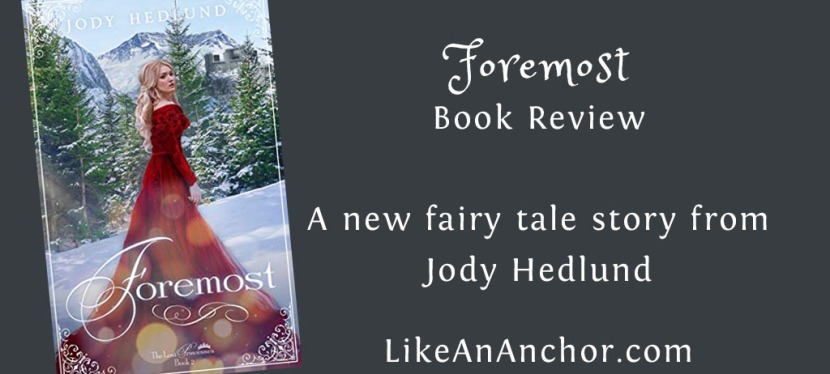
A second princess, another key to the treasure, and a cruel king desperate to squelch the growing rebellion.
If you’re looking for a wholesome and sweetly romantic series for your teens and young adults (or yourself — there’s no age limit!) then you’ll want to check out Jody Hedlund’s new Lost Princesses fairy tale series. The series started with prequel novella Always and novel Evermore, and now it continues with Foremost.
Mild spoiler warning: I’m not going to disclose any major plot points but if you don’t want to know anything about the plot and character relationships before reading this book then you’ll want to skip my post for now.
The story of Foremost
Raised in an isolated abbey, Lady Maribel desires nothing more than to become a nun and continue practicing her healing arts. She knows nothing outside her cloistered world but that doesn’t bother her much. She has all the friends she needs in the nuns, their protector Wade, and her fellow orphans Edmund and Collette. Sure she feels trapped sometimes and longs for a little adventure before settling down, but she does intend to take her vows and settle into life as a nun.
Adventure finds her with the arrival of an unexpected visitor who reveals Maribel’s true identity as one of the three lost princesses. With wicked King Ethelwulf’s soldiers hunting her, Maribel must leave the abbey and travel to join her sister, Queen Adelaide Constance. Edmund goes with her as her protector, hoping and praying she won’t discover that he loves her as far more than an adopted sister. He will not stand in the way of her dreams to become a nun and a healer, no matter what it costs him. Read more →
How many versions of you are there? Are you a different person behind the wheel of your car than you are when speaking to your grandmother? Do you play one part at work and another part with friends on the weekend? Do you hide parts of yourself or change the way you present yourself based on circumstances?
We all do this. To a certain extent, it’s useful to make your behavior fit the context. You don’t want to wear the same clothes, for example, to grub out a stump in the backyard as to attend a wedding. But when the change is more extreme — polite to a date but angry and vindictive when driving in traffic — it can be a problem.
Integrity comes form the Latin word integer, meaning something whole and complete in itself. If you are a person with integrity then there is only one version of you (“The True Meaning of Integrity” by So-Young Kang). You act with honesty and live by strong moral principles whether or not someone is watching. People with integrity apologize when they are wrong or cause inconvenience, they refuse to act viciously even when fighting, and they give others the benefit of the doubt (“7 Signs of People With Integrity” by Seth Meyers).
It’s very difficult to live with complete wholeness and consistency. And it’s well-nigh impossible to do so if you don’t know who you are and what you believe. As the Biblical writer James said, “he who doubts is like a wave of the sea, driven by the wind and tossed” (James 1:6, WEB). We need an anchor for our identity if we’re to live with integrity. Read more →
What fictional characters do you relate to as an ESTJ?
Just as we can describe real people using the Myers-Briggs® typology system, we can also type well-written fictional characters. Some of fiction’s most iconic and intriguing characters are ESTJs and today we’re going to talk about seven that I think real-life ESTJs will find relatable.
One great thing about looking at character personality types is that it helps us better understand people who have different types than we do. Fictional ESTJs can serve as examples for what real-life ESTJs might be like, and also show how much variation can exist between individuals with the same type.
The things that makes ESTJs such great fictional characters are much the same things that makes them such interesting people in real life. They tend to be well organized, disciplined, and skilled at making tough decisions. This makes them excellent leaders, something we see in most of the ESTJ characters on this list.
Bryan Mills
I haven’t seen Taken, but Susan Storm lists Bryan Mills as the ESTJ in her post “The Greatest Movie Heroes of Every Myers-Briggs® Personality Type.” She says that he “He embodies the quick-thinking precise nature of the ESTJ. He knows how to take charge, create an effective plan, and can easily give instructions to other people over the phone on how to move forward.” Like so many TJ types, he’s able to put emotions aside and take decisive, logical action.
As for the other aspects of his character, Susan says, “Mills shows his Introverted Sensing (Si) in the way he systematically pays attention to everything around him.” Like other ESTJs, he’s a detail-oriented person and can easily recall important information. He also relies on skills acquired in his past to solve the problems of his present situations — something SJ types tend to do very well.
Quote from Taken (2008). Image: Liam Neeson as Bryan Mills
Eve Baird
Eve Baird from The Librarians is a fairly stereotypical example of an ESTJ in fiction, embodying the ESTJ’s blunt demeanor, no-nonsense attitude, and ability to keep things moving forward. ESTJs like Eve are grounded in reality and care about keeping the world running as it should be, a trait Eve devotes to keeping the Library safe and magical artifacts out of the wrong hands. Though she can seem gruff, she’s very loyal and cares deeply about people (a TJ trait that’s often overlooked).
Like other ESTJs, Eve’s preferred mental process of Extroverted Thinking involves measuring and managing impersonal criteria when making decisions. There are examples of this in literally every episode. Her co-pilot process is Introverted Sensing, which filters everything she learns learn through the lens of her own memories and experiences. That’s not to say ESTJs are inflexible. Once given enough information to work with, they’re quick to adapt their actions to match the situation. Anything else would be inefficient. This is partly due to the fact that they prioritize effectiveness, and partly due to their tertiary Extroverted Intuition.
Quote from The Librarians Season 2, episode 9 (2015). Image: Rebecca Romijn as Eve Baird and Noah Wyle as Flynn Carsen
Leia Organa
Leia Organa of the Star Wars saga has a much different personality type than your typical princess figure in fiction. Most are Feeling types, but Leia’s response to Darth Vader, her criticism of her seemingly inept rescuers in A New Hope, and the way she instantly takes charge of every situation are characteristic of dominant Te types. She’s a take-charge sort of person who is fiercely loyal to family and values, and expects the same level of commitment from others.
Like other Sensing types, Leia’s focus is on the here and now. Even through she and the Rebellion (and later the Resistance) are fighting to change the future of the galaxy, she does that by shaping the present in a practical way. Her strengths as an ESTJ type make her a fantastic leader both in the Rebellion against the Empire and, later, in a variety of political and leadership roles. She also makes good use of her tertiary Extroverted Intuition (especially later in life) to help her see multiple solutions to problems and adapt quickly to changing situations.
Quote from of The Last Jedi (2017). Image: Carrie Fisher as Leia Organa
Nick Fury
Nick Fury from the MCU might be more of an ENTJ than an ESTJ, but I include him on this list because I think ESTJs will find the way he uses the TJ side of his personality relatable and (depending on how you read his character) there’s also an argument to be made that he is an ESTJ type. Either way, Fury leads with a strong Extroverted Thinking function and (like many real-life ESTJs) he’s good at crashing through red tape to get the job done. He has zero patience for people who make stupid decisions, and he has cultivated the power needed to go around them.
Fury is motivated to make the world a safer place, even if he has to do that in ways that make other people like ISFJ Captain America uncomfortable. He’s concerned with the big picture and future security (more typical of ENTJs, but could be an ESTJ’s tertiary Extroverted Intuition). He is also highly pragmatic and makes decisions based on what he has learned in the past (more typical of ESTJs).
Quote from of The Avengers (2012). Image: Samuel L. Jackson as Nick Fury
Olivier Armstrong
If you haven’t yet watched Fullmetal Alchemist Brotherhood I highly recommend it. It’s full of amazing characters, including ESTJ Olivier Armstrong. She is an extremely talented leader who commands absolute loyalty from her troops. While people might see her (and, in many cases, real-life ESTJs) as harsh and critical, those who get to know her find her scrupulously honest and see she doesn’t expect anything less of herself than she demands from others.
Major General Armstrong is the sort of character who self-confident, aggressive, go-getting ESTJs will find highly relatable. She doesn’t let other people, circumstances, or even herself stand in the way of what she wants to accomplish. She lives in a world of concrete facts and is devoted to a strong, efficient moral code much like many real-life SJ types.
Quote and image from Fullmetal Alchemist Brotherhood).
Peter Pevensie
Peter Pevensie has been my favorite character from The Chronicles of Narnia since seeing the 2005 movie for The Lion, The Witch, and the Wardrobe (I didn’t read the books until later). In our modern world, ESTJs have a reputation for being the hard-hitting, no-nonsense types that steamroll anyone in their way. Peter’s an example of the more gentle, guardian-like role that characterizes certain ESTJ types.
Like many ESTJs, Peter likes to be in charge but he doesn’t abuse his power. He uses it for others’ good, and is reliable, practical, and logical in all his roles from eldest sibling to high king. He takes his responsibilities very seriously, even making them part of his identity, and has a hard time adjusting to the real world once he has to leave Narnia. Like many real-life SJ types, he doesn’t like change and it takes him a while to figure out how to navigate new situations if he doesn’t have an existing framework for interpreting reality.
Quote from The Lion, the Witch, and the Wardrobe by C.S. Lewis (1950). Image: William Moseley as Peter Pevensie
Tiana
Like many real-life ESTJs, Tiana from Disney’s The Princess and the Frog is never shy about sharing her thoughts or making decisive decisions. She’s assertive and expressive in the face of friends, creditors, and villains alike. With her strong work ethic, family-focus, and adherence to doing what’s right, Tiana is strong example of the SJ Guardian type. She also has another trait I’ve noticed in SJs — they are, as Naveen observes, “secretly funny.”
Even better, Tiana isn’t an SJ stereotype. Many people assume types using Introverted Sensing as one of their functions are unimaginative, solidly traditional, and somewhat boring. That’s far from being true. Like other Sensing types, SJs are concerned with taking in information about the world around them, but they’re also interpreting that information in a highly subjective way. And so you get Tiana, building up a dream of the future that doesn’t look practical to outside observers, but makes perfect sense within her framework of reality. Her dream is solid, detailed, planned, and responsible.
Quote and image from The Princess and the Frog (2009)
What did you think of this list? If you’re an ESTJ, which fictional characters do you relate to best? Is there anyone you’d add to or take off of this list? I’d love to hear your thoughts!
A few weeks ago, I was in a conversation with someone who quoted Ben Shapiro saying, “Facts don’t care about your feelings.” The tension between facts and feelings is a topic that’s been coming up quite a bit in discussions recently for me, as I’ve talked with people who are frustrated by how many people today ignore scientific research related to several issues that I don’t want to get into right now. My reason for bringing this up is that listening to these comments prompted a related thought.
Feelings don’t care about your facts.
You can have all the research in the world to back you up but when feelings are involved people (as a whole) just don’t care. You can’t root out deeply help opinions by inundating people with logical reasoning. It’s like if you’ve ever spilled cooking oil on your clothes and then tried to scrub it out with water. The facts just run right off because they doesn’t mesh with what we already hold true.
“As a result of the well-documented confirmation bias, we tend to undervalue evidence that contradicts our beliefs and overvalue evidence that confirms them. We filter out inconvenient truths and arguments on the opposing side. As a result, our opinions solidify, and it becomes increasingly harder to disrupt established patterns of thinking.” — “Facts Don’t Change People’s Minds. Here’s What Does” by Ozan Varol
At its most simple, “Confirmation bias occurs from the direct influence of desire on beliefs. When people would like a certain idea or concept to be true, they end up believing it to be true.” Once we get an idea in our heads, we tend to hold on tight to information that supports it and ignore or reject anything that would threaten this idea. These tightly-held ideas can be anything from a political view, to an understanding of how the world works, to a belief about yourself (“What Is Confirmation Bias?” by Shahram Heshmat Ph.D.).
It’s Not Just “Them”
We tend to think that we’re right and other people who disagree with us are wrong. We can easily see confirmation bias at work in others, and many of us are more than happy to point that problem out and offer correction.
This isn’t just a problem with other people, though. It’s a problem with you and me too. We all have confirmation bias about the things we believe. We all filter-out opposing information and gravitate toward the things that agree with us. No matter how rational and fact based we think we are, we’re also influenced by confirmation bias. If we want to understand why it’s so hard to change people’s minds we need to recognize what’s happening in ourselves as well as in them. Read more →




 Like An Anchor