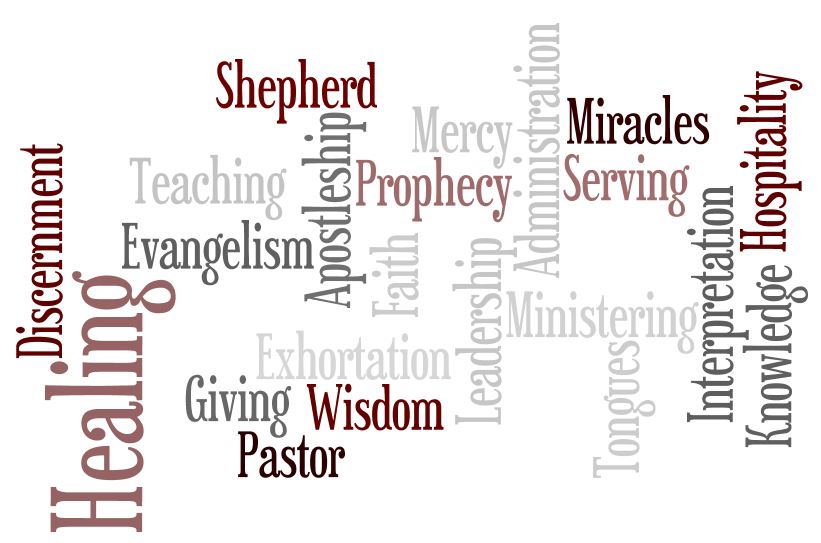
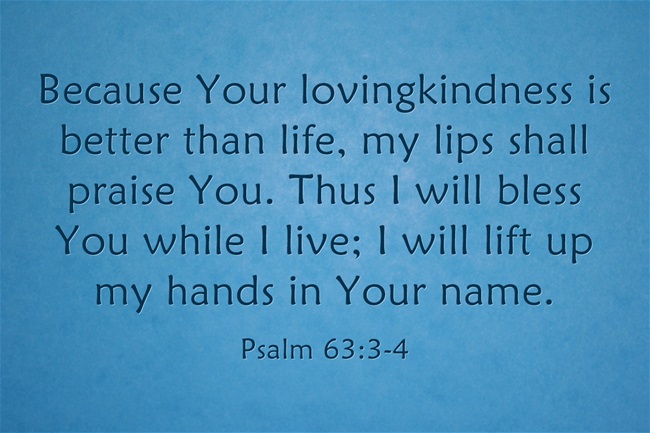
Praise and Worship: What is Worship?

Praise and Worship blog series, "What is Worship?" | marissabaker.wordpress.comI’ve titled this blog series “Praise and Worship,” but so far we’ve only talked about praise and prayer. I think it’s typical to think of praise and worship going together, and perhaps you’re like me and the first thing you think of is praise and worship music. While praise is typically done aloud and often includes music and singing, worship in the Bible is actually quite different.

Defining Worship

In the Old Testament, most mentions of “worship” are translated from the Hebrew word shachah (H7812). It is a “verb meaning to bow down, to prostrate one self, to crouch, to fall down, to humbly beseech, to do reverence, to worship” (Baker and Carpenter). It was the accepted way of showing respect to powerful people, such as Boaz (Ruth 2:10) or David (1 Sam. 25:41).

While it was acceptable to bow before other people sometimes, when their position and character called for such a gesture of respect, it was never acceptable to do this before any deity other than the one True God (Josh. 23:7). When using shacha in the sense of worship, it may only be used toward God if you intend to worship properly.

Give to the Lord the glory due His name; bring an offering, and come before Him. Oh, worship the Lord in the beauty of holiness! (1 Chr. 16:29)

In the New Testament, there are several words translated “worship,” but we’ll only look at two of them right now. One, latreuo (G3000) is associated with the act of serving God, and involves the voluntary service of a hired servant rather than the compulsory service of a slave. We’ll get back to this word near the end of the post.

The Greek word most often translated “worship” has a meaning very similar to the Hebrew shachah. Proskuneo (G4352) means “to worship, do obeisance, show respect, fall or prostrate before. Literally, to kiss toward someone, to throw a kiss in token of respect of homage” (Zodhiates). I’ve written about this word before, in a post called “Blowing Kisses to God.” In the New Testament, the usual meaning is to bow or kneel before someone in reverence.

But if all prophesy, and an unbeliever or an uninformed person comes in, he is convinced by all, he is convicted by all. And thus the secrets of his heart are revealed; and so, falling down on his face, he will worship God and report that God is truly among you. (1 Cor. 14:24-25)

In Spirit

Praise and Worship blog series, "What is Worship?" | marissabaker.wordpress.comWe no longer use this form of salutation to show respect, at least in Western cultures. Bowing to someone seems very foreign, unless we are kneeling in prayer, and even then most of us aren’t crouching on the ground.

While the physical act of bowing before God does endure — for “at the name of Jesus every knee should bow” (Phil 2:10) — that is no longer the main definition of worship. Jesus pointed this out when talking with a Samaritan woman about whether God should be worshiped in a specific location.

Jesus said to her, “Woman, believe Me, the hour is coming when you will neither on this mountain, nor in Jerusalem, worship the Father. … But the hour is coming, and now is, when the true worshipers will worship the Father in spirit and truth; for the Father is seeking such to worship Him. God is Spirit, and those who worship Him must worship in spirit and truth.” (John 4:21, 23-24)

So, it is not enough to model the physical act of bowing down in worship. We have to find the “spirit and truth” at the heart of worship that pleases God, and then model that.

People in the Bible who rightly worship God do so when they are asking Him for something (Ex. 34:8-9), as part of their praise (Ps. 138:2), and with godly fear (Ps. 5:7). Reverence for God is at the core of true worship. We worship Him because we believe He is worthy of worship.

All nations whom You have made shall come and worship before You, O Lord, and shall glorify Your name. For You are great, and do wondrous things; You alone are God. (Ps. 86:9-10)

Worship seems to be the natural response to an encounter with God or one of His messengers. Abraham “bowed himself toward the ground” when the “Lord appeared to Him” (Gen. 18:1-2). Manoah and his wife “fell on their faces to the ground” after the angel of the Lord prophesied Samson’s birth (Judg. 13:20). Exekiel says, “I fell upon my face” when he saw his first vision (Ezk. 1:28), and Daniel describes the same reaction (Dan 8:17). John fell at the feet of two angels intending to worship them when he received the Revelation of Jesus Christ, though they corrected him since they were servants of God and not God Himself (Rev. 19:10; 22:8).

When we see a glimpse of who and what God the Father and Jesus the Son are and understand it at all, it’s impossible not to worship. The disciples worshiped Jesus when He demonstrated power over a storm (Matt 14:32-33), and when He ascended to heaven (Luke 24:51-52). Peter, James, and John fell on their faces when they heard a Voice from heaven while witnessing Jesus’ transfiguration (Matt. 17:5-6), and a blind man who was healed worshiped Jesus when he understood who He was (John 9:38). We were created to recognize our Creator and pay Him the honor He is due.

Sacrifice and Service

I mentioned earlier that one of the Greek words translated “worship” is connected with serving God. This is also the case in the Old Testament, where we often see worship and sacrifice paired (2 Chr. 29:27-30). Jesus also connected worship and service when rejecting Satan’s temptation, saying, “You shall worship the Lord your God, and Him only you shall serve” (Matt. 4:10).

Praise and Worship blog series, "What is Worship?" | marissabaker.wordpress.comIn the Old Testament, service to God involved animal sacrifices and a physical priesthood, but that was simply “a shadow of the good things to come,” and now a different sort of service is expected from God’s people (Heb. 10:1-4). Now, personally being “a living sacrifice” is described as our “reasonable service” (Rom. 12:1). This will likely involve a physical aspect, but that’s as a result of our spiritual worship (Phil. 3:3).

God, who made the world and everything in it, since He is Lord of heaven and earth, does not dwell in temples made with hands. Nor is He worshiped with men’s hands, as though He needed anything, since He gives to all life, breath, and all things. (Acts 17:24-25)

To repeat Christ’s words to the woman at the well, “God is Spirit, and those who worship Him must worship in spirit and truth” (John 4;24). In the New Testament church, God wants to be closer to His people than ever before. He’s not putting physical sacrifices and forms of service between us any more — those are done away with and we are brought near Him by the sacrifice of His Son (Eph. 2:13). His Spirit is communicating directly with our spirits, and He wants us to serve Him from the center of our being.

Therefore, since we are receiving a kingdom which cannot be shaken, let us have grace, by which we may serve God acceptably with reverence and godly fear. (Heb. 12:28)


Finding Your Gifts

Do you know what your gifts are?

Sometimes when I ask people this, their first response is to ask “What gifts?” or to stall and say something flippant like “I can fry an egg.” I think that’s one of the most heart-wrenching things I hear on a fairly regular basis. So many of us believe that there really isn’t anything unique about us, that there’s nothing special we can offer the world, that we don’t have an aptitude for something useful or interesting. We think we’re boring, normal, or mundane, and even if we do recognize some good qualities in ourselves, we think they are too small to do any good. Gifts? me? I don’t think so.

But everyone really does have gifts. Some of this is part of our personalities, and if you’re a Christian you probably believe in Spiritual gifts as well. I guarantee that there’s at least one thing (and probably several) gifts that you have. Even if you can’t see it yet there really is something that you are ridiculously good at, or a core part of yourself that offers something good to you and the world, or a talent just waiting to be used.

Hidden Gifts

Finding Your Gifts | marissabaker.wordpress.comI recently read an article titled How Your Greatest Insecurities Reveal Your Deepest Gifts by Ken Page (a psychotherapist, lecturer, and author who studies intimacy). He argues that the core parts of ourselves that we try to hide because we think we’re “too much” or “too little” are where our gifts dwell.

Over the years, I realized that the characteristics of my clients which I found most inspiring, most essentially them, were the ones which frequently caused them the most suffering.

Some clients would complain of feeling like they were “too much”; too intense, too angry, or too demanding. From my therapist’s chair, I would see a passion so powerful that it frightened people away.

Other clients said they felt that they felt like they were “not enough”; too weak, too quiet, too ineffective. I would find a quality of humility and grace in them which would not let them assert themselves as others did.

In his definition, your gifts are essential qualities that make you who you are. Most of us distance ourselves from our gifts and create “safe” versions of ourselves that don’t show the world who we really are. Ken Page’s focus is on expression our core gifts in intimate relationships, but if we discover who we are and what we have to offer it will impact other aspects of our lives as well.

His tips for discovering your core gifts are to look at the things that cause you the most joy, as well as the things that cause you the most pain. You will be most moved and inspired by positive experiences related to your core gift, and most hurt by negative experiences that touch on those sensitivities. For example, if one of your core gifts is honesty you will be drawn to other people who are honest and hurt deeply when someone you’re close to violates your trust. Here’s a link to one of Page’s more in-depth articles exploring this topic.

Personal Strengths

We spend quite a bit of time on this blog talking about personality types. Since I’m an INFJ on the Myers-Briggs scale, I’ll use my personality type as an example yet again. We can’t all be equally good at everything, and different personality types have different strengths. Some gifts that would be consistent with an INFJ personality type are a talent for reading other people, easily practicing empathy, and generating an inspiring vision for the future. On the other hand, most INFJs will not have a strong gift for impersonal evaluation of pros and cons in a situation, or for interacting with huge groups of people. For those tasks, you’ll need to track down a thinking type with a gift of logic or an extrovert with a gift for interacting with people.

Learning the strengths and weaknesses of your individual type is a good way to start tracking down your own unique gifts. The profiles on 16 Personality Types have a list of typical strengths and weaknesses associated with each type, and there’s also a free test you can take if you don’t know your type yet.

Often, the strengths of our personality types come to us so easily that we don’t think of them as a gift. It’s so easy for INFJs to pick up on other peoples emotions that it can seem like a slightly annoying thing we do automatically, rather than a unique gift we can use to relate to other people. ETSJs take charge of situations almost without thinking about it, and might not list leadership as a gift because it seems so normal to them.

Spiritual Gifts

God doesn’t make useless people. You are a child of God, and no matter how weak and helpless and even useless you feel God can work with you and make you strong (2 Cor. 12:10). If God is calling you and working with you through His Holy Spirit, then you’ve also been given one or more spiritual gifts. Paul tells us that “the manifestation of the Spirit is given to each one for the profit of all” (1 Cor. 12:7) and trust me, you’re not the exception to that rule.Finding Your Gifts | marissabaker.wordpress.com

Finding out what your particular spiritual gift is can be quite a challenge. Live Your Calling: A Practical Guide to Finding and Fulfilling Your Mission in Life by Kevin Brennfleck and Kay Marie Brennfleck has a chapter devoted to a spiritual gifts questionnaire. It’s more of a guideline than a definitive answer, though. When I took the evaluation, it told me I had and potentially used somewhere between 2 and 8 spiritual gifts. Didn’t really narrow it down much.

Other tests, like Spiritual Gifts Test, can also give you an idea of what your spiritual gift might be. It ranks your top three gifts, and gives a description of each. Ultimately, though, I think to discover what your spiritual gift really is requires prayer and action. Thinking about your spiritual gifts only gets you so far — you have to start using them and serving and seeing if you have a gift for that particular way of serving.

Learning about your particular gifts can give you more confidence in yourself, improve your relationships, and give you an idea of how you can serve others more effectively. I’m still discovering my gifts, but they’re already bearing fruit, including this blog. I wish you a similarly exciting journey!

Praise and Worship: How We Pray and Praise

We’ve embarked on a mission to study the subject of praise and worship in the Bible. Last week’s post served as an introduction, explaining why I’m studying this topic and supplying a foundation for what praise means in scripture. We looked at various Hebrew words translated “praise,” and saw that it involves not keeping silent about the splendor and goodness of God. Praise includes verbal acknowledgement of Him, singing His praises, and offering thanksgiving, and involves a certain level of excitement.

Praise and Worship blog series, "Words of Praise" | marissabaker.wordpress.comThis tells us that simply having unverbalized thoughts of praise is not enough. Yes, “God is Spirit, and those who worship Him must worship in spirit and truth” (John 4:24) — we can’t have genuine praise if our hearts and spirits are not right with God. But when we are worshiping in spirit and in truth, there will be some sort of physical aspect as well. God looks on our hearts, and on what comes out of our mouths as a result of our heart. What we say and how we say it is important.

For out of the abundance of the heart the mouth speaks. A good man out of the good treasure of his heart brings forth good things, and an evil man out of the evil treasure brings forth evil things. … For by your words you will be justified, and by your words you will be condemned. (Matt. 12:34-35, 37)

So, what does this have to do with praise and worship? Well, we can agree that some way of praising God aloud is good and proper, but the form that takes is still up for debate. I want to take the time today to look at examples of people praising and praying in the Bible, and see what we’ve given in terms of description. What details are we given of their physical posture, the music that accompanies their songs of praise, and other examples of coming before God?

Prayerful Postures

In churches today, I’ve seen people come before God in prayer and/or praise standing, sitting, and kneeling. I’ve seen bowed heads, and raised hands. There are many ways people approach God, but they are not all equally well-received in every church group. I’ve been told that it is disrespectful to pray sitting down, that it is showy and inappropriate to raise your hands, and that if you want to kneel do so in the privacy of your own home. Often, there’s a prescribed mode of worship and it makes people nervous when you deviate.

Praise and Worship blog series, "Words of Praise" | marissabaker.wordpress.comIn the Bible, however, I’ve found positive examples of people praying with their faces to the earth as they bow down (Deut. 9:25), while looking toward heaven (Ps. 5:2-3), in a seated posture (2 Sam. 7:18), standing up (Mark 11:25), with their hands lifted (Ps. 141:2), lying in a sick bed (2 Kings 20:2), and while kneeling (Dan. 6:10). Biblical people pray silently and aloud, alone and in groups.

Then Solomon stood before the altar of the Lord in the presence of all the assembly of Israel, and spread out his hands toward heaven; and he said: “Lord God of Israel, there is no God in heaven above or on earth below like You, who keep Your covenant and mercy with Your servants who walk before You with all their hearts.” (1 Kings 8:22-23)

Solomon began his prayer at the temple dedication standing before the altar with his arms lifted toward heaven. As he continued, he prayed that God would hearken unto prayers made toward this temple (which is why my Messianic group still recites the shema while facing Jerusalem, though we know God always hears us whichever way we’re pointing). At some point during this prayer, Solomon went to his knees.

And so it was, when Solomon had finished praying all this prayer and supplication to the Lord, that he arose from before the altar of the Lord, from kneeling on his knees with his hands spread up to heaven. (1 Kings 8:54)

This is an example of a public prayer, and sometimes such prayers are called for. I think most prayers given in public today, though, will be in a smaller setting with other believers. We see examples of this type of prayer in the gospels, when Christ prayed with His disciples present (Luke 9:28-29; 11:1; John 17:1), and in Acts when the disciples pray as a group (Acts 1:24; 4:24-31; 12:12; 20:36).

I desire therefore that the men pray everywhere, lifting up holy hands, without wrath and doubting (1 Tim. 2:8)

Prayer is also a very private thing, when not part of public praise and worship. It can be silent, as was Hanah’s prayer (1 Sam. 1:13), or aloud like Christ’s prayer in the garden (Matt. 26:39; Heb 5:7), but the focus is always on talking with God, not on being seen.  God hears all sorts of prayers and doesn’t have a set mode for how we should physically approach Him. What He cares about is the inner state of our hearts (which we’ll talk about in a moment).

Modes of Praise

Most of the musical forms of praise aren’t talked about in the Bible until David became king. There were songs of praise to the Lord, like Moses and Miriam’s song after crossing the Red Sea (Ex. 15:1-21), but music, singing, and dancing as praise isn’t really mentioned as part of regular worship practices until David set up the tabernacle. This “man after God’s own heart” appointed 4,000 priests to praise the Lord with music (1 Chr. 23:5). They used instruments like the harp, psaltery, trumpets, cymbals, and tambourines (Ps. 33:2; 149:3; 2 Chr. 5:13)

Praise Him with the sound of the trumpet; praise Him with the lute and harp! Praise Him with the timbrel and dance; praise Him with stringed instruments and flutes! Praise Him with loud cymbals; praise Him with clashing cymbals! Let everything that has breath praise the Lord. (Ps. 150:3-6)

Praise and Worship blog series, "Words of Praise" | marissabaker.wordpress.comPraise we see in the Bible is loud and enthusiastic (2 Chr. 30:21; Ezra 3:11; Jer. 31:7), full of gladness, joy, and song (2 Chr. 29:30; Ps. 28:7), but can sometimes be described with more subdued words like “harmonious” and “solemn” as well.

It is good to give thanks to the Lord, and to sing praises to Your name, O Most High; to declare Your lovingkindness in the morning, and Your faithfulness every night, on an instrument of ten strings, on the lute, and on the harp, with harmonious sound. (Ps. 92:1-3)

Many of God’s holy days are described as “solemn assemblies.” The Hebrew words — and there are several — don’t necessarily mean what we think of as “solemn,” though. They refer to  appointed times, meetings, and assemblies of great importance. One of the words (H2287) actually means “to march in a sacred procession, to observe a festival; by implication to be giddy” (Strong’s Dictionary, see Deut. 16:13-15)

Sing aloud to God our strength; make a joyful shout to the God of Jacob. Raise a song and strike the timbrel, the pleasant harp with the lute. Blow the trumpet at the time of the New Moon, at the full moon, on our solemn feast day. For this is a statute for Israel, a law of the God of Jacob.(Ps. 81:1-4)

Doesn’t sound so very “solemn” to me, but we can “sing praises with gladness” to a wide variety of music styles. We shouldn’t get bored with more meditative songs, and we shouldn’t disprove of loud, joyful songs either. Both have a place in worship, and both can be used to honor God.

State of Your Heart

Most of what we’ve looked at so far discusses what prayers and praise should look like from the outside. The point I’ve been trying to make by doing this is that the outward expression of worship and communication with God can be quite varied, and that’s okay. God doesn’t ignore people because they chose to pray aloud instead of silently, or standing instead of kneeling, or with hands raised instead of lowered (or vice versa on all these). That’s not what He’s concerned about, and it’s not what should worry us either.

Also He spoke this parable to some who trusted in themselves that they were righteous, and despised others: “Two men went up to the temple to pray, one a Pharisee and the other a tax collector. The Pharisee stood and prayed thus with himself, ‘God, I thank You that I am not like other men — extortioners, unjust, adulterers, or even as this tax collector. I fast twice a week; I give tithes of all that I possess.’ And the tax collector, standing afar off, would not so much as raise his eyes to heaven, but beat his breast, saying, ‘God, be merciful to me a sinner!’ I tell you, this man went down to his house justified rather than the other; for everyone who exalts himself will be humbled, and he who humbles himself will be exalted.” (Luke 18:9-14)

The difference between these two men wasn’t that one prayed looking up and one prayed with head bowed. It was the attitude that showed in how they prayed which concerned Jesus. One prayed “with himself” about how much better his way of serving God was than that of other people. The other man made his prayer about God’s love and mercy which makes a relationship with Him possible. One was proud of himself, the other was humble before his God.

And when you pray, you shall not be like the hypocrites. For they love to pray standing in the synagogues and on the corners of the streets, that they may be seen by men. Assuredly, I say to you, they have their reward. But you, when you pray, go into your room, and when you have shut your door, pray to your Father who is in the secret place; and your Father who sees in secret will reward you openly. (Matt. 6:5-6)

Praise and Worship blog series, "Words of Praise" | marissabaker.wordpress.comThis doesn’t forbid all public prayer, but rather praying as a pretense just to be seen (Matt. 23:14). There are times to pray around other people, but most conversation with God doesn’t need an audience.

Praise, on the other hand, is often more effective with other people around. As we talked about last week, praise involves declaring the wonder of God and offering thanks for what He has done. This can be done in private, but when the Bible talks about “showing forth” or “telling of” God’s marvelous works, it implies sharing your praise of God with others. This is why it irritates me so much to be told that enthusiastic music, hand lifting, and praise dancing doesn’t belong in a church service and can be done privately at home if you feel you must. Praise isn’t something we should shut up in an out-of-the-way place.

I will praise the Lord with my whole heart, in the assembly of the upright and in the congregation. (Ps. 111:1)

The motivation for our praise is just as important as the motivation for our prayers. If we’re praising just to be seen (which is what people who raise their hands are often accused of in more subdued congregations), then our praise is empty. Praise should start in the heart, then overflow to the outer world.

I will praise You, O Lord my God, with all my heart, and I will glorify Your name forevermore. (Ps. 86:12)

I will praise You with uprightness of heart, when I learn Your righteous judgments. (Ps. 119:7)

Since God is the only one who can discern the thoughts and intents of a heart, we are left with very little room for criticizing how other people praise and worship. We can’t see into their hearts, and it is not our place to judge whether or not their expressions of worship are genuine. Unless the way they are praising is indecent and causing confusion in the church (1 Cor. 14:33, 40), we shouldn’t judge other worshipers or dictate and micro-manage our worship practices.

2014 Blogging Year in Review

While I don’t really feel a new year has started until the spring flowers start blooming around the Passover season, the calender most everyone else is using moves from 2014 to 2015 tonight. The WordPress.com stats helper monkeys prepared a 2014 annual report for this blog, and so I decided to share it.

Here’s an excerpt:

Madison Square Garden can seat 20,000 people for a concert. This blog was viewed about 61,000 times in 2014. If it were a concert at Madison Square Garden, it would take about 3 sold-out performances for that many people to see it.

Four of my top five posts were written in 2013 instead of 2014. It’s pretty exciting that people are still interested (they were all MBTI related). I also looked at the stats myself, to see what were the top five posts written this year. Here’s that list:

  1. INFJ Dark Side
  2. How to Be Friends With an INFJ
  3. Fictional MBTI – Steve Rodgers (ISFJ)
  4. The Missing Disney Princesses
  5. Love Languages and MBTI Types

If you’re interested, you can click here to see the complete report.

Praise and Worship: Words of Praise

The question of how we should praise and worship our God seems to be following me. It comes up at Messianic services where we sing, dance, blow shofars, clap hands and tambourines, and lift our hands in praise. It comes up in my local United Church of God group, where we sing a few hymns then sit quietly in our seats. It comes up in Facebook groups, comments on this blog, and private messages from friends and readers.

On the one hand, we have people who worry that physical manifestations of worship take away from our focus on God, and distract fellow believers. They say the Sabbath is not a time to entertain yourself, but a time to honor God. They’ve seen brethren who started exploring ideas from other church groups leave the faith, so to be safe they stick with tradition and shun anything new.

Praise and Worship blog series, "Words of Praise" | marissabaker.wordpress.comOn the other hand, we have people who think the best way to honor God is to involve the physical as well as the spiritual. The outward forms of worship are not to entertain us — they are the natural manifestation of our inward worship. They say if we see a president for something in the Bible as a good thing, throw out our church tradition and replace it with what we find in scripture.

I try to see both sides of an argument when considering most questions, and to be sensitive to other view points. I understand the reluctance to leave comfort zones, and the fear of change turning out bad instead of good. Still, I’m sure you can tell that I’m leaning toward the later argument, the one in favor of more enthusiasm in our service to God. But why? What does the Bible have to say about the subject of praise and worship, and how important is it to God that we do things one way or another? This will be the first in a series of blog posts on the subject.

Offering Acknowledgement

Often, a word in the Hebrew language will have several different meanings and you have to infer what is specifically being said from the context. Another language, like Greek or English, would use several different words to describe the same idea. This is not, however, the case with the subject of “praise.”

I count 7 different Hebrew words that are translated into English as “praise” in the King James Version. Some are only translated “praise” on occasion and have other related meanings, while others are exclusively used to describe a form of praise. There’s also a separate word for “worship.” What this tells me is that the idea and activity of praise was extremely important to the Hebrew people who worshiped God, and to God Himself. Since He is unchanging, praise is also vital for believers today.

The first time the word “praise” appears, it is spoken by a woman (not saying that’s significant; just interesting). After giving birth to another son, Jacob’s wife Leah says, “‘Now I will praise the Lord;’ therefore she called his name Judah” (Gen. 29:35). The word for “praise” here, and the root word of Judah’s name, is yadah (H3034). It means to acknowledge, recognize and declare a fact. It can mean confession, or to acknowledge the role of God in one’s own life and thereby five Him praise. Zodhiates notes it can also mean speak out, sing, or give thanks.

I will praise You, O Lord, with my whole heart; I will tell of all Your marvelous works. I will be glad and rejoice in You; I will sing praise to Your name, O Most High. (Ps. 9:1-2)

Here, yadah in verse one is paired with another word for praise in verse two. Zamar (H2167) is the word for musical praise, and playing instruments or singing in a praise celebration. It’s often translated “sing praise,” or with reference to stringed instruments.

Oh, give thanks to the Lord! Call upon His name; make known His deeds among the peoples! Sing to Him, sing psalms to Him; talk of all His wondrous works! (1 Chr. 16:8-9)

Singing is an integral part of several words for praise. Another, todah (H8426), “describes an offering of thanks or a sacrifice of thanksgiving,” which could be delivered in the form of a song (Baker and Carpenter). This was the purpose of the two “large thanksgiving choirs” appointed by Nehemiah (Neh. 12:27, 31, 38), the appears in other verses as well. Praising God involves thanking Him and acknowledging His goodness, often publicly with songs or spoken words.

But I will sacrifice to You with the voice of thanksgiving; I will pay what I have vowed. Salvation is of the Lord. (Jon. 2:9)

Offerings like this are part of the service God expects of His people. We’ve spent all our time in the Old Testament so far, but this is certainly part of New Testament Christianity as well. Let’s take a quick look at a verse from the book of Hebrew before going back to the Old Testament:

Therefore by Him let us continually offer the sacrifice of praise to God, that is, the fruit of our lips, giving thanks to His name. (Heb. 13:15)

Hallelujahs

The Hebrew word halel (H1984) is the word most often translated “praise” (closely followed by yadah). Baker and Carpenter’s dictionary says it comes from a root that means “to shine” or “to shout.” Both show up in the meaning of halal, which refers to praising God and is at the root of the word “hallelujah.” In the Old Testament, one of the things it is associated with is Levitical ministry as set-up by the righteous kings of Israel.

And he [David]  appointed some of the Levites to minister before the ark of the Lord, to commemorate, to thank, and to praise the Lord God of Israel (1 Chr. 16:4)

When Zodhiates defines this word, he says that “the idea of radiance” is key to understanding what halal means. We praise God to make His glory shine forth. It is from this word that we get “the connotation of the ebullience of rejoicing and praising God.” It involves cheerfulness, exuberance, and is full of energy. Praise is a powerful thing in the mouths of God’s people. It is an expected service, and can lead to amazing victories, as we see in the story of King Jehoshaphat.

And when he had consulted with the people, he appointed those who should sing to the Lord, and who should praise the beauty of holiness, as they went out before the army and were saying: “Praise the Lord, for His mercy endures forever.” Now when they began to sing and to praise, the Lord set ambushes against the people of Ammon, Moab, and Mount Seir, who had come against Judah; and they were defeated. (2 Chr. 20:21-22)

Make-a-joyful-shout-toThese verses used halal, yadah, and another word, tehillah (H8416), which is derived from halal. It is used “of the adoration and thanksgiving which humanity renders to God” (Baker and Carpenter). It refers specifically to a hymn or song of praise, and is the Hebrew name for the book of Psalms (Zodhiates).

One of the main points I notice in all these definitions of words for “praise” is that it is impossible to keep silent. If you’re praising God, in the sense the words convey, you are talking about Him, singing to Him, and making known your adoration for Him all the time.

I will bless the Lord at all times; His praise shall continually be in my mouth. My soul shall make its boast in the Lord; the humble shall hear of it and be glad. Oh, magnify the Lord with me, and let us exalt His name together. (Ps. 43:1-3)

The word for “bless” here is the last on our list of Hebrew words translated “praise” (in Judges 5:2). Usually, barak (H1288) is translated “bless,” and it means “to bless, kneel, salute, or greet.” It is used both of people blessing, praising, and acknowledging God, and of God giving blessings to us.

I realized just a short way into this study that it was going to require multiple blog posts to cover. Consider this word-study a foundation/introduction for a whole series on the subject of praise and worship. I’m looking forward to delving deeper into this subject with you in the next few weeks, and welcome any feedback you have. Suggestions for what to include in this study as it continues? Agree or disagree with anything I’ve said? Comment below!


Myers-Briggs Types and Grief

 LMAP, CC-BY, via flickr
credit: LMAP, CC-BY, via flickr

I started writing this post nearly a year ago, after losing a dear friend, but I couldn’t finish it then. While I was grieving and watching the people around me grieve, I started wondering if the ways individuals respond to grief might be influenced by personality type. Once I started thinking about it, I was surprised that it wasn’t something I’d already read about in my personality studies.

People experience grief in such different ways that it would make sense for someone to try and find commonalities between how each personality type deals with grief. Maybe then we could come up with a self-help method for the grieving process more individualized than the inadequate and outdated 5 stages of grief model.

A few Google searchers later, I’d found plenty of forum topics where people who shared personality types were getting together to compare notes on how they deal with grief. I also found the following on the official Myers-Briggs website:

There have been many books written about personality type and grief, and it is perhaps one of the most profound uses of type. Understanding one’s personality type helps a person recognize why certain expressions of grief are better suited to his or her personal journey through this difficult process.

Unfortunately, they are neglected to give any more information about the “many books.” I’ve only been able to find Recovery from Loss: A Personalized Guide to the Grieving Process by Lewis Tagliaferre and Gary L. Harbaugh and Understanding Grief Types: Working with the Individual Nature of Bereavement by Lisa Prosser-Dodds (which had not yet been released).

Survey of Available Information

Recovery from Loss is specifically written for people who are grieving the loss of a spouse. It proposes a 20-step model for dealing with grief, and does address the role of personality type. However, the authors’ ideas are drawn from general knowledge of how different types respond to stressful situations rather than on actual research. They suggest this would be a profitable study, but do not undertake such a study themselves.

For such a study, I found a The Relationship Between Grief and Personality — A Quantitative Study by Lisa Prosser-Dodds, who presented this study of 239 individuals’ responses to grief as part of her PhD (I’m assuming it was also the starting point for her soon-coming book). Her study asks, ” Is there a difference in grief response between groups with differing MBTI personality types?” According to her, previous explorations of the MBTI’s role in grief are very few. She mentions four:

  1. a 1990 study of 51 bereaved mothers that said, “Extroverts reported higher levels of coping resources and focused on Social, Cognitive, Emotional and Spiritual resources.” The sample group mainly consisted of Extroverts and Feelers.
  2. a 1999 study of 14 people who had lost a spouse. This study “found differences in styles of grieving between varying personality types” but not “a significant use of inferior function,” which we would expect to show up in times of stress.
  3. the 1990 book Recovery From Loss, which I’ve alredy mentioned. Prosser-Dodds thinks their 20-step recovery model is presented “at a level of intellectual requirement that most grievers might become unable to digest,” and notes their observations are “not grounded in empirical data.”
  4. the 1994 book Voices of Loss, compiling first-hand accounts of grief and loss (not necessarily due to death) from various personality types. It is also “not based upon empirical data.”

 What We Can Learn

If you’re interested in reading part of Prosser-Dodd’s study, her summary of results begins on page 68 of this PDF document. The aspect of her findings that I found most surprising was that “When the dominant function aspect of the personality was compared, none of the results showed significant differences. All six subscales and the total scale scores failed to support the hypothesis.” Given Naomi Quenk’s writings on the role of inferior functions in times of stress, this is quite shocking. I would have assumed eruptions of the shadow played a key role in grief, but our dominant function might actually have more to do with how we grieve than our inferior functions.

Instead, “the results that showed the most significant differences were with the predictor variable functional pairs (NT, ST, NF and SF).” This probably wouldn’t have surprised Isabel Myers, since that is the method she used to divide personality types into four groups: “ST- Practical and Matter of Fact Types,” “SF – Sympathetic and Friendly Types,” “NF – Enthusiastic and Insightful Types,” and “NT – Logical and Ingenious Types.”

NF Types

Prosser-Dodd found that NF types had “higher levels of despair, disorganization and detachment” in their grief response, as wells as “slightly less personal growth.” NF type tend to feel things deeply in general, so it is hardly surprising that our grief response involves high levels of emotion. They are, however, better able than thinking types to find meaning in the tragedy of loss and regain balance in relation to the world.

NT Types

Intuitive Thinkers scored lowest on all aspects measured by the Integration of Stressful Life Events Scale. This measures the ability to make meaning out of a loss and to find one’s footing in the world while recovering. Prosser-Dodd said that considering NT types as “as the logical and strategic types, it would follow they might struggle with a comprehension of the loss in general and perhaps find it difficult to regain their footing in world following a loss.”

SF and ST Types

On the scales of despair, disorganization, and detachment the ST and SF types scored in between the NF and NT types, with SF types just a bit higher than ST types. Interestingly, ST types were the most likely to use a loss for personal growth. SFs scored higher than STs in being able to find their footing in the world and make meaning out of a loss (they’re better at this than NF types, as well).