Super Easy Crepes

I woke up this morning with the intention of writing freelance articles, cleaning the closet, and working on a paper quilling wedding present – with no time for a blog post. But when I opened a Mother’s Day Tracfone flyer that came in the mail yesterday, I was greeted by a recipe for “Yummy Crepes.” I wasn’t sure how good a recipe that came from Tracfone could be, but they looked so good that I tried it and it tasted so good I have to share it.

The crepes only took about 20 minutes from start to finish. We filled them with strawberry and raspberry jam and sprinkled them with powdered sugar. I think they would taste really good with fresh fruit, but we didn’t have any.

Yummy Crepes

super easy yummy crepes tracfone ready to flip
Ready to flip

1 cup all-purpose flour (I replaced ¼ cup of this with white whole wheat flour)

2 eggs

½ cup milk

½ cup water

¼ teaspoon salt

2 Tablespoons melted butter

Whisk together flour and eggs. Gradually add in milk and water, stirring to combine. Add the salt and butter then beat until smooth.

Crepe filled with raspberry jam

Heat a lightly oiled frying pan or griddle over medium high heat. Use approximately ¼ cup for each crape and pour on griddle (this made 9 crepes for me).

Cook crepe until the bottom is light brown. Turn and cook the other side.

Roll up or fold the crepe with fresh fruit, drizzle on some chocolate, or sprinkle with powdered sugar. Serve hot.

Our Vocation

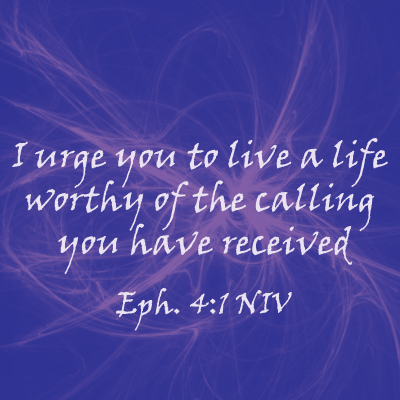
I urge you to live a life worthy of the calling you have received Eph. 4:1 NIV

I was reading through Ephesians (in my KJV Bible) when a word caught my eye. Earlier, I’d been reading something about the word history of “vocation,” and learned that it wasn’t until fairly recently that it referred to anything other than an ecclesiastical calling. With that in mind, I thought the word choice in Ephesians 4:1 was intriguing:

I therefore, the prisoner of the Lord, beseech you that ye walk worthy of the vocation wherewith ye are called

Prior to the mid 1500s, the definition of vocation was always linked to a calling from God (vocation, n. Oxford English Dictionary Online). Of the 11 definitions given in the OED, 5 have to do with a religious calling. Even after the word expanded, the primary meaning continued to involve a Christian calling – there simply weren’t other employments that you could choose instead of being born into. Here are two of the definitions (1a was first recorded in 1426, and 2a was in use by 1487):

1 a. The action on the part of God of calling a person to exercise some special function, especially of a spiritual nature, or to fill a certain position; divine influence or guidance towards a definite (esp. religious) career; the fact of being so called or directed towards a special work in life; natural tendency to, or fitness for, such work.

2 a. The particular function or station to which a person is called by God; a mode of life or sphere of action regarded as so determined.

Back when the King James Bible was being readied for its publication in 1611, these are the definitions they would have had in mind when they chose to translate the Greek word klesis (G2821 κλῆσις) as “vocation” here and as “calling” in ten other places. For them, a life’s work which you were called to had to involve Christianity.

Though one of the main reasons we can use “vocation” more generally now is that we have the freedom to choose a profession other than that of our parents, I think it goes deeper than that. It is telling of our society that when we think of a vocation, we rarely (if ever) think of anything religious or spiritual.

When we talk about finding your life’s work or discovering your calling, we mean finding employment that is lucrative and enjoyable for us. Even as Christians, when people ask “what do you do?” we are more likely to respond by telling them about our job than about our faith. I’m as guilty of that as anyone. But (except in a setting where we should clearly be talking about the kind of work we do) maybe we should re-think this. Our true vocation – our calling from God – should be the one that’s more interesting to talk about and more important to share.

Applesauce Cake With Cinnamon Frosting

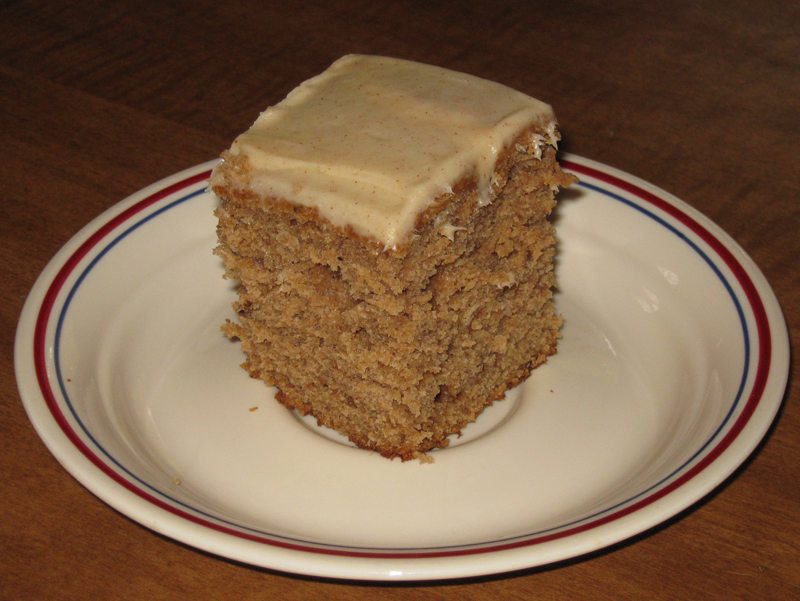
I’ve been writing two blog posts, but I decided on this one for today, since it’s been a while since I posted anything about food (and I know about half my subscribers are more interested in cooking than commentary). We opened a can of our homemade applesauce yesterday that tasted a bit scorched, so I decided to bake with it. Hence, the Spiced Applesauce Cake will be coming to church with us today and shared at the snack table. I confess, I ate some for breakfast this morning. It tastes good warm, but it’s even better after cooling overnight.

Spiced Applesauce Cake with Cinnamon Cream Cheese Frosting

applesauce cake batter
yummy cake batter

Cake

2 cups all-purpose flour

2 teaspoons baking powder

1/2 teaspoon baking soda

1/2 teaspoon salt

3/4 teaspoon cinnamon

1/2 teaspoon ground ginger

1/8 teaspoon ground cloves (optional)

1 stick unsalted butter, softened

1 cup packed light brown sugar

1 teaspoon pure vanilla extract

2 large eggs

1 1/2 cups unsweetened applesauce

1/2 cup chopped walnuts (optional)

Frosting (makes enough for 2-3 cakes)

5 oz cream cheese, softened

3 tablespoons unsalted butter, softened

1/4 teaspoon pure vanilla extract

1 cup confectioners sugar

1/2 teaspoon cinnamon

Preheat oven to 350°F. Butter an 8- or 9-inch square or round cake pan (alternately, a double-batch can be baked in a 13”x9” baking dish).

Whisk together flour, baking powder, baking soda, salt, and spices.

Beat butter, brown sugar, and vanilla with an electric mixer at high speed until pale and fluffy, 2 to 3 minutes. Add eggs 1 at a time, beating well after each addition, then beat in applesauce. At low speed, mix in flour mixture until just combined, then stir in walnuts (if using).

a piece of applesauce cake cinnamon cream cheese frosting
a piece of Applesauce Cake

Spread batter evenly in pan and bake until golden-brown and a wooden pick inserted into center comes out clean, 40 to 45 minutes. Cool in pan 15 minutes. Run a knife around edge of cake to loosen, then invert onto a plate (larger cakes can be left in pan). Reinvert cake onto a rack to cool completely.

Beat cream cheese, butter, and vanilla with an electric mixer at high speed until fluffy. Sift confectioners sugar and cinnamon over cream cheese mixture, then beat at medium speed until incorporated. Spread frosting over top of cooled cake.

Lights In The Darkness

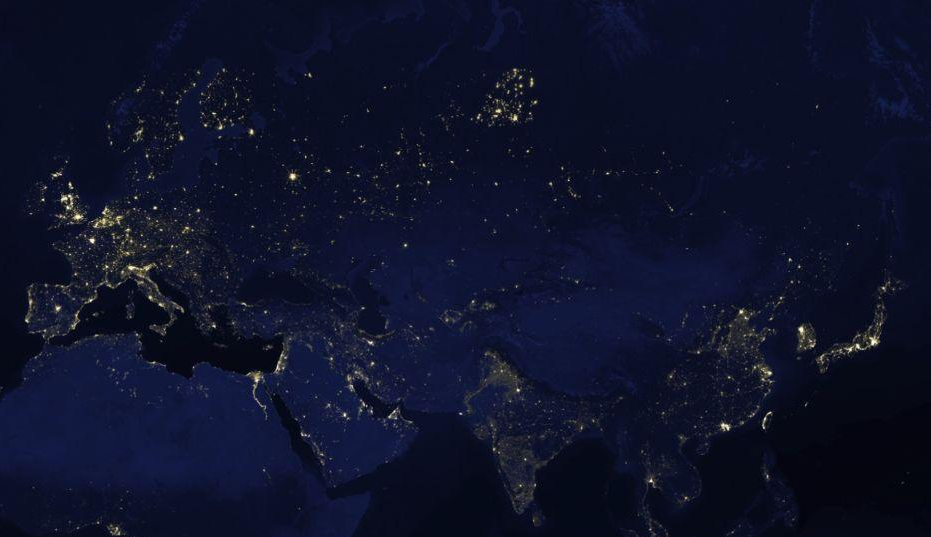
Google earth at night city lights
Google Earth At Night

You know those pictures of the world at night, when you can see all the city lights? Maybe that’s something like what God sees when He looks at the world — a great darkness with tiny spots of light wherever there is a Christian.

Ye are the light of the world. A city that is set on an hill cannot be hid. Neither do men light a candle, and put it under a bushel, but on a candlestick; and it giveth light unto all that are in the house. Let your light so shine before men, that they may see your good works, and glorify your Father which is in heaven. (Matt. 5:14-16)

Do all things without murmurings and disputings: that ye may be blameless and harmless, the sons of God, without rebuke, in the midst of a crooked and perverse nation, among whom ye shine as lights in the world (Phil. 2:14-15)

How bright are our lights? Are we readily visible, contrasting sharply with the darkness, or do we blend in because we barely glow at all?

Pilgrims

I’m back! and the flu which was the reason for my blogging hiatus has indirectly inspired this newest post. Since I had to stay home from church services, I had the chance to watch a DVD sermon we’d just got in the mail (you can listen to “My Burden Is Light” on this website, if anyone’s interested).

In this sermon, he talked about getting rid of the old man and removing sin from our lives so we are not weighed down with excess spiritual baggage as we make our pilgrimage toward the kingdom of God. This sparked a thought I’ve been mulling over for the past few days.

I don’t know how you think about being “strangers and pilgrims on the earth” (Heb. 11:13), but I’ve always thought more about being separate from the world and making a pilgrimage out of darkness than I have about the obvious flip-side of this statement. To be making a pilgrimage out of something, there must be a destination that we are making a pilgrimage toward. In much the same way, when we become a stranger to this world, we experience a change that makes us no longer strangers to God.

At that time ye were without Christ, being aliens from the commonwealth of Israel, and strangers from the covenants of promise, having no hope, and without God in the world: but now in Christ Jesus ye who sometimes were far off are made nigh by the blood of Christ. (Eph. 2:12-13).

Because of His redemptive work, we are “no more strangers and foreigners, but fellowcitizens with the saints, and of the household of God” (Eph. 2:19). Coming out of this world and becoming strangers to it is what we must do once we have received the gift of forgiveness that allows fellowship with God.

When we are separate from the world in how we think and behave we, like those in the Faith Chapter, “declare plainly that [we] seek a country” (Heb. 11:14). Do our lives show that we are friends of God and strangers to the world’s ways? Do we proclaim with our actions that our sense of belonging is with God, and not with this world?

Armor We Wear

I’m reblogging a friend’s post today, partly because it’s a good post and partly because I’ve been under the weather the past few days. Hopefully I’ll be back to blogging shortly, but until then, I hope you find this post as encouraging as I do.

smilesupport313's avatarsmilesupport313

In our lives, we all have armor. That shield we hold like a wall that cannot be scaled. That sword we wave in an attempt to get the upper hand. That helmet that limits our view. That breastplate to protect our heart. That belt of the familiar and comfortable. Those shoes of the stubborn and hard-hearted. 
Whatever we do, we carry these things with us. We also pack baggage and throw that over our shoulders. At every encounter with the alarming, we struggle to fight and march on. 
God has taken that baggage and disengaged it from our shoulders. He held our hand as we crossed a bridge of tumultuous waters. Together on the other side, we used a torch to light the bridge on fire. Our old life, who we were, is dead to us. Why do we save our armor?
Let’s trade in our armor. That wall of…

View original post 109 more words