What fictional characters do you relate to as an INTP?
Just as we can describe real people using the Myers-Briggs® typology system, we can also use the system to type well-written fictional characters. Some of fiction’s most iconic and intriguing characters are INTPs, and today we’re going to talk about seven of them that I think real-life INTPs will find relatable.
One great thing about looking at character personality types is that it helps us to better understand people who have different types than we do. Fictional INTPs can serve as examples for what real-life INTPs might be like, and also show how much variation can exist between individuals with the same type.
Alice
I actually typed Alice as an ENTP on my Disney Princess MBTI chart, but many people type her as an INTP. I’m fairly certain she uses Introverted Thinking and Extroverted Intuition as her two favorite functions, so both ENTPs and INTPs will probably find her a relatable character.
Extroverted Intuition is the most visible aspect of her personality. “If I had a world of my own everything would be nonsense,” seems the sort of thing a bored, curious intuitive would say as they try to explore every possibility no matter now far-fetched. As Alice goes through Wonderland, she’s constantly testing the different aspects of the world and asking questions. Read more →
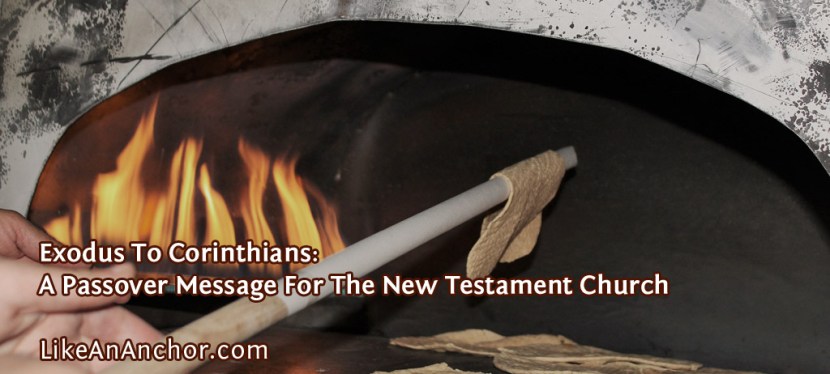
In 1 Corinthians, Paul makes several references to leavening and to Passover. For many readers today, these references mean very little because so many Christian churches have left the roots of their faith, which Paul was referencing here. In order to really understand key passages of 1 Corinthians, we need to understand Passover and the Feast of Unleavened Bread.
I know some (perhaps quite a few) of you are Christians who don’t keep Passover, but I hope you’ll still keep reading today’s post. I think you’ll find it interesting and maybe it’ll give you something new to think about and study.
Passover Background
The Passover story begins in Exodus 12. We’re nearing the end of the plagues of Egypt, and the Lord is telling Moses what the Israelite must do to avoid the final plague — the death of the first born. In the first month of the year, on the evening that begins the 14th day (Hebrew days begin at sunset), Israel was to kill a young male lamb, paint the door posts of their houses with its blood, then roast the lamb whole and eat it with unleavened bread and bitter herbs (Ex. 12:1-13).
This day shall be to you for a memorial, and you shall keep it a feast to Yahweh: throughout your generations you shall keep it a feast by an ordinance forever. (Ex. 12:14, WEB)
The Lord goes on to describe a festival of unleavened bread (matzah) that follows the Passover. For seven days, no leavening (hametz) is permitted in anyone’s house and whoever eats leavened food will be cut off from God’s people (Ex. 12:15-20). Later instructions in Leviticus clarify the timing of all this, stating that Passover is on the 14th and Unleavened Bread begins with a holy convocation on the 15th, then ends with another holy convocation on the seventh day (Lev. 23:4-8). The two holy days are Sabbaths of rest where you are not to work, much like the weekly Sabbath.
The New Covenant Passover
Moving into the New Testament, the gospels make careful note of Passovers that Jesus kept during his ministry. The first is recorded in John 2:13-23. The second is skimmed over, though Luke 6:1 probably references the last day of Unleavened Bread. John 6:4 mentions the third Passover, and Christ’s final Passover is recorded in detail by all four gospels because that was the day He died.
He said to them, “I have earnestly desired to eat this Passover with you before I suffer, for I tell you, I will no longer by any means eat of it until it is fulfilled in God’s Kingdom.” (Luke 22:15-16, WEB)
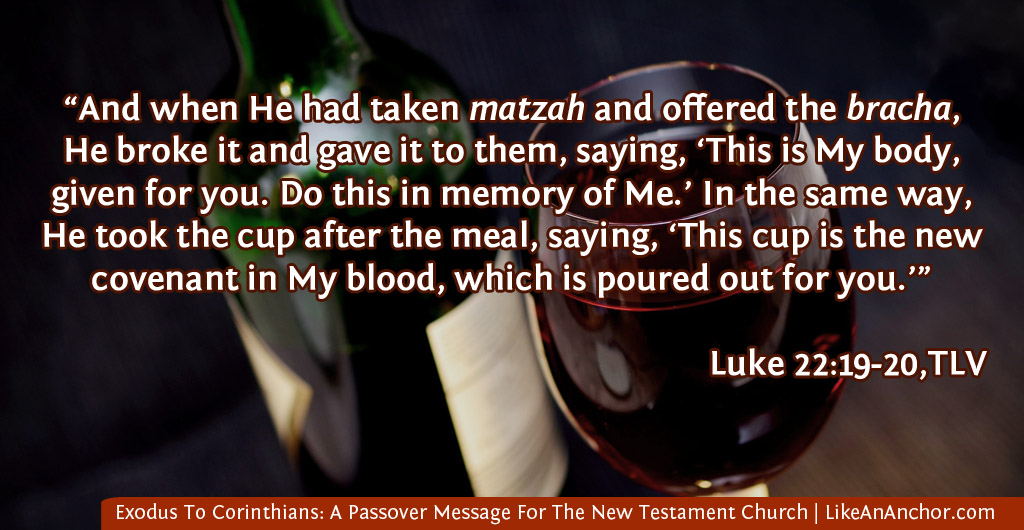
He then proceeded to institute new Passover symbols for New Covenant believers. Jesus will not partake of the Passover again until the kingdom of God comes in the future, but He tells us to do so in memory of Him (Luke 22:17-20).
For I received from the Lord that which also I delivered to you, that the Lord Jesus on the night in which he was betrayed took bread. When he had given thanks, he broke it, and said, “Take, eat. This is my body, which is broken for you. Do this in memory of me.” In the same way he also took the cup, after supper, saying, “This cup is the new covenant in my blood. Do this, as often as you drink, in memory of me.” (1 Cor. 11:23-25, WEB)
The passage we just read from 1 Corinthians 11 is part of the most obvious Passover reference in this letter. Paul goes on to share instructions on how we’re supposed to prepare for Passover, as well as warnings about the dangers of not keeping Passover the correct way. Read more →
I like to keep the people around me happy. I want harmony in all my relationships, and I hate conflict. Take all those (along with a few other personality traits and some insecurities) together, and you end up with someone who’s been a “people pleaser” for most of her life.
It’s normal for FJ personality types to act based on what will meet everyone’s needs and work to maintain harmonious relationships. That’s because they use Extroverted Feeling, or “Harmony,” as their decision-making process. But at some point in their personal growth journey, FJs need to realize that 1) you’re part of the “everyone” whose needs should be met, and 2) it’s impossible to please everyone.
Since writing my post “Are You Ready To Find Your Weirdness?” I’ve been thinking about what effect embracing authenticity will have on interpersonal relationships. One of the things I’ve realized is that instead of trying to adjust my presentation of myself to impress specific people, I need to focus more on bringing my best self to every conversation and interaction. If they’re impressed by that, cool, but if not it’s okay. Failing to please everyone isn’t really failure at all. It’s just something that happens.
We Can’t Please Everyone
It’s impossible to connect with everyone unless you’re adjusting yourself to please them. There’s far too much variety in human beings’ beliefs and preferences for your authentic self to resonate equally well with every person. In fact, if we’re being honest, I’m sure there are some types of people you don’t really want to resonate with. For example, you’d probably worry about yourself if a Klu Klux Klan member felt that you understood and agreed with them 100%. Read more →
One of the most influential names in personality theories surrounding Myers-Briggs® types is David Keirsey. His book Please Understand Me II was one of the first I read when I decided to study personality theory because it was so widely recommended.
The more I studied Myers-Briggs types, though, the less comfortable I felt with Keirsey’s version and the more questions I had. Was his insistence on grouping the 16 types into 4 categories really all that useful? Is the practice of giving each type nicknames doing more harm than good? Why did he seem to ignore Jungian psychological functions? I started to think maybe he’s not the best resource for studying Myers-Briggs, though he does offer an interesting perspective on how the 16 types might relate to historic 4 type systems.
I’ve debated quite a bit whether or not to actually write this post. But I’ve been reading Personality Type: An Owner’s Manual by Lenore Thomson, who is a former managing editor of the Junginan journal Quadrant and who has taught courses on psychological types at the C.G. Jung Foundation in New York City. In her discussion of the ITP and IFP types, she voiced some of the same frustrations with Keirsey that I’ve felt, particularly in regard to how he talks about the SP types.
If you’d like to get a copy of Thomson’s book, click here. Please note that this is an affiliate link, which means that, at no additional cost to you, I will receive a commission if you click on the link and make a purchase.
Keirsey’s Focus on SP Types
I do want to start out by saying that I know Keirsey’s intentions were good in how he described SP types. He saw himself as “championing” the SPs (who he called “Artisans”) more than any other type because his parents, brothers, and many of his friends were Artisans. In addition, much of his work for 30 years as a family therapist was spent working with Artisan children who gave their parents and schools a hard time when they were noisy and restless or didn’t finish assignments.
My long association with and understanding of Artisans of all ages has enabled me to be more useful to them than to others of different temperament. I think Artisans ought to be enjoyed for what they are instead of condemned for what they are not, something that can also be said of the other three temperaments. (Keirsey, Please Understand Me II, p. 33)
While I agree with the sentiment, I think that some of Kersey’s theories did a disservice to SP types by constraining them into an art-making, hedonistic stereotype. There’s so much more to them than that, and I think by simply focusing on their shared SP traits we lose a lot of the nuances of these four types. I doubt this was his intention, but that’s how people seem to have used/misapplied his theories. Read more →
Lamentations is a depressing little book, at least on first glance. It’s composed of 5 poems of mourning that were once part of the book of Jeremiah, but were then isolated so they’d be easier to read in public. Traditionally, the Jewish people read Lamentations each year on Tish B’av, a fast day commemorating the destructions of the temple in 586 BC and 70 AD.
The first poem speaks of sorrow, weeping, misery, and desolation that has come upon Israel. Jeremiah describes the Lord as righteous for bringing such punishment to those who rebelled. The second poem is about the Lord fighting against Israel as an enemy. As a result, there is weeping, misery, and no comfort.
The fourth poem recounts more horrors that happened because of Israel’s sin. It talks about persecutions and punishment brought on them by the anger of the Lord. The fifth poem cries out to God to remember His people, recounting the punishments they’ve already suffered for their iniquities. It ends by talking about God forgetting and rejecting Israel, begging Him not to do so forever.
We now know that God answered this last prayer. He didn’t forget His people or cast them off forever. In fact, God the Father sent God the Son to die in our place and redeem us. The Word became flesh and brought about reconciliation between God and man as our Passover sacrifice.
Even without this perspective, though, Jeremiah was able to have a surprisingly hopeful outlook in the midst of incredibly difficult situations. In the third poem, nestled right in the middle of Lamentations, we find a determination to continue believing in the Lord’s goodness no matter what comes. That’s an outlook we would all do well to imitate. Read more →
One of the things I’ve discovered in learning how to better handle my anxiety is that breathing helps.
I was kind of hoping when I started counseling I’d learn about a semi-magical secret trick to avoiding panic attacks and working through anxiety. And what did I find? Deep breathing. Turns out that it’s important to breath when you’re panicking. Who knew?
Just to be clear, I’m talking about things that help in the moment when you’re starting to feel anxious — not about long-term work on managing anxiety and re-training your mind. That’s a slightly different topic, which I’ve talked about in posts like “Exchanging Your Foundation Stones” and “Making Some New Paths In Our Minds.”
Different people who struggle with anxiety find different ways of managing it (EFT tapping, grounding techniques, deep breathing, etc). For me, grounding and breathing seem to work best, which I find interesting since I’ve been doing both for years through my yoga practice. I just needed to start using those tools more effectively in the rest of my life, not just for 15-45 minutes every morning.
Side note: I know some of my readers will think it odd that a Christian practices yoga, so here’s a link to my post where I talk about Yoga, Meditation, and Christianity. The short version is that the asana (poses and movements) and pranayama (breath control) aspects of yoga are mind-body tools I’ve been using for about 8 years now and from which I’ve seen nothing but good fruits.
It’s amazing what a difference focusing on the present moment, grounding yourself in the physical world, and forcing yourself to breath deep can make. And I’m assuming this would help whether you’re dealing with every-day anxieties or with having more long-term anxiety. The techniques seem almost too simple, but they work and if you’re starting to feel panicky the last thing you need is to try and remember some complicated method of calming down.
You don’t need to figure everything out, or get cured of anxiety, or conquer whatever mountain you’re climbing before you can start to feel better. Sometimes, all we need is to stop, breath, and tune-in to the present moment. To give ourselves permission to feel however it is we’re feeling rather than keep burying it or pressing on through.
Hopefully, taking the time to ground yourself and just breath will help cultivate a sense of peace. But if not, don’t beat yourself up over it. Treat yourself with the same kindness I’m sure you’d show someone you love who’s struggling. Self-care isn’t selfish — it’s essential (another thing I’m learning that now seems like it should have been obvious).
I’m not sure who needed this post (other than me), but I hope you’ll take some time for yourself today. Breath, tune-in, and take care of yourself. Be well my dear readers 🙂



 . Please note that this is an affiliate link, which means that, at no additional cost to you, I will receive a commission if you click on the link and make a purchase.

 Like An Anchor