Searching For Balance

I’ve been rather preoccupied with the idea of Balance lately, both in the world around me and internally. A lack of balance frustrates me so much and yet many people seem to gravitate toward polarities rather than searching for middle ground.

Searching For Balance | marissabaker.wordpress.com
scales credit: StockMonkeys.com

Let’s look at Christianity for a quick example. I’m not sure if this is the case in your churches, but in the groups I attend the question of Sacred Names comes up every once in a while. One the one hand, you have people who only use the Hebrew names like Yahweh and Yeshua and claim others “have rejected the name of their God.” I’ve even heard of people who won’t talk with other Christians unless they can pronounce the sacred names “correctly” (which varies depending on who you talk with). Then on the other hand, you have people who say Sacred Namers have fallen into “a satanic doctrine that leads people into idolatry.”

It just seems so ridiculous to me. To the first claim, if God wanted us all speaking Hebrew He wouldn’t have confused the languages at the tower of Babel. Read more

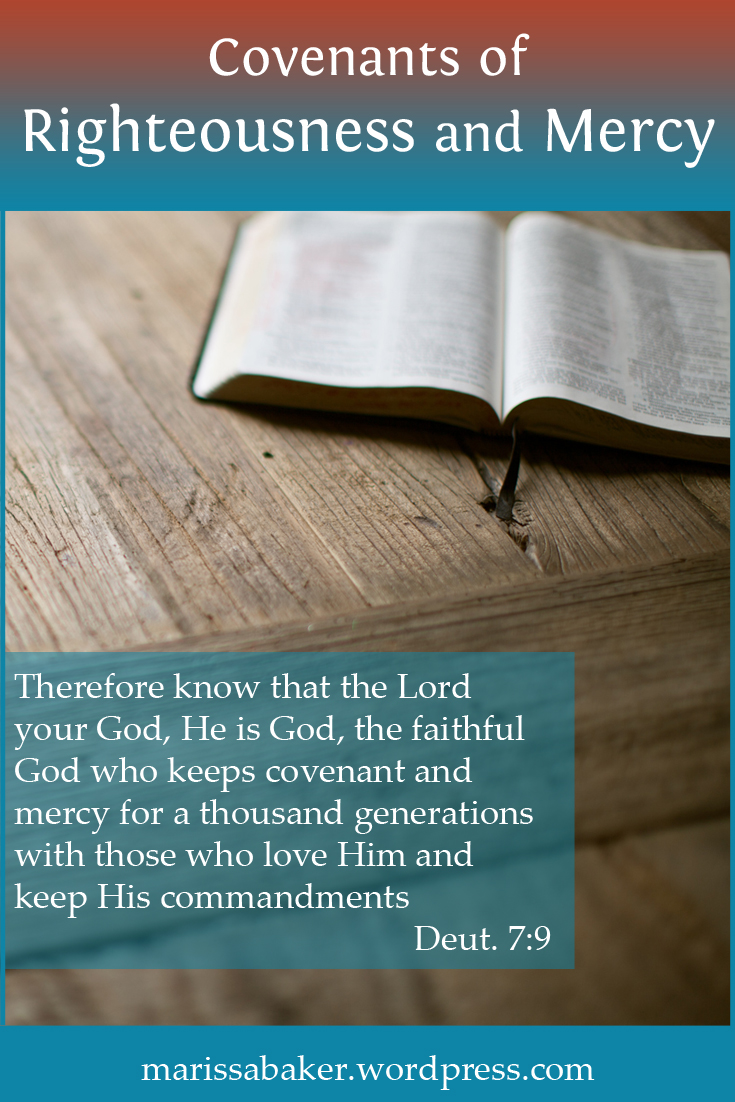
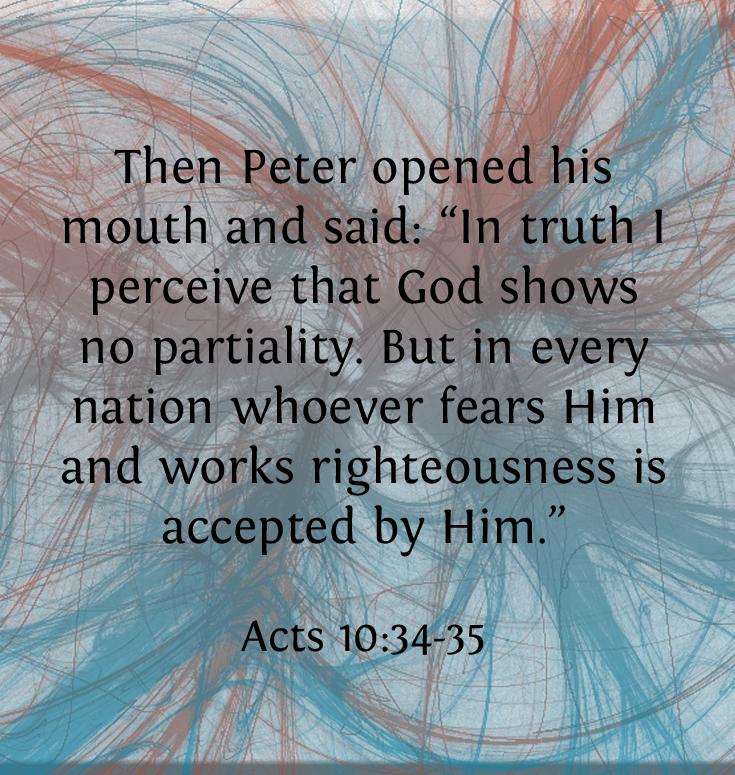
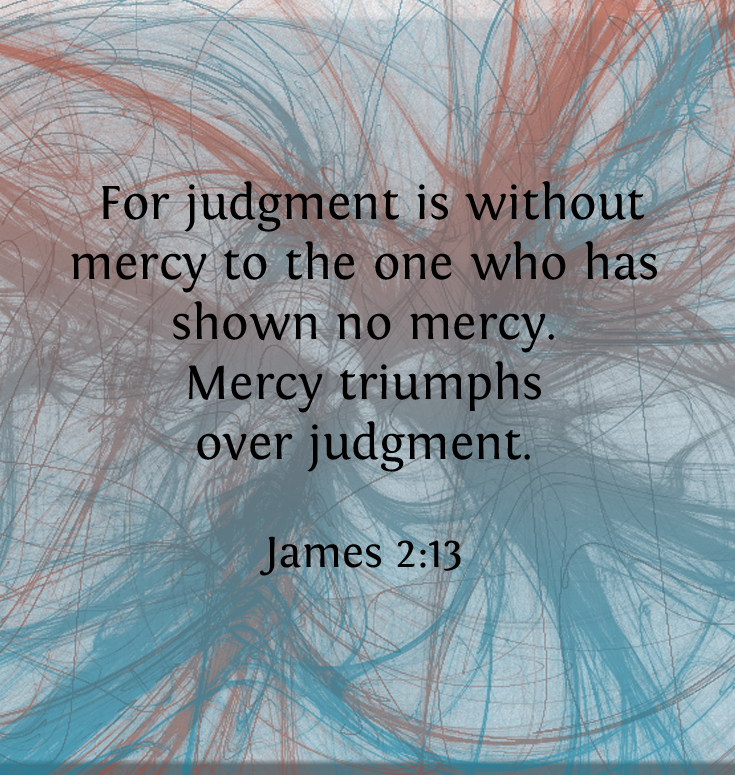
Covenants of Righteousness and Mercy

This isn’t the first time a Bible study has brought tears to my eyes. Usually that happens when I’m studying God’s love, but there’s also something inspiring, humbling and wonderful about His righteousness and mercy. They’re aspects of God’s essential character, and the more I learn about who the Father and Yeshua are, the more inclined I feel to just sit here in awe.

In Matthew 5:48 Jesus said, “you shall be perfect, just as your Father in heaven is perfect.” We have a responsibility to grow toward perfection, developing God’s character inside us. If we’re going to mimic His character, we have to study and learn about who and what He is, so we can display those traits as well.
Covenants of Righteousness and Mercy | marissabaker.wordpress.com

I’ve already written many posts on this blog about “God is love” (there’s even a whole ebook free if you click here), so that’s not what we’re going to focus on today. Instead, I want to spend our time together this Sabbath focusing on two key character traits that are aspects of God’s love.

The Lord is Righteous

If you search for the phrases “the Lord is …” and “God is …” trying to find descriptions of His character, the first you come to is in Exodus.

And Pharaoh sent and called for Moses and Aaron, and said to them, “I have sinned this time. The Lord is righteous, and my people and I are wicked. (Ex. 9:27)

Even a pagan ruler on the receiving end of God’s judgement recognized that “the Lord is righteous.” In Hebrew, the word is tsaddiyq (H6662). For human beings, righteousness involves fulfilling the commands of God. It “consisted in obedience to God’s law and conformity to God’s nature” (Theological Wordbook of the Old Testament, entry 1879). Like love, righteousness isn’t just something God shows toward us — it is one of His essential character traits. We define righteousness by pointing to God’s standard.

“Behold, the days are coming,” says the Lord, “That I will raise to David a Branch of righteousness; a King shall reign and prosper, and execute judgment and righteousness in the earth. In His days Judah will be saved, and Israel will dwell safely; now this is His name by which He will be called: THE LORD OUR RIGHTEOUSNESS. (Jer. 23:5-6)
Covenants of Righteousness and Mercy | marissabaker.wordpress.comNot only is God Himself righteous, but all our righteousness is found in Him. This prophecy points to Christ’s role as the one who makes us righteous. Only by following in Yahweh Tsidkenu’s footsteps can we continue in righteousness.

As we’ve seen, God’s righteousness is closely connected to His law. It follows that as a Being of righteousness He must institute penalties for disobedience as well as rewards for obedience. Daniel recognized this in his prayer for the exiles.

As it is written in the Law of Moses, all this disaster has come upon us; yet we have not made our prayer before the Lord our God, that we might turn from our iniquities and understand Your truth. Therefore the Lord has kept the disaster in mind, and brought it upon us; for the Lord our God is righteous in all the works which He does, though we have not obeyed His voice. (Dan. 9:13-14)

It is righteous for God to let evil befall a nation that broke their covenant with Him. Covenants aren’t just about the good things both parties get out of the agreement — they also include consequences for breaking the covenant, which is what we do when we sin (Dan. 9:4-5). Because God is righteous, He keeps the entire covenant — including the part that stipulates consequences for sin.

The Lord is Mercy

Daniel also calls on another of God’s essential character traits; one that goes hand-in-hand with righteousness.

And I prayed to the Lord my God, and made confession, and said, “O Lord, great and awesome God, who keeps His covenant and mercy with those who love Him, and with those who keep His commandments, we have sinned and committed iniquity, we have done wickedly and rebelled, even by departing from Your precepts and Your judgments.

O Lord, righteousness belongs to You, but to us shame of facebecause we have sinned against You. To the Lord our God belong mercy and forgiveness, though we have rebelled against Him. (Dan. 9:4-5, 7, 9)

If God was not mercy as well as righteousness, we would be in grave straits indeed. We have all sinned, and if God righteously rewarded us for that we would all be dead (Rom. 3:23; 6:23). Yet Jesus Christ took on Himself the death penalty required by covenant. Instead of rewarding us as we deserve He offers mercy, as He did to “a blasphemer, a persecutor, and an insolent man” who became the Apostle Paul (1 Tim. 1:13).

But God, who is rich in mercy, because of His great love with which He loved us, even when we were dead in trespasses, made us alive together with Christ (by grace you have been saved) (Eph. 2:4-5)

Mercy is as much a part of God’s being as love and righteousness, and it has always been this way. Back in the Torah, Moses makes a prayer for Israel very similar to Daniel’s plea. The people have rebelled, and Moses is asking for God’s mercy to mingle with His righteousness.

And now, I pray, let the power of my Lord be great, just as You have spoken, saying, ‘The Lord is longsuffering and abundant in mercy, forgiving iniquity and transgression; but He by no means clears the guilty, visiting the iniquity of the fathers on the children to the third and fourth generation.’ Pardon the iniquity of this people, I pray, according to the greatness of Your mercy, just as You have forgiven this people, from Egypt even until now.” (Num. 14:17-19)

Covenants of Righteousness and Mercy | marissabaker.wordpress.comMoses is directly referencing God’s own description of Himself in Exodus 34:6-7. These are the character traits of “God is love” which back-up the covenant God makes with His people

In the Old Testament verses we’ve been quoting, “mercy” is translated from the Hebrew chesed (H2617). The Theological Wordbook of the Old Testament points out that this word is often connected with covenant — most likely in that God’s covenant is a result of His chesed and includes the promise of His loving kindness. As those in covenant with God, we’re expected to show mercy as well.

Blessed are the merciful, for they shall obtain mercy. (Matt. 5:7)

In Greek, “mercy” is elos (G1656). It’s different from grace, which is a special kind of gift from God that consists of removing the penalty for sin. Mercy goes along with that and takes a step farther by alleviating the miserable consequences of sin (Zodhiates Key-Word Study Bible).

Jesus has compassion and mercy on us because He sympathizes with our weakness, having experienced what it’s like to be human even though He never sinned (Heb. 4:15-16). We, too, should exercise mercy towards others. As sinners ourselves, we’re in a unique position to respond to the suffering we see in others with loving kindness rather than condemnation. We must learn to follow God’s example of mingling righteousness and mercy. We never forget or ignore the covenant laws and our commitment to righteousness, but we also remember to always act out of mercy and love.


Grimm’s Laissez-faire Attitude Toward Sexual Coercion

Anyone else still watching NBC’s Grimm? I’m only one episode behind on the current season, but I’m seriously thinking of giving it up entirely. What was once an interesting foray into the dark origins of fairy tales has become a tangle of dysfunctional relationships and plot lines so ridiculous that Rosalee just spent a whole episode voicing my own frustrations with “how/why is this happening?”

More upsetting than the devolving story line, though, is how they writers have been handling the question of rape. Even if you’re not watching Grimm, this discussion matters because the way our entertainment presents issues like sexual violence both reflects and influences prevailing culture.

Love In The Time Of Cookies

It all started way back in season one with the character Adalind. She’s a Hexenbeist (basically a witch). She’s a main antagonist in this first season, and uses her powers to force Hank to see her as a romantic option. He’s basically roofied via magical chocolate chip cookie, but it wasn’t addressed in the show as rape and I doubt the writers even thought of it that way.

This brings us to the first disturbing idea that Grimm keeps coming back to, perpetuating the myth that adult men can’t be victims of rape. Hank wasn’t a victim — he was just a guy who accidentally had sex with someone he didn’t want to. No big deal (never mind that she drugged him and nearly killed him). We wouldn’t overlook this if the characters’ genders were reversed, so why the double-standard?

English and Welsh law didn’t recognize male rape as a crime until 1994. The United States was even farther behind — the FBI’s definition of rape didn’t include male victims until early 2012. I suppose it’s not surprising, then, that the statistics I could find related to male rape were UK-based. Crime reports for 2014 in England & Wales record 3,580 sexual assaults against men. Survivors UK (a male-only support group) estimates that only 2-3% of assaults are actually reported (compared to 10-12% for women). And yet society doesn’t treat it as a problem — Survivors UK had their funding cut completely last year, and most rape hotlines won’t even talk to men. No wonder Hank didn’t want to claim his coerced relationship with Adalind was rape.

It’s Okay If She’s A Witch

Adalind’s actions with Hank are played-off as unwanted sexual aggression rather than an attack, but apparently it’s enough to justify writing her comeuppance as an assault scene. Since the blood of a Grimm can strip a Hexenbeist of her powers, Nick attacks her, pins her to the ground, climbs on top of her, and kisses her so she’ll bite his lip. There’s really no way not to interpret this imagery as sexual. Charity has written an excellent article titled “A Grimm Look at Writers’ Impact on Rape Culture” that addresses this scene in-depth, as well as the after-math that continues comparing Adalind to a rape victim.

The disturbing part about this scene isn’t so much that it’s played as a sexual assault, but rather that no one has a problem with that. This perpetuates the myth that sexually aggressive women are asking for (or even deserve) sexual assault. Nick is the good guy, the hero, and that didn’t change for most viewers after he attacked Adalind. But other people’s bad actions shouldn’t justify “good” people committing unconscionable acts.

Baby Makes It Better

Skip ahead to the end of season three. Adalind has her Hexenbeist powers back, and she hatches a plan to take Nick’s powers away. Much like ingesting a Grimm’s blood can take away Hexenbeist powers, sleeping with a Hexenbeist takes away a Grimm’s abilities to detect Wessen. Adalind uses magic to disguise herself as Nick’s love interest, Juliette, and he sleeps with her. While Adalind doesn’t violently assault him, here’s no denying Nick was coerced into having sex with someone he would have turned down if given a choice. Doesn’t that make it rape?

Now in season 5, Nick is living with Adalind and the child she conceived as a result of her impersonating Juliette. Can you imagine this in reverse? No one asks a woman to move in with a man she wouldn’t have consented to have sex with just because the resulting child needs a father. If someone did write that situation, you can bet there’d be other characters in the show discouraging her from living with her rapist. In Nick and Adalind’s case, however, the farthest any character will go is describing it as “weird.” The writers don’t see their past relationship as rape (see first myth) and, if the number of Nick/Adalind shippers online is any indication, neither do most fans.

I was going to have a “myth” listed for each section, but it doesn’t really work here — no one actually thinks you should move-in with your rapist if there’s a child! It’s insane. And yet, I saw someone online arguing that Nick and Adalind’s relationship is a relatable and realistic portrayal of modern adults in a co-parenting situation after an unexpected pregnancy. I suppose this is what happens when you live in a culture that’s adopted an anything goes (except abstinence) attitude toward sex. The more taboos we tear down, the easier it is to skirt around the ones that remain.


The Lord of Hosts

Our study last week reminded me of something else that caught my eye while writing the minor prophets series last year. When I was copying verses over into my handwritten notes, I realized I was writing “the Lord of hosts” quite a lot — sometimes more than once in a single verse.

You’ll often see this name of God written as “Jehovah Sabaoth.” Yahweh Sebaot/Tsebaoth are other ways to transliterate the name, and Elohim Sebaot is used as well. The variations of this name occur some 285 times, mostly in the books of prophecy. In the New Testament, it’s transliterated as “Lord of Sabaoth” (Rom. 9:29; James 5:4).

The Lord of Hosts  | marissabaker.wordpress.com
Photo by Juraj Kubica

Seeing the name “Lord of hosts” again and again in the prophets made me wonder about the significance of this name. Each name of God tells us something important about His character. What does “the Lord of Hosts” teach us? Read more

Men in The Church: It’s OK to Grow Some Balls

A thought-provoking post written by my brother. I’ve been thinking lately about a trend in some churches to place women in leadership roles. Women do have a significant role in the church (which can even involve teaching), but I think the Bible is clear that the ordained, public leadership of the church has been given to men. Instead of usurping those roles when they go vacant, perhaps we need to ask why men are leaving the church and what we can do to encourage them to stay and lead.

Nathan's avatarScience & Faith

“There are no real men in the church.”

“None of the men I know actually care about God.”

I’ve heard these statements hundreds — maybe thousands — of times, mostly from women but also from older men. There’s this general realization that men in the church today just don’t really care about their faith. It’s not an imagined problem. Statistically, men just aren’t on fire for Christianity. But why? Why are so many guys lacking zeal for their religion? Why aren’t they fired up?

Men really don’t understand that Christianity has room for masculinity. We’re told to be passive, that we’re too headstrong, that men are dangerous. Then in the same breath, we’re told we have to “do more” for the church. It’s confusing and discouraging. Well, gird up your loins like a man, cause we’re about to see why we should get fired up as Christians.

View original post 866 more words

INFJ Overthinking -­ When Our Beautiful Mind Turns Against Us

This is a guest post by John Lindholm, a writer for the Introvert Spring INFJ forum.

INFJs like to look in. Sometimes this habit works against us. Our mind is a busy freeway of thoughts that steer our car off the happy highway. Certain circumstances are particularly disorienting. Our mind twists, turns, and reverses these situations so much that they no longer match up to reality. Here are a few you might recognize:

Small Talk, Big Mistake

INFJ Overthinking -­ When Our Beautiful Mind Turns Against Us, guest post by John Lindholm | marissabaker.wordpress.com
photo credit: “Thinking RFID” Jacob Bøtter

It is no secret that introverts would rather eat a brick sideways than engage in small talk. But I’ve only been offered that choice twice in my life, so the chit chat is unavoidable even to the ghosty­ist INFJ.

It’s even worse when we think our conversation partner is more successful, better looking, or more interesting than we are. When this happens, the chatter milk can sour in an instant.

It starts with rotten self-­talk like, “why am I such a loser compared to him?” Or, “why can’t I just relax and talk like she can?” Or even, “why do I suck at life?” Then the pulverized mind of the INFJ has to throw a few words together to continue the conversation. Not good.

One time, I ran into somebody I hadn’t seen for well over a year. He started with, “I haven’t seen you for a while, so I just wanted to say hi.”

I volleyed, “Yeah, so how have you been?” Not a bad start, but the meter on my coherence tank plummeted as the palaver continued.

When he tried to end things with, “Ok so, I just wanted to say hi,” I again replied, “Yeah, so how have you been?”

Realizing I had repeated myself, I answered my own question. “Good, good, yes right?” It was ridiculous, so I excused myself and retreated to the restroom.

It Will Be All Better When…

For the INFJ, successes that should be celebrated and lead to happiness and further growth can actually lead to frustration, sadness, and even depression. This has a lot to do with “I’ll start my diet on Monday” self­-promising. We tell ourselves,

“Once I get through this social-­event­-stuffed weekend, everything will be perfect.”

“As soon as school ends, I’ll get back to writing my book.”

“I’ll be so happy after I lose these ten pounds.”

This kind of thinking ensures that we’re never where we are. We’re not here, we’re in our head. We’re so busy thinking about what would make us happy that we miss out on the present moment. Since no amount of achievement will evict us from our brain, we’re better off focusing on how to make our head a happier place.

There’s Only One Side: Mine

We INFJs will brood, contemplate, deliberate and ruminate the DNA right out of an idea. Other folks might have an opinion, a passing notion, or even a half­-baked solution. But if they don’t agree with us, they’re wrong.

Or so we think.

We’re awesome at dissecting an issue, but have a hard time accepting opposing points of view. It’s hard for us to trust that others have as much going on between the ears as we do (they probably don’t, but that’s beside the point).

And heaven forbid that people want to speak about a problem without also brainstorming for a solution. I mean, what’s the point in highlighting a fault if we don’t want to fix it, right?

Your Turn…

I’d like to hear from the rest of you INFJs, and from those who love them. What other ways do INFJs overthink or misunderstand social situations? Please share below.

Author Bio: John Lindholm is a middle school math teacher and a writer for the Introvert Spring INFJ Forum (which you are welcome to join). He enjoys writing fiction as well as articles and other pieces about introversion. Check him out at InwardFacingWriters.com.


If you’d like to know more about the INFJ personality type, check out my book The INFJ Handbook. I just updated it with a ton of new information and resources. You can purchase it in ebook or paperback by clicking this link.