Easy Bread Sticks

Easy breadsticks recipe marissabaker.wordpress.com
bread sticks fresh from the oven

Summer weather has returned with the promise of a week’s worth of 90 degree temperatures, so I’m not baking much of anything this week. Thankfully, I took pictures last week when I made these wonderful garlic-covered bread sticks. The original recipe is from Readable Eatables’ Olive Garden Breadsticks. Her’s are so good that the only thing I’ve changed is melting more butter to brush over the top — three tablespoons just never seems like enough.

The best thing about this recipe is it consistently turns out well and there is no kneading — you don’t even take the dough out of the mixing bowl until it’s time to form the bread sticks. They taste great with pasta and salads, and I’m looking forward to serving them with soups this winter.

Easy Bread Sticks

print this recipe

Easy breadsticks recipe marissabaker.wordpress.com
This is what it will look like when there’s enough flour in the dough

Dough

1 ½ cups warm water

2 Tablespoon sugar

1 Tablespoon yeast

1 Tablespoon salt

2 Tablespoon butter, softened

4-5 Cups flour (I usually use 1 cup whole wheat, then about 2½-3 cups white)

Topping

5 Tablespoon butter melted

sea salt

1 teaspoon garlic powder

For the dough, pour the water into a stand mixer with the sugar and yeast, let that sit and froth for about 10 minutes. Add salt, butter, and 2 cups of flour. Mix the dough on low. Add the rest of the flour a half cup at a time, until dough scrapes the sides of the bowl clean. Mix the dough about 5 minutes on medium speed, until its soft and easy to work with.

Easy breadsticks recipe marissabaker.wordpress.com
They’ll cook just fine if you crowd them a little to fit all the bread sticks on one pan

Let the dough rest in the bowl until doubled in size, about 1 hour, and then roll it out. Roll the dough out into a long log, spray a knife with cooking spray and cut the dough into 12-14 pieces. Roll those pieces into about 6 inch long snakes. Spray 1-2 large cookie sheets with cooking spray, and lay the bread sticks out leaving an inch or two between each one.

Place them in the oven with the temperature turned to 170 degrees. Let them rise for about 15 minutes, or until doubled in size. Alternately, they can rest on the counter until doubled in size. Once risen, brush them with the 2 Tablespoons of melted butter and sprinkle them with salt.

Preheat the oven to 400 degrees and bake bread sticks for 12-14 minutes or until golden brown. While they are baking, combine the rest of the melted butter with 1 tsp garlic powder. When the bread sticks are golden brown, remove them from the oven and brush them with the butter/garlic mixture. Serve warm.
print this recipe

Dark Fairy Tales

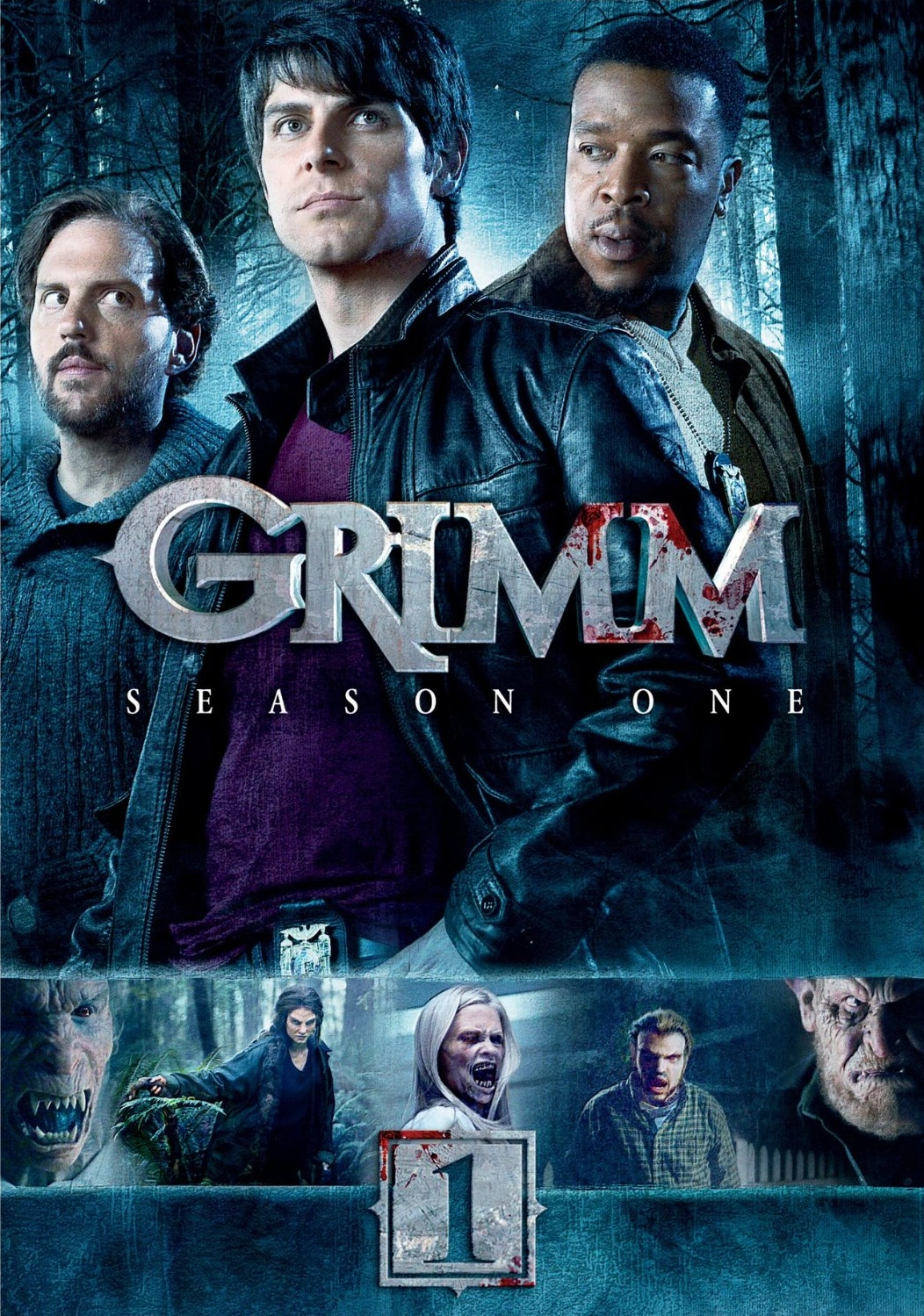
I recently started watching the TV show Grimm. I’m still about a season-and-a-half behind, but catching up pretty quickly (no spoilers if you’ve watched more than me!).  For those who aren’t familiar with the show, it’s about a homicide detective named Nick who recently inherited his family’s gift for seeing strange creatures known as Wesen. Together with his detective partner, his girlfriend, and a reformed Blutbot (aka “the big bad wolf”), Nick discovers that a surprisingly high number of Wesen happen to commit crimes in Portland, Oregon (seriously, are there no human criminals?)
The thing that makes Grimm different from other crime dramas, and what initially attracted me to the show, is the folkloric element. The stories are loosely based on fairy tales and myths from a variety of cultures, most notably those collected by Jacob and Wilhelm Grimm. Each episode uses elements of an original legend, but changes the plot. Another “change” that has been made is that Grimm is much darker than the popular idea of fairy tales as Disney princess stories.

I say “change” in quotation marks because the fairy tales most of us grew up with are MUCH tamer than the original versions (or, more accurately, the earliest versions we have written down). Yet many people assume fairy tales started out innocent and have been corrupted by our modern culture. Take this quote from Plugged In Online’s review of Snow White and the Huntsman, for instance.

I’ve always liked fairy tales, whether in cartoony-flick or storybook-for-the-kids form. But it appears that those “once upon a time” sweet and innocent versions don’t often make the grade nowadays. Today’s reimaginings usually have to come with a bit more bite.

The trend with today’s versions of fairy tales, including Grimm, isn’t so much making the stories darker as it is returning to fairy tales’ darker roots. Even the fairy tales we consider “sweet and innocent” used to have a darker side. Cinderella’s step sisters cut off their toes and heels to fit into the glass slipper. The Little Mermaid’s prince marries someone else and she considers murdering him, but dies instead. And I’m not even going to talk about Sleeping Beauty and Rapunzel.

Why read/watch "Dark Fairy Tales" marissabaker.wordpress.com
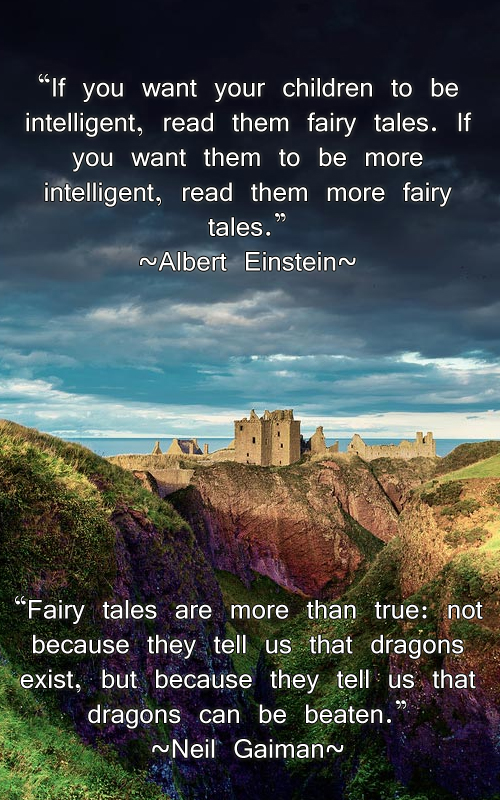
background image of Dunnottar Castle

Don’t misunderstand me — I love Disney films. And they can get pretty dark, at least so far as the villain is concerned. But I love the older versions as well. I wouldn’t read all of them to a young child, but it is possible to shelter children too much (see my previous post where I talk about banning fairy tales). And there is certainly no reason not to read fairy tales as an adult. In the words of C.S. Lewis,

When I was ten, I read fairy tales in secret and would have been ashamed if I had been found doing so. Now that I am fifty, I read them openly. When I became a man I put away childish things, including the fear of childishness and the desire to be very grown up.

Lewis also said, to those who think fairy tales belong in the nursery,  “Some day you will be old enough to start reading fairy tales again.” My own fairy tale reading did not begin in earnest until I had graduated high school, so I suppose by this definition the more fairy tales I read, the more grown-up I get.

God of Love, Old Testament

Love has always been an integral part of God’s relationship with His people. The commandments Christ called greatest (Mat. 22:37-39; Mar. 12:29-31) are contained in the the law delivered to Moses: “thou shalt love the LORD thy God with all thine heart, and with all thy soul, and with all thy might” and “thou shalt love thy neighbor as thyself” (Deu. 6:5; Lev. 19:5). In addition, the Old Testament conversation about love was not limited to instructions. God also declared His great love for His people.

For thou art an holy people unto the LORD thy God: the LORD thy God hath chosen thee to be a special people unto Himself, above all people that are upon the face of the earth. The LORD did not set His love upon you, nor choose you, because ye were more in number than any people; for ye were the fewest of all people: but because the LORD loved you, and because He would keep the oath which He had sworn unto your fathers, hath the LORD brought you out with a mighty hand, and redeemed you out of the house of bondmen, from the hand of Pharaoh king of Egypt. (Deut. 7:6-8)

In the Old Testament, God’s love is revealed in many ways. He shows His love by rescuing Israel from Egypt and defeating her enemies. His love is contained in the law, given to protect His people from the consequences of sin. Love is shown every time He chastises Israel for forsaking Him and in the way He offers forgiveness and welcomes them back when they repent. He also tells His people He loves them.

“I Love You,” says God

When I first started studying this subject, I was amazed to read how many declarations of love God makes for His chosen people. He calls Himself Israel’s husband, and even after they were unfaithful to Him, He promised to redeem His people from their sins and marry them again — a promise fulfilled when Jesus Christ established the New Covenant. He says, “I will allure her, and bring her into the wilderness, and speak comfortably unto her. … And it shall be at that day, saith the LORD, that thou shalt call Me Ishi [husband]; and shalt call Me no more Baali [master]” (Hos. 2:14,16).

And I will betroth thee unto Me for ever; yea, I will betroth thee unto Me in righteousness, and in judgment, and in loving kindness, and in mercies. I will even betroth thee unto Me in faithfulness: and thou shalt know the LORD. And it shall come to pass in that day, I will hear, saith the LORD, … and I will have mercy upon her that had not obtained mercy; and I will say to them which were not my people, Thou art my people; and they shall say, Thou art my God. (Hos 2:19-21, 23 KJV)

Can there be anything more beautiful than these promises? God is often accused of being unfairly harsh in His judgments, but how many human beings whose spouse was unfaithful would be as merciful towards them as the Lord is toward His unfaithful people?God of Love, Old Testament. marissabaker.wordpress.com

But now, thus says the Lord, who created you, O Jacob, and He who formed you, O Israel: “Fear not, for I have redeemed you; I have called you by your name; You are Mine. When you pass through the waters, I will be with you; and through the rivers, they shall not overflow you. When you walk through the fire, you shall not be burned, nor shall the flame scorch you. For I am the Lord your God, the Holy One of Israel, your Savior; I gave Egypt for your ransom, Ethiopia and Seba in your place. Since you were precious in My sight, You have been honored, and I have loved you; therefore I will give men for you, and people for your life. (Is. 43:1-4 NKJV)

This is one of my favorite passages from the Old Testament. It is so full of reassurance and love.

I was going to write a more complete concluding paragraph, but we have morning services today and I’m running out of time to get to choir practice. Happy Sabbath!

Peach Cheesecake Squares

peach cheesecake bars recipe marissabaker.wordpress.com
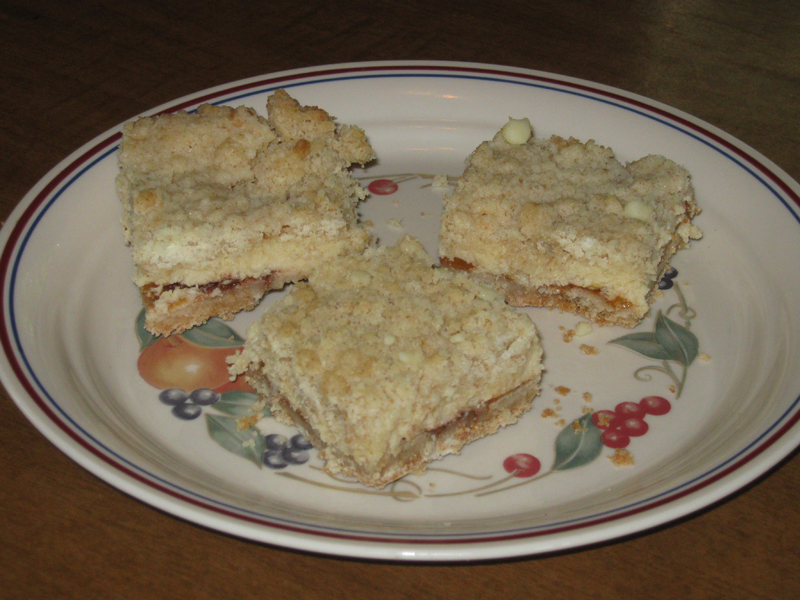
The finished bars, cooled and cut

There’s an Amish family not far from my home who sells fresh produce. When peaches are in season, my family buys them by the crate. Usually they get eaten quickly, but if they are a bit older when we buy them, sometimes you have to bake with some. As is, this recipe turns out great, but the peach flavor was a little too subtle and it only used 2 peaches. I think I’d try doubling the amount of peaches next time.

Peach Cheesecake Bars

print this recipe

2 cups ripe peaches

2 teaspoons cinnamon and sugar, mixed

2 ¼ cups all-purpose flour

1 ½ cups powdered sugar

1 cup butter, cold

1 (8-oz) package cream cheese, softened

1 (14-oz) can sweetened condensed milk

1 egg

2 teaspoons vanilla

Preheat oven to 350°F. Peal and thinly slice peaches. Place in bowl and toss with cinnamon/sugar mixture. Let fruit set.

In large bowl, mix flour and powder sugar. Cut the cold butter into the mixture. Reserve 2 cups for topping. In a 9×13-inch ungreased baking dish, press remaining mixture and bake for 15 minutes.

peach cheesecake bars recipe marissabaker.wordpress.com
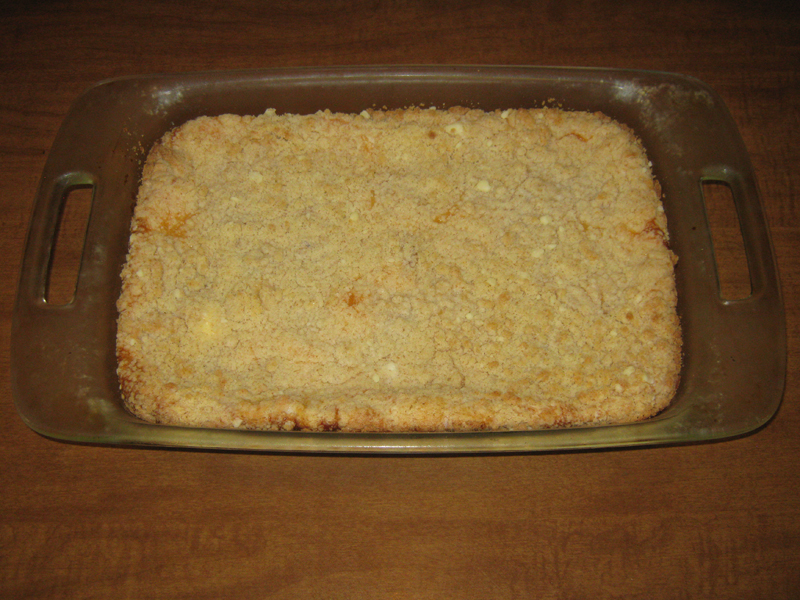
Just out of the oven

Beat the cream cheese until fluffy, then slowly add the condensed milk, baking until smooth. Add egg and vanilla.

Place peaches and juice on baked crust. Top with cream cheese mixture. Sprinkle reserved crumb mixture over the top. Bake 30-35 minutes or until the top is slightly brown. Chill and cut into squares.

print this recipe

You Know You’re an INFJ When …

Over the past few weeks, it has become apparent from comments on this blog and Word Press’s statistics that my writings about INFJs, introverts, and personality type are by far the most popular. Even though it’s been two full months since I wrote Things You Should Know About INFJs, it gets more than twice as many views per week than the newer posts. Since INFJs are one of the personality types most likely to read about themselves and look for answers about how they think, I guess this shouldn’t be surprising.

Am I An INFJ?

INFJoe has a great website with personality comics. Click on the image to visit his website

If this is a question you’ve asked yourself, that’s a pretty good sign you’re an NF type. If we accept David Keirsey‘s ideas on personality type, NF Idealists are by far the most likely type to be searching for identity.

Do you know your Myers-Briggs type? How did you discover it and in what way, if any, has this knowledge affected you?

I discovered my personality type was INFJ after taking a free test based on the MBTI around the time I graduated high school. Since taking the official test wasn’t an option at the time, I tracked down several free versions online (here’s one that’s pretty good) to compare results. Then, I read many descriptions of INFJ types online and in books, and they fit me so well that I’m certain this type is correct.

Signs You’re An INFJ

Here are a few results I found while glancing over a forum on TypeologyCentral called “You know you’re an INFJ when…” It is 231 pages long, was started in 2008, and is still active. These are all quotes from the first two pages.

  • You’re convinced you can make positive change for humanity happen if you just keep working on your vision…
  • You’ve figured out that you don’t fit any other type well.
  • Had a co-worker this summer tell me about her cheating on her husband. You know, after knowing her for all of a week. It seems like everyone wants to share any dark/weird stories with me.
  • You can’t act on something you know logically is the right course of action until its ethically justified for you.
  • You’re pretty sure something is a lost cause, but you have to try anyway for conscience sake.

To a certain extent, all these are true for me (the third one as a general principle — random strangers confiding weirdly personal things with little or no encouragement). The top points on my personal list are a little different, however. The following are typical of most INFJs, and ring especially true for me.

  • Conflict is tremendously uncomfortable. Even tense moments are hard (especially, for some reason, while eating dinner)
  • You have a well developed “rich inner world” and/or the feeling that you belong in a fantasy world rather than the real one
  • It seems easy to pick up on other people’s emotions and mirror them while you are talking.
  • You’re a spiritual/religious person who frequently ponders deep and/or abstract ideas
  • You are fascinated by personality types and enjoy figuring out what other people’s types are
  • There a struggle between needing to be around people so you can connect with them and share your thoughts, and an introvert’s desire for alone time

If you’re an INFJ, what would you add to this list? What convinced you this type is the one that fits you?


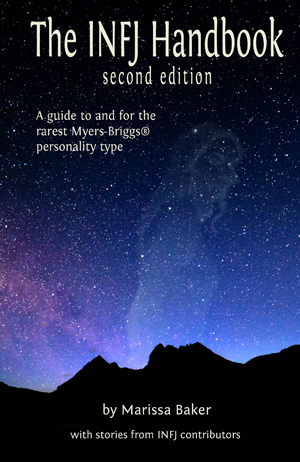
If you’d like to know more about the INFJ personality type, check out my book The INFJ Handbook. I just updated it with a ton of new information and resources. You can purchase it in ebook or paperback by clicking this link.

What If …

Instead of my usual Bible Study type post for Saturday, I thought I would share a few of the Bible-related thoughts that have been rolling around in my mind lately. It would be awesome if these sparked a discussion in the comments 😉

Green and Blue

What if the sky and oceans are blue and plants are green because those are God’s favorite colors? I know about the scientific explanations for why chlorophyll in plant leaves is green and how the atmosphere scatters blue light, but I’m thinking about when the science behind the colors was created. I’m sure God could have set up the world so it looked purple and orange, or red and yellow, or any other combination of colors.

The really cool thing is, if you Google “Which colors are the most relaxing?” the top results are green and blue. Psychologists, designers, and certain philosophies all agree these are the most calming, peaceful colors. Blue triggers feelings of serenity, lower blood pressure, and people are more productive in a blue room. Green is calming, refreshing, and the easiest color for our eyes to look at. Isn’t it amazing that God surrounds us with colors designed to make us feel better?

Planks in Eyes

Reverendfun.com 01-23-2001What if the parts of the Bible we avoid the most are the parts we need to listen to the closest? Perhaps the verses that make us angry are the ones which should inspire us to search for planks in our eyes (Matt. 7:1-5).

Here’s  a couple examples I’ve been thinking about. The Bible teaches that women are to submit to their husbands (Eph. 5:22-24), not teach in church(1 Tim. 2:12), and maintain a physical appearance that clearly shows they are women instead of men (Deut. 22:5; 1 Cor. 11:2-15). Perhaps feeling threatened by such verses is a sign that we could be doing better at exercising Godly femininity. Similarly, there are plenty of verses instructing Christians not give the people of God a bad name by resisting human governments (Rom. 13:1-7; 1 Pet. 2:17). Yet these verses are often ignored or scoffed at by those in the church who are most vocal politically. It bothers me.

Jesus and the MBTI

For my last “What if …?” I want to talk about a question that has lead several people to my blog recently. Looking at a summary of search terms used, I see “Jesus infj,” “is Jesus an infj?” and “was Jesus an infj.” Since people are ending up on my blog because of this question, I thought I would address it. To me, it seems almost sacrilegious to claim we’ve pinned down Jesus’s personality type. If there was ever anyone who couldn’t be classified or put into a single box, I think it would be Him. If, however, we accept the idea that personality types exist and people can be categorized by them at least loosely, having a specific personality type could have been part of Jesus’s experience when living a human life. With that as our foundation, I think it would be safe to say Jesus is most like the group David Keirsey called “Idealists.” Of this type, Keirsey says in the description on his website,

Idealists (NFs), as a temperament, are passionately concerned with personal growth and development. Idealists strive to discover who they are and how they can become their best possible self — always this quest for self-knowledge and self-improvement drives their imagination. And they want to help others make the journey.

From there, we have four Myers-Briggs types: the Teacher (ENFJ), the Counselor (INFJ), the Champion (ENFP), and the Healer (INFP). Though I’ve read arguments that go back and forth on whether Jesus was an introvert or an extrovert, I’m not going to offer my opinion or try to narrow this down any more.